
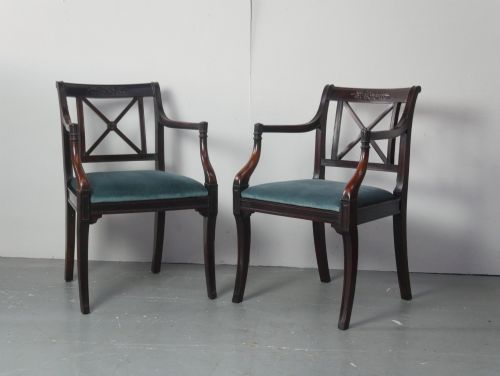
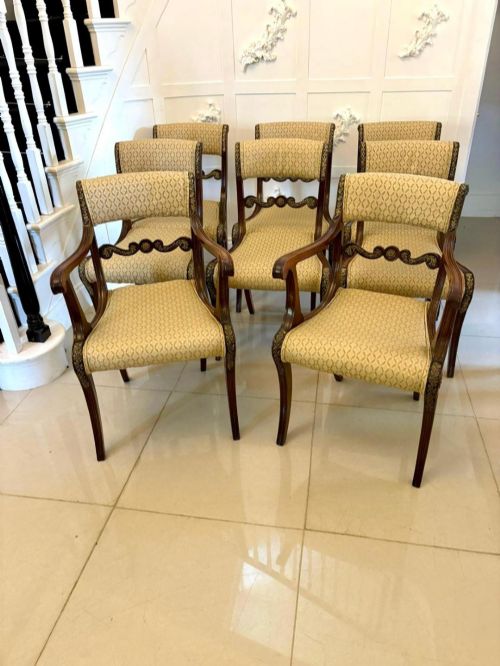
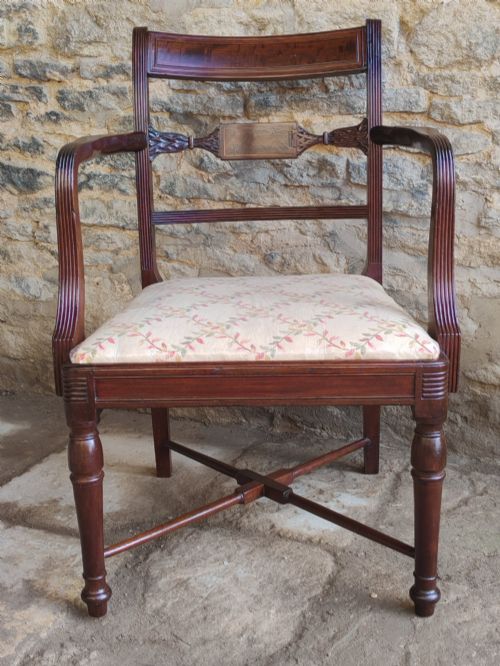

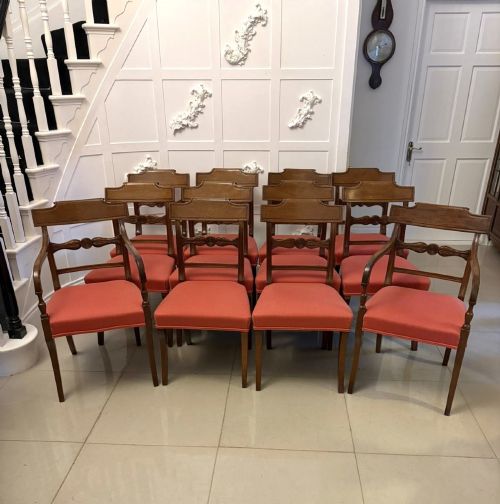
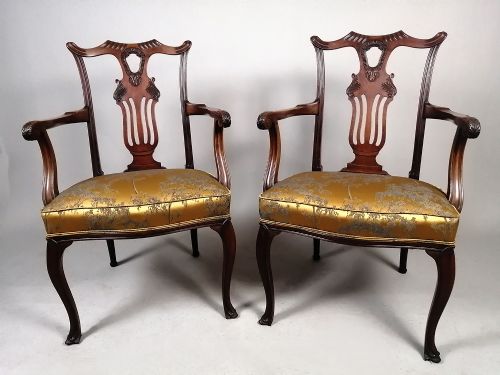
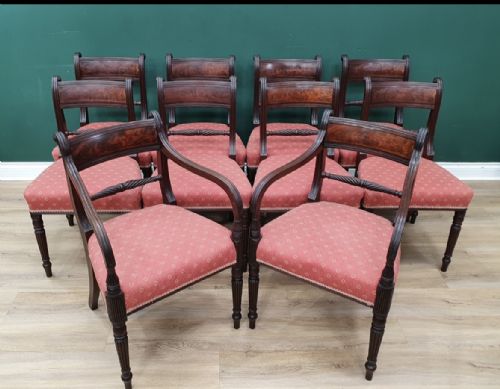
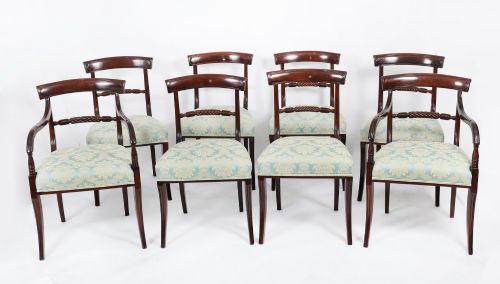
Regency Mahogany Carvers
Regency mahogany carvers are sturdy dining armchairs designed for the heads of the table, combining structural elegance with practical seating.
Regency Mahogany Carvers
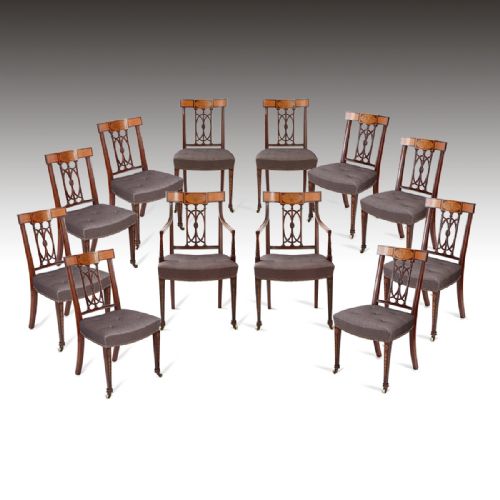
When searching for regency mahogany carvers, a buyer is looking at robust timber dining armchairs originating from the 19th Century, Georgian, and Regency periods. These elbow chairs typically appear as part of larger dining sets or as matched pairs for reception rooms and studies.
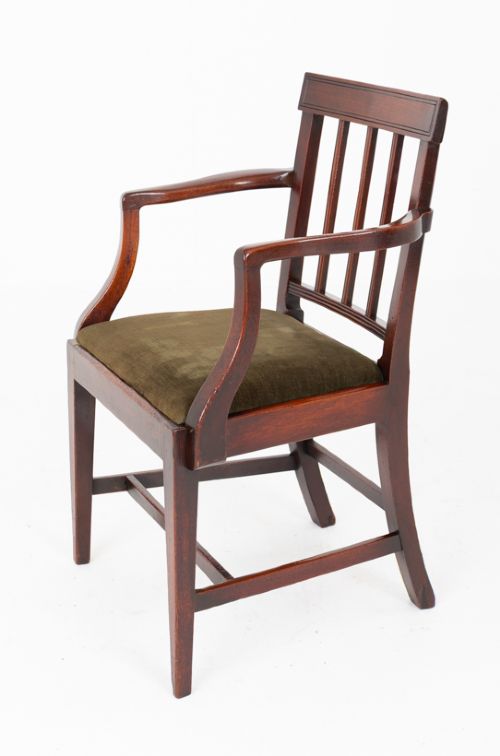
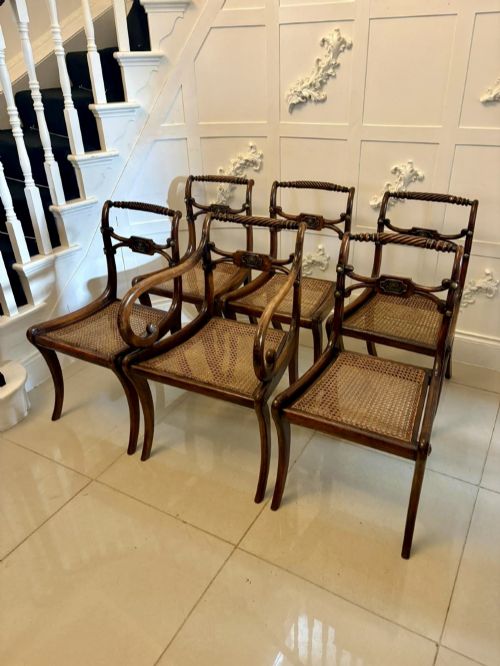
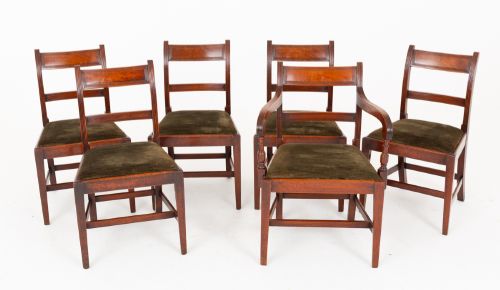
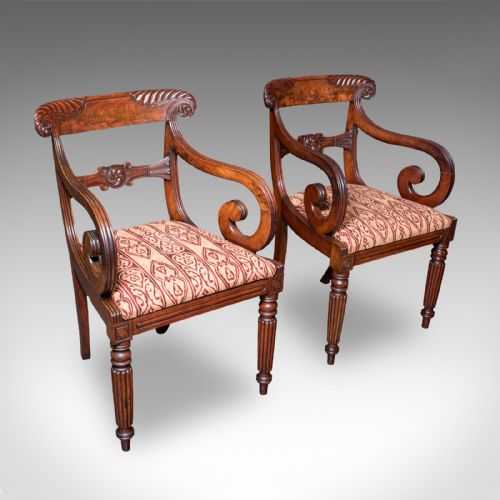
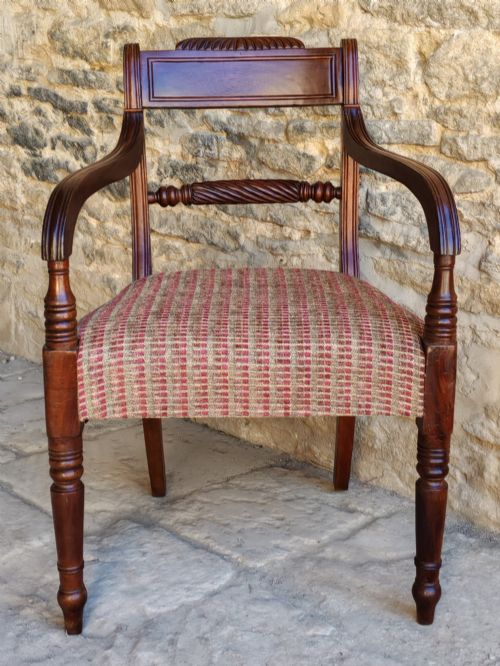
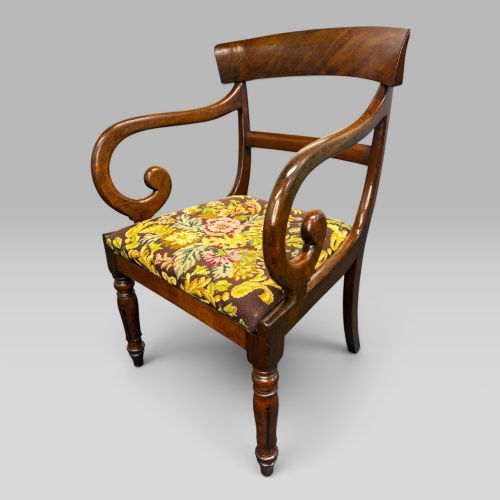
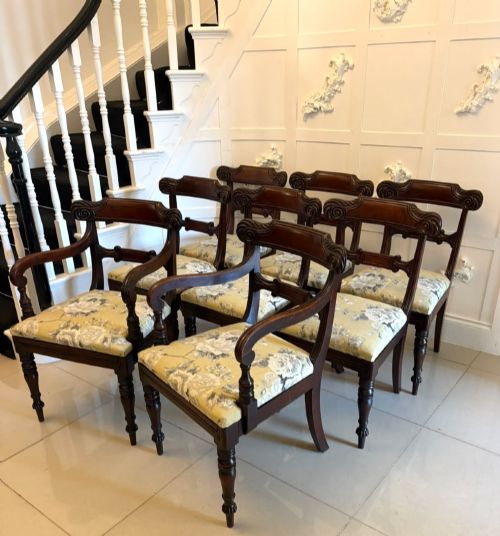
The version most commonly met on this page is the nineteenth-century mahogany carver featuring scroll arms, bar backs, or rope backs. Many of these pieces integrate into larger suites containing both single dining chairs and armchairs.
Makers and workshops constructed these seating forms using dense timber varieties alongside upholstered fabric, velvet, or cane seats. Occasional revival pieces from the Edwardian era also emerge among the nineteenth-century originals.
Materials and construction
Cabinet makers constructed these carvers primarily from solid mahogany, utilising its dense grain to support slender vertical splats, curved arm supports, and sabre legs. Workshops also worked with Cuban mahogany on specific nineteenth-century commissions.
Seating portions received drop-in or fixed pads covered in textile, fabric, or velvet, while alternative examples utilised woven cane inserts. Artisans shaped timber backs into distinctive bar-back, shield-back, and lyre-back configurations using steam bending and traditional joinery.
Some carvers feature decorated faux birds eye maple timber, proving that nineteenth-century hosts enjoyed unexpected splashes of pattern.
Markers of quality
The top of the range is distinguished by matching timber grain across an entire set of dining chairs, alongside crisp carving on scroll arms and back rails. Lower tiers often show mismatched timber selections or replacement components accumulated over decades of use.
Original upholstery frames and uncompromised structural joinery separate exhibition-quality pieces from heavily restored examples. Superior carvers maintain their original finish and structural integrity without relying on excessive modern reinforcement.
Thomas Clarkson And Sons
The Regency Mahogany Carvers Glossary
- Carver
- A dining armchair traditionally placed at the head of a table for the host. These chairs feature integrated armrests matching the design of the surrounding single dining chairs.
- Bar back
- A chair back featuring a horizontal crossbar or splat connecting the uprights. This style frequently incorporates decorative reeding or carved central motifs.
- Rope back
- A backrest design carved to resemble twisted rope strands. Cabinet makers utilised this motif during the Regency and Georgian periods.
- Drop-in seat
- A removable timber frame holding the upholstered pad that drops into a rebate within the chair seat rails. This technique allowed for straightforward reupholstering without dismantling the chair frame.
- Sabre leg
- A concave, outwardly curving leg tapering towards the foot. This form provides stability and typifies Regency seating design.
- Lyre back
- A chair splat shaped in the outline of a musical lyre. Makers popularised this classical revival motif during the nineteenth century.
Regency Mahogany Carvers: Frequently Asked Questions
What is a regency mahogany carver?
A carver is a dining armchair with integrated elbow rests, designed to sit at the head or foot of a dining table. Regency examples are built from mahogany and date from the early nineteenth century or later revival periods.
These chairs frequently appear alongside matching sets of single dining chairs. They provide wider seating and decorative arm supports while maintaining the style of the dining suite.
How do I identify a genuine period carver?
Look closely at the timber construction, joinery methods, and wear patterns on the underside of the seat rails. Genuine nineteenth-century carvers display hand-cut joints and dense mahogany grain that differs visibly from twentieth-century reproductions.
Reviewing the style of the back splat, legs, and arm supports helps connect the piece to Georgian, Regency, or later revival eras. Comparing the chair to documented dining chair sets from the same period confirms standard design proportions.
Were carvers sold as part of dining sets?
Makers traditionally produced carvers in pairs to accompany larger sets of single dining chairs for formal dining rooms. Surviving sets often preserve these original ratios of armchairs to single chairs.
Individual carvers also exist as standalone reception or desk chairs for studies and morning rooms. Pairs frequently emerge independently from larger disassembled dining sets.
What seat materials should I expect?
Original seating surfaces include upholstered pads covered in fabric or velvet, drop-in frames, and woven cane panels. Many antique carvers have undergone reupholstery over the decades to maintain usable condition.
Cane seats require careful handling and occasional maintenance to prevent snapping. Upholstered versions allow for custom fabric choices that complement existing interior schemes.