






Georgian Box Toilet Mirror
A georgian box toilet mirror sits neatly on a chest or dresser, offering a tilting glass above small drawers for everyday grooming.
Georgian Box Toilet Mirror
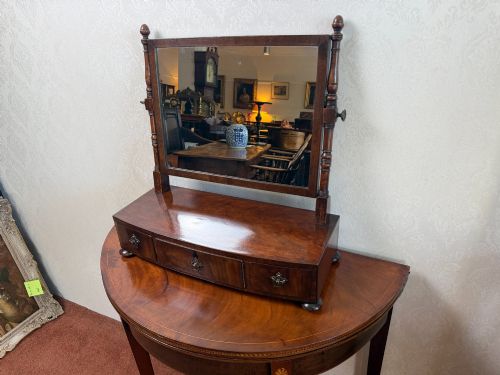
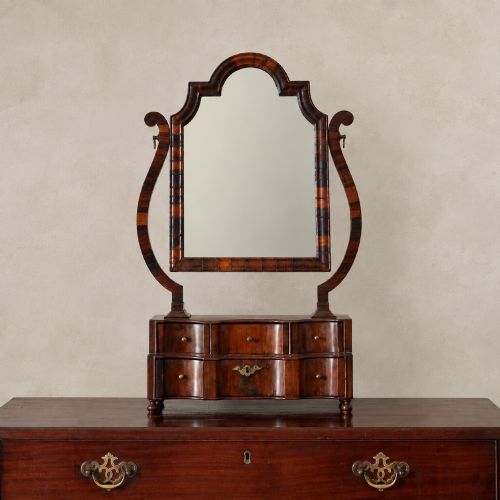
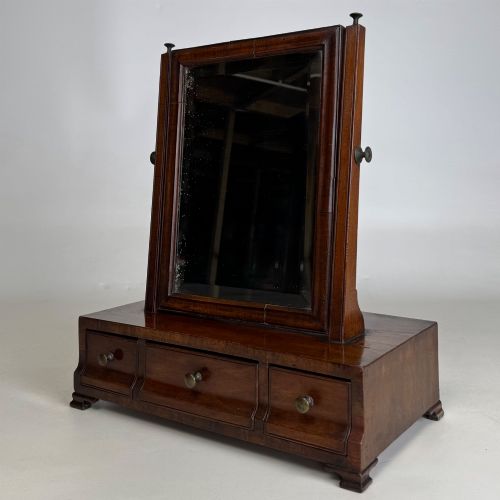
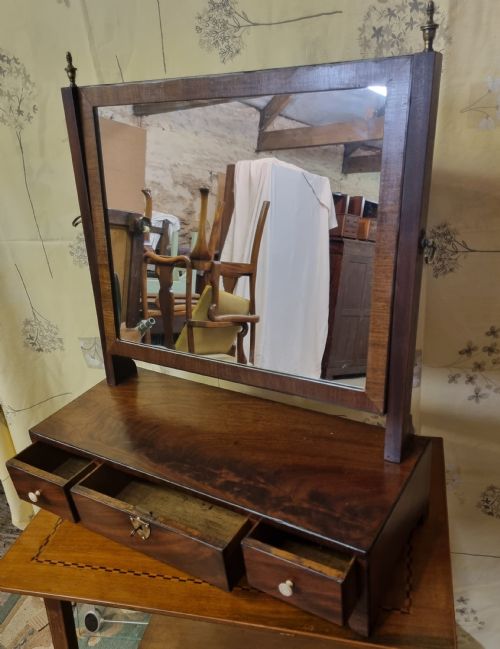
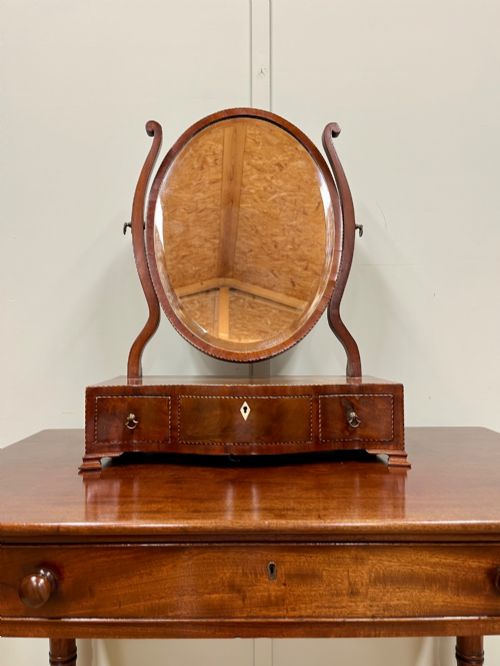
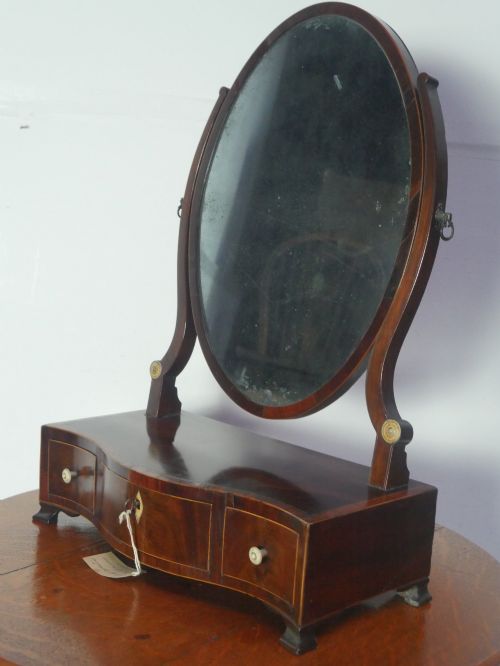
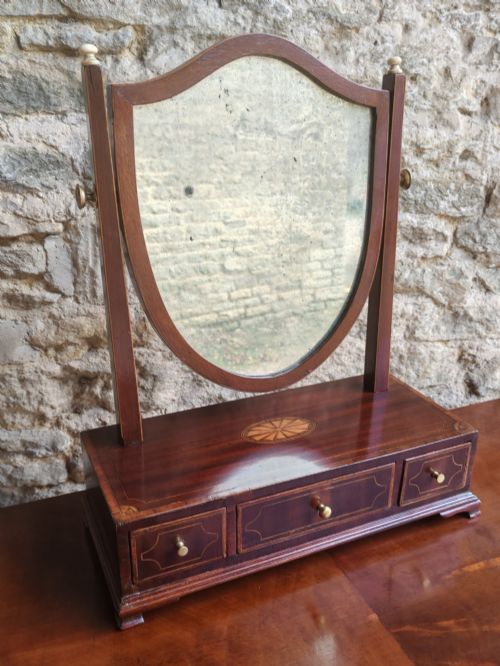
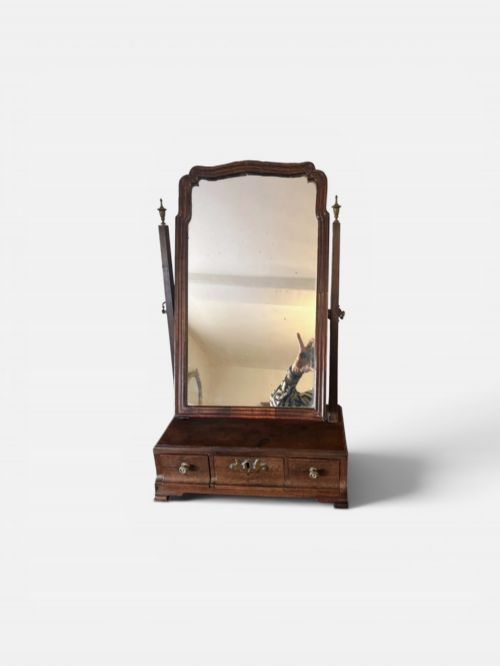
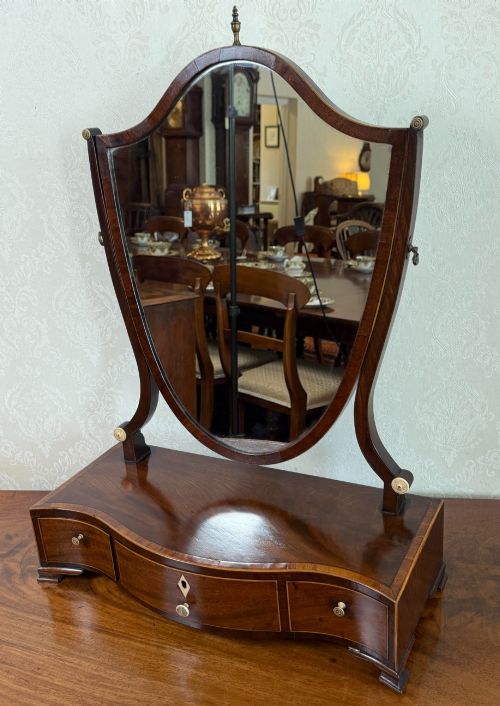
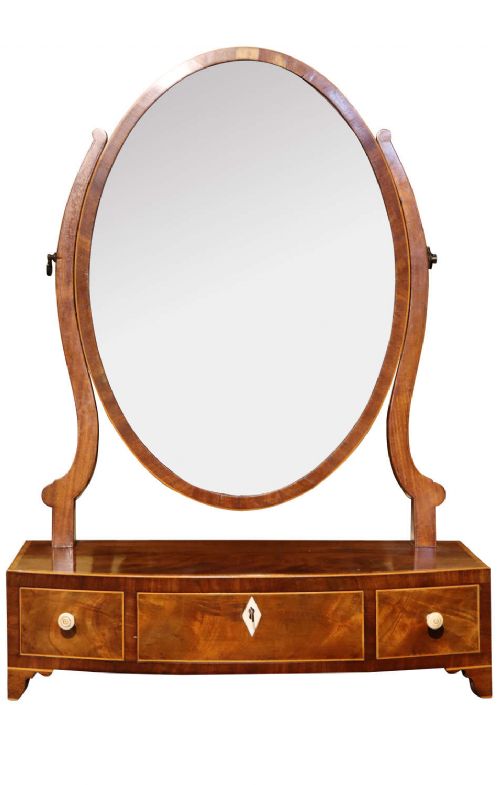
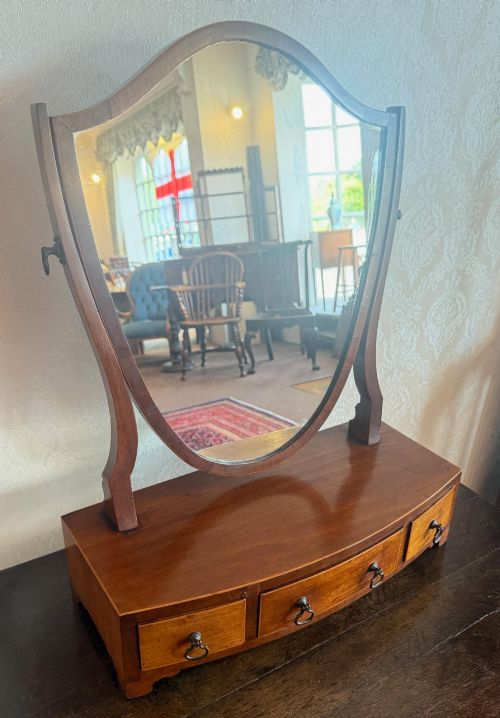
A georgian box toilet mirror is a table-standing glass mounted on upright arms above a miniature base fitted with drawers. These practical furnishings appear across the eighteenth and nineteenth centuries, including the Regency period and various later revivals. Most examples take the form of upright rectangular plates, though oval, shield-shaped, bow-fronted, and serpentine variations also occur.
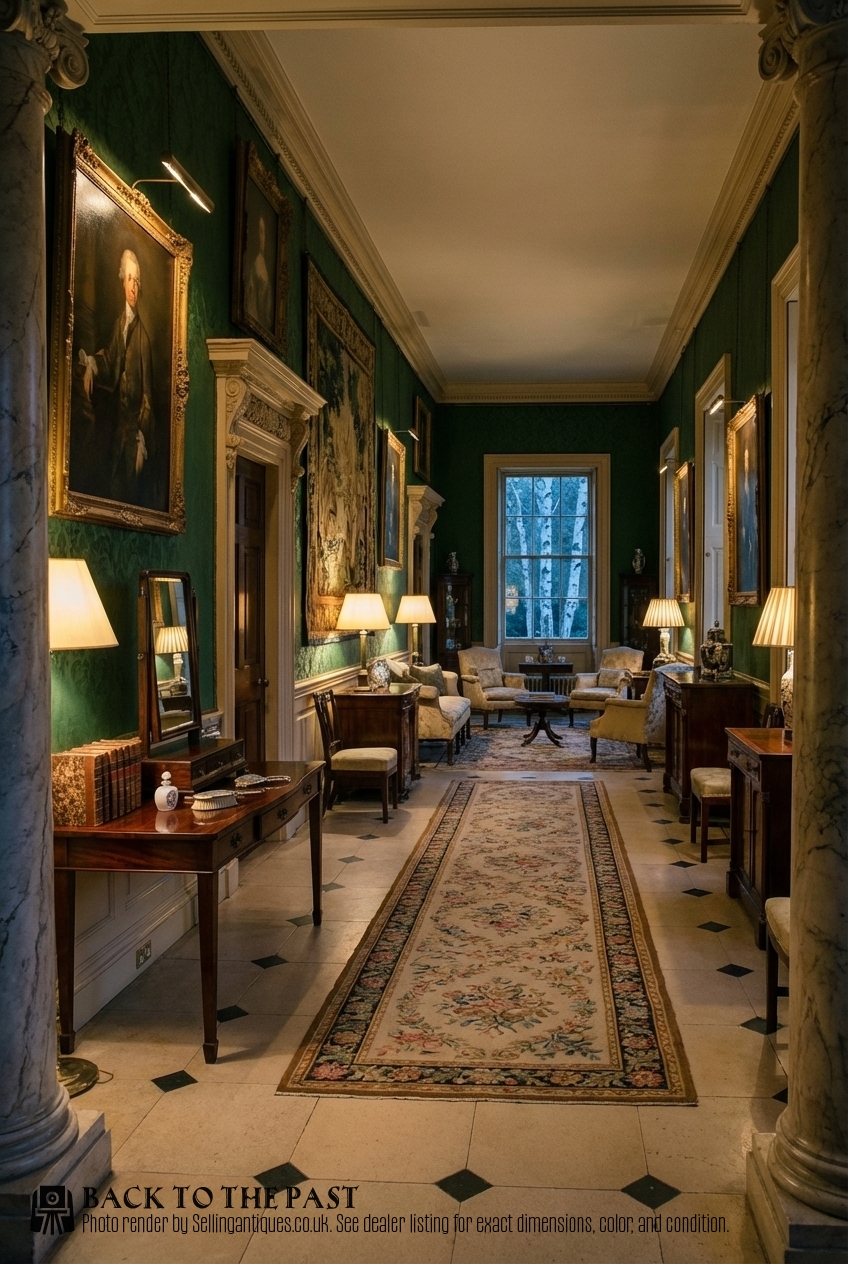
Makers designed these dressing glasses to sit upon a commode, chest, or dressing table for close-up personal grooming. The small base box often includes tiny compartments or drawers intended for keeping pins, trinkets, and small valuables secure. Surviving pieces span walnut, mahogany, and occasional harewood, reflecting the shifting tastes of cabinet makers across successive reigns.
How they were made
Cabinet makers built the box bases of these mirrors using solid timbers like mahogany and walnut, frequently applying decorative crossbanding, stringing, or fine inlay. Upright arms, sometimes termed horn supports or pivots, held the swinging mirror frame in place and allowed the user to adjust the angle of the glass. Brass fittings such as small knob handles, side screws, and bracket feet completed the construction.
The glass plates themselves were silvered and set into moulded wooden frames, often supported by secondary woods in the internal carcase work. Finer examples integrated subtle curves into the box fronts, employing serpentine or bow-front shapes that required precise woodworking skills.
Georgian Box Toilet Mirror Retail Price Guide 2026
Typical asking prices for georgian box toilet mirror among the pieces listed under this phrase on Sellingantiques today, from the lower quarter to the upper quarter. They describe what is for sale here now, not the wider market.
Listings demonstrate timber choices moving from early walnut and laburnum to rich mahogany and occasional harewood by the late eighteenth century.
What varies in quality
The standard of a georgian box toilet mirror rests on the choice of timber figure, the crispness of any inlay, and the harmony of its proportions. Pieces constructed with richly grained mahogany or figured walnut demonstrate superior workshop selection compared to plain or heavily restored carcases.
Attention to detail in the drawer construction, such as hand-cut dovetails and well-fitted internal partitions, separates standard utilitarian pieces from finer output. Original brasses, intact pivoting mechanisms, and undisturbed mirror plates further elevate the integrity of a surviving dressing glass.
The Georgian Box Toilet Mirror Glossary
- Crossbanding
- A narrow strip of veneer applied across the grain of the primary wood to form a decorative border around a drawer front or top.
- Serpentine
- A shaped outline featuring a convex centre flanked by two concave curves, frequently seen on the box bases of better dressing mirrors.
- Shield-shaped
- A mirror plate cut into the outline of a heraldic shield, popular during the later eighteenth century.
- Swing mirror
- A plate suspended between two upright posts by adjustable side screws, allowing the user to tilt the glass freely.
Georgian Box Toilet Mirror: Frequently Asked Questions
Where did people place these mirrors?
These dressing glasses sat upon top of chests of drawers, side tables, or dedicated low dressing tables in bedrooms and dressing rooms.
Their compact footprints allowed them to be moved easily around the home to follow available daylight before the invention of electric lighting.
What went inside the box bases?
The small drawers and internal compartments held personal items such as cosmetics, hairpins, rings, and small shaving tools.
Some campaign or travelling variants included specialised fittings to keep grooming bottles secure during transit.
How do I date a toilet mirror?
Dating relies on observing the timber choice, the shaping of the mirror frame, and the construction methods used in the base drawers.
Walnut pieces generally point to earlier eighteenth-century work, while mahogany and satinwood finishes align with the George III and Regency periods.
Are the mirror plates original?
Mirror glass suffered from foxing and degradation over centuries, leading many historical pieces to receive replacement glass plates.
Examining the silvering, backing boards, and edge bevelling helps determine whether the glass dates to the original period of manufacture.