



Georgian Apprentice Chest
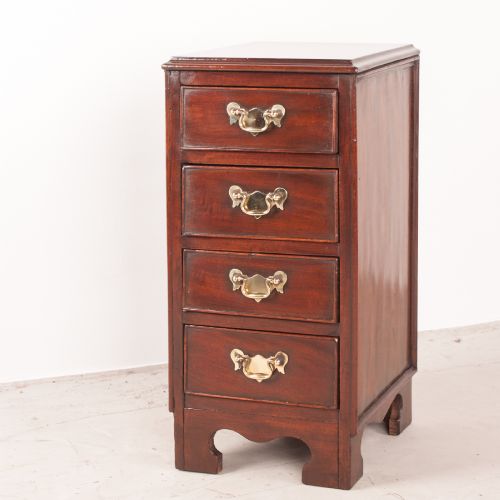
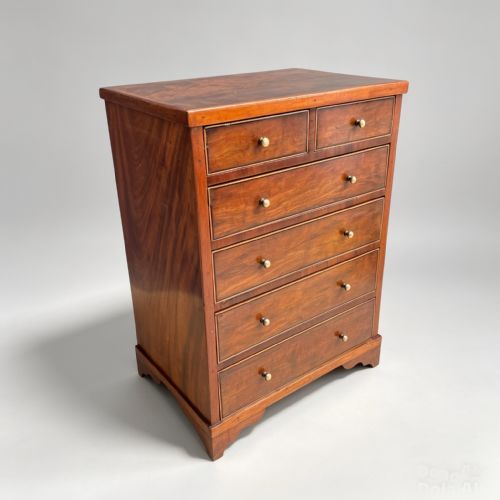
A georgian apprentice chest is a small-scale piece demonstrating mastery, offering collectors the presence of full-sized furniture in miniature form.
Georgian Apprentice Chest
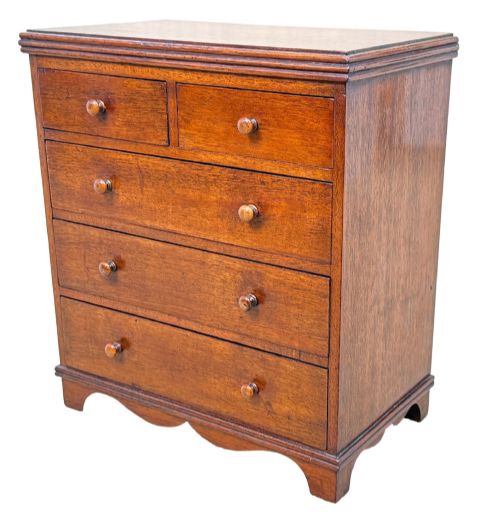
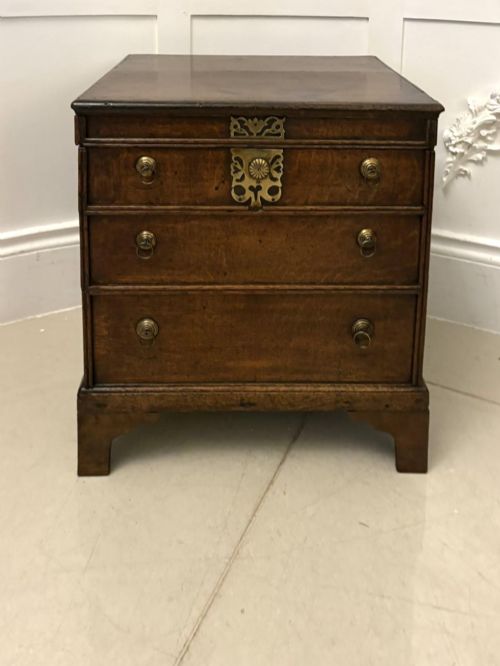
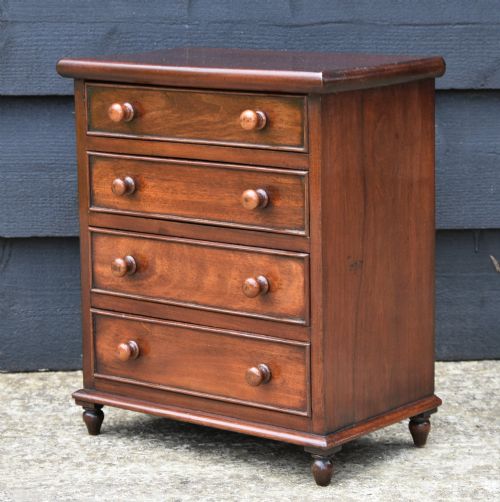
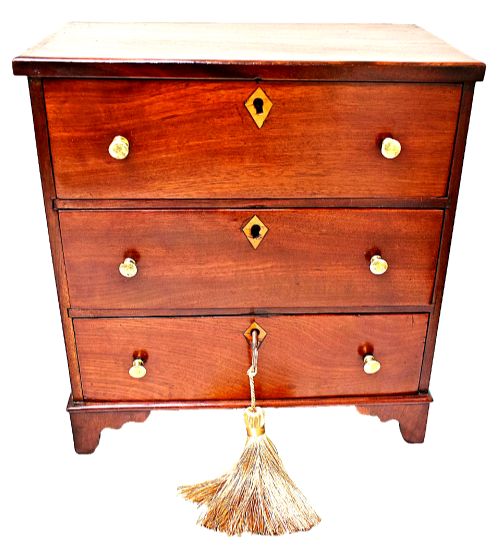
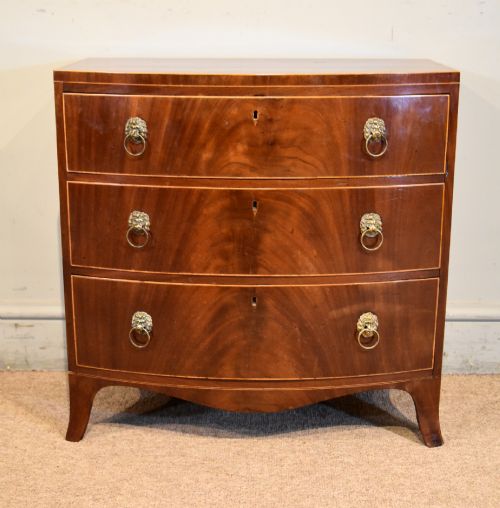
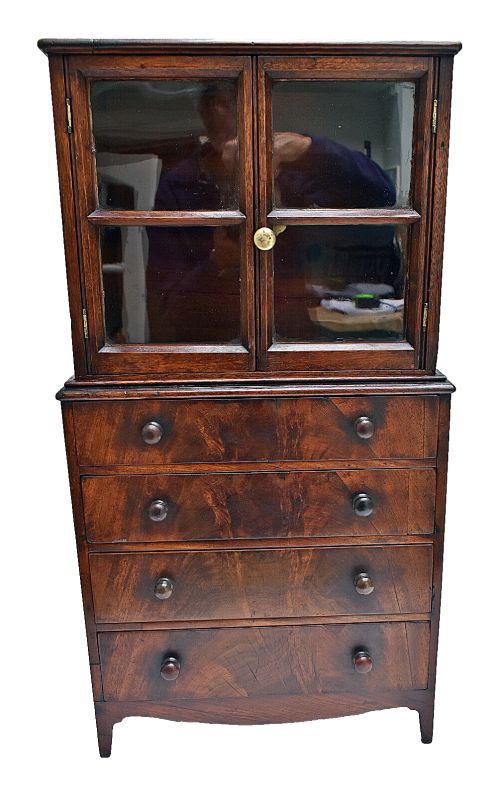
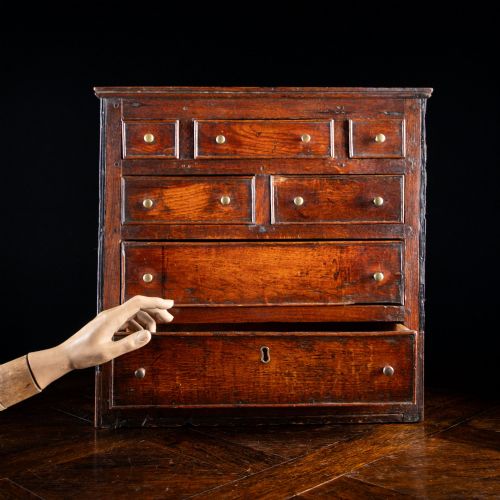
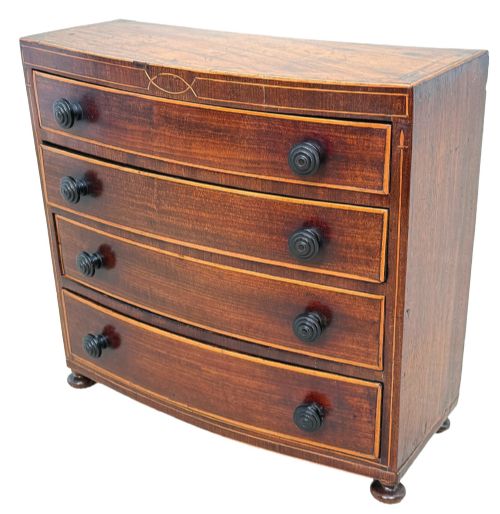
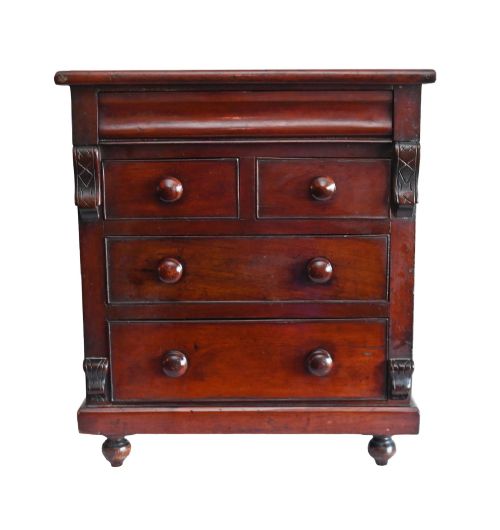
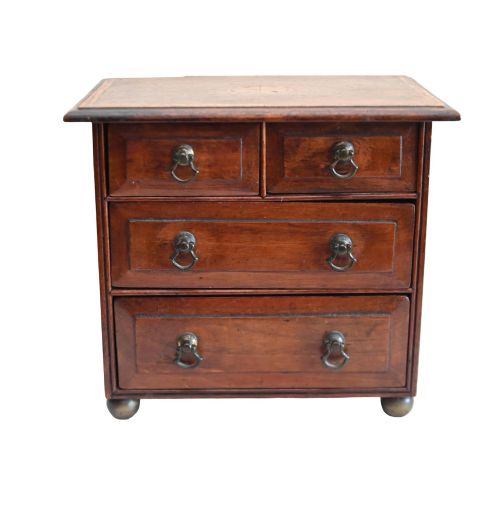
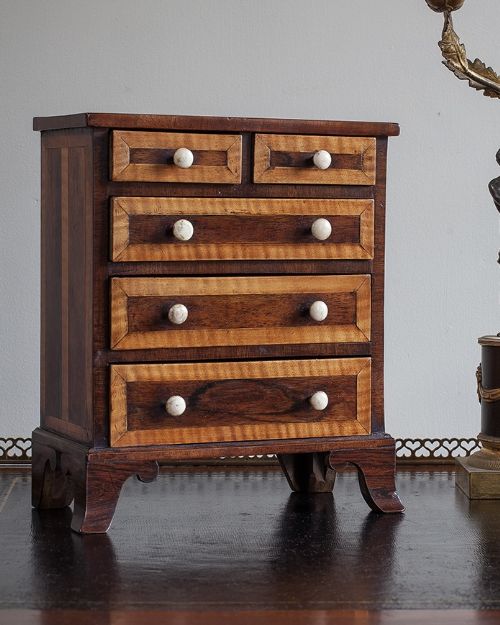
When you examine a georgian apprentice chest, you are looking at miniature furniture made to showcase a craftsman's skill or serve as a desktop case. The pieces appearing most often on this page take the form of miniature chests of drawers, mule chests, and small cabinets produced across the eighteenth and nineteenth centuries.
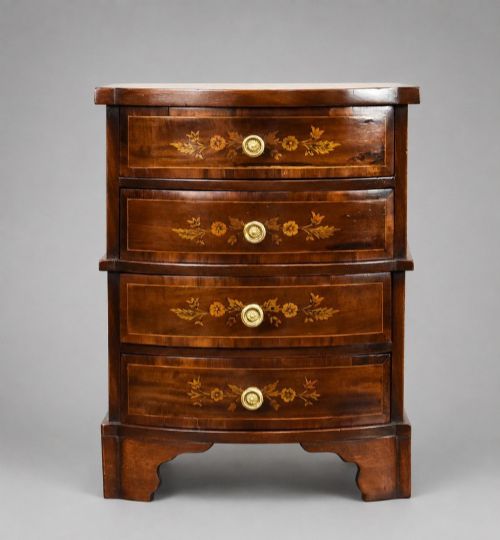
Makers shaped these items in various regional woods, producing miniature tallboys, bowfront chests, and kneehole desks with working drawers. Alongside standard drawer configurations, some examples incorporate writing surfaces or lift lids, mirroring domestic furniture on a reduced scale.
Originating from periods spanning the Georgian era into the Victorian decades, these items reflect the prevailing furniture styles of their respective years. Buyers encounter mahogany, oak, and walnut constructions bearing the proportions and details of larger household pieces.
Materials and construction
Cabinetmakers utilised solid timbers such as mahogany, oak, walnut, and pine, frequently selecting figured veneers and wood inlay to decorate drawer fronts and top surfaces. Brass drop handles and bone escutcheons appear across many examples as functional and decorative hardware.
Joinery methods followed those used in full-sized cabinet work, employing dovetailed drawer construction and panelled carcases. Surfaces were finished to highlight the natural grain of the wood, resulting in patinated finishes developed over centuries of handling.
Georgian Apprentice Chest Retail Price Guide 2026
Typical asking prices for georgian apprentice chest among the pieces listed under this phrase on Sellingantiques today, from the lower quarter to the upper quarter. They describe what is for sale here now, not the wider market.
Some miniature mule chests are small enough to sit on a tea caddy, yet still possess tiny lockable drawers.
Quality and proportion
The distinction between ordinary examples and superior pieces lies in the fidelity of the proportions and the precision of the miniature joinery. Fine items maintain correct architectural scaling and crisp moulding details that match full-sized furniture of the period.
The choice of timber significantly affects the standing of a piece, with figured walnut, burr yew, and finely grained mahogany representing the higher end of the range. Original hardware, intact inlay work, and undisturbed surface patina elevate the character of individual items.
The Georgian Apprentice Chest Glossary
- Apprentice piece
- An item created by a tradesman to demonstrate proficiency before gaining master status, though many small chests served simply as high-quality desktop storage.
- Mule chest
- A storage form combining a chest of drawers base with a blanket box top, rendered here in miniature proportions.
- Bow front
- A convex curved cabinet front that projects outward, frequently seen on mahogany and marquetry examples from the Regency and Edwardian periods.
- Escutcheon
- A protective plate surrounding a keyhole, often fashioned from brass or bone on these small cabinets.
- Tallboy
- A stacked chest of drawers consisting of a lower section carrying an upper chest, scaled down into a compact miniature format.
Georgian Apprentice Chest: Frequently Asked Questions
What is a georgian apprentice chest?
These items are small-scale furniture pieces constructed by cabinetmakers as demonstration pieces or desktop storage containers. They replicate full-sized chests and cabinets in miniature proportions.
They utilise traditional furniture woods like mahogany, oak, and walnut, incorporating working drawers and period hardware.
How were these small chests used?
Period owners placed them on desks, tables, or sideboards to store documents, trinkets, spices, or small valuables. Their manageable size allowed them to function as desktop companions.
Craftsmen also used them as samples to show prospective clients the quality of work they could produce on larger commissions.
Are these chests made of solid wood?
Most examples feature a primary cabinet wood such as oak, mahogany, or pine, frequently enhanced with decorative veneers. Secondary timbers often appear inside drawer linings and back panels.
Cabinetmakers applied inlay and crossbanding to the primary surfaces to create decorative patterns.