
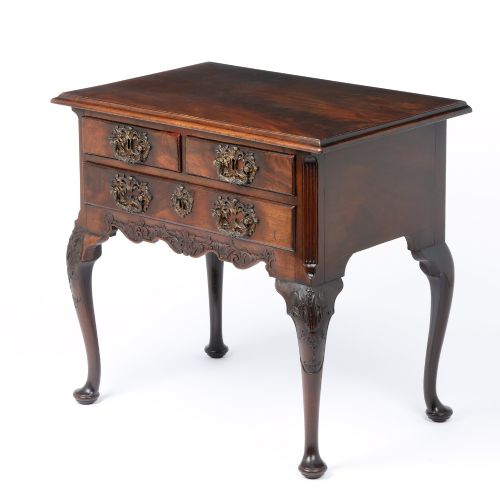
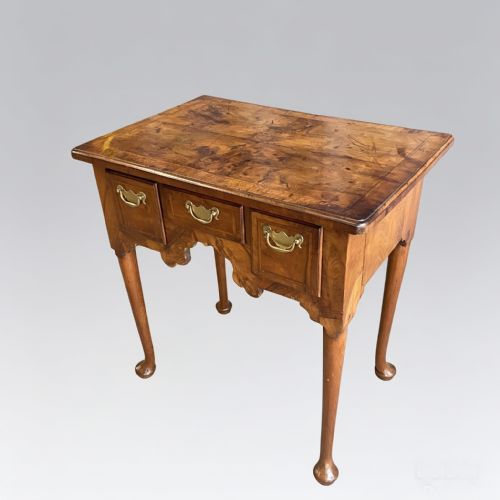
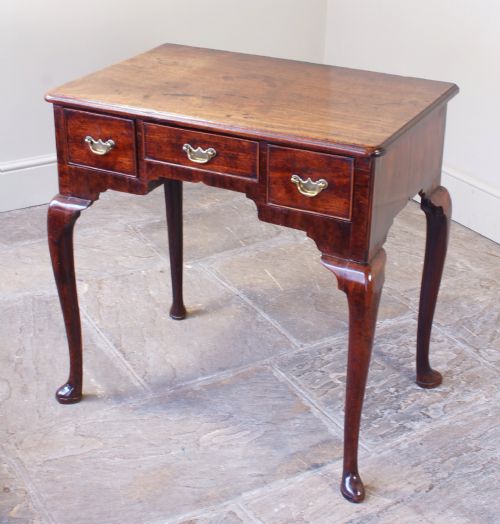


George II Lowboy Table
A george ii lowboy table brings mid-eighteenth-century proportion and fitted drawer storage into a room as a compact side table.
George II Lowboy Table
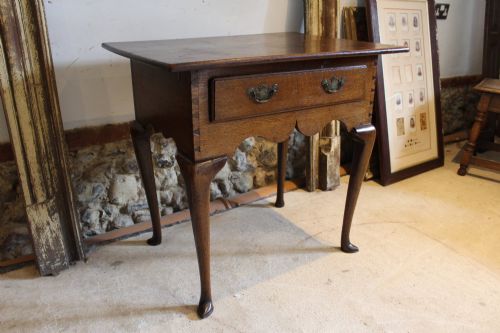
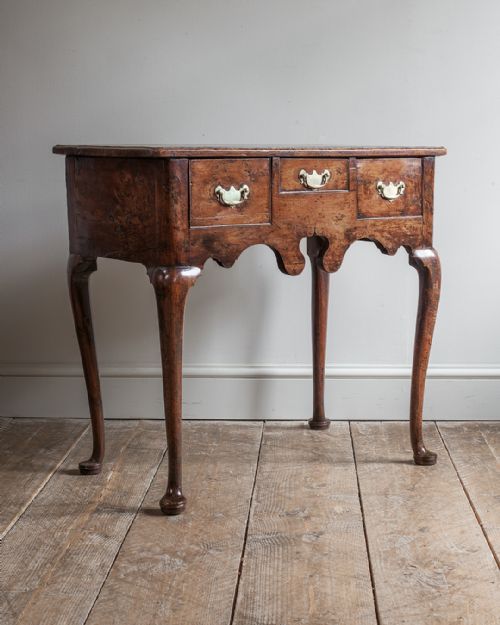
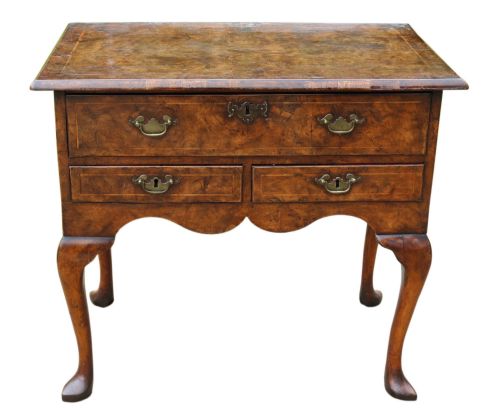
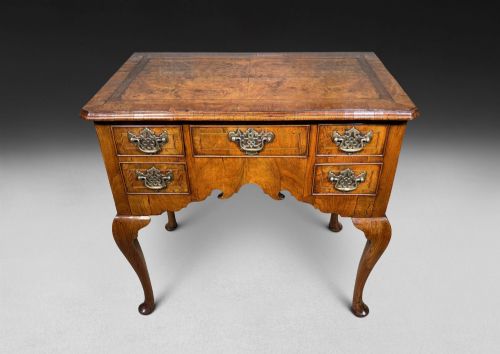
A george ii lowboy table is a low side table featuring one to three drawers, constructed primarily during the eighteenth century in oak, walnut, and mahogany. These versatile pieces served historically as dressing tables or small side tables in halls and chambers.
The versions most frequently met on this page belong to the George II and broader Georgian periods, alongside occasional nineteenth-century revival interpretations. They appear as side tables, writing desks, and dresser bases with characteristic low proportions.
How they were made
Cabinetmakers utilised native and imported timbers, pairing structural oak with decorative veneers of walnut, burr elm, and mahogany. Solid timbers such as cherrywood, fruitwood, and plum wood also form the primary bodies of these tables.
Joinery methods include framed drawer construction and jointed leg attachments, frequently terminating in cabriole legs. Brass hardware secures the drawer fronts, while feather banding often outlines the walnut drawer surfaces.
Several pieces combine sturdy oak frames with decorative walnut veneers, showing that historical cabinetmakers enjoyed a clever mix of substance and style.
What varies in quality
The choice of timber surface defines the visual hierarchy, with figured burr walnut and richly grained Cuban mahogany occupying the upper tier of refinement. Simpler regional pieces utilise local oak and fruitwood with straightforward grain patterns.
Proportion and leg shaping separate standard examples from finer outputs, particularly in the fluid curve of a cabriole leg or the crisp execution of feather banding. Original brass furniture hardware enhances the integrity of a piece.
The George II Lowboy Table Glossary
- Lowboy
- A small table with drawers, standing on four legs, typically used as a dressing or side table during the eighteenth century.
- Cabriole leg
- A furniture leg that bends outward in a convex curve and tapers inward in a concave curve, ending in a foot.
- Feather banding
- A decorative inlay technique using veneer strips arranged in a herringbone or V-shaped pattern around drawer edges.
- Burr elm
- A timber harvested from walnut or elm growths featuring swirling, knotty grain patterns prized for decorative veneering.
- Dresser base
- A low wooden storage unit featuring drawers or cupboards, serving a function similar to larger side tables.
George II Lowboy Table: Frequently Asked Questions
What is a lowboy used for?
Historically, these low tables functioned as dressing tables in bedrooms or as small side tables in hallways and reception rooms. Their fitted drawers provided convenient storage for small personal items or documents.
Today, they suit modern living spaces as compact hall tables, bedside surfaces, or slim writing desks beneath mirrors.
How do I identify a George II lowboy?
Look for structural markers characteristic of the mid-eighteenth century, such as cabriole legs, shaped aprons, and specific timber choices including walnut, oak, and mahogany. Drawer configurations typically feature one wide drawer above smaller side drawers or a single central drawer.
Drawer construction details like hand-cut dovetails and period brass handles help confirm the age and origin of the piece.
Are all lowboys made of mahogany?
While mahogany is common, particularly in later eighteenth-century examples, many pieces utilise native British timbers such as oak, walnut, cherrywood, fruitwood, and yew wood. Burr elm and plum wood also appear as decorative veneer or solid construction materials.
The choice of timber often reflects the regional workshop origin and the status of the original commission.
How do I style a lowboy at home?
Place the table against a hallway wall or in a living room beneath a framed mirror or artwork to create a balanced focal point. The compact footprint allows it to fit into narrow spaces where standard tables prove too deep.
Keep surface objects minimal to showcase the grain of the wood and the joinery of the top.