


George II Chairs
When you search for george ii chairs, you step into an era defined by robust walnut, rich mahogany, and confident cabriole legs.
George II Chairs
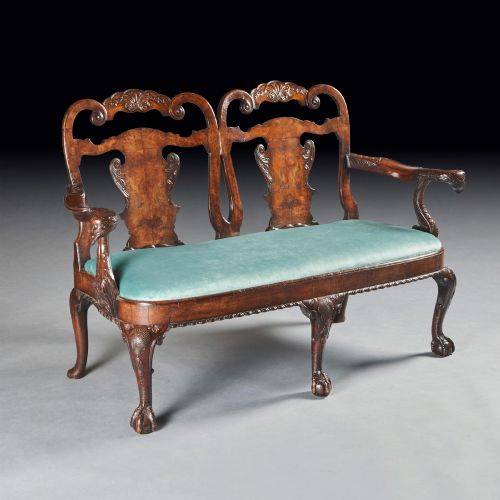
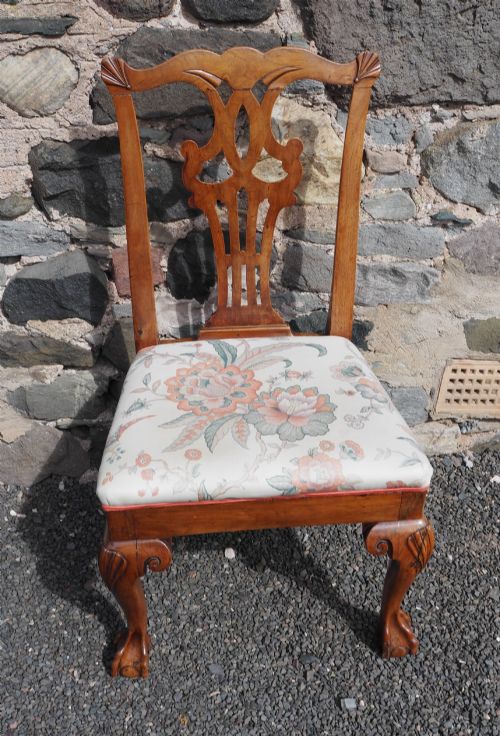
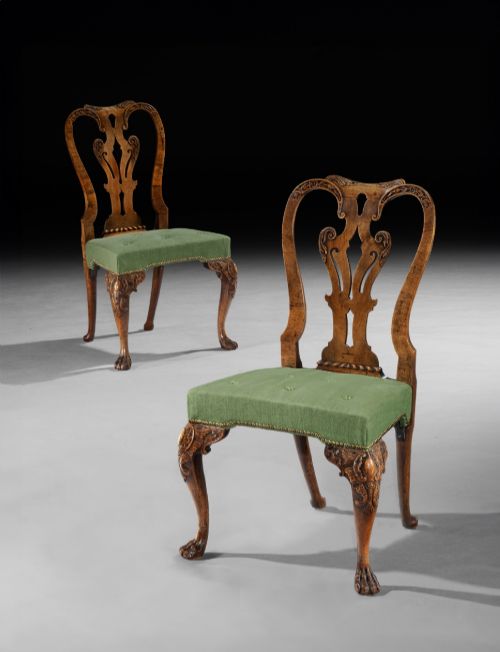
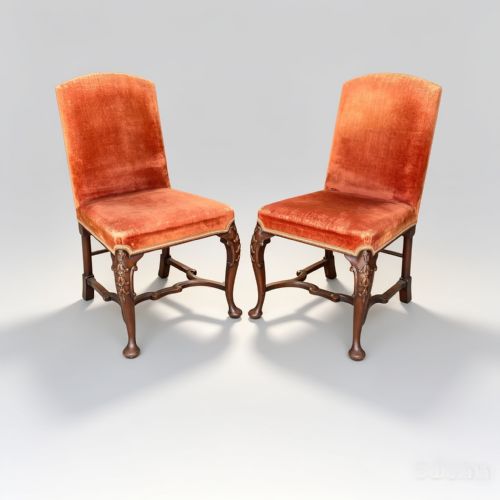
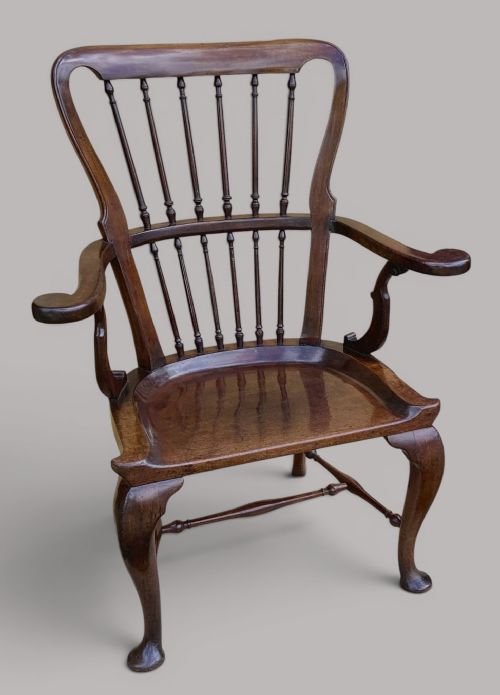
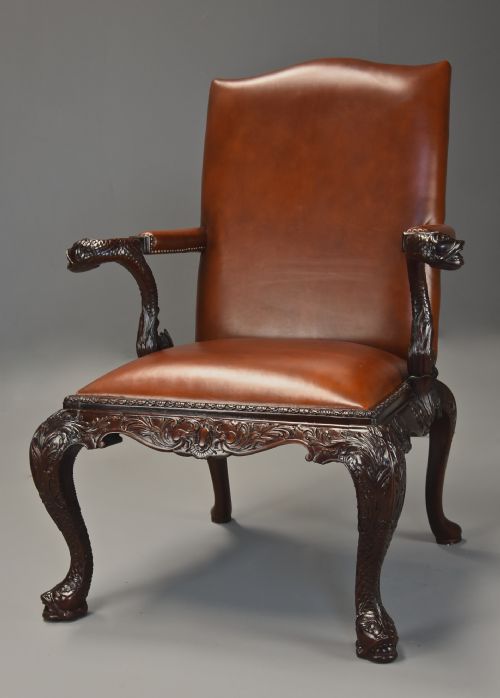
George ii chairs encompass a varied selection of seating forms, ranging from single side chairs and dining sets to expansive library armchairs, wing chairs, and low settees. The pieces appearing here span both genuine mid-eighteenth-century examples and later nineteenth- and twentieth-century revival interpretations.
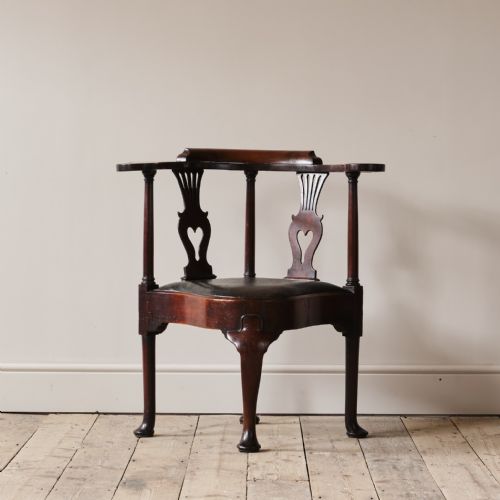
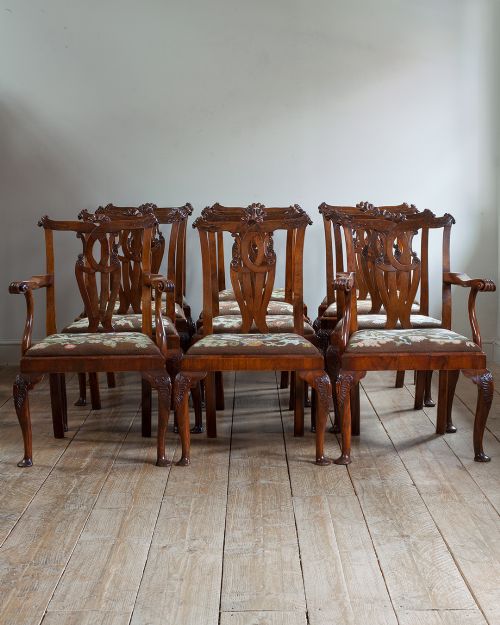
Dining chairs and side chairs dominate the selections, alongside substantial open armchairs and corner chairs built from dense hardwoods. Walnut examples commonly point to the earlier years of the period, while mahogany pieces represent the shift toward heavier carving and architectural forms.
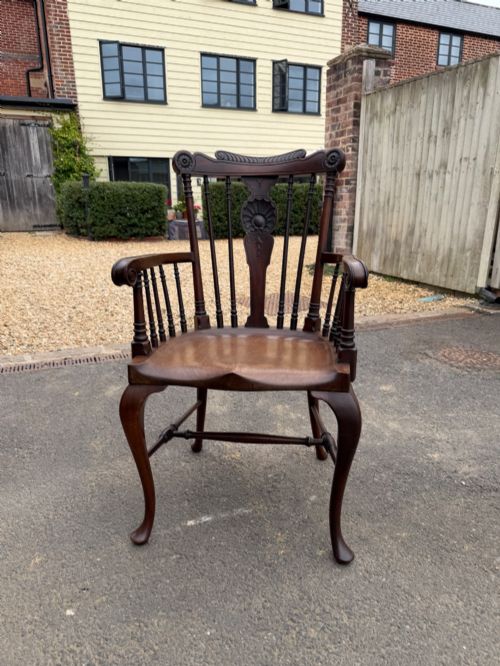
Makers working in later centuries continued this lineage through revival pieces, producing sets and pairs that mirror the proportions and decorative motifs of the original period. Buyers encounter both singular statement armchairs and large matched sets intended for formal dining spaces.
How they were made
Cabinetmakers constructed these frames primarily from solid mahogany and walnut, occasionally utilising fruitwood, oak, or elm for regional or country variations. Timber selection dictated the depth of carving possible, allowing craftsmen to shape pronounced ball-and-claw feet and shell motifs.
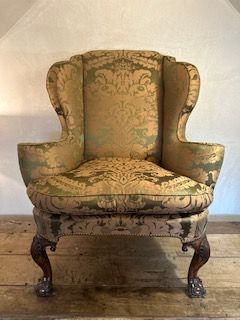
Upholstered elements relied on traditional webbing and stuffing secured with textile coverings such as leather, velvet, and fabric. Joinery involved sturdy mortise and tenon frames designed to support the weight of the sitter without relying on excessive metal bracing.
George II Chairs Retail Price Guide 2026
Typical asking prices for george ii chairs among the pieces listed under this phrase on Sellingantiques today, from the lower quarter to the upper quarter. They describe what is for sale here now, not the wider market.
Listings feature walnut, mahogany, and fruitwood examples alongside upholstered seating in leather, velvet, and fabric across multiple centuries.
What varies in quality
The degree of hand-carving defines the upper tier of these pieces, separating simple functional seating from highly ornamented library chairs and sets. Crisp detailing on the knees, splats, and crest rails distinguishes skilled execution from routine production.
Timber figure and density contribute significantly to the standing of a chair, with rich grain patterns commanding greater attention. Original surface patination and the integrity of the structural frame further separate standard examples from notable ones.
Robert Strahan Dublin
The George II Chairs Glossary
- Cabriole leg
- A furniture leg that curves outward at the knee and tapers inward toward the foot, often finishing in a pad, claw-and-foot, or hoof. This form mimics the shape of animal limbs and typifies mid-eighteenth-century design.
- Gainsborough armchair
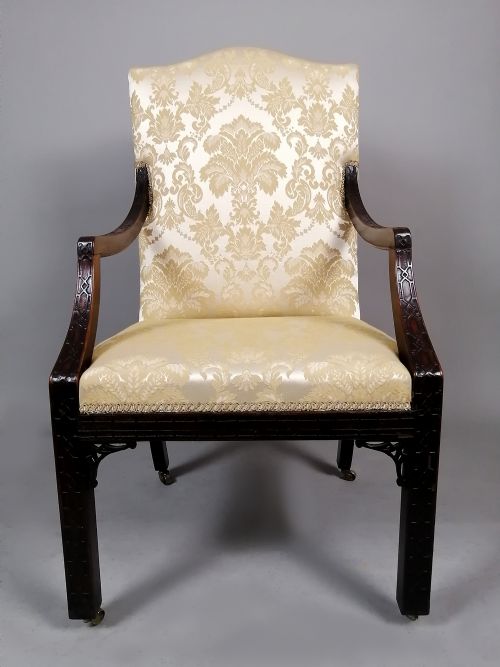
- A wide, upholstered open armchair featuring padded armrests and low sides designed to accommodate the voluminous skirts worn during the period. They rest on four legs, frequently with carved cabriole fronts.
- Corner chair
- A square-shaped chair set diagonally with a curved backrest supported by three or four uprights and a central column. Also known as roundabout chairs, they originated to fit neatly into room corners.
- Splat
- The vertical wooden strip down the centre of a chair back, often shaped into vases or intertwined ribbons. In walnut and mahogany chairs, the carved splat provides structural support while displaying the main decorative motif.
George II Chairs: Frequently Asked Questions
How do I identify genuine george ii chairs?
Examine the timber species, construction methods, and the crispness of the hand-carved details on the knees and splats. Original pieces from the era show period-appropriate joinery and natural wear patterns accumulated over centuries.
Revival pieces from the nineteenth and twentieth centuries often feature heavier machine-cut elements or wood characteristics distinct from eighteenth-century stock. Comparing the secondary woods beneath the seat helps clarify the manufacturing date.
Were these chairs used for dining?
Dining chairs formed a major part of eighteenth-century output, often commissioned in large sets of eight, ten, or twelve for formal households. Single side chairs and hall chairs served auxiliary seating purposes in grand hallways and parlours.
Larger armchairs and settees were placed in libraries and withdrawing rooms rather than around the dining table. Matching sets of dining chairs remain highly sought after for contemporary dining spaces.
What is the difference between walnut and mahogany examples?
Walnut chairs typically reflect the earlier decades of the period, displaying warm tones and intricate grain patterns suited to fluid cabriole designs. Craftsmen favoured walnut before mahogany supplies expanded and dominated British cabinetmaking.
Mahogany chairs emerged as the preferred medium for heavier, deeply carved pieces, including Chinese Chippendale and elaborate library armchairs. The density of mahogany allowed for sharper relief carving on the crest rails and front legs.
How should I care for antique upholstery?
Protect the fabric or leather surfaces from direct sunlight and fluctuating humidity to prevent fading and drying of the natural materials. Regular gentle dusting preserves the textile fibres without stressing the underlying webbing.
When replacement is necessary, select traditional materials and upholstery techniques that respect the structural integrity of the antique frame. Professional conservation ensures the longevity of both the woodwork and the covering.