
Georgian Walnut Seating
Georgian walnut seating brings together rich timber and refined frames, offering both sturdy comfort and the warm tone collectors prize.
Georgian Walnut Seating
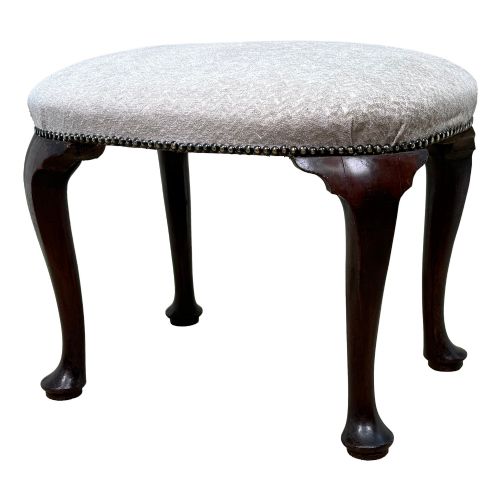
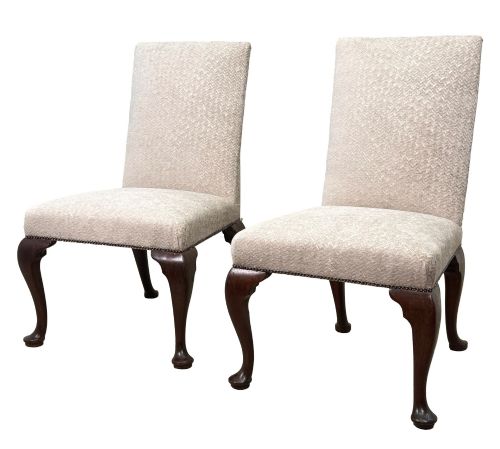
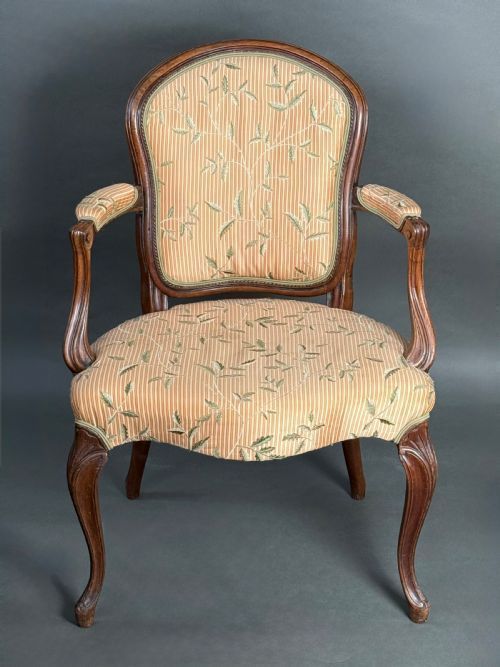
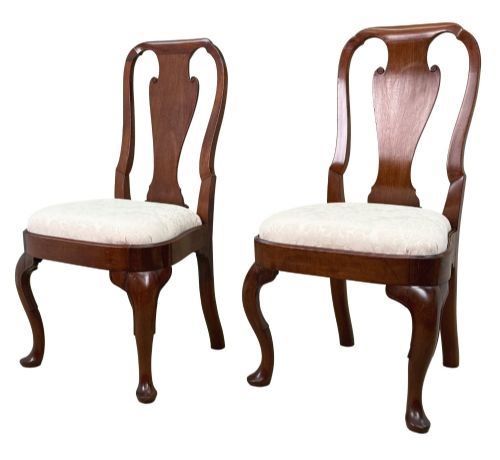
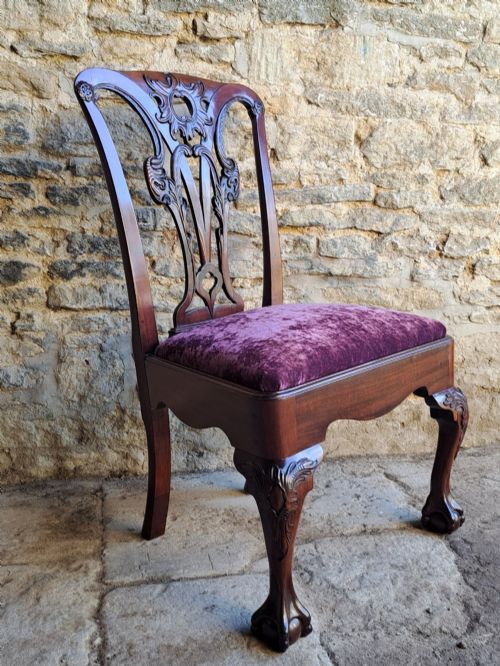
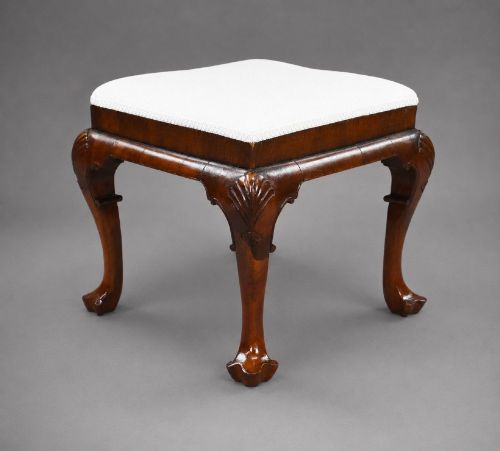
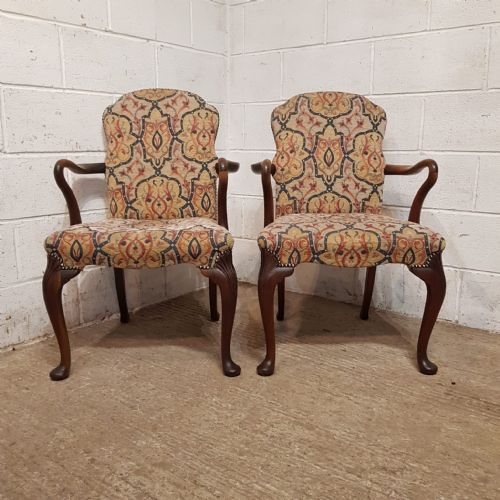
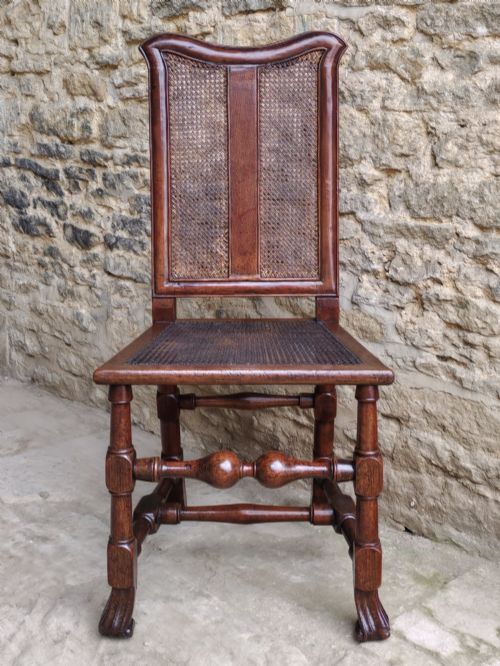
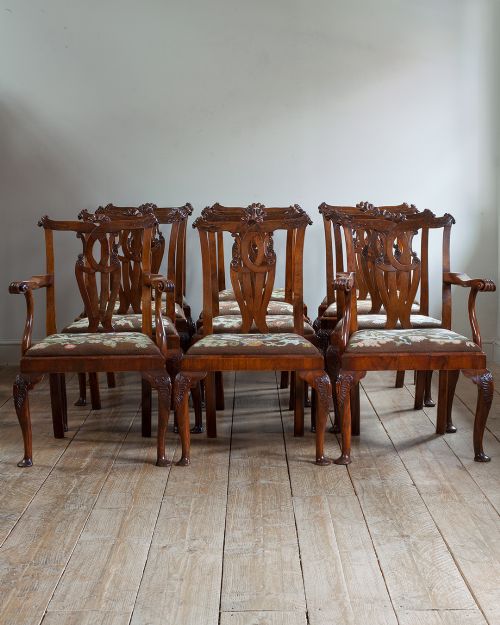
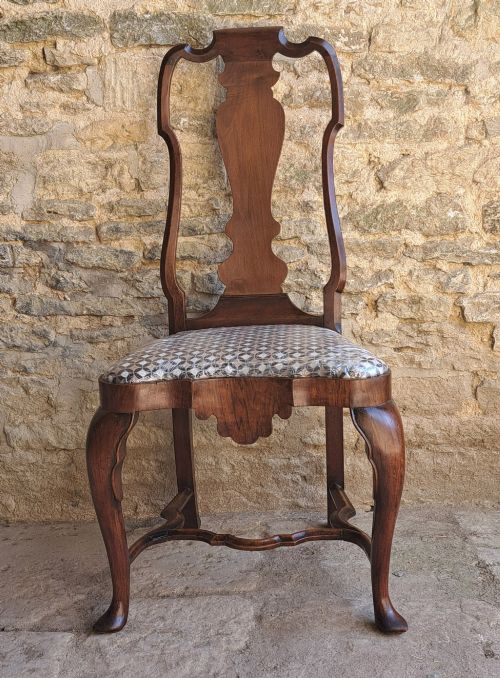
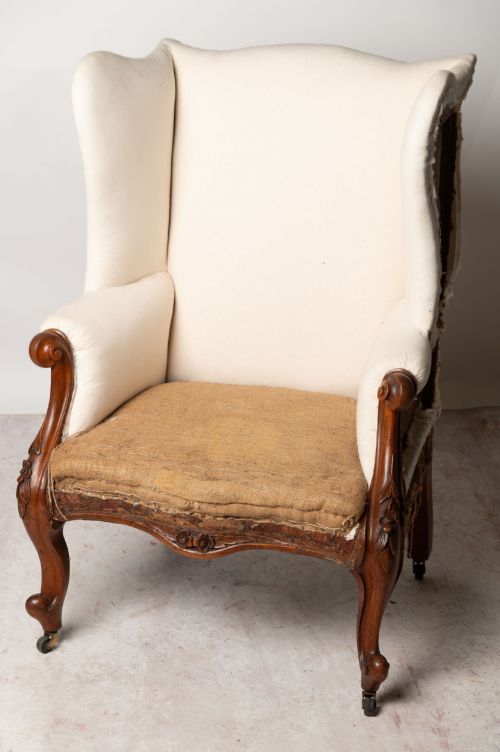
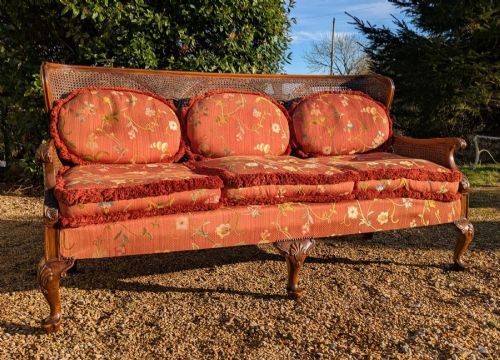
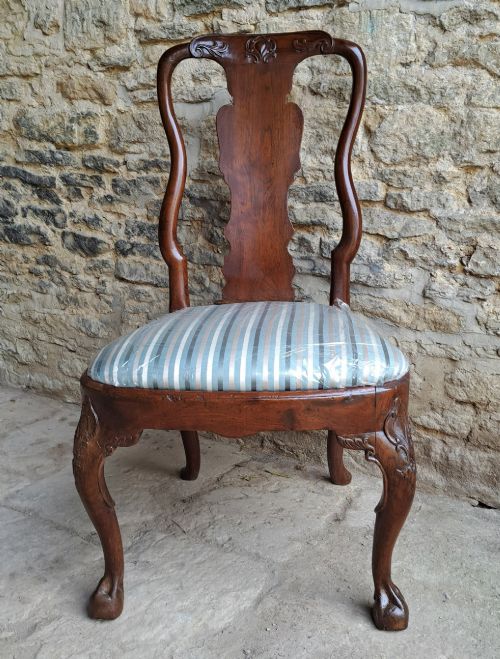
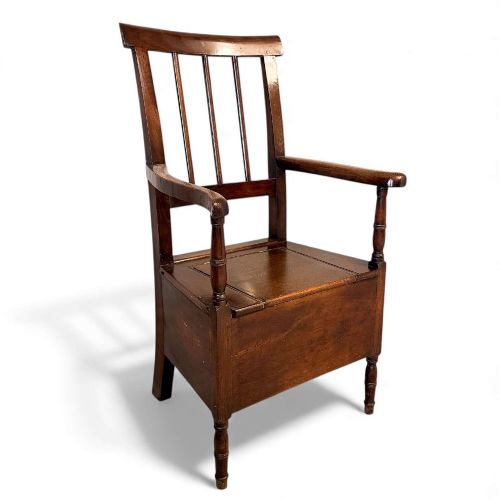
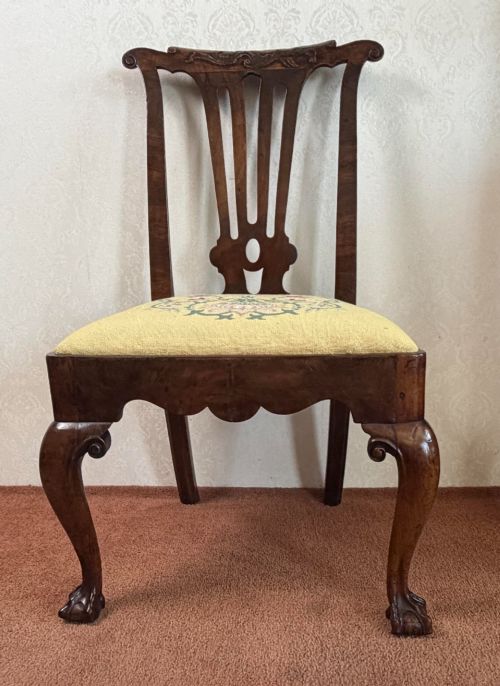
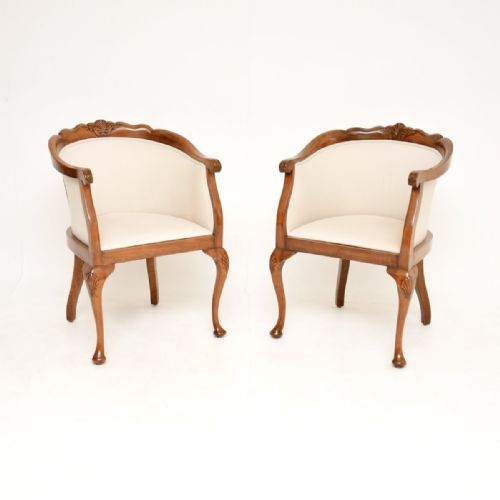
Georgian walnut seating encompasses a variety of domestic furniture designed for comfort and reception, including side chairs, armchairs, dining chairs, footstools, settees, and corner chairs.
The pieces appearing on this page span several eras, primarily centring on the eighteenth century alongside later revival periods such as the nineteenth and early twentieth centuries.
Makers and craftsmen of these periods utilised native and red walnut, shaping timber into distinct forms that range from early eighteenth-century Queen Anne designs to George II and Regency styles.
Materials and Construction
Construction relies heavily on solid walnut and burr walnut timbers, often chosen for their rich grain patterns and deep warm colour.
Frames are frequently upholstered in traditional textiles, including silk, velvet, tapestry, and needlepoint, complemented by internal padding and feather cushions.
Metal elements such as brass appear in structural or decorative capacities, while skilled joinery binds the wooden frames together.
A child's armchair appears among the full-sized seating, proving that even eighteenth-century households catered to pint-sized nobility.
Distinctions in Standard
The distinction between ordinary and exceptional pieces lies in the fidelity of the timber selection, particularly where figured burr walnut or rich red walnut is employed.
Refinement of carving and the balance of the frame proportions dictate the visual success of a chair or settee, distinguishing master craftsmanship from later revival output.
The Georgian Walnut Seating Glossary
- Walnut
- A dense, dark hardwood prized for its rich figure and durability in furniture construction. It served as the primary timber for high-status seating during the early eighteenth century before mahogany gained favour.
- Burr walnut
- A specialised wood veneer taken from the warted growths of the walnut tree. This material displays intricate, swirling grain patterns reserved for the most decorative surfaces.
- Ribbon back
- A chair back design featuring carved splats that resemble intertwined ribbons or flowing loops. This decorative motif appears on mid-eighteenth-century seating.
- Drop in seat
- A removable upholstered frame that fits directly into the wooden rails of a chair. It allows for easier reupholstering without dismantling the main structure.
- Corner chair
- A seating form designed to fit into room angles, featuring a diagonal seat plan and a continuous curved back rail supported on posts.
Georgian Walnut Seating: Frequently Asked Questions
How do I date a walnut chair?
Dating relies on examining the timber species, joinery methods, and the stylistic profile of the legs and back splats. Early pieces often show distinct structural joinery and native walnut timbers.
Later revival pieces from the nineteenth and twentieth centuries adopt historical forms but utilise manufacturing techniques and secondary woods characteristic of their actual period of production.
Were these chairs used for dining?
Many examples function as dining chairs, particularly when found in matched sets or larger groupings. These pieces provided comfortable seating around the dining table for the household and guests.
Other forms, such as library armchairs, corner chairs, and settees, served specific domestic functions in studies, reception rooms, and hallways.
What is red walnut?
Red walnut refers to a specific tonal variety of the timber, sometimes associated with Irish furniture production during the mid-eighteenth century. It exhibits a distinct warm reddish hue.
Cabinet makers valued this variant for its striking appearance and solid working properties when shaping chairs and tables.
How should I care for antique upholstery?
Maintenance requires gentle cleaning appropriate to the specific textile used, whether that is silk, velvet, tapestry, or needlepoint. Professional conservation helps preserve delicate historic fabrics.
Protecting the textile from direct sunlight and excessive handling ensures the longevity of both the fabric and the underlying stuffing.