


Red Velvet Dining Chair
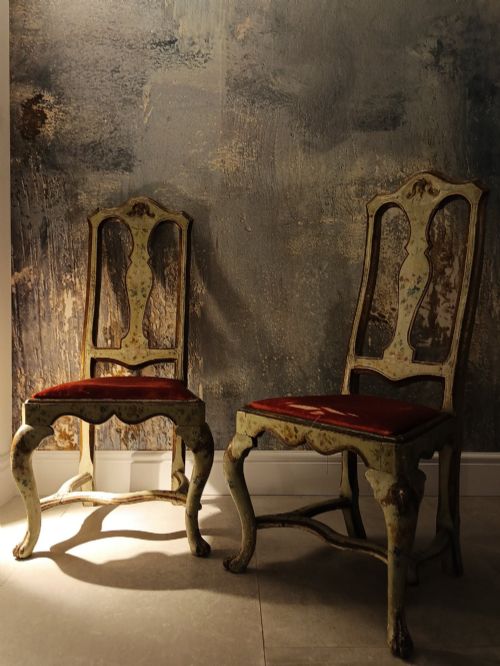
A red velvet dining chair brings deep tactile richness and historic timber frames to the table.
Red Velvet Dining Chair
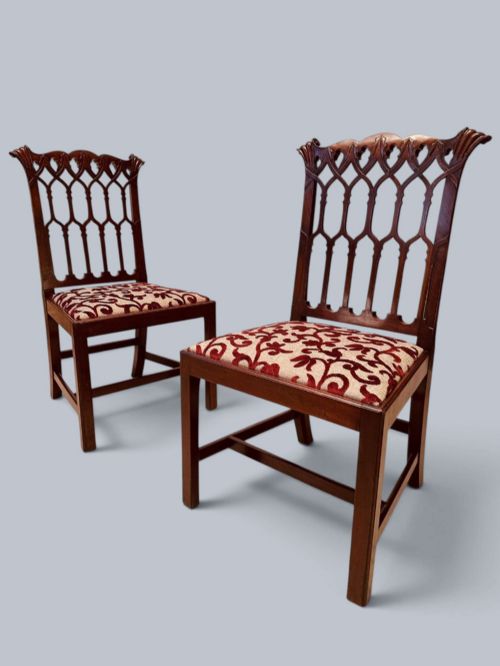
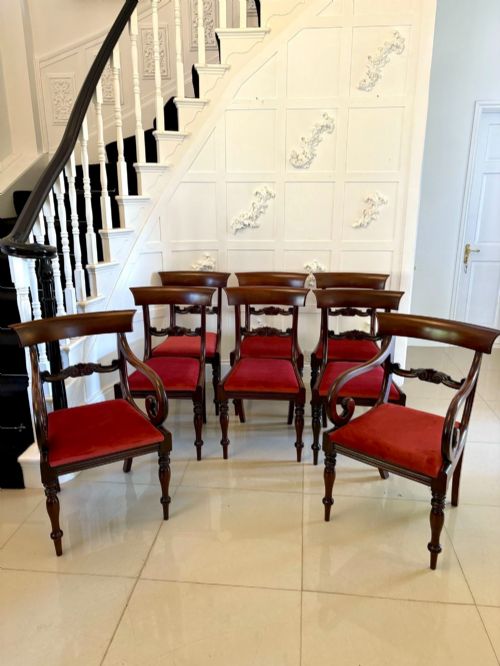
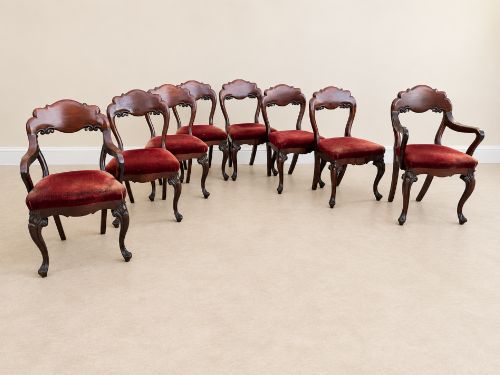
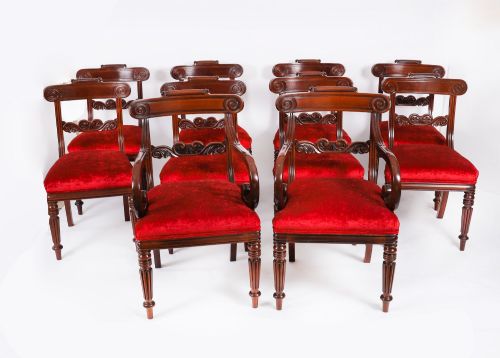
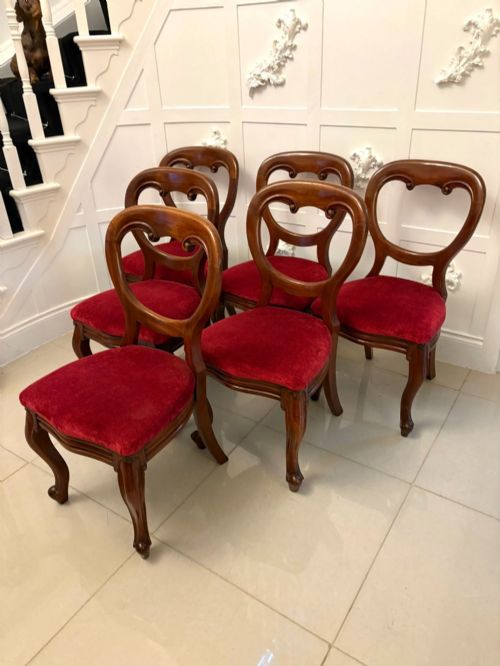
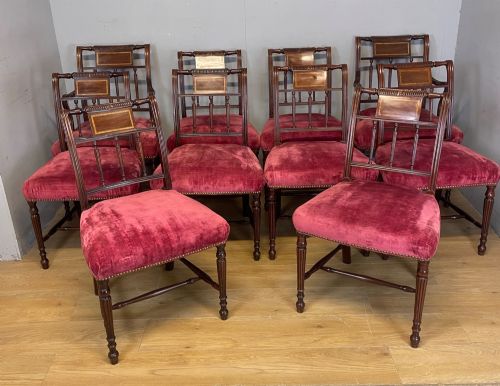
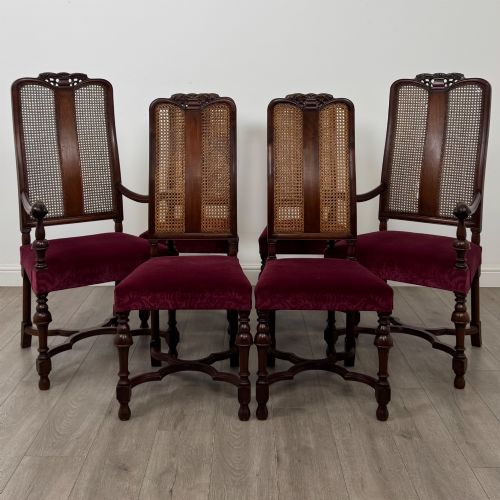
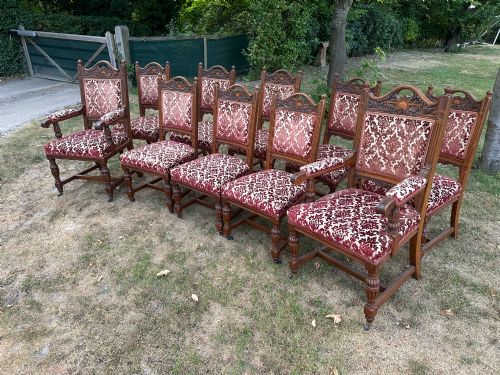
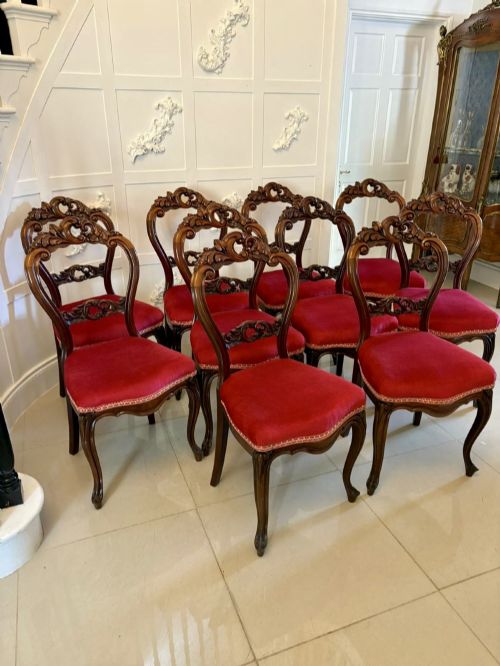
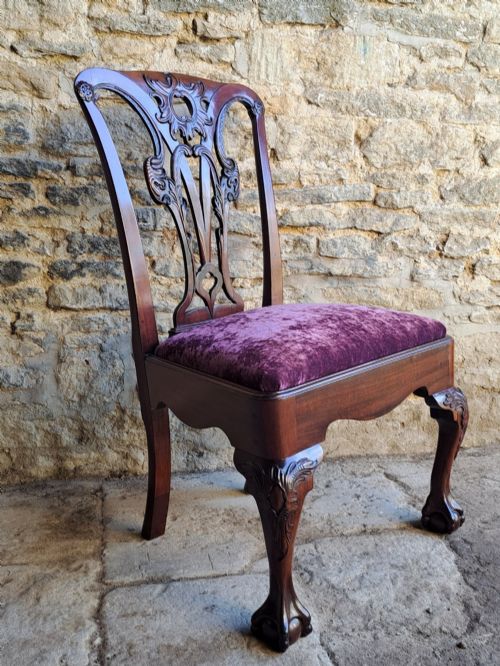
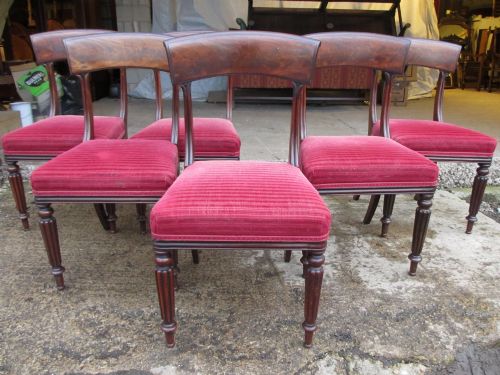
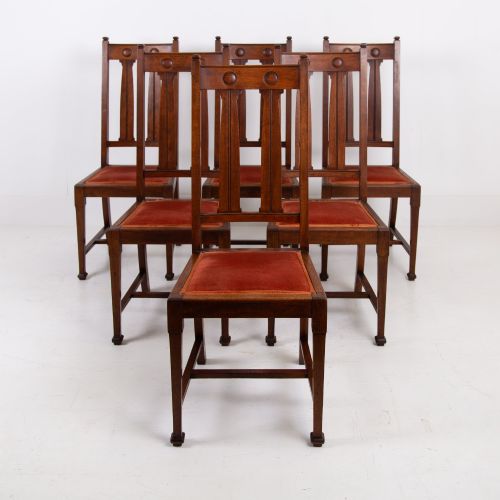
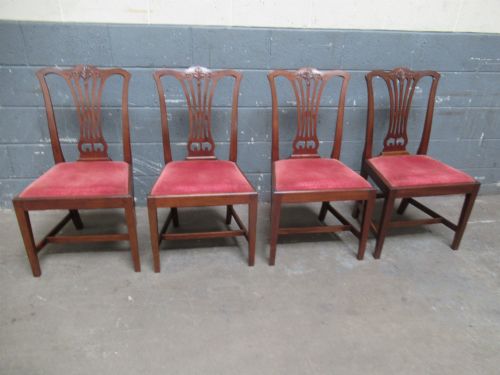
A red velvet dining chair unites period wooden frames with tactile textile upholstery, appearing in forms from single side chairs to large matched sets. You encounter these pieces across eighteenth-century, nineteenth-century, and Edwardian periods, encompassing styles from Regency and William IV to Gothic Revival and Chippendale style.
The timber frames supporting the red velvet upholstery are predominantly mahogany and oak, alongside walnut and rosewood. These chairs serve functional dining roles while displaying the carved backs, balloon shapes, and inlaid details characteristic of their respective eras.
Materials and technique
Frames are constructed from dense hardwoods like mahogany, oak, walnut, and rosewood, often shaped through traditional joinery and detailed carving. Skilled cabinetmakers utilised techniques such as inlay, cane backs, and structural bracing to ensure durability.
Upholstery involves textiles like velvet and fabric secured over traditional padding, complemented occasionally by brass accents. The combination of solid timber framing and tactile fabric defines the physical construction of these seating pieces.
Red Velvet Dining Chair Retail Price Guide 2026
Typical asking prices for red velvet dining chair among the pieces listed under this phrase on Sellingantiques today, from the lower quarter to the upper quarter. They describe what is for sale here now, not the wider market.
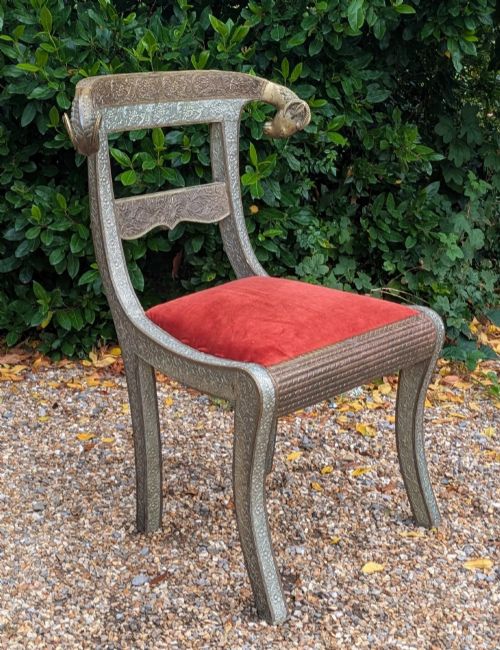
An unexpected Indian wedding chair featuring ram's heads and silver sits alongside the traditional British dining sets.
Quality variations
The refinement of the timber carving and the integrity of the wood frame distinguish the finer examples from standard production. Cabinetmaking precision in the joinery and the selection of figured mahogany or walnut elevate certain sets above others.
Consistency across a matched set and the harmony between the wooden structure and the textile upholstery dictate the standing of individual chairs. Maker attribution, such as work originating from established workshops, also influences distinction.
Holland And Sons·J Proctor
The Red Velvet Dining Chair Glossary
- Mahogany
- A durable tropical hardwood prized for its deep reddish-brown colour and stability in fine furniture construction. It forms the primary timber for the majority of these dining seats.
- Balloon back
- An open chair back shaped like a rounded balloon, popular during the Victorian era. This curved wooden frame provides comfortable lower back support.
- Carver chair
- An armchair designed for the head of a dining table, featuring supportive armrests. These pieces match the smaller side chairs in a dining set.
- Gothic Revival
- A nineteenth-century architectural and decorative style incorporating pointed arches and medieval motifs. Chairs in this style display dramatic carved wooden details.
Red Velvet Dining Chair: Frequently Asked Questions
What periods do these chairs represent?
The available selection spans from the eighteenth century through the nineteenth century into the Edwardian era. You will find pieces reflecting Georgian, Regency, William IV, and Victorian design principles.
Craftsmanship evolves across these periods, moving from earlier hand-carved mahogany forms to later revival styles and larger matched sets.
Which woods are most common?
Mahogany forms the primary timber across the listings, appearing alongside oak, walnut, and rosewood. These dense hardwoods provided the structural strength required for daily dining use.
Cabinetmakers selected specific timbers based on the prevailing style, utilising rich grain patterns to enhance the visual weight of the frames.
How do side chairs and carvers differ?
Side chairs are built without armrests to allow multiple seats to fit compactly around a dining table. Carver chairs feature integrated armrests and typically stand at the heads of the table.
Both forms share matching timber frames and upholstery to maintain a cohesive appearance in a dining room.
How do I care for velvet upholstery?
Velvet requires gentle brushing to maintain the pile and prevent flattening of the textile fibres over time. Protecting the fabric from direct sunlight preserves the depth of the red colour.
Regular light vacuuming with a soft attachment removes dust from the folds and preserves the tactile finish.