
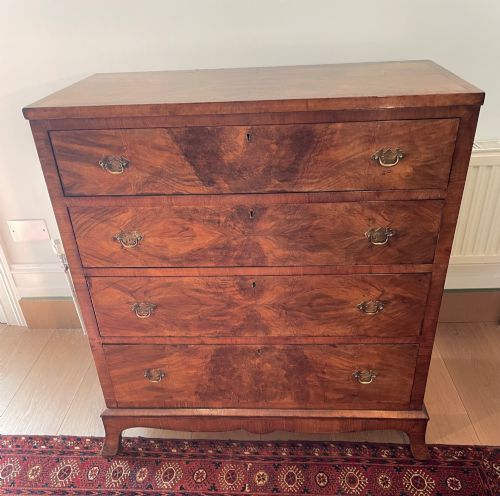
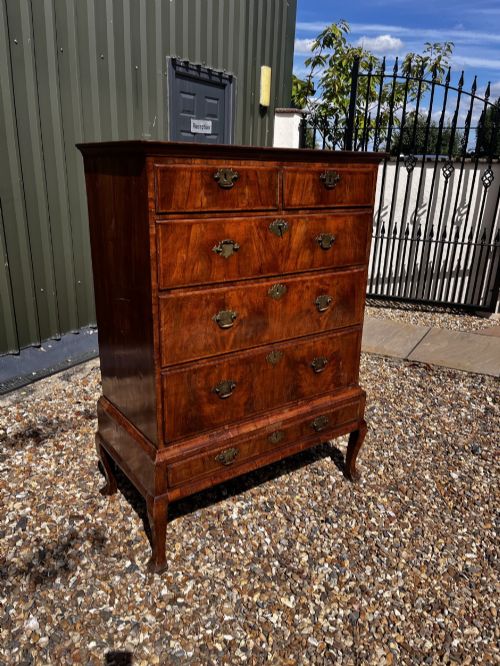
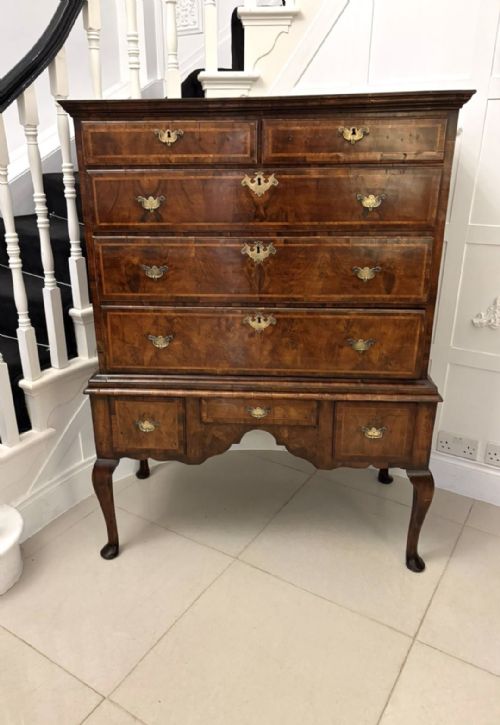
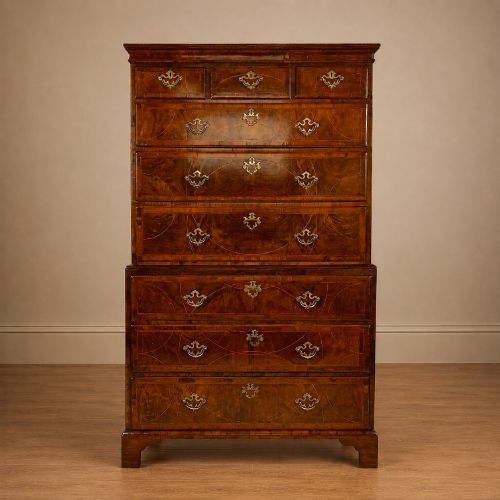
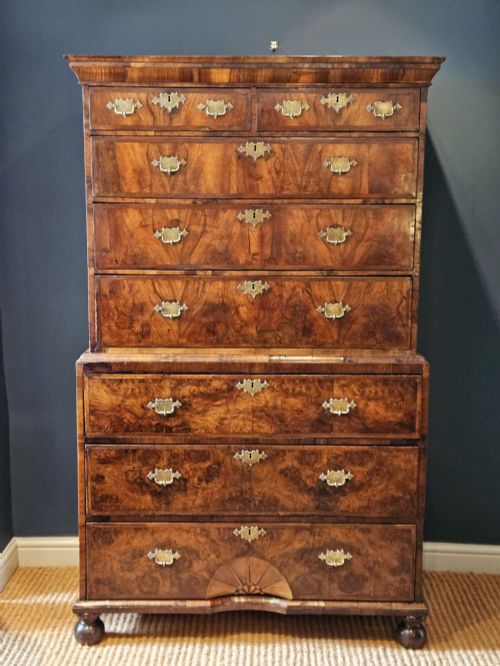
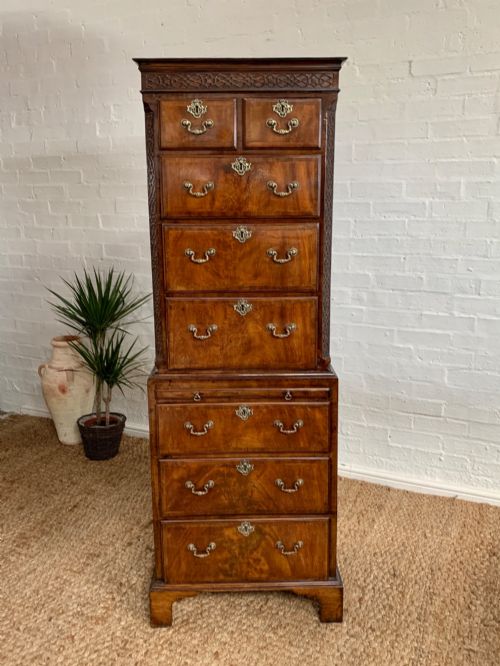
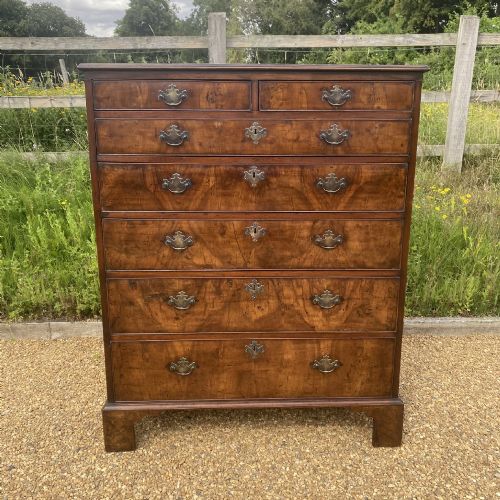
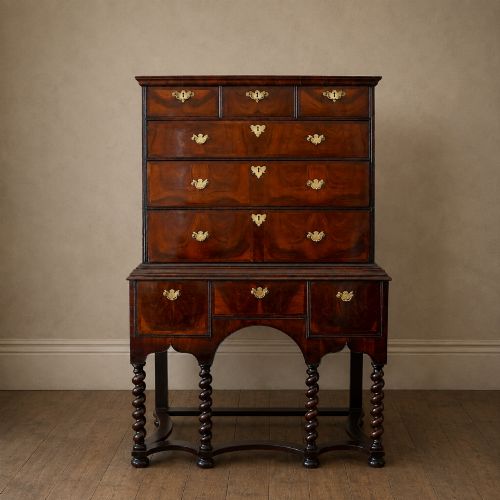
George I Walnut Chest
A george i walnut chest brings tactile warmth and restrained proportion to an interior through rich figured timbers.
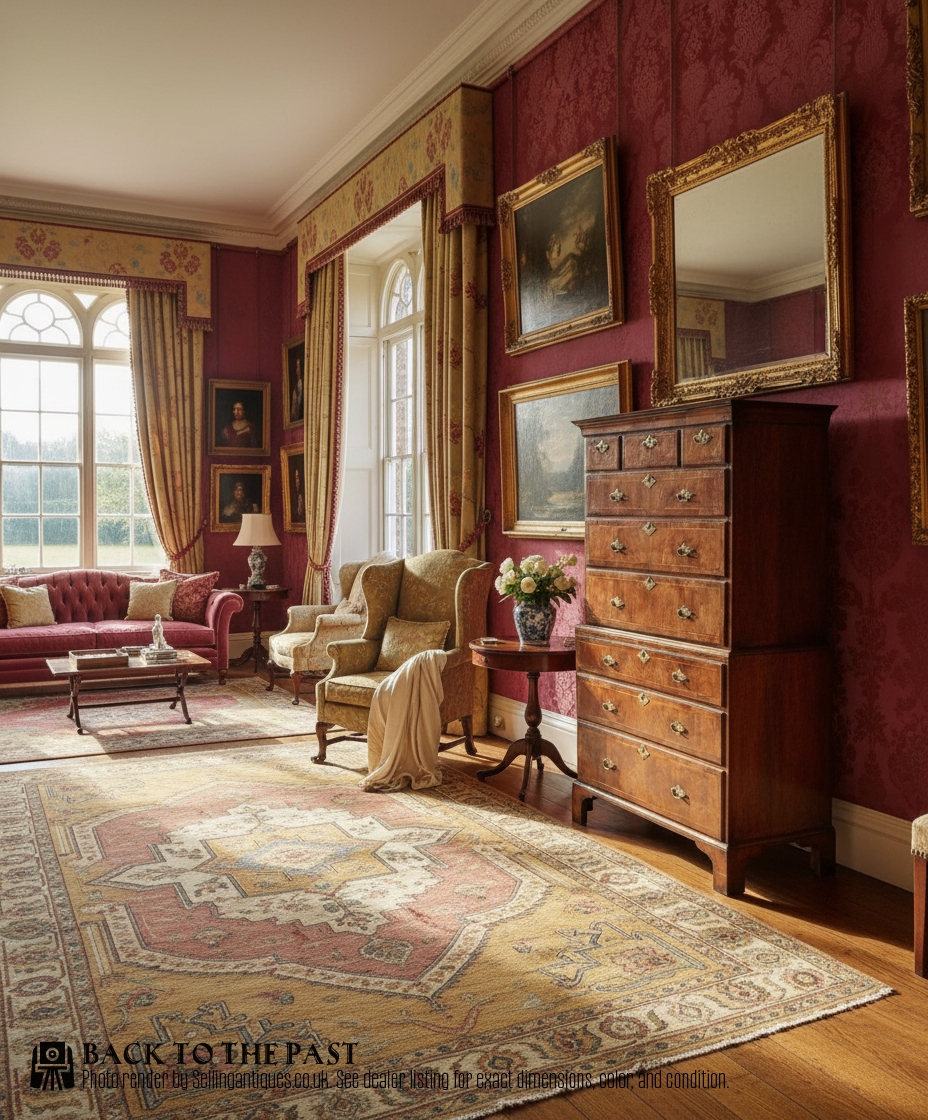
George I Walnut Chest
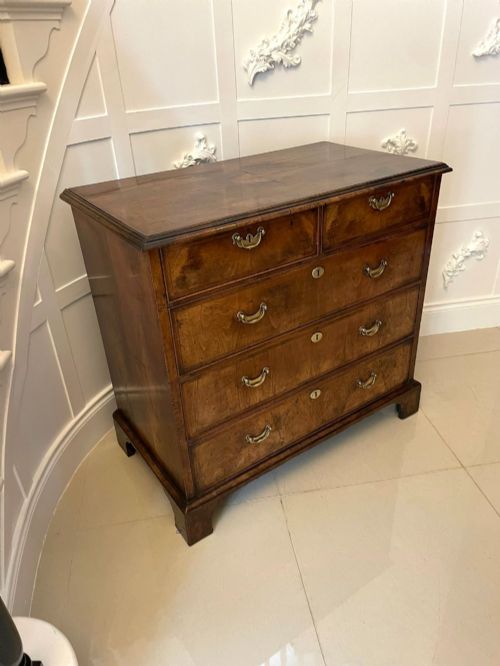
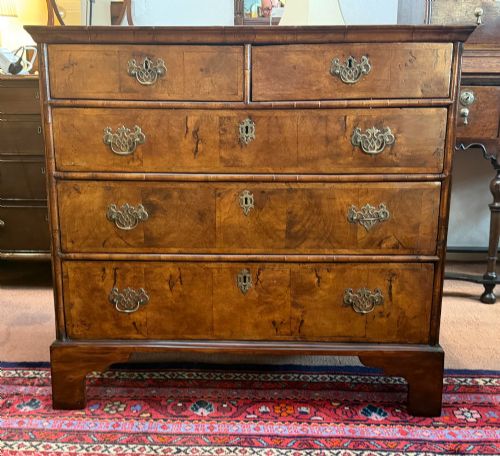
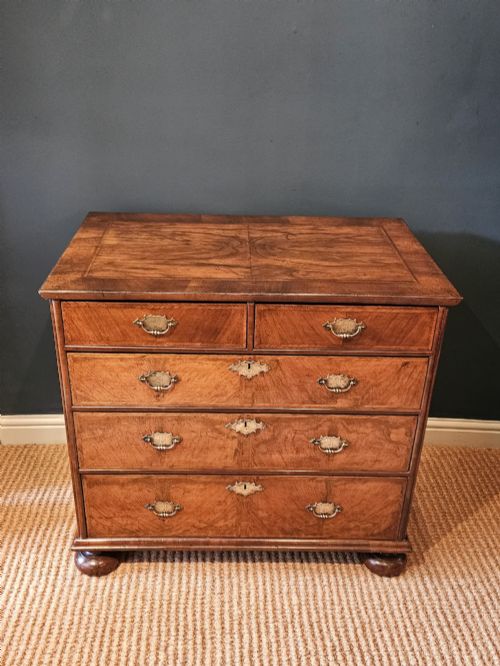
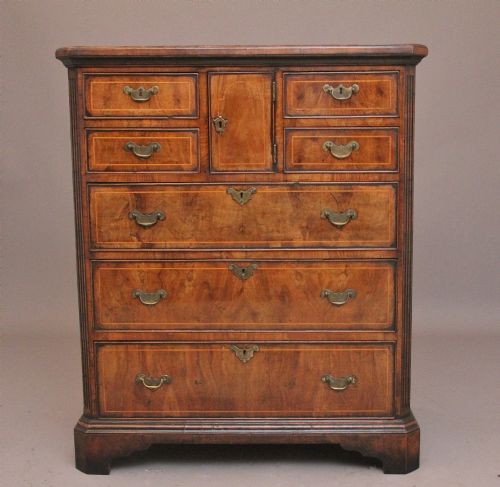
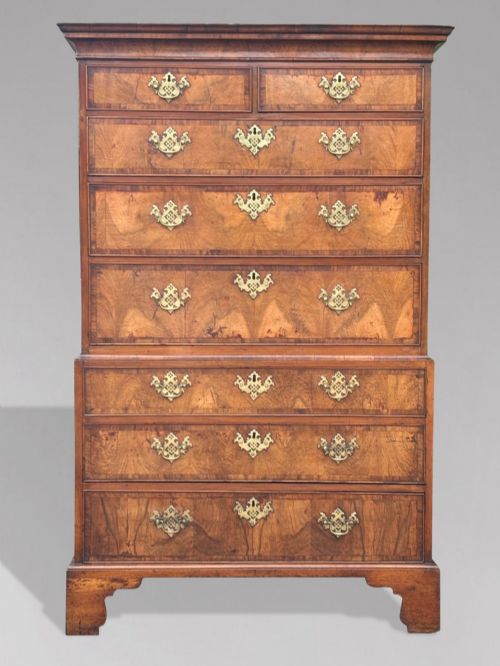
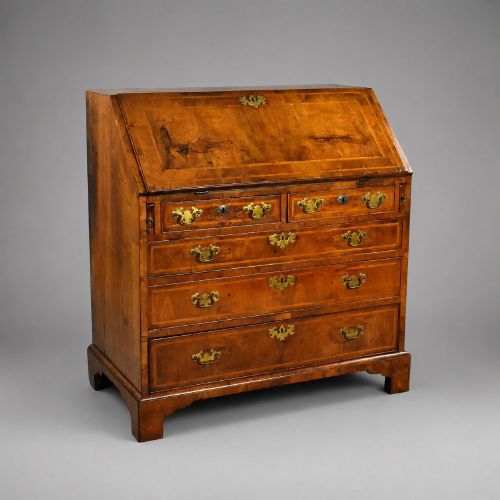
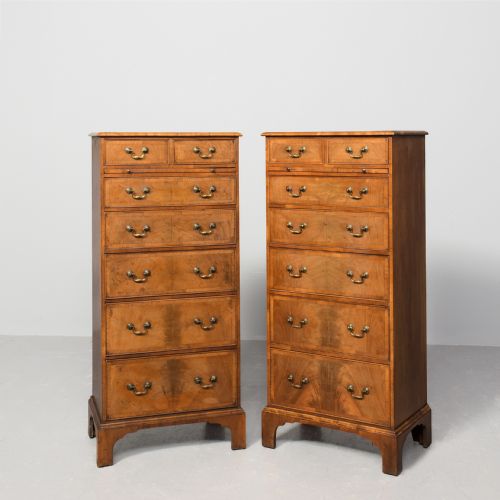
A george i walnut chest typically presents as a rectangular cabinet fitted with multiple horizontal drawers, often raised on a low stand or bracket feet. The form emerged during the early eighteenth century when walnut supplanted oak as the primary cabinet timber.
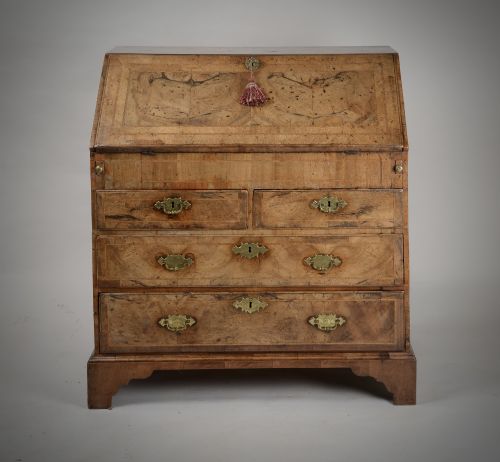
Buyers will encounter variations ranging from low chests and bachelors chests with folding tops to grander chest on chest and tallboy constructions. Bureau bookcases and kneehole dressing chests also appear within this stylistic grouping.
While many examples date to the eighteenth century under Georgian reigns, later revival pieces from the early twentieth century replicate the distinct timber veneers and banded borders of the original period.
How they were made
Cabinetmakers applied thin veneers of figured, burr or plain walnut over stable secondary woods such as oak and pine, utilising natural grain patterns for decorative effect. Crossbanding and herringbone stringing in lighter woods like boxwood framed the drawer fronts.
Drawer interiors typically feature softwood construction joined by hand-cut dovetails, while structural carcases rely on solid oak or pine framing. Brass drop handles and escutcheons secured with pins punctuate the facade.
Finishes developed through repeated waxing build a deep patina over the timber, highlighting the natural figure of the walnut without obscuring the grain.
Miniature versions measuring twenty centimetres high provide all the joinery of a full-scale chest for the smallest rooms.
What varies in quality
The choice of timber sets the visual standard, with heavily figured burr walnut and book-matched veneer panels representing the upper tier of execution. The precision of the herringbone banding and cross-cut borders further distinguishes finer workshops from standard production.
Proportion and scale dictate desirability, particularly in smaller formats such as neat-sized chests or bachelors chests where balanced dimensions require greater cabinetmaking skill. The retention of original brass hardware and untouched surface patination elevates an example above altered or heavily restored pieces.
The George I Walnut Chest Glossary
- Burr walnut
- Timber taken from the abnormal growth knots of a walnut tree, producing a swirling, highly decorative grain pattern used for veneering.
- Herringbone banding
- Narrow strips of veneer laid in alternating diagonal patterns to form a V-shape border around drawer edges.
- Chest on chest
- A tall storage unit comprising an upper chest of drawers stacked directly upon a slightly wider lower chest section.
- Bachelors chest
- A compact chest of drawers featuring a fold-over top or sliding shelf designed for writing.
- Crossbanding
- A border strip of veneer laid perpendicularly to the main grain of the panel to frame the surface.
George I Walnut Chest: Frequently Asked Questions
How do I care for a walnut chest?
Keep the timber away from direct heat sources and strong sunlight to prevent the veneers from drying and lifting. Regular application of traditional beeswax maintains the moisture and deepens the natural patina.
Avoid using modern silicone sprays or harsh chemical polishes, as these damage the historic finish. Clean surfaces gently with a soft, dry cloth.
Are these chests suitable for daily use?
Most sturdy examples function well for clothes storage or general organisation in a modern bedroom or living space. The internal drawers slide within traditional wooden runners that require gentle handling.
Smaller formats and delicate bachelors chests work effectively as hallway statement pieces or bedside storage. Care should be taken not to overload deep drawers to preserve the original softwood internal structures.
How do I spot a later revival chest?
Twentieth-century revival pieces often display machine-cut internal dovetails and modern secondary timbers behind the walnut veneers. The surface finish tends to feel more uniform compared to the varied patination accumulated over centuries.
Hardware fixings and screw types provide additional clues regarding the manufacturing date. Examining the drawer linings and backboards reveals the construction methods characteristic of later periods.
What is a feather-banded border?
Feather-banding consists of two strips of veneer cut diagonally and laid together to resemble the central shaft of a feather. Cabinetmakers used this delicate inlay technique to border drawer fronts on fine eighteenth-century furniture.
The resulting chevron pattern adds subtle visual framing to plain walnut surfaces. Spotting crisp, intact feather-banding indicates careful craftsmanship.