


French Porcelain Urns
When you search for french porcelain urns, you encounter decorative objects that blend ceramic bodies with gilt metal mounts to capture historic European tastes.

French Porcelain Urns
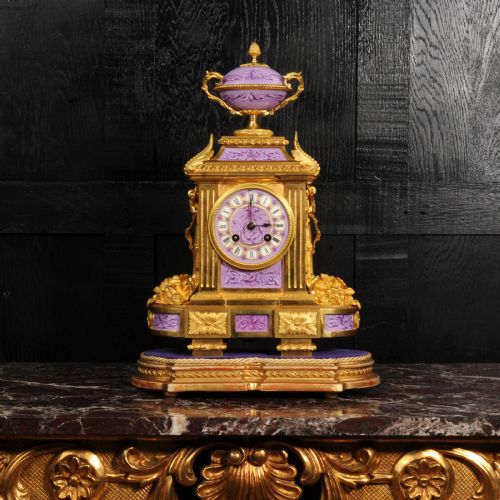
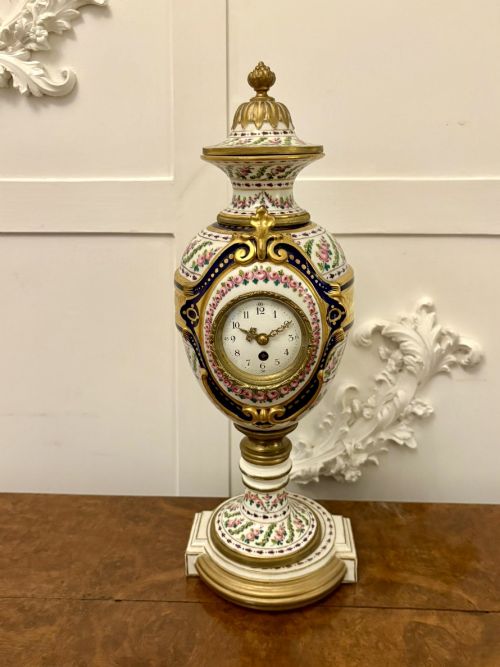
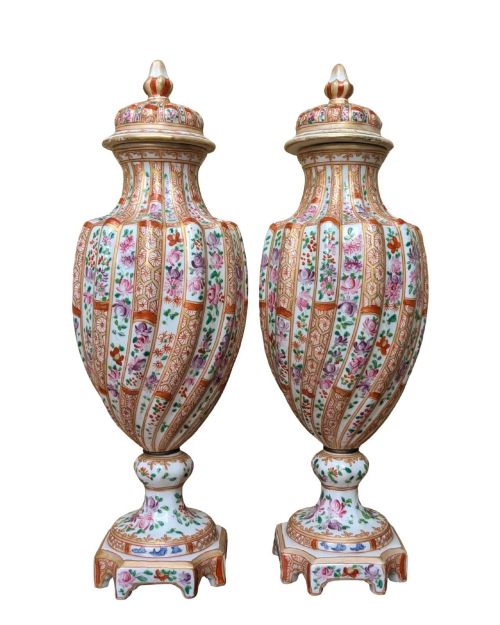
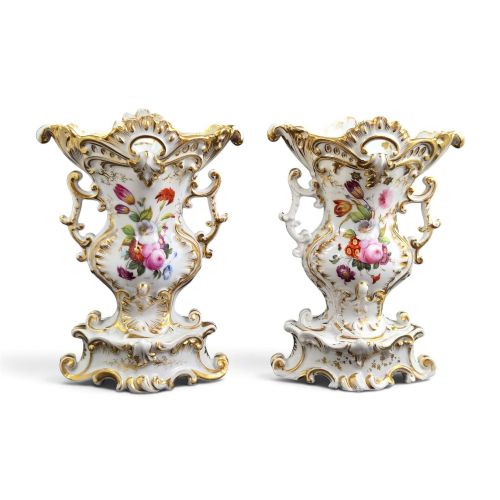
These items encompass decorative vessels, lidded jars, and clock cases produced primarily during the nineteenth century across periods such as the Regency and Napoleon III eras. The selection here leans heavily towards nineteenth-century examples decorated in styles that borrow from earlier Rococo, Neoclassical, and Louis XVI aesthetics.
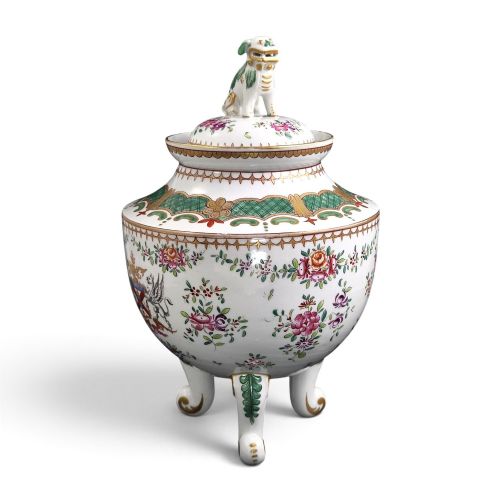
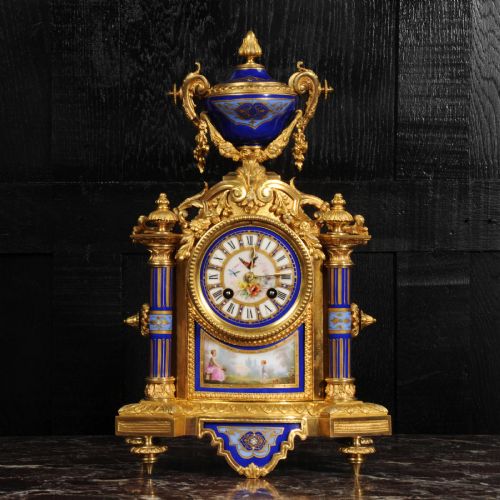
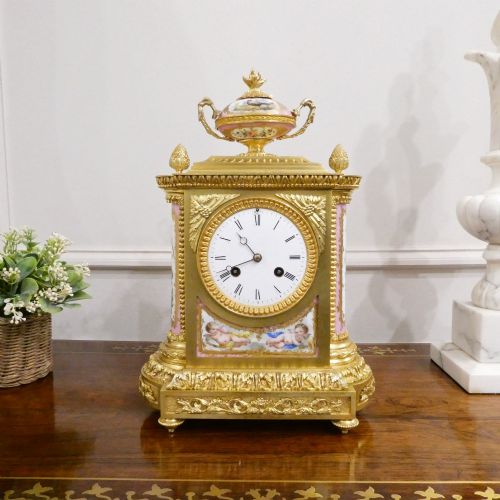
Makers and factories range from famous names like Samson of Paris and Jacob Petit to regional potteries producing faience and Paris porcelain. Forms span standard vases, potpourri containers, and cassolettes mounted on pedestals or integrated into mantel clock sets.
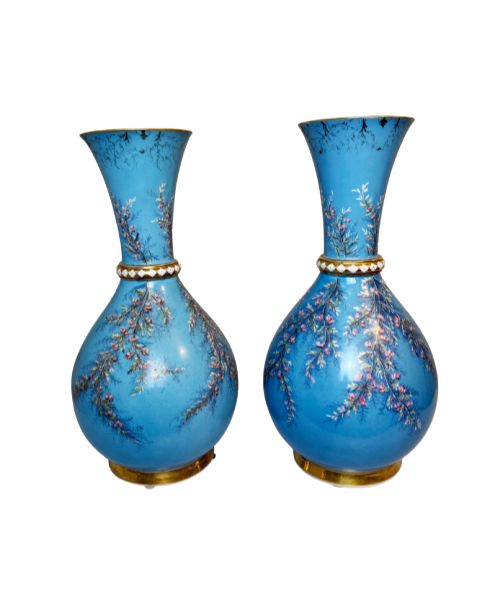
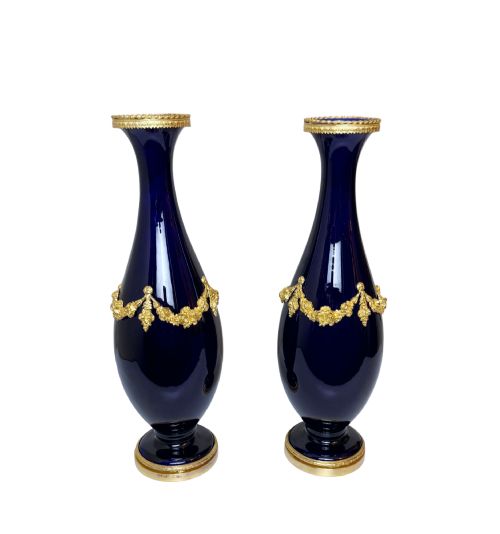
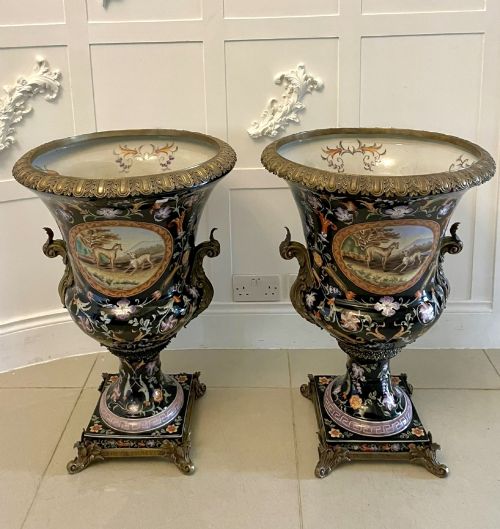
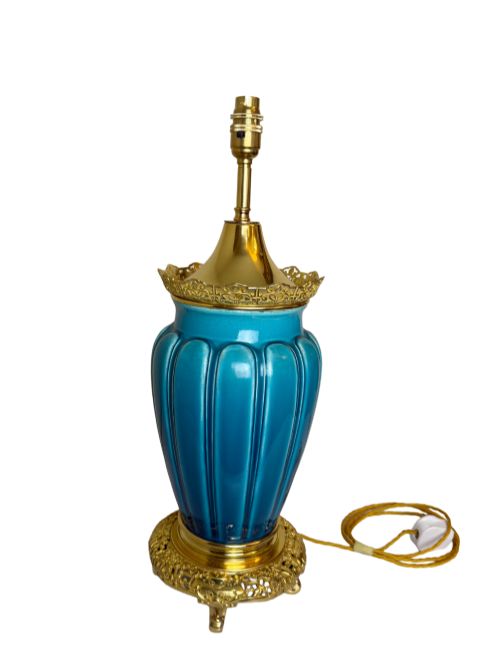
Buyers frequently encounter pairs of urns finished in blue, turquoise, or bleu céleste glazes, often accompanied by hand-painted figural scenes or armorial motifs. The forms bridge purely decorative display pieces and functional vessels adapted later into table lamps.
Materials and Construction Techniques
The primary bodies utilise hard-paste or soft-paste porcelain, earthenware, and faience, shaped through throwing, moulding, or slip-casting. Potters applied monochrome glazes in blue, green, and turquoise alongside hand-painted enamels and pate-sur-pate decoration.
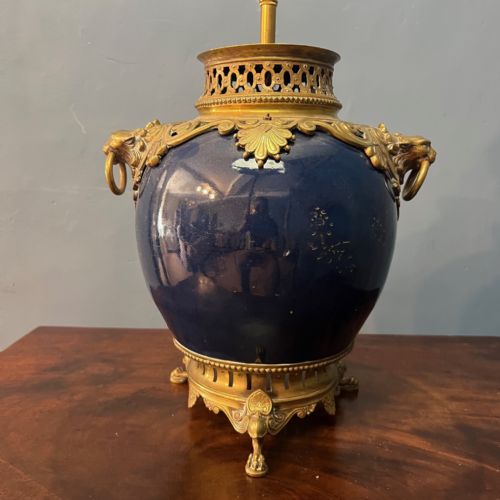
Metal mounts formed from ormolu, gilt bronze, brass, and gold leaf provide structural frames and decorative handles, collars, and bases. These bronze elements were cast, chased, and gilded before being fitted to the ceramic bodies with pins, screws, or adhesives.
French Porcelain Urns Retail Price Guide 2026
Typical asking prices for french porcelain urns among the pieces listed under this phrase on Sellingantiques today, from the lower quarter to the upper quarter. They describe what is for sale here now, not the wider market.
Some nineteenth-century French vases were manufactured specifically to commemorate Napoleon Bonaparte while masquerading as eighteenth-century imperial treasures.
Markers of Quality and Execution
Quality rests upon the crispness of the bronze chasing and the weight of the ormolu mounts relative to the porcelain body. Finer pieces display finely articulated cast mounts that fit the contours of the ceramic precisely rather than standard commercial fittings.
Hand-painted elements distinguish standard production wares from exhibition-quality works, with superior examples showing detailed brushwork in figural scenes and enamel saturation. The depth of the porcelain glaze and the precision of the firing process separate workshop output from factory standards.
Japy Freres·Jean-Baptiste Delettrez·Samson Paris·Jacob Petit·Achille Brocot
The French Porcelain Urns Glossary
- Ormolu
- A gold-coloured bronze alloy used for decorative mounts on furniture and ceramics. It involves applying a mercury-gold amalgam to cast bronze.
- Cassolette
- A vessel shaped like an urn that functions as a perfume burner or vase, often featuring a reversible lid. These items typically include pierced sections for releasing scents.
- Sèvres
- A French porcelain manufactory renowned for producing soft-paste and hard-paste luxury wares. Pieces in this style imitate its distinct glazes and gilt decorations.
- Bleu Céleste
- A bright sky-blue porcelain ground colour developed at the Sèvres factory during the eighteenth century. This glaze appears frequently on nineteenth-century revival pieces.
- Pate-sur-pate
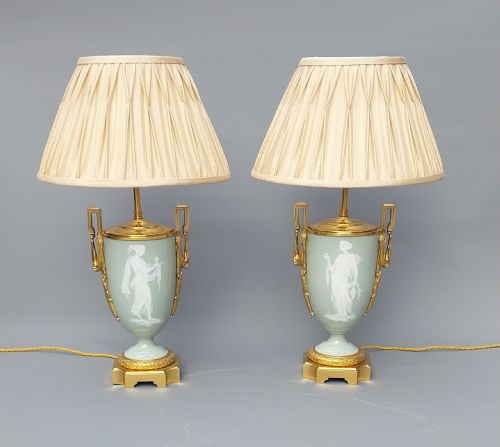
- A ceramic decoration technique where liquid clay is built up in successive layers on a contrasting body. This creates a low-relief cameo effect before firing.
French Porcelain Urns: Frequently Asked Questions
How were French porcelain urns used?
These vessels served primarily as decorative garnitures on mantelpieces, consoles, and sideboards within nineteenth-century drawing rooms. Some forms functioned as potpourri holders or cassolettes designed to fragrance domestic interiors.
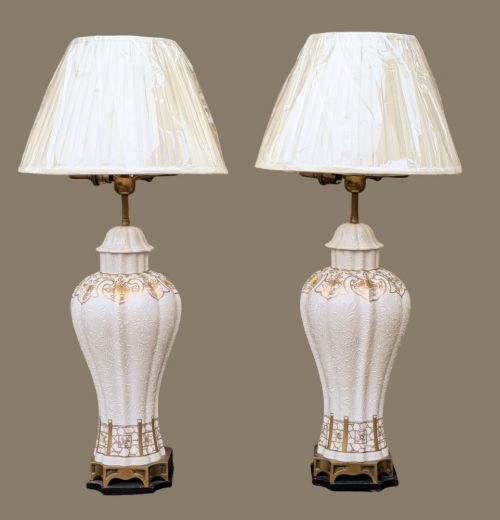
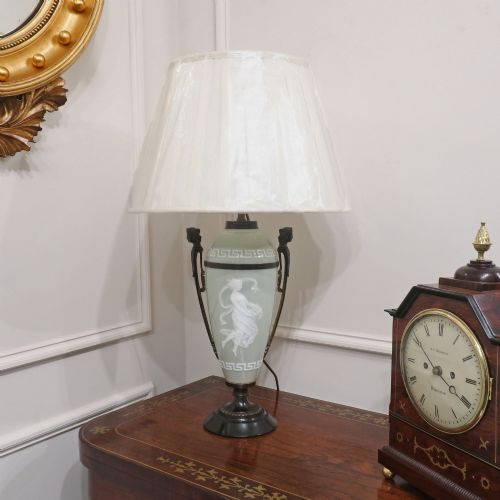
Over subsequent generations, many pairs were adapted into table lamps by running electrical wiring through the ceramic bodies and mounts. Their deployment shifted from formal interior ornamentation to ambient household lighting.
What styles dominate these pieces?
The inventory shows a strong presence of Rococo Revival, Louis XVI Style, and French Neoclassical designs. These aesthetic revivals drew inspiration from eighteenth-century court taste.
Other items reflect Chinoiserie influences, Napoleon III opulence, and occasional Art Nouveau experimentation. This mix illustrates how nineteenth-century makers reinterpreted historic European and global motifs.
How do I identify a Sèvres style piece?
Items described in the Sèvres style typically feature rich coloured grounds, such as bleu céleste or deep blues, paired with heavy gilt bronze or ormolu mounts. They often incorporate hand-painted reserves depicting pastoral or courtly scenes.
Many nineteenth-century French pieces emulate the famous factory's output without being official products of the royal Sèvres establishment. Examining the quality of the enamel work and the character of the gilt mounts helps contextualise the piece.
What is the difference between faience and porcelain?
Faience is a tin-glazed earthenware that offers an opaque, slightly porous body with a softer surface finish. It appears frequently in nineteenth-century decorative urns and vases.
Porcelain is a denser, vitrified ceramic fired at higher temperatures until non-porous. Hard-paste and soft-paste porcelain bodies present a whiter, more refined fracture and support sharper enamel painting.