

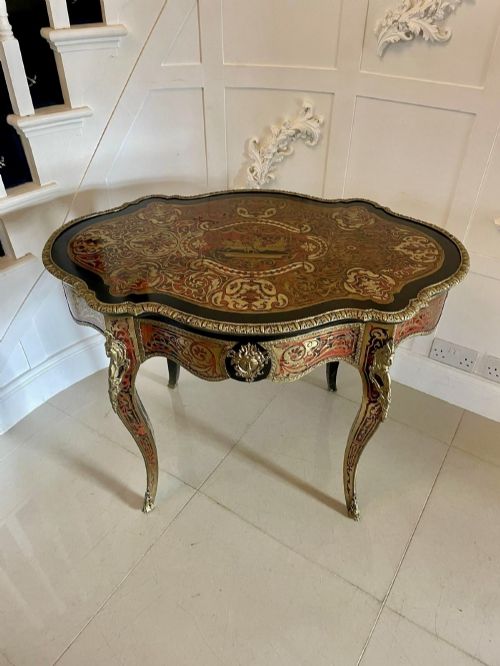
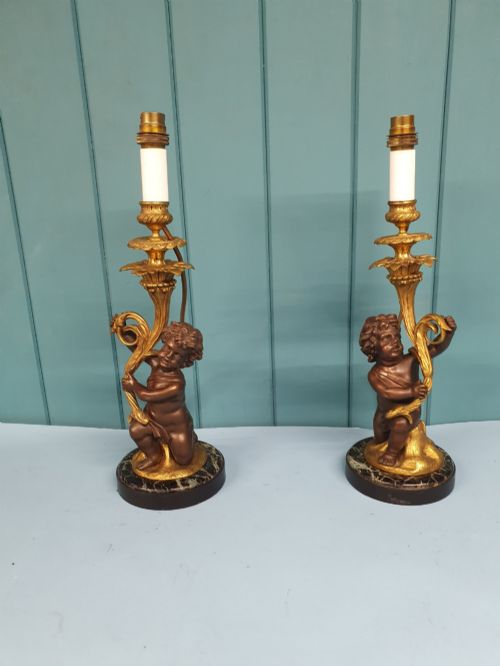
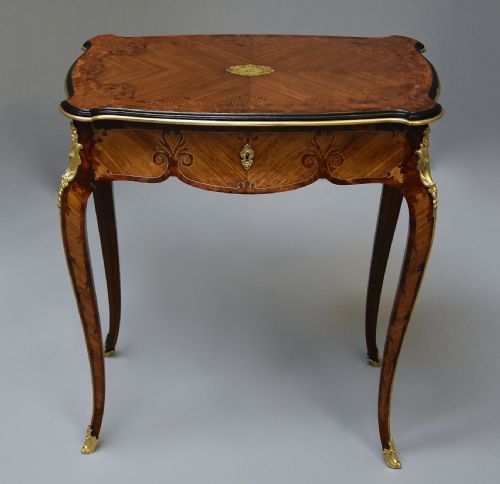
French Ormolu Side Table
When you look for a french ormolu side table, you find pieces that combine cabinet-making with cast gilt mounts to bring warmth and decorative presence to a room.
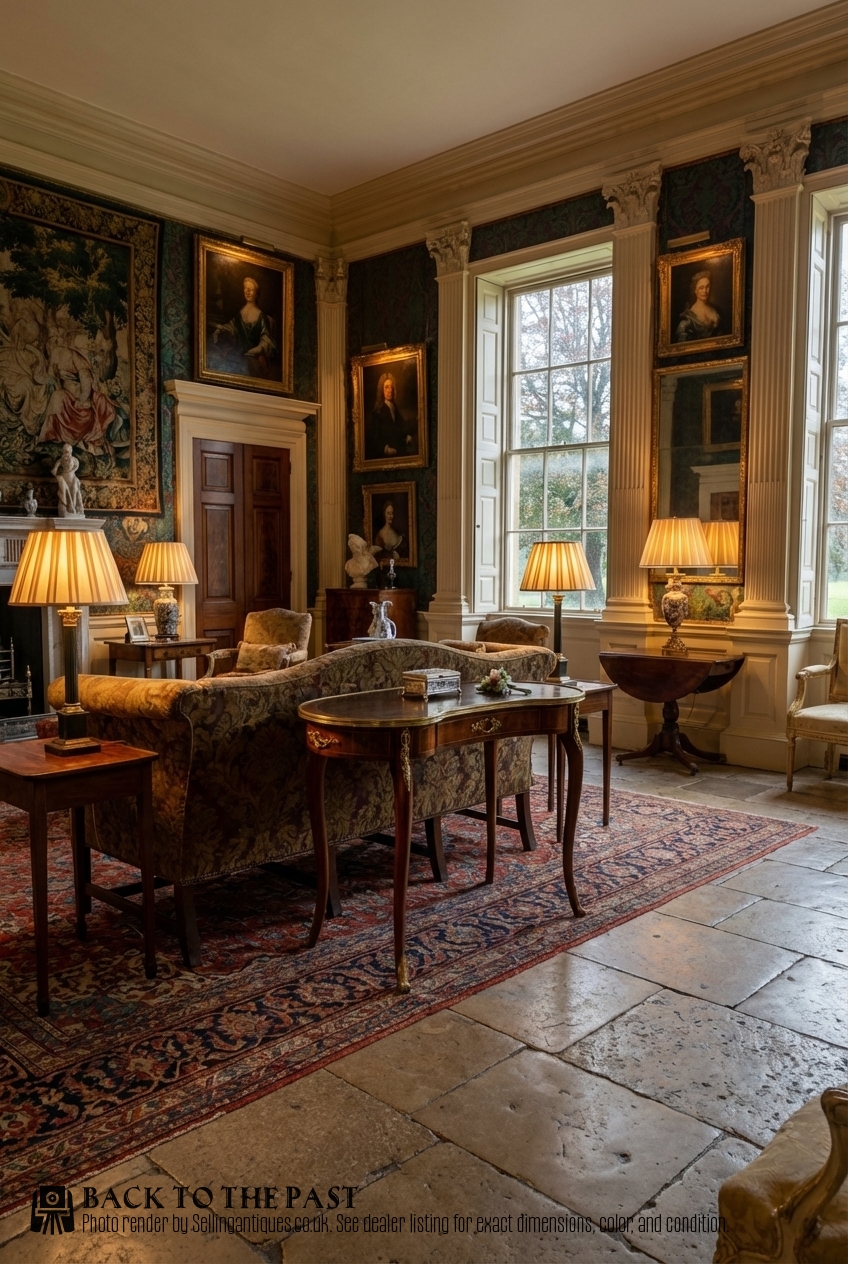
French Ormolu Side Table
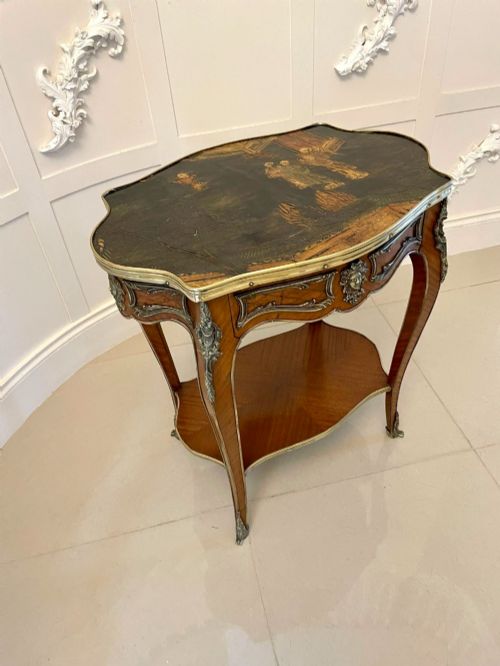
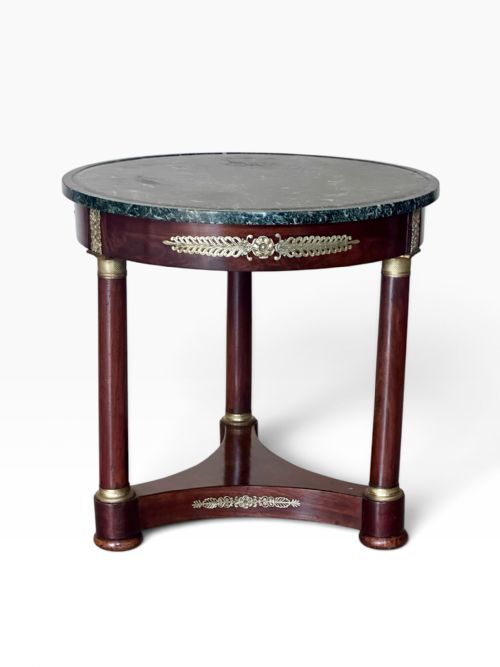
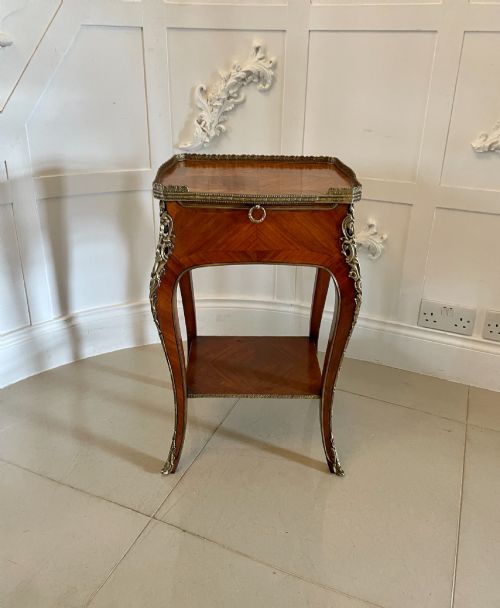
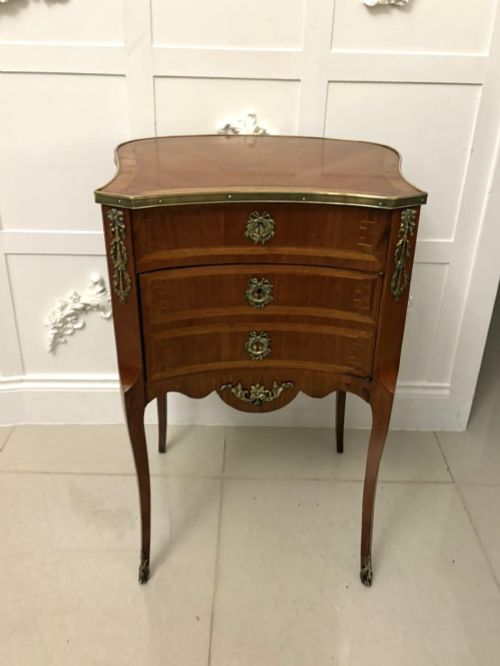
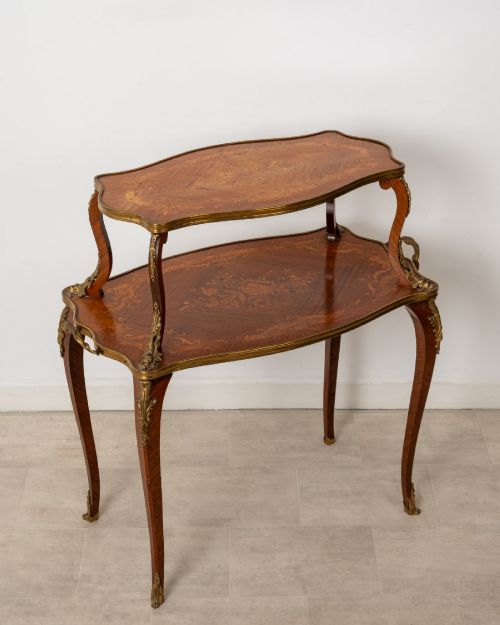
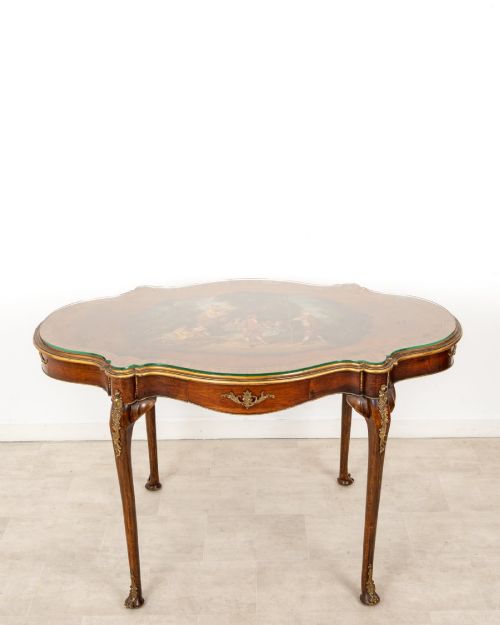
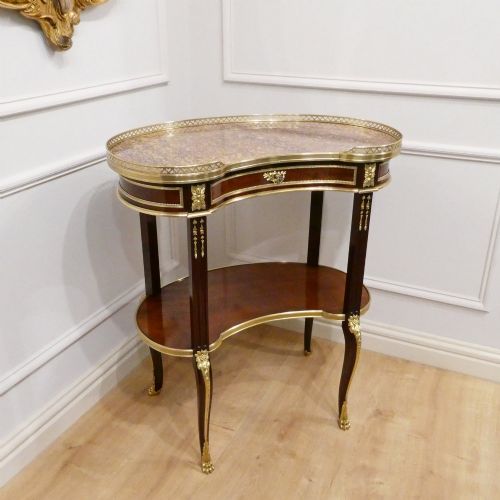
A french ormolu side table encompasses varied forms ranging from freestanding centre tables and writing desks to compact bedside cabinets and two-tier étagères. These items largely date from the nineteenth century into the early twentieth century, reflecting revivals of Louis XV and Louis XVI aesthetics alongside the Empire period.
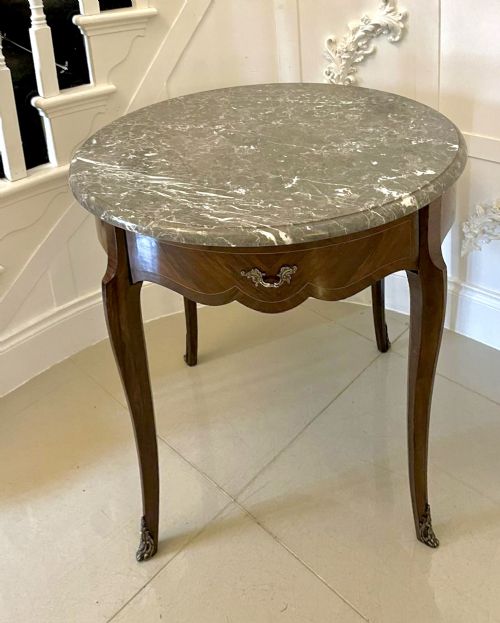
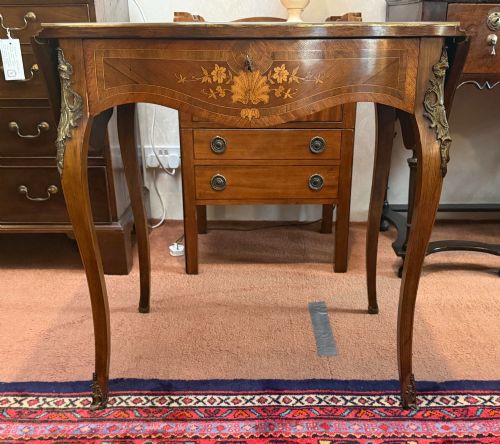
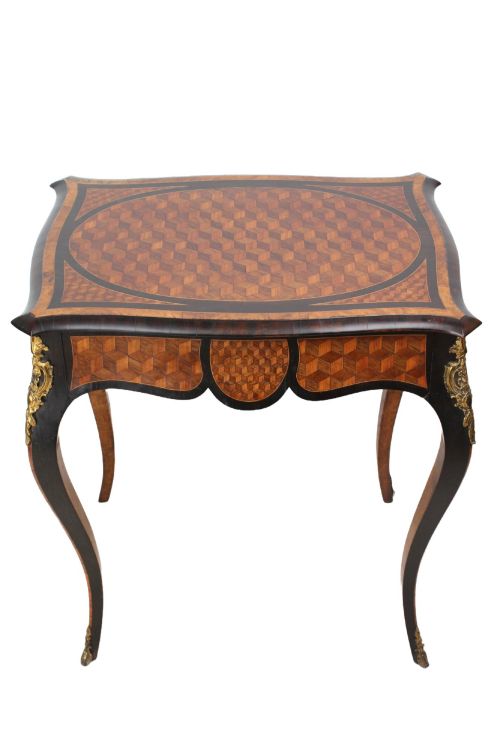
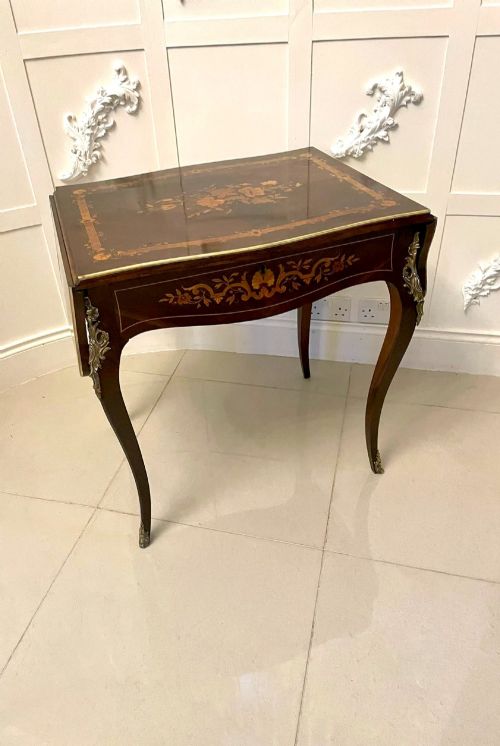
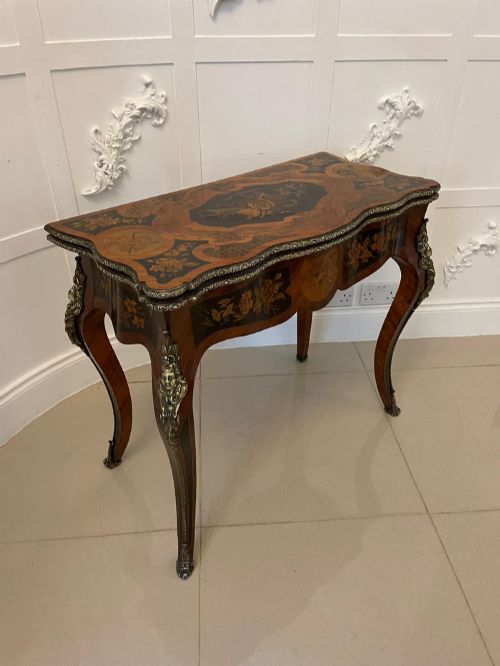
The versions most frequently met on this page are freestanding kingwood or mahogany tables featuring serpentine outlines, marquetry inlay, and cast bronze mounts. Many retain their original marble tops or leather writing surfaces, demonstrating the functional versatility demanded by nineteenth-century domestic interiors.
Materials and Construction
Cabinet-makers constructed carcass frames using native timbers like walnut and mahogany, overlaid with exotic veneers including kingwood, rosewood, and satinwood arranged in geometric parquetry or floral marquetry patterns. Brass and copper stringing frequently outlined these panels before the application of lacquer or polish.
Ormolu mounts - cast from bronze and given a gilt finish - were chased by hand to sharpen details on corners, apron mounts, and sabots, then secured to the wooden body with threaded screws or pins.
Some nineteenth-century tables include clever hidden compartments and spring-loaded drawers designed to store secret letters or jewellery away from prying eyes.
Evaluating Craftsmanship
Quality rests upon the crispness of the ormolu chasing and the depth of the timber veneers. Superior pieces display hand-chased bronze mounts where every leaf or scroll shows distinct texture, whereas lower grades rely on unrefined, commercially cast brass details.
The complexity of the underlying joinery and timber selection further separates standard production from exhibition-grade work. Desks and tables featuring sophisticated internal mechanisms, dense marquetry, and heavy native carcases indicate higher workshop standards.
JAS Shoolbred·Maison Millet·François Linke·Joseph-Emmanuel Zwiener·Edwards And Roberts·Alphonse Tahan·Louis Majorelle·Gillows
The French Ormolu Side Table Glossary
- Ormolu
- Gilded bronze used for decorative mounts on furniture. The technique involves applying a gold amalgam to cast bronze before heating to drive off the mercury.
- Marquetry
- The art of applying decorative veneer pieces to a structure to form pictorial designs. Cabinet-makers cut varied woods together to ensure tight joints.
- Parquetry
- Geometric wood-mosaic work used for flooring and furniture surfaces. Squares, lozenges, and triangles create repeating patterns across table tops.
- Gueridon
- A small round occasional table supported by a central pillar or multiple legs. Originating in seventeenth-century France, the form persisted across later revival periods.
French Ormolu Side Table: Frequently Asked Questions
What is a french ormolu side table used for?
These pieces served multiple domestic functions, operating as writing surfaces, bedside storage, or decorative display stands for lamps and clocks.
Their compact proportions allowed them to fit easily into corners, between windows, or beside seating arrangements in formal drawing rooms.
How do I care for marble tops?
Marble surfaces require simple dusting with a soft cloth and immediate blotting of liquid spills to prevent staining. Avoid acidic cleaning products that etch the polished stone.
Waxing is generally unnecessary for the marble itself, though the surrounding wood and ormolu mounts benefit from occasional gentle dusting.
How do I distinguish 19th-century pieces?
Nineteenth-century examples display hand-cut dovetails, older timber shrinkage patterns, and hand-chased ormolu mounts with patination acquired over decades.
Machine-made screws, bright modern lacquers, and uniform stampings often point towards later reproduction furniture rather than period production.
What is the difference between ormolu and brass?
Ormolu is mercury-gilded bronze that exhibits a warm, deep golden tone and sharp hand-chased detailing resulting from the softer properties of cast bronze.
Brass is a harder alloy of copper and zinc that tends to show a yellower metallic sheen and was frequently used for simpler stringing or standard hardware.