
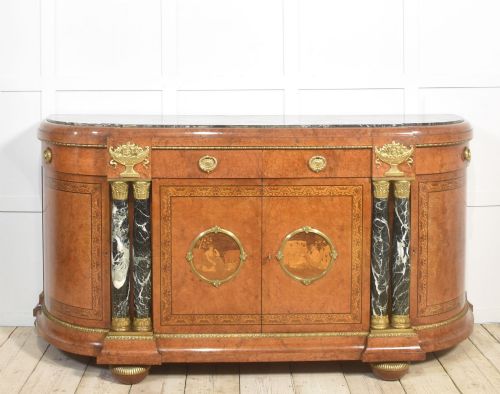


French Empire Sideboard
A french empire sideboard brings architectural symmetry and polished mahogany into a room, defined by restrained classical proportions.
French Empire Sideboard
A french empire sideboard stands as a substantial storage piece grounded in neoclassical design, typically featuring rich mahogany or ebonised wood. These items emerge from nineteenth-century workshops, carrying the formal dignity associated with the period.
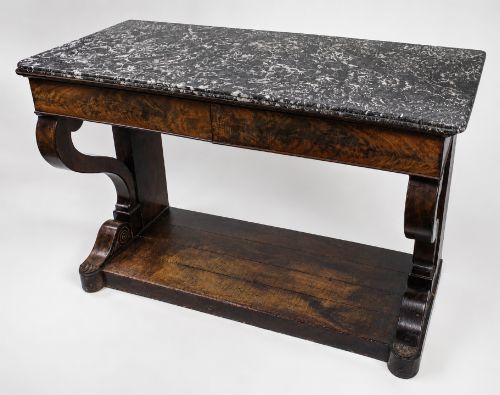
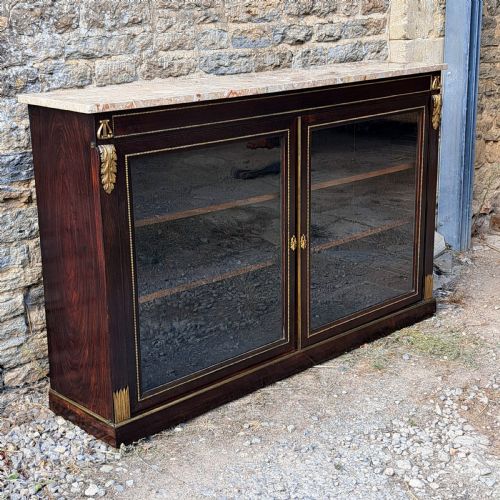
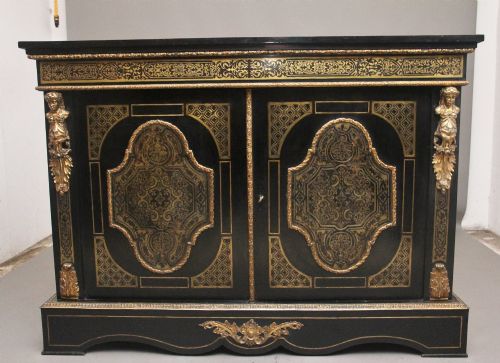
The versions most commonly met on this page include mahogany chiffoniers, marble-topped side cabinets, and enfilades built in the French Empire or Napoleon III styles. They provide deep cupboard space beneath a functional surface, often accented with dark stone.
Makers shaped these forms with strict rectangular lines, flat pilasters, and heavy cornices, prioritising architectural weight over organic curves. Buyers select them to anchor a dining room or hallway with disciplined nineteenth-century presence.
Materials and construction
Cabinetmakers constructed these pieces primarily from dense mahogany or walnut carcasses, frequently applying ebonised finishes to mimic exotic timber. Structural stability relied on thick planking and precise joinery to support heavy stone surfaces.
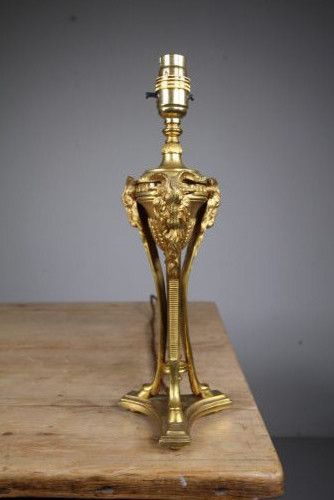
Mounts of gilt bronze, brass, and ormolu decorate the corners, keyhole escutcheons, and door frames. Marble or slate tops add significant weight and provide a cool, durable working surface.
Surfaces received hand-rubbed French polish to highlight the grain of the mahogany or rosewood, while metal mounts were chased and fire-gilt to contrast sharply against the dark wood.
Brass ram heads occasionally peer from corners, watching dinner parties unfold with steady nineteenth-century composure.
Markers of quality
Quality rests upon the crispness of the cast ormolu mounts and the thickness of the marble or slate slab fitted to the top. Superior examples display deeply chased bronze details rather than flat, pressed metal.
The selection of timber grain on the primary doors distinguishes better workshops from standard production. Cabinetmakers who matched flame mahogany veneers across multiple doors achieved a balanced visual rhythm.
Internal construction, including solid mahogany drawer linings and robust locking mechanisms with original keys, separates finer pieces from simpler utility cabinets.
Edmond Poteau
The French Empire Sideboard Glossary
- Ormolu
- Gilt bronze mounted onto furniture or lighting. This technique involves applying a mercury and gold amalgam to bronze before heating.
- Chiffonier
- A tall sideboard or low cabinet with drawers and doors. It provides enclosed storage for dining silver or linens.
- Enfilade
- A long sideboard or suite of rooms aligned in a straight row. In furniture, it denotes an extended low cabinet with multiple doors.
- Ebonised
- Wood stained or painted black to imitate ebony. This finish gained popularity during the nineteenth century for formal neoclassical pieces.
- Commode a porte
- A cabinet with doors enclosing shelves or drawers. It stands lower than a traditional chiffonier and often carries a marble top.
French Empire Sideboard: Frequently Asked Questions
How do I identify a true period french empire sideboard?
Look for heavy mahogany timbers, original fire-gilt ormolu mounts, and structural joinery consistent with nineteenth-century French cabinetmaking.
Check for marble tops fitted directly to the wooden frame without modern secondary bracing.
Where should I place a french empire sideboard?
These pieces suit dining rooms, large hallways, or living spaces where their architectural proportions can anchor the room.
Ensure the floor is level and strong enough to support the combined weight of dense hardwood and heavy marble.
What is the difference between a chiffonier and a sideboard?
A chiffonier typically incorporates a combination of drawers and enclosed cupboard space within a taller, narrower vertical format.
Sideboards span wider horizontal dimensions, designed primarily for serving food and storing larger dining accessories.
How do I clean the marble top?
Wipe the surface with a damp cloth and mild, neutral soap, avoiding acidic cleaners that etch polished stone.
Dry thoroughly with a soft cloth to preserve the finish against moisture damage.