

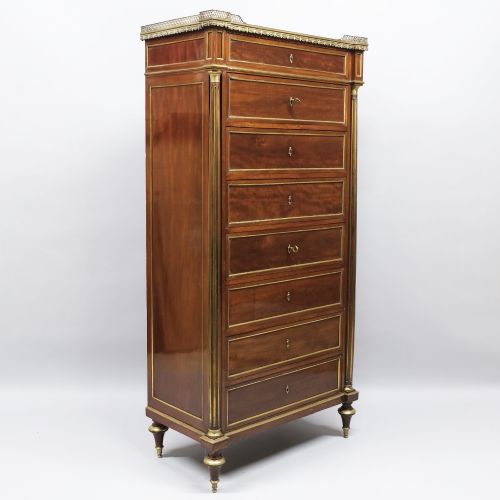


Antique French Chiffonier
These antique french chiffonier pieces are timber storage cabinets from the nineteenth century and the early twentieth century that bring refined utility to any room.
Antique French Chiffonier
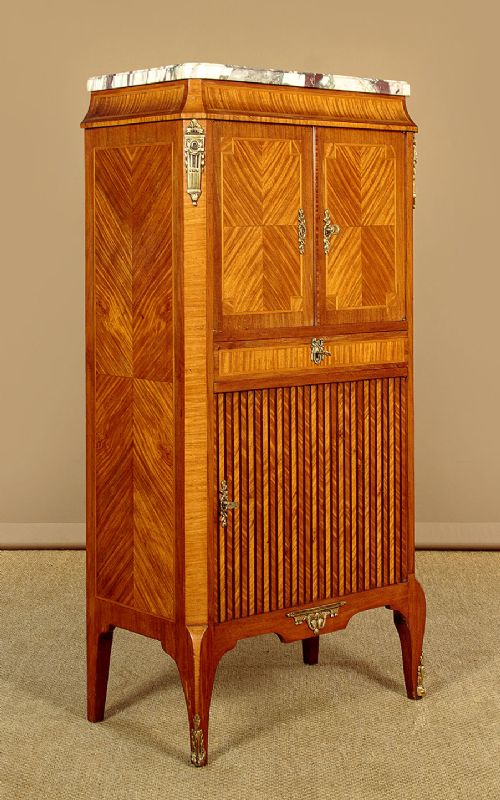
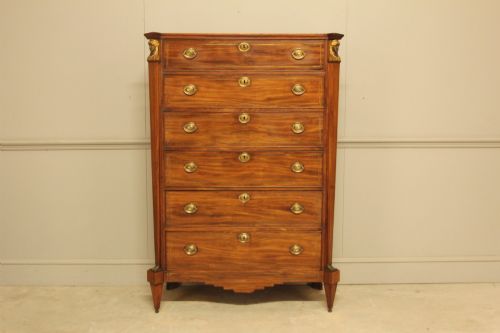
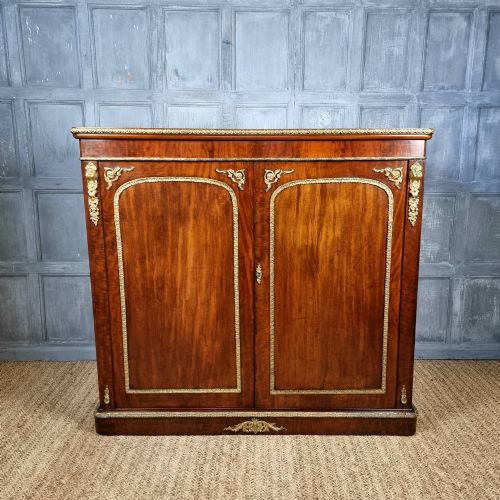
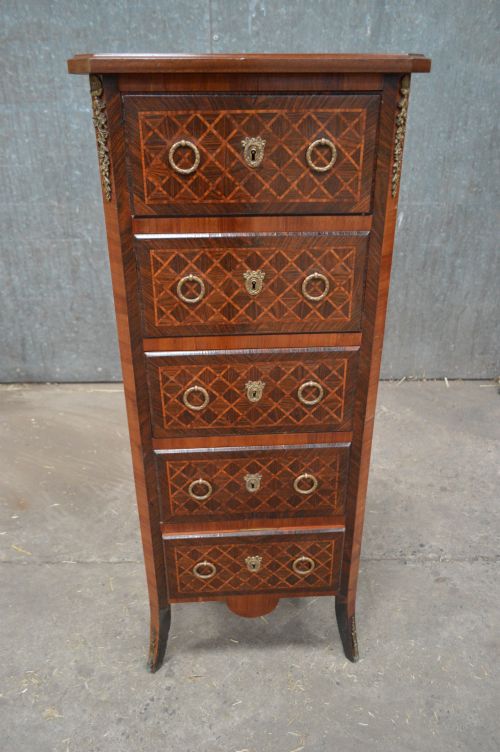
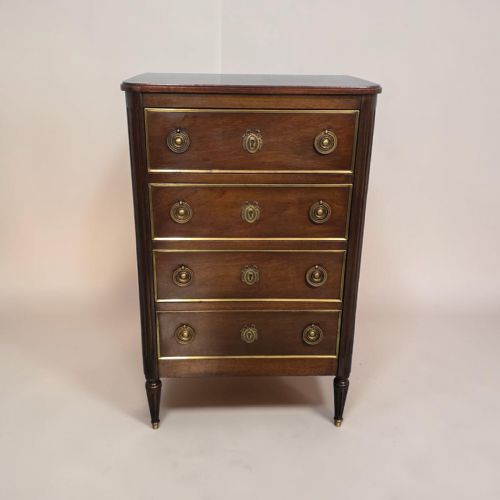
An antique french chiffonier is a low storage cabinet designed for domestic utility, appearing in various revival styles including Louis XVI, Louis Philippe, and French Empire. These pieces function as side cabinets, chests of drawers, and semainiers, offering enclosed storage with surface display space.
The pieces on this page span the nineteenth century and the early twentieth century, showing regional interpretations such as French Provincial alongside grander urban revival forms. Buyers frequently encounter side cabinets and chests of drawers featuring characteristic timber construction and decorative mounts.
How they were made
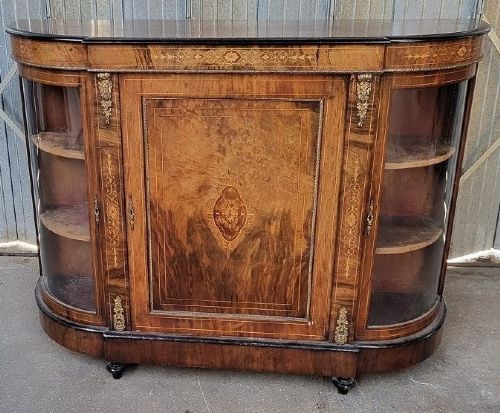
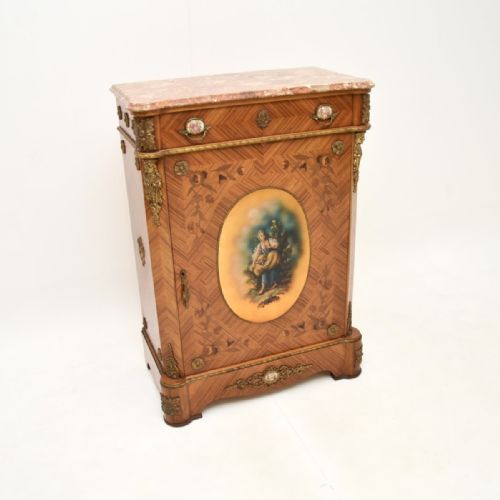
Cabinet makers utilised select hardwoods such as walnut, rosewood, and oak, often pairing the primary timber with painted panels, marble tops, and glass. Construction relied on traditional joinery methods suited to housing drawers and doors securely.
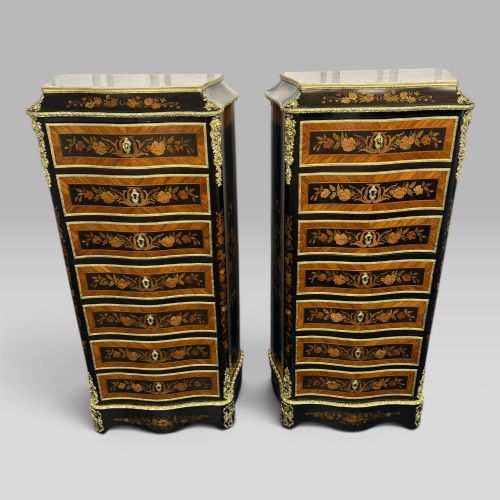
Decorative embellishments include cast brass and ormolu mounts, hand-carved details, and painted finishes applied to the timber surfaces. These materials reflect the aesthetic preferences of the nineteenth century and subsequent revival periods.
Antique French Chiffonier Retail Price Guide 2026
Typical asking prices for french chiffonier among the pieces listed under this phrase on Sellingantiques today, from the lower quarter to the upper quarter. They describe what is for sale here now, not the wider market.
Listings feature pieces spanning the nineteenth century, nineteen hundred, and nineteen thirty, constructed from walnut, rosewood, oak, and painted wood.
What varies in quality
Quality in these cabinets rests upon the choice of timber and the precision of the joinery, distinguishing finely figured rosewood and walnut from simpler painted wood structures. The integration of auxiliary materials like marble tops and ormolu mounts further separates standard utilitarian pieces from more ambitious revival work.
The refinement of carved elements and the preservation of original painted panels dictate the visual distinction across the range. Pieces retaining their original mounts and structural integrity demonstrate the sustained skill of the maker.
The Antique French Chiffonier Glossary
- Semainier
- A tall chest of drawers traditionally designed with seven drawers, one for each day of the week. This form provides vertical storage while maintaining a compact footprint.
- Ormolu
- Gilded bronze applied to furniture as decorative mounts and feet. This technique adds metallic contrast to timber surfaces.
- Louis XVI Style
- A revival style characterised by neoclassical restraint, straight lines, and symmetrical ornamentation. It draws inspiration from the late eighteenth century.
- French Empire
- A heavy, classical style influenced by ancient Roman and Greek design, utilising dark woods and prominent metal mounts. It conveys an imposing architectural presence.
- Buffet Cabinet
- A large storage piece with lower cupboards and often an upper section or carved top. It serves as both a sideboard and a display surface.
Antique French Chiffonier: Frequently Asked Questions
What is an antique french chiffonier used for?
These cabinets serve as practical storage furniture for living spaces, dining rooms, and bedrooms, holding tableware, linens, or daily items. The flat top surface also provides space for lamps, books, or decorative objects.
Historically placed against walls for convenient access, they continue to function as versatile storage units in modern homes while adding period character.
How do I identify a Louis XVI style cabinet?
Louis XVI style pieces feature straighter structural lines, neoclassical symmetry, and restrained ornamentation compared to earlier, more exuberant rococo designs. They often incorporate classical motifs and disciplined proportions.
Examining the mountings, leg shape, and overall silhouette helps confirm this specific revival aesthetic within the nineteenth or twentieth century.
What materials are typical for these cabinets?
The primary materials include walnut, rosewood, and oak, frequently combined with marble tops, glass, and cast brass or ormolu mounts. Painted wood finishes also appear on specific provincial and revival pieces.
These varied materials dictate the visual weight and textural contrast of each individual cabinet.
How do I care for a walnut or rosewood chiffonier?
Protect the timber and polished surfaces by keeping the cabinet away from direct sunlight and fluctuating heat sources. Regular dusting with a soft, dry cloth preserves the finish without harming the wood.
Marble tops require gentle cleaning with appropriate stone-safe solutions to prevent staining while maintaining the natural grain.