
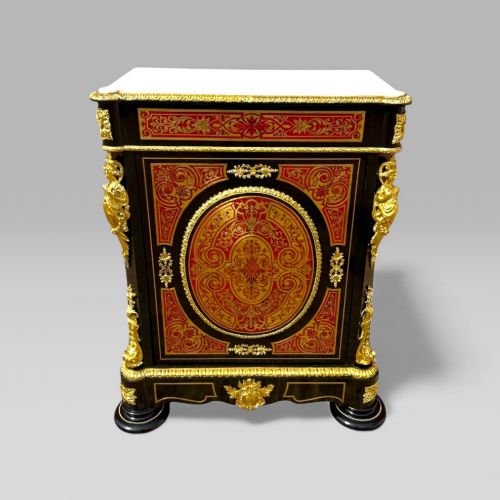


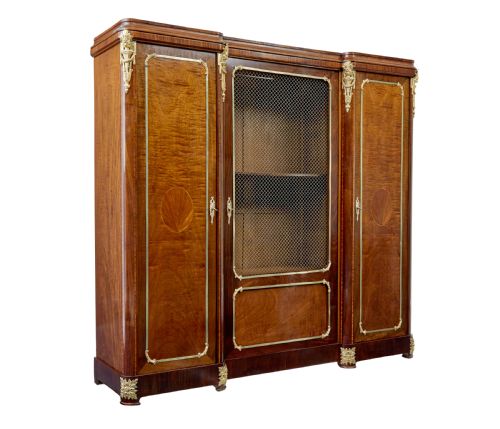
French Empire Side Cabinet
A french empire side cabinet brings severe architectural lines and rich timber into a room, offering practical surface space alongside a defined period character.
French Empire Side Cabinet
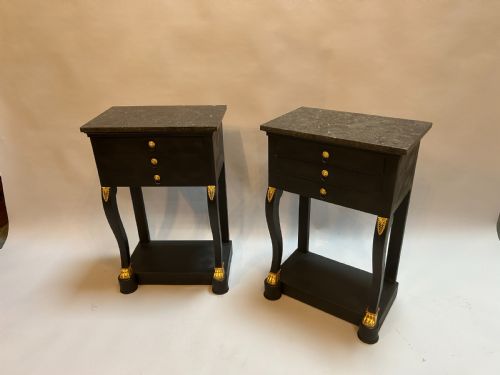
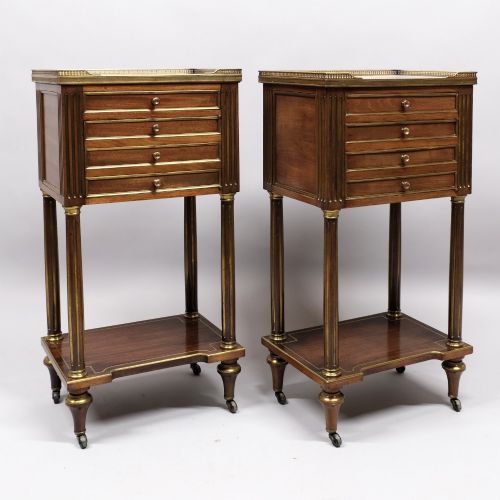
A french empire side cabinet is a low storage form defined by classical restraint, proportion, and weight. The selections span compact bedside stands and larger side cabinets, anchored by the aesthetic movements of the nineteenth century.
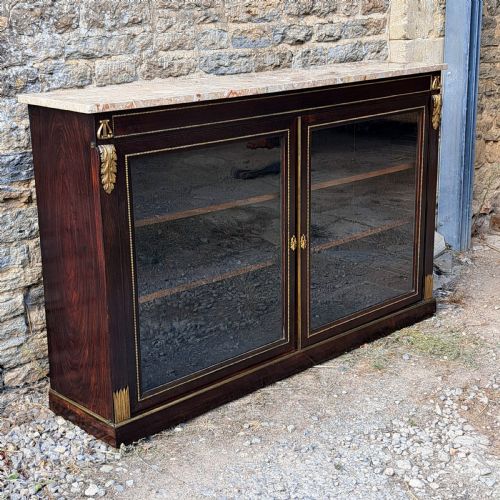
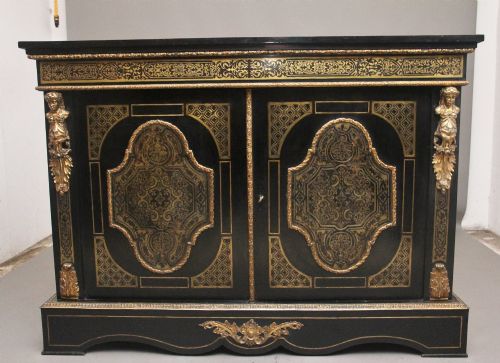
The primary forms met on this page include bedside cabinets, pier cabinets, and console tables. These pieces draw from French Empire, Napoleon III, and Neoclassical vocabularies, reflecting the enduring influence of classical antiquity on nineteenth-century design.
How they were made
Makers built these cabinets using dense timbers such as mahogany, rosewood, and ebonised wood, often framing grain patterns with care. Surfaces receive structural weight from marble tops in white or fossil varieties.
Cast brass, ormolu, and gilt metal mounts provide sharp contrast against dark woods, secured along corners, friezes, and door panels. Boullework and porcelain plaques appear on specific Napoleon III examples to add ornamental depth.
French Empire Side Cabinet Retail Price Guide 2026
Typical asking prices for french empire side cabinet among the pieces listed under this phrase on Sellingantiques today, from the lower quarter to the upper quarter. They describe what is for sale here now, not the wider market.
Tortoiseshell and brass marterials whisper secrets of nineteenth-century French workshops into modern hallways.
What varies in quality
The standard of a french empire side cabinet rests upon the crispness of its gilt bronze or ormolu mounts and the depth of the timber grain. Finer examples display cleanly chased metalwork that integrates smoothly with the architectural carcase.
Construction integrity and the selection of materials define the upper tier of these pieces. Heavy marble slabs fitted precisely to the timber top distinguish superior workshops from standard production.
Edmond Poteau
The French Empire Side Cabinet Glossary
- Ormolu
- Gilded bronze used for decorative mounts on furniture. It provides a bright metallic contrast against dark woods like mahogany and ebonised finishes.
- Boulle
- Marquetry technique utilising brass and tortoiseshell inlaid in arabesque patterns. Named after the cabinetmaker André-Charles Boulle, it defines luxury Napoleon III pieces.
- Pier Cabinet
- A narrow cabinet designed to stand against a wall pier between windows. These often feature glass doors and marble tops.
- Chiffonier
- A tall sideboard or cabinet with drawers and shelves. French examples often incorporate enclosed lower storage beneath an open upper section.
- Sevres Style
- Ceramic plaques painted with pastoral scenes or monograms and inset into cabinet doors. These porcelain inserts signal mid-nineteenth-century revival work.
French Empire Side Cabinet: Frequently Asked Questions
What is a french empire side cabinet used for?
These cabinets serve as bedside stands or low storage units in living spaces. Their flat stone tops hold lamps or decorative objects while interior shelves conceal smaller items.
The restrained footprint allows them to fit against tight wall spaces where larger case pieces would overwhelm the room.
How do I identify French Empire style?
Look for dark mahogany or ebonised timbers paired with symmetrical brass or ormolu mounts. The silhouettes lean heavily on classical Roman and Greek architectural motifs.
Columns, pilasters, and friezes are common structural elements that keep the visual weight grounded and severe.
Are marble tops original to these cabinets?
Most nineteenth-century side cabinets and bedside stands were designed with fitted marble tops to provide a durable, waterproof surface. These slabs usually match the period of the wooden carcase beneath.
Fossil marble and white Carrara are the most frequent stone varieties encountered on these pieces.
How do I care for ebonised wood and ormolu?
Dust ebonised surfaces with a soft dry cloth and avoid harsh chemical polishes that can degrade the dark finish. Ormolu mounts should be left unpolished to preserve their patination.
Keep the timber away from direct heat sources and strong sunlight to prevent the wood from splitting or fading over time.