
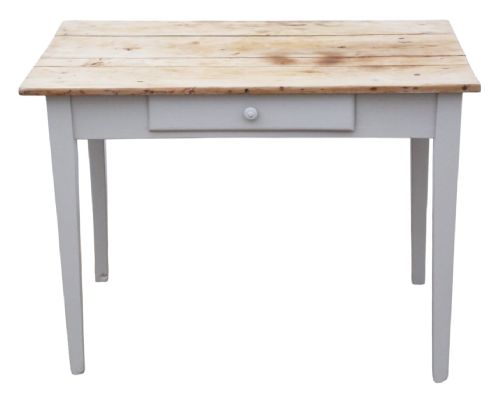
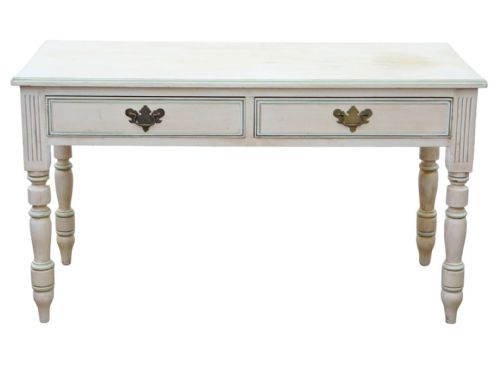


Antique French Console Desk
An antique French console desk combines the utility of a writing surface with the elegance of salon furniture.
Antique French Console Desk
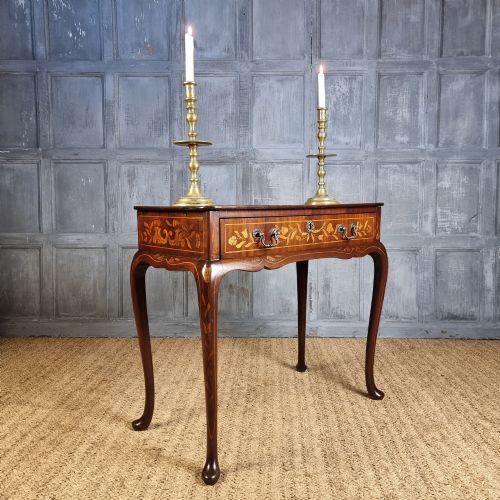
An antique French console desk brings together forms designed for writing and display, appearing across periods from the eighteenth century through the early twentieth century. These pieces emerge in styles such as Louis XVI Revival, French Empire, and Louis XV Revival, alongside provincial variations.
The selections span bureau plat writing tables, marble-topped console tables, and tiered side pieces. Buyers frequently encounter walnut, mahogany, and kingwood constructions fitted with drawers or inset writing surfaces.
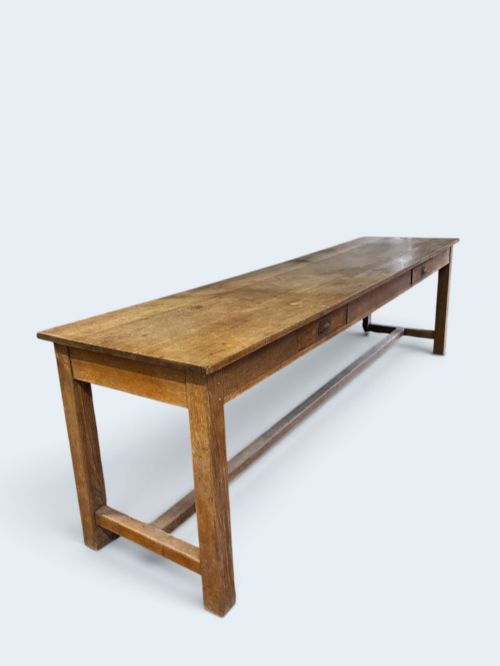
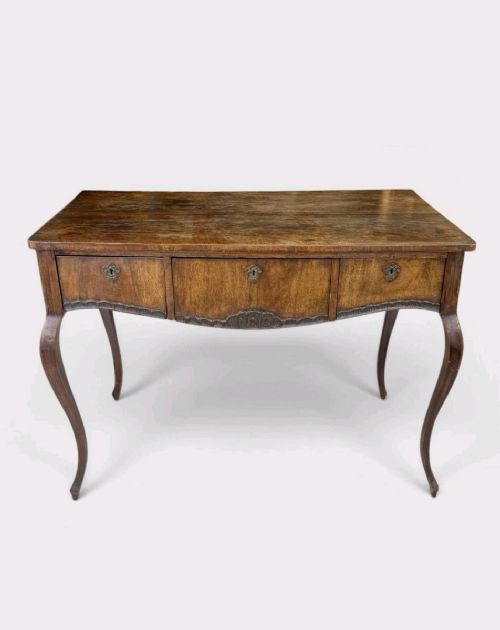
Originating in domestic and formal French interiors, these tables function as writing desks, centre tables, or serving surfaces. Their forms reflect the decorative shifts from elaborate marquetry to rustic oak and cherrywood utilitarian builds.
Materials and Construction
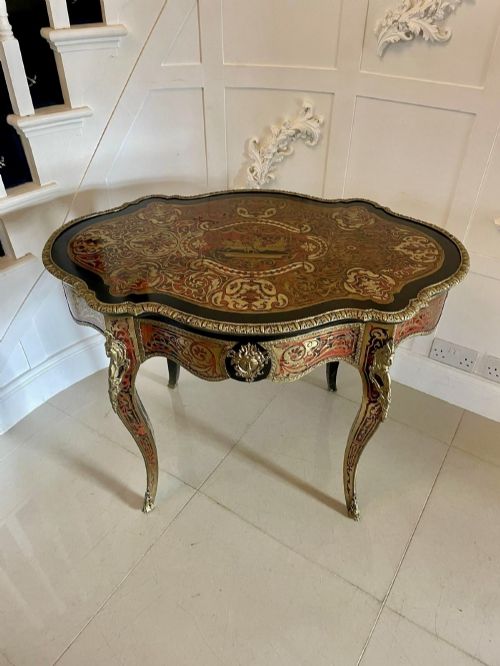
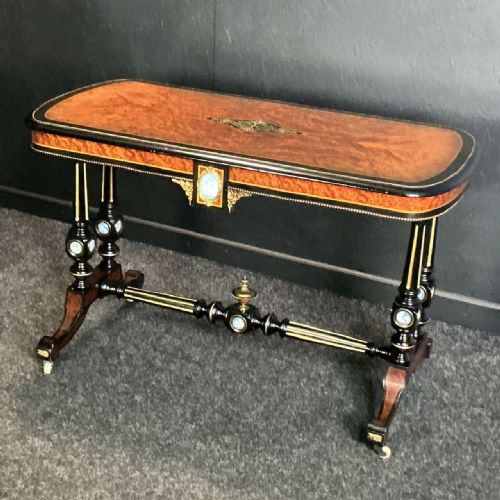
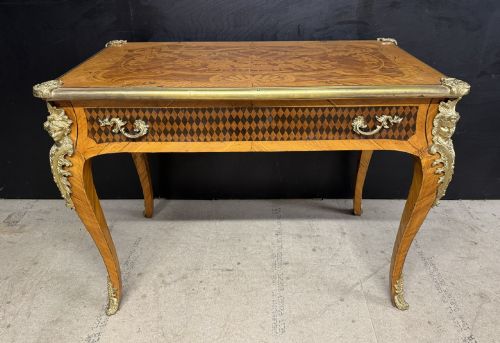
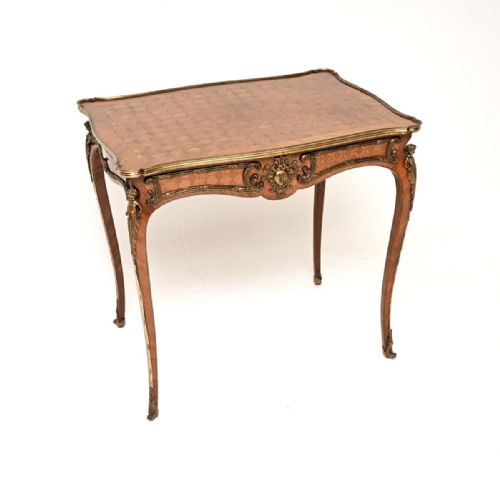
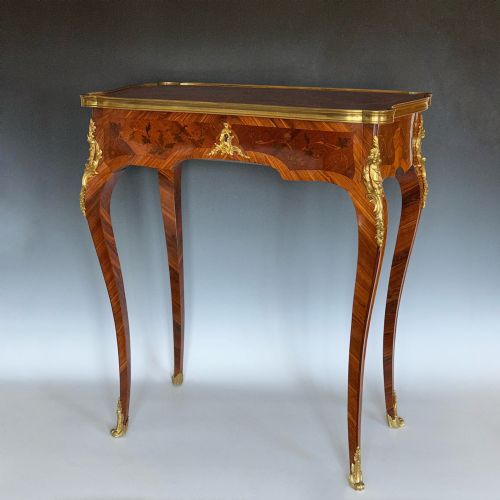
Cabinetmakers utilised dense hardwoods including walnut, mahogany, oak, and cherrywood for structural stability, often applying veneers of kingwood, tulipwood, and burr walnut. Parquetry and marquetry geometric or floral patterns decorate the surfaces of refined bureau plat and centre tables.
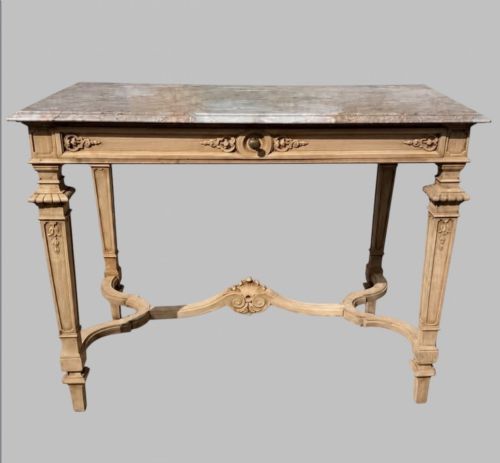
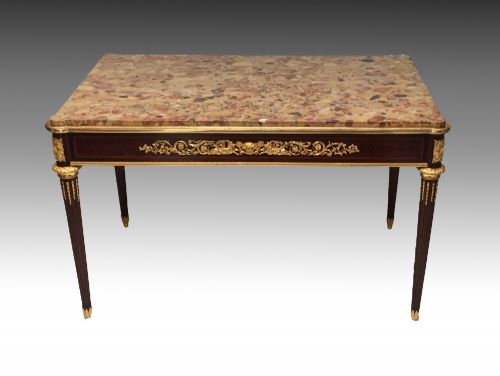
Metalwork played a defining role, with cast ormolu mounts, brass details, and bronze accents applied to corners, legs, and aprons. Marble tops, including fossil marble varieties, were fitted directly to the wooden frames of console and side tables.
Several tables include secret compartments hidden behind frieze drawers for storing private correspondence.
Distinctions in Quality
The refinement of marquetry and parquetry inlay distinguishes finer desks, where precise timber selection creates complex pictorial or geometric designs. Finishes such as original patinas and hand-applied paint layers show the integrity of the surface over centuries.
Hardware and secondary elements reveal workshop standards through the crispness of ormolu cast mounts and the selection of secondary timbers within drawer construction. The integration of fitted marble slabs and the execution of carved cabriole or tapered legs separate standard utility pieces from high-style salon furniture.
Edward’s And Robert’s·Millet·Jean-Joseph Chapuis·Francoise Linke
The Antique French Console Desk Glossary
- Bureau Plat
- A freestanding writing table, typically with drawers along the frieze, finished on all sides for placement in the centre of a room.
- Ormolu
- Gilded bronze used for decorative mounts and accents on furniture, particularly prominent in Louis XVI and Empire styles.
- Marquetry
- The art of applying pieces of veneer to a structure to form decorative patterns and pictorial scenes.
- Parquetry
- Geometric mosaic woodwork used for flooring and table tops, creating patterns such as cubes or chequers.
- Cabriole Leg
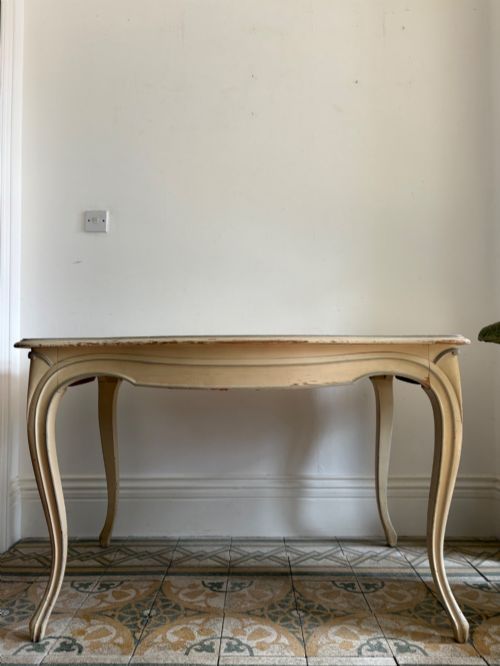
- A furniture leg that curves out and then in, resembling the leg of an animal, common in revival styles.
Antique French Console Desk: Frequently Asked Questions
How do I identify a bureau plat?
A bureau plat is recognised as a flat-topped writing table finished on all sides so it can stand in the middle of a room rather than against a wall. These pieces usually feature a leather or suede writing inset and one or more drawers built into the frieze.
Makers often embellished them with ormolu mounts, marquetry, or parquetry. They differ from standard side tables through their specific focus on a comfortable writing surface.
What defines French Empire style?
French Empire furniture draws heavily on classical antiquity, featuring dark woods like mahogany contrasted with gilded bronze or ormolu mounts. The lines are generally more architectural and monumental than the curving forms of earlier Louis periods.
Tables from this era often incorporate fossil marble tops and sculptural supports. The aesthetic reflects the influence of the Napoleonic period.
Where should I place a console table?
Console tables traditionally stand flat against a wall in a hallway, drawing room, or living space, often paired with a mirror or artwork above. Their shallow depth makes them suitable for narrow circulation areas where a full desk would obstruct movement.
Marble-topped versions provide a durable surface for lamps and decorative objects. They also function effectively as serving tables in dining rooms.
How do I care for marble tops?
Marble tops require gentle cleaning with a soft, damp cloth and neutral soap to avoid scratching the polished stone or degrading the original surface. Acidic liquids like wine or citrus juice should be wiped away immediately to prevent etching.
Waxing is unnecessary for the stone portion, though the surrounding wood frame benefits from appropriate furniture wax. Regular dusting keeps abrasive particles from dulling the finish.
What is the difference between provincial and revival styles?
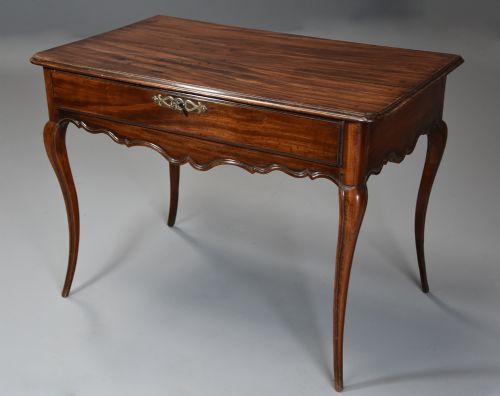
Provincial pieces reflect regional craftsmanship using local timbers like cherrywood, oak, and fruitwood with simpler, sturdier construction. They were made for everyday domestic use in French country homes rather than urban salons.
Revival styles replicate or adapt earlier court aesthetics, such as Louis XVI or Louis Rococo, utilising exotic veneers and elaborate metal mounts. These later interpretations celebrate historical French design vocabulary.