


Ormolu Mahogany Sideboard
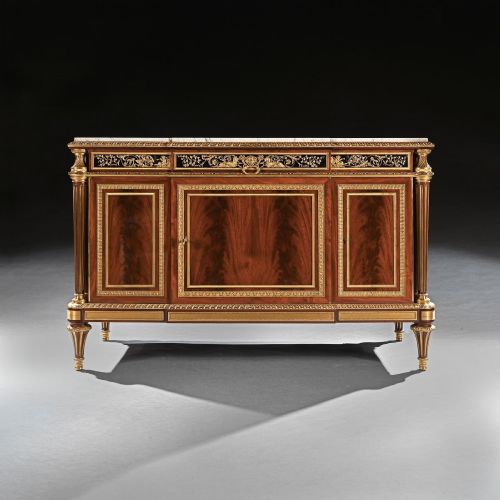
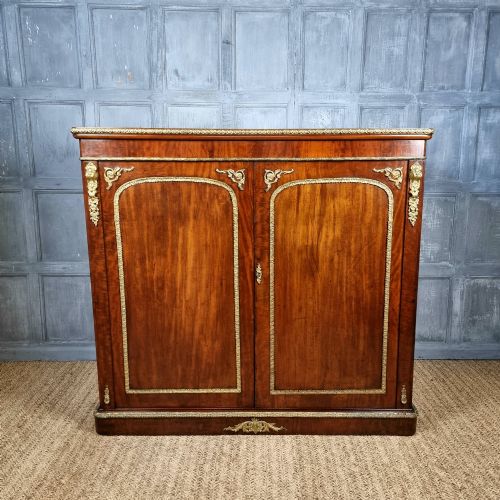
These ormolu mahogany sideboard pieces combine rich timber with gilt bronze mounts, offering grand storage and display for formal rooms.
Ormolu Mahogany Sideboard
An ormolu mahogany sideboard brings together deep tropical timber and gilt bronze mounts, appearing across styles such as French Empire, Louis XVI, and Regency. Buyers examining this page encounter side cabinets, commodes, chiffoniers, and display cabinets spanning the nineteenth and early twentieth centuries.
The nineteenth-century examples dominate the selection, often featuring marble tops and marquetry or parquetry details. Makers and workshops from both English and French traditions produced these storage forms, influenced by classical motifs and revival aesthetics.
How they were made
Cabinetmakers constructed these forms using solid and veneered mahogany, frequently selecting flame mahogany and walnut to create figured grain patterns across large surfaces. Marquetry and parquetry inlay added geometric or floral contrast to the timber carcasses.
Gilt bronze or ormolu mounts were cast and chased before being applied as handles, feet, escutcheons, and corner ornaments. Marble slabs, often serpentine-fronted, were fitted to the upper surfaces of commodes and side cabinets.
Materials recorded across the inventory include mahogany, flame mahogany, walnut, ormolu, marble, brass, glass, and marquetry.
What varies in quality
The standard of an ormolu mahogany sideboard rests on the crispness of the gilt bronze chasing and the selection of the timber veneer. Finer examples display deeply sculpted ormolu mounts with distinct hand-chased detail rather than flat, mass-produced metalwork.
Construction methods also separate standard production from exceptional work, seen in the precision of the marquetry, the thickness and veining of the marble tops, and the smooth operation of drawers and doors within the mahogany carcase.
Henry Dasson·Gillows
The Ormolu Mahogany Sideboard Glossary
- Ormolu
- Gilt bronze mounts applied as decorative ornaments to furniture. This technique involved coating bronze in a gold amalgam and firing it to leave a rich metallic finish.
- Marquetry
- The art of applying pieces of veneer to a structure to form decorative patterns. Craftsmen utilised various woods to create pictorial or geometric designs.
- Commode
- A low chest of drawers or cabinet with doors, developed in France during the seventeenth century. These pieces frequently feature marble tops and elaborate ormolu mounts.
- Parquetry
- Geometric mosaic woodwork used for surface decoration. It differs from marquetry by using regular angular blocks to form repeating patterns.
- Chiffonier
- A tall sideboard or cabinet fitted with doors and drawers. Nineteenth-century examples often incorporated glass panels or open shelving.
Ormolu Mahogany Sideboard: Frequently Asked Questions
What is an ormolu mahogany sideboard?
An ormolu mahogany sideboard is a substantial storage piece made from mahogany timber and decorated with gilt bronze mounts. These items encompass side cabinets, commodes, and chiffoniers from the nineteenth and early twentieth centuries.
They serve as focal points in formal dining rooms and halls, combining surface display space with enclosed storage for tableware or linens.
Where were these pieces made?
The pieces listed originate primarily from French and English workshops working in classical revival styles. French makers produced designs influenced by Louis XVI, Empire, and Napoleon III aesthetics.
English firms like Gillows also contributed to this tradition, adapting classical motifs to local cabinetmaking standards during the nineteenth century.
How do I care for marble and mahogany?
Mahogany surfaces benefit from regular dusting with a dry cloth and occasional application of appropriate furniture wax to nourish the grain. Avoid placing timber pieces in direct sunlight or near heat sources.
Marble tops require protection from acidic liquids like wine or citrus juice, which can etch the polished stone surface. Wipe spills promptly with a damp cloth and mild soap.