


Mahogany Chiffonier Table
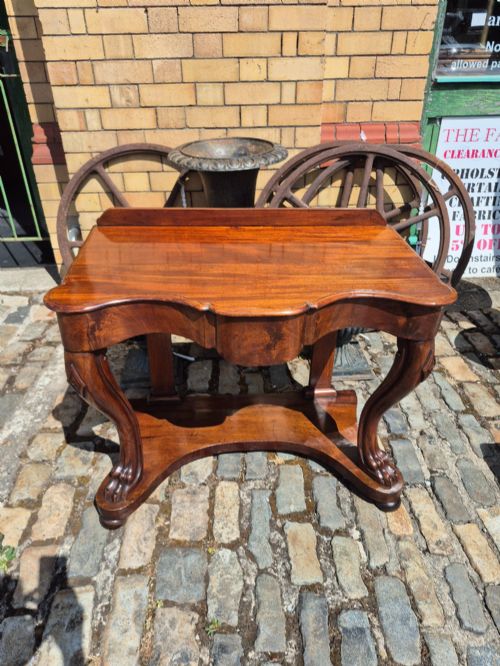
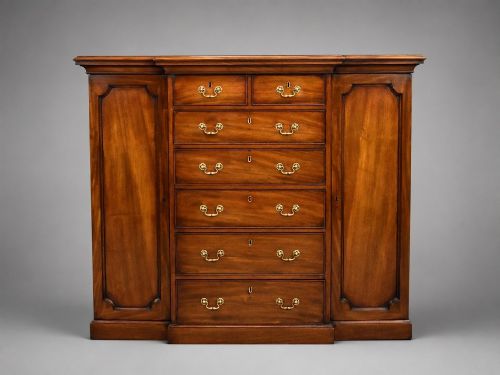
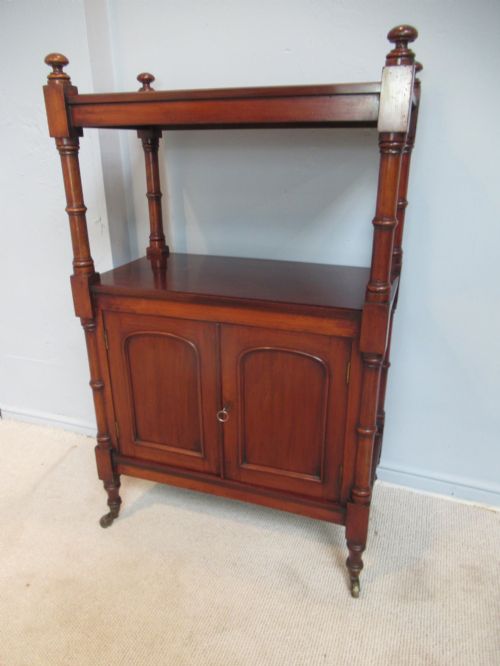
These mahogany chiffonier table pieces combine practical storage with refined timber work, offering both a useful surface and a handsome focal point for a traditional interior.
Mahogany Chiffonier Table
When searching for a mahogany chiffonier table, a buyer encounters a diverse group of nineteenth-century items often catalogued as sideboards, buffets, console tables, and cabinets. These forms span Victorian, Regency, Edwardian, and French Empire styles, reflecting varied domestic uses across different European tastes.
The pieces most frequently met on this page belong to the Victorian period, alongside examples dated from the 1860s, 1870s, and 1890s. They range from small proportions and neat-sized chiffoniers to large buffet servers and mirrorback sideboards, each designed to hold dining ware or display decorative objects.
How they were made
Makers utilised solid timber and flame mahogany veneers over secondary woods to create rich grain patterns across doors and drawer fronts. Cabinet makers selected boards with deep natural figuring to draw the eye, particularly on larger buffet servers and side cabinets.
Construction frequently incorporated decorative hardware such as brass fittings and ormolu mounts, whilst certain French Empire and Napoleon III examples integrated mirror glass and marble tops. These supplementary materials added structural contrast and reflective light to the dark timber frames.
Listings span Victorian, Edwardian, and French Empire periods, utilising flame mahogany, marble, brass, and mirror glass.
What varies in quality
The distinction between standard examples and the finest pieces rests upon the selection of timber and the ambition of the carving. Superior items display meticulously matched flame mahogany veneers and crisp, deep relief work that highlights the structure of the sideboard.
Proportion and scale also dictate the upper tier of the range, where exceptionally small proportions or restrained Regency lines demonstrate greater design discipline. The integration of auxiliary elements like mirror glass, marble, and ormolu further separates ordinary utility furniture from high-status salon pieces.
The Mahogany Chiffonier Table Glossary
- Chiffonier
- A low sideboard or cabinet, typically featuring drawers above enclosed shelving. It evolved during the nineteenth century into a primary dining room storage form.
- Flame mahogany
- A veneer cut from the fork of the mahogany tree, producing a swirling, flame-like grain pattern. Cabinet makers reserved this highly decorative wood for prominent panel surfaces.
- Ormolu
- Gilded bronze ornamentation applied to furniture mounts, common in French Empire and Napoleon III designs. It provides a bright metallic contrast against dark timber.
- Breakfront
- A piece of furniture whose central section projects forward from the flanking wings. This architectural arrangement creates depth and visual rhythm across large sideboards and bookcases.
- Mirrorback
- A sideboard or buffet featuring an integrated vertical mirror mounted above the rear surface. This addition serves to reflect light and display objects placed on the top board.
Mahogany Chiffonier Table: Frequently Asked Questions
What is a chiffonier table?
A chiffonier table is a low nineteenth-century cabinet or sideboard designed for domestic storage and display. It typically combines drawer space with enclosed lower cupboards.
These pieces served various rooms, functioning as serving surfaces in dining spaces or as side cabinets in parlours and reception rooms.
How do I date a mahogany chiffonier?
Dating relies on observing stylistic markers, construction methods, and timber choice across the piece. Victorian examples often feature heavy carving, whilst earlier Regency or French Restauration items show cleaner classical lines.
Secondary woods and the application of veneers also provide clues, as cabinet-making techniques shifted throughout the nineteenth century.
Where were these pieces used?
They originated primarily in formal dining rooms and drawing rooms of nineteenth-century homes. Their surfaces held silver, glassware, and serving dishes during meals.
In modern interiors, they function well as hallway consoles, living room display units, or television stands that retain a traditional aesthetic.
What is the difference between a sideboard and a chiffonier?
A sideboard is generally a larger dining room piece built for holding heavy serving platters and tableware. A chiffonier is typically smaller and more compact, often incorporating a superstructure or mirror.
Both categories overlap considerably in antique markets, where makers adapted forms to suit changing domestic requirements.