

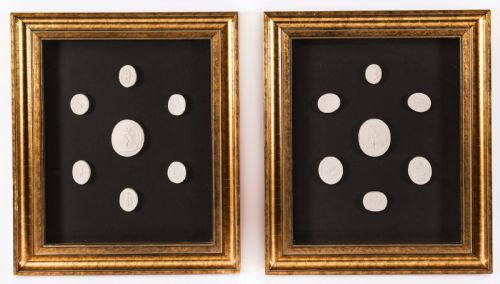


Framed Grand Tour Souvenirs
Framed grand tour souvenirs capture the classical sights and ancient sculpture collected by travellers on eighteenth and nineteenth-century journeys.
Framed Grand Tour Souvenirs
Framed grand tour souvenirs represent the classical art and archaeological studies collected during continental travels across the eighteenth and nineteenth centuries. Buyers searching for framed grand tour souvenirs encounter a diverse range of wall art, including framed intaglios, plaster reliefs, and oil paintings.
Works span from late eighteenth-century Italian carved marble bas-reliefs to mid nineteenth-century watercolour views and gouaches of Naples. Each object preserves the visual record of classical sites, mythological figures, and ancient sculpture admired by travellers abroad.
How they were made
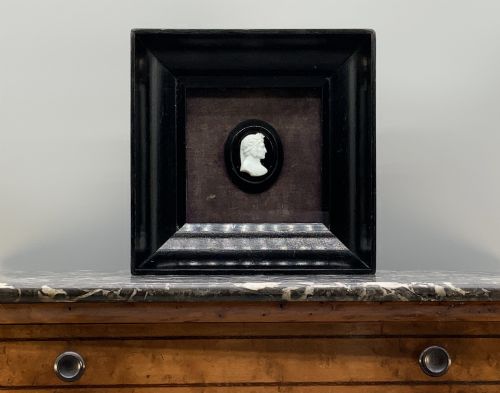
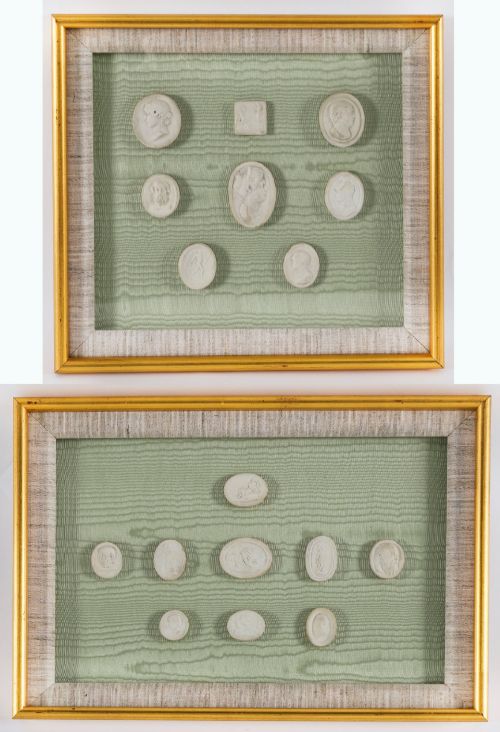
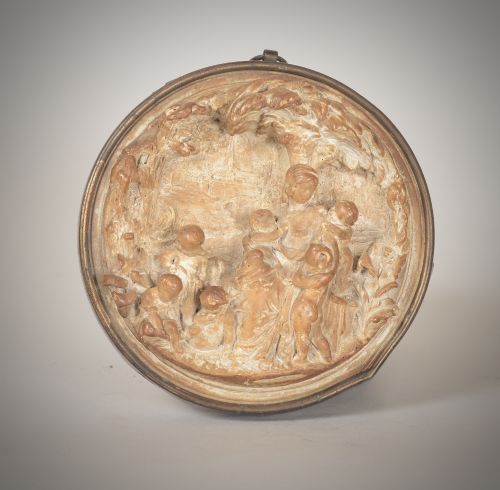
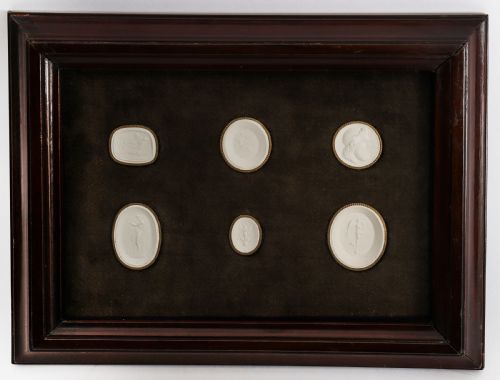
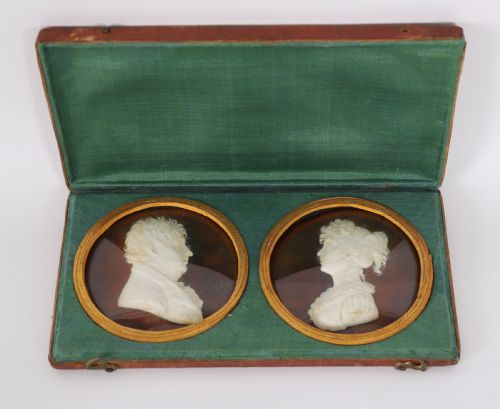
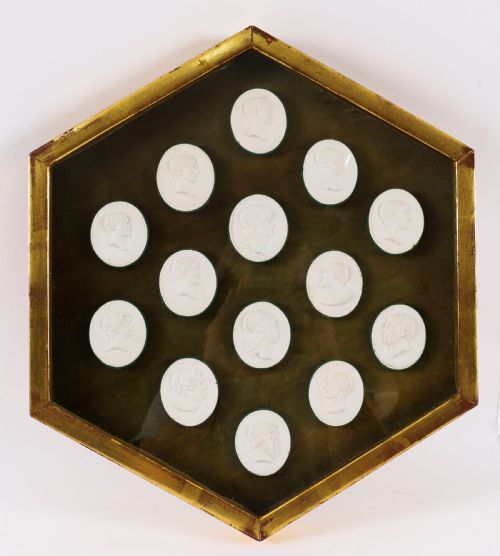
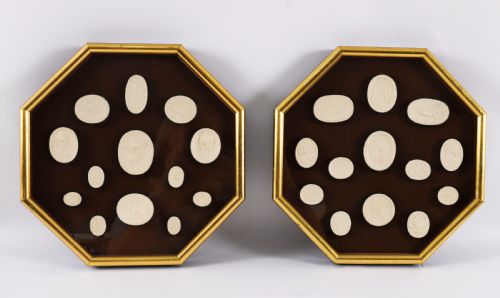
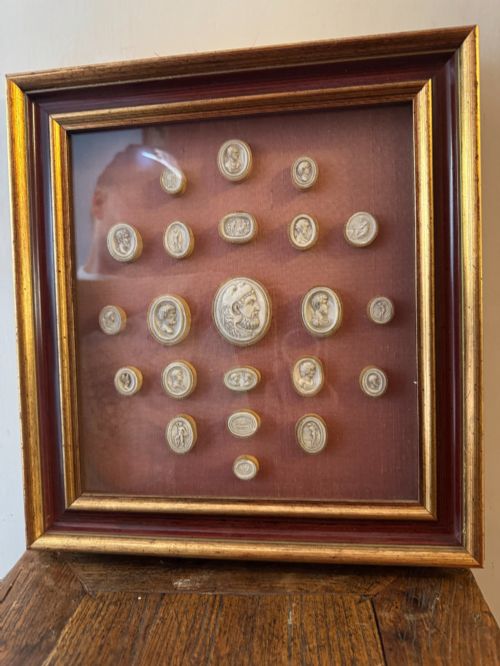
Makers utilised traditional artistic media such as plaster, gypsum, wax, and carved ivory to cast or carve miniature classical profiles and intaglios. These delicate reliefs were then arranged meticulously inside velvet-lined or paper-backed display frames.
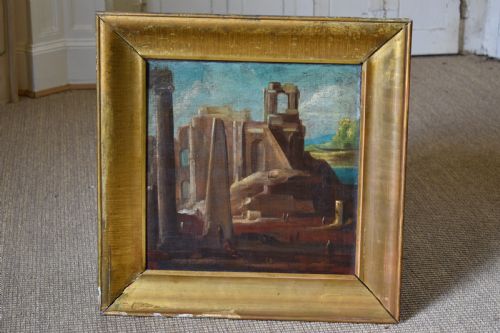
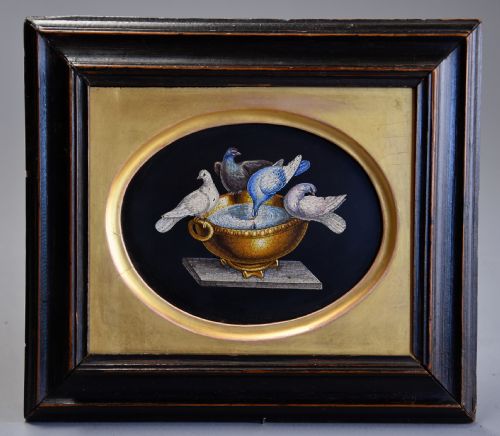
Painted works rely on oil on canvas, watercolour, gouache, and pietre dure marble inlay to depict Italian architectural ruins and landscape scenes. Artisans of the Neapolitan school and other Italian workshops applied these pigments and stone veneers with fine precision.
Listings feature eighteenth and nineteenth-century works including glass, plaster, wood, giltwood, paper, and velvet.
What varies in quality
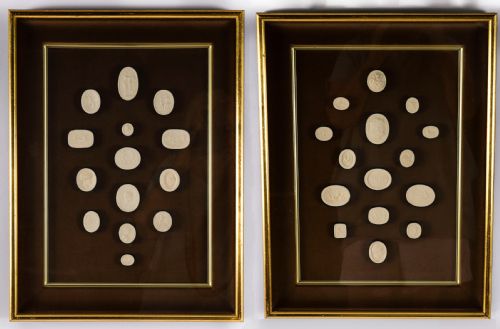
Framing and mounting also dictate standard, where period giltwood, ebonised surrounds, and custom box frames elevate the presentation. The complexity of grouped collections, such as extensive sets of numbered impressions, commands greater visual presence.
Giovanni Liberotti·Pietro Bracci
The Framed Grand Tour Souvenirs Glossary
- Intaglio
- A gem or other gemstone or plaster impression carved into the surface so that the design dips below the plane. These were frequently arranged in collections within framed panels.
- Gouache
- An opaque watercolour paint used by Italian artists to create vibrant topographical views of Naples and surrounding ancient sites. It yields a matte finish with rich colour saturation.
- Pietre dure
- A method of inlaying cut and fitted polished coloured stones to create pictorial images. This technique appears in Italian marble pictures depicting figurative scenes.
- Cameo
- A method of carving an object such as a carved ivory plaque or marble profile in relief rather than intaglio. This technique highlights the profile portrait against a contrasting background.
- Micromosaic
- Tiny coloured glass tesserae assembled meticulously to form detailed pictorial plaques. These miniature works were prized highlights of nineteenth-century Italian souvenir collecting.
Framed Grand Tour Souvenirs: Frequently Asked Questions
What are framed grand tour souvenirs?
These pieces are portable artworks and classical casts gathered by travellers during educational journeys across Europe. They served as scholarly mementoes and decorative displays for British homes.
Items range from sets of plaster intaglios and carved ivory plaques to watercolour views of Pompeii and gouaches of Naples. Each object reflects the neoclassical tastes of the eighteenth and nineteenth centuries.
How were intaglios displayed?
Intaglios were typically arranged systematically in rows behind glass within wooden, ebonised, or giltwood frames. Velvet or paper backings provided a contrasting bed for the white plaster or wax impressions.
This mounting method protected the delicate relief carvings while allowing collectors to study classical sculpture and cameos together on a wall.
Which periods do these pieces span?
The available works primarily date from the late eighteenth century through the nineteenth century. This timeframe captures the height of European travel to ancient classical sites in Italy.
Earlier pieces often feature carved marble and detailed plaster sets, while mid to late nineteenth-century examples include watercolour paintings and micromosaic panels.
How do I live with these artworks?
Framed grand tour souvenirs suit studies, libraries, and living spaces where their historical character can be appreciated up close. Their neutral plaster tones and dark frames complement both traditional and modern interiors.
Keep them away from direct sunlight to protect delicate paper backgrounds, fabric velvet linings, and watercolour pigments from fading.