





Faux Marble Pedestal
A faux marble pedestal brings classical gravitas to any room, offering a clever trompe l'oeil support for your finest display pieces.
Faux Marble Pedestal
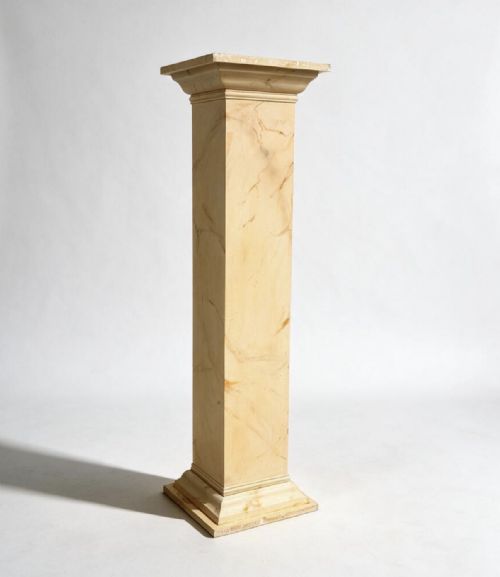
A faux marble pedestal stands as a striking display column or plinth designed to elevate sculpture, urns, and decorative objects. When you search for a faux marble pedestal, you encounter architectural columns, cylindrical cupboard stands, and traditional display columns.
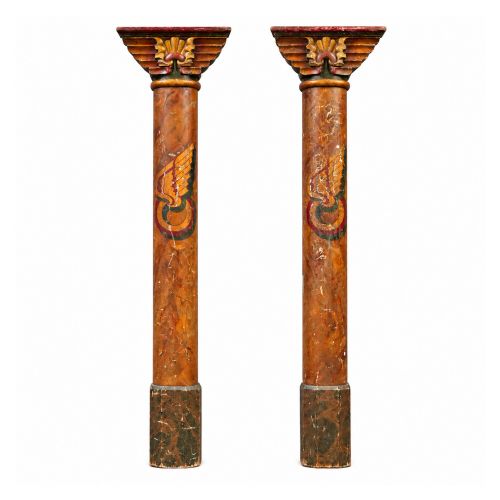
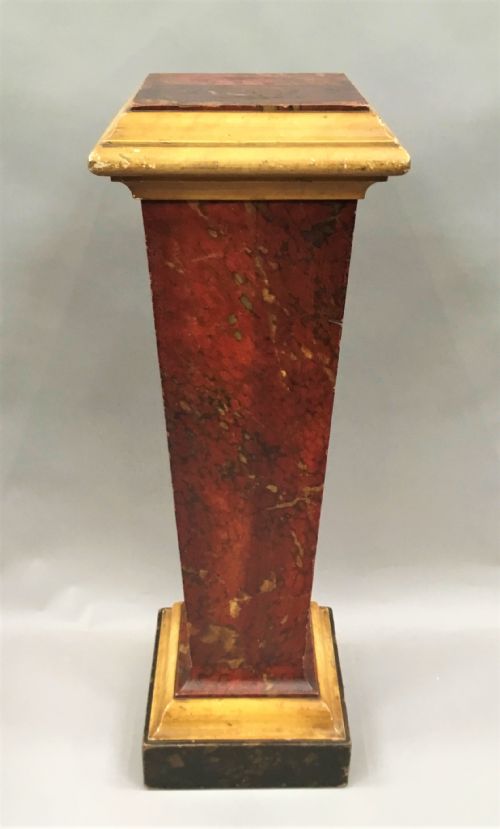
The pieces on this page span the Regency, Victorian, and early twentieth-century periods, alongside Edwardian fairground and theatrical examples. You are most likely to meet painted timber columns or scagliola cylinders finished to simulate stone.
Makers utilised these pieces to create the grandeur of solid marble without the prohibitive weight and cost. They serve equally well as standalone architectural salvage or functional supports in a hallway or drawing room.
How they were made
Makers built the foundational structure primarily from pine, wood, and plaster, forming sturdy columns, cylinders, and square plinths. Artisans then applied sophisticated paint finishes or scagliola to replicate the rich veining of natural stones like verde antico.
Scagliola involves a composite material made from pigmented selenite, glue, and natural dyes, hand-polished to achieve a convincing stone lustre. Painted timber versions rely on skilled brushwork to mimic marble graining across cylindrical and square forms.
Faux Marble Pedestal Retail Price Guide 2026
Typical asking prices for faux marble pedestal among the pieces listed under this phrase on Sellingantiques today, from the lower quarter to the upper quarter. They describe what is for sale here now, not the wider market.
Listings feature materials including paint, wood, plaster, scagliola, and marble across periods spanning the Regency era to the 1930s.
What varies in quality
The sophistication of the simulated marble finish dictates the visual success of the piece, ranging from simple decorative paint to meticulous scagliola work. Superior examples display convincing depth in the veining and retain their original surface patination.
Structural integrity depends upon the stability of the underlying timber or plaster core, particularly in large scale architectural columns and tall display pedestals. Well-executed socle bases and contrasting plinths anchor the design and demonstrate thoughtful craftsmanship.
The Faux Marble Pedestal Glossary
- Scagliola
- A composite material made from plaster, glue, and pigments, embedded and polished to imitate marble and other hard stones. This technique allows artisans to craft complex columns and pedestals with convincing geological depth.
- Socle
- A short plain plinth or pedestal acting as a support for a column, statue, or urn. It provides a stable footing beneath the main shaft of the pedestal.
- Verde Antico
- A dark green serpentine breccia marble prized in classical architecture and replicated by decorative painters. The simulated version mimics this distinct mottled green and white patterning on wooden display columns.
- Torchere
- A tall stand or pedestal originally designed to carry a candelabrum or torch. These slender supports now frequently display floral arrangements or small sculptures.
Faux Marble Pedestal: Frequently Asked Questions
How are faux marble pedestals constructed?
Makers typically formed the core from pine, wood, or plaster before applying specialised paint finishes or scagliola. This combination provided structural stability while achieving the appearance of solid stone.
Artisans built cylindrical, square, and column forms to serve as sturdy supports for display items.
What is scagliola?
Scagliola is a composite material made from pigmented plaster, glue, and natural dyes that mimics genuine marble. Craftsmen hand-polished the surface to create convincing depth and veining.
This technique was widely utilised on pedestals and columns to provide monumental weight without actual stone.
How do I style a pedestal at home?
A pedestal functions best as a focal point in an empty corner, hallway, or flanking a doorway. Use it to elevate sculptures, urns, or decorative vessels to eye level.
Ensure the weight of the display object matches the structural scale of the column beneath.
How do I identify the period of a pedestal?
Dating relies on stylistic clues such as Neoclassical motifs, Regency proportions, or Victorian joinery methods. The preparation of the timber and the handling of the faux finish also point to specific eras.
Architectural salvage and theatrical or fairground pieces often display distinct construction traits from the early twentieth century.