


Scagliola Column
A scagliola column brings classical architectural presence into a room, offering the visual weight of stone through a clever composite medium.
Scagliola Column
When searching for a scagliola column, a buyer encounters architectural supports and display pieces designed to elevate sculpture, urns, or decorative objects. These items typically take the form of freestanding pedestals and columns dating from the nineteenth and early twentieth centuries.
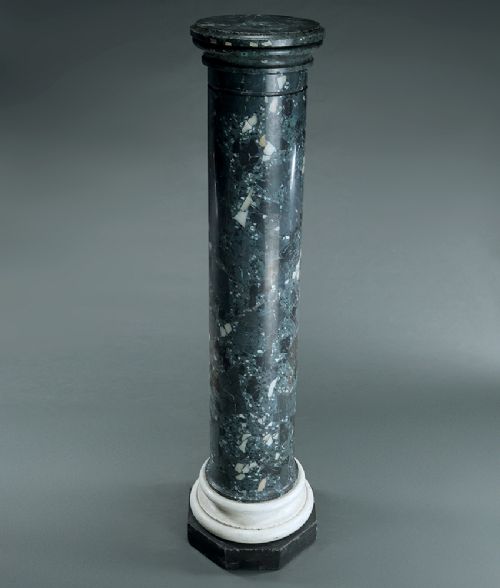
The most common examples on this page are nineteenth-century pieces reflecting Neoclassical and Victorian tastes. Makers constructed these supports to imitate costly stones such as Siena, Verde Antico, and porphyry.
Originating primarily from British and continental workshops, these items range from slender display shafts to robust square pedestals. They serve as focal points in interiors, providing height and texture through simulated mineral surfaces.
How they were made
Makers produced these pieces using pigmented selenite, glue, and crushed marble applied over cores of plaster, wood, or pine. Workers trowelled and polished this composite mixture to mirror the veining of natural stone.
Some examples incorporate secondary materials such as ormolu collars, white socle bases, and black marble plinths. Painters also utilised paint on wood and plaster to create faux marble finishes on simpler supports.
Listings feature items spanning the nineteenth century through the 1930s, utilising scagliola, marble, plaster, and wood in Neoclassical and Victorian styles.
What varies in quality
The sophistication of the simulated veining marks the difference between basic painted pieces and masterwork scagliola. Skilled makers achieved a luminous depth that closely mimics quarried marble.
Surface finish and structural integration also determine standard, where hand-polished plaster and tight joints distinguish finer works from simpler plaster or painted wooden alternatives.
The Scagliola Column Glossary
- Verde Antico
- A dark green serpentine marble imitated in many nineteenth-century columns. Makers reproduced its distinct mottled appearance using coloured plaster mixes.
- Porphyry
- A purple-red igneous rock with large crystals, frequently replicated in simulated columns. This striking stone finish appeared often in Grand Tour decorative arts.
- Socle
- A short plinth or pedestal supporting a column or statue. It provides a stable foundation for the shaft above.
- Ormolu
- Gilded bronze used for decorative mounts and collars on furniture and pedestals. This metallic detailing complements the stony surfaces of composite columns.
Scagliola Column: Frequently Asked Questions
What is a scagliola column made of?
These pieces consist of pigmented gypsum plaster mixed with animal glue and marble dust, applied over a core of plaster or wood. Artisans polished the surface to replicate quarried stone.
Some examples also incorporate painted plaster, pine bases, and bronze or ormolu mounts to complete the architectural form.
How do I date a scagliola column?
Dating relies on stylistic clues such as Neoclassical motifs, Victorian proportions, and the specific composition of the core materials. Nineteenth-century pieces often display hand-turned wooden or plaster structures.
Comparing the simulated stone type against popular tastes of the eighteen-hundreds helps narrow down the period of manufacture.
Where should I place a column?
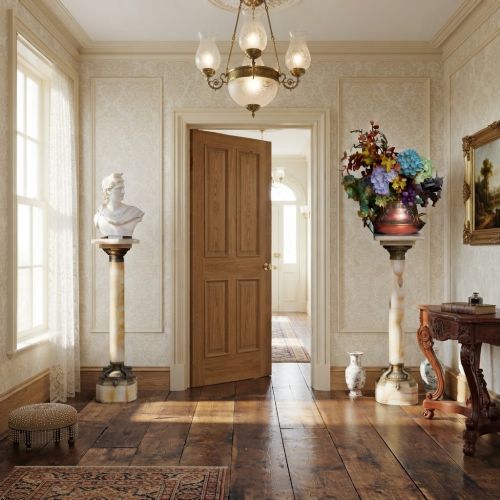
These pedestals function well as standalone display supports for sculptures, urns, or heavy decorative objects in a hallway or reception room. Their vertical form draws the eye upward and adds architectural structure to an interior.
Ensure the placement accounts for the weight distribution of the piece and any delicate ormolu or marble elements.
How do I care for scagliola?
Dust the surface gently with a dry, soft cloth to prevent particulate buildup on the polished plaster or painted finish. Avoid liquid cleaners or harsh chemicals, which can damage the delicate composite material.
Maintain stable humidity levels in the room to protect the underlying plaster, wood, and glue composition from cracking.