
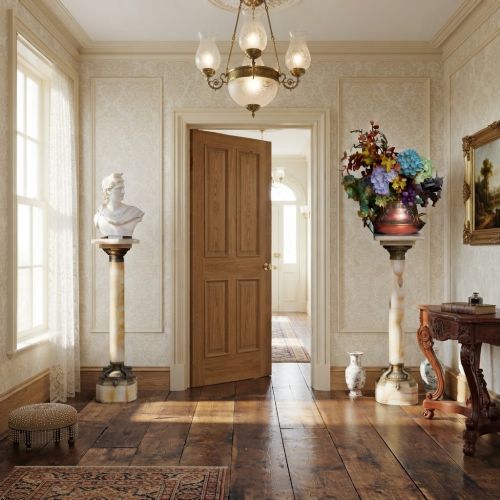
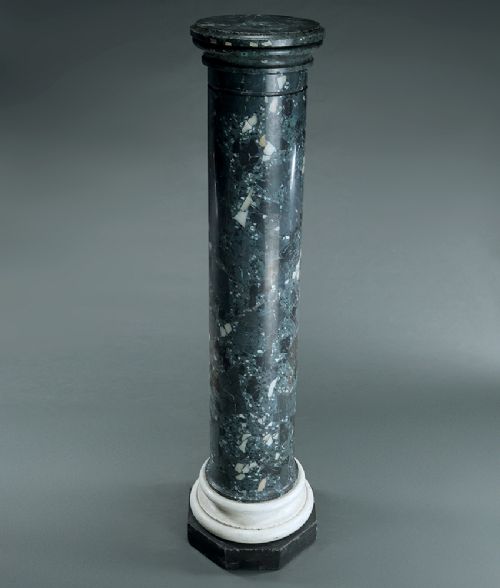


Scagliola Column Pedestal
A scagliola column pedestal brings architectural presence to a room, offering the weighty look of carved stone through a specialist plaster composite.
Scagliola Column Pedestal
A scagliola column pedestal serves as a stately support for display, lifting sculptures, urns or decorative objects to eye level. When searching for a scagliola column pedestal, a buyer encounters substantial upright supports designed to mimic luxurious marbles and hardstones.
The examples gathered here span from the mid-nineteenth century into the early twentieth century, taking forms such as square pedestals, cylindrical columns and matching pairs. Neoclassical and Victorian revival styles dominate, often incorporating socle bases and plinths.
Many of these pieces utilise faux finishes like verde antico or porphyry to replicate expensive Italian stones at a fraction of the weight. They range from simple painted wooden display columns to elaborate plaster structures.
How they were made
Makers produced scagliola by combining pigmented selenite plaster with glue and natural colourings, then kneading and embedding marble splinters or veins into the mixture. The surface was left to dry before being polished with oils and wax to achieve a convincing stone lustre.
Alternative items on this page rely on painted wood, plaster or actual marble combined with ormolu collars and onyx elements. Workshops shaped these materials into robust structural shafts suited for holding heavy decorative urns.
Grand Tour travellers returned home eager to recreate Italian marble halls, inadvertently turning tinted plaster into high art.
What varies in quality
The success of a scagliola column pedestal depends entirely on the fidelity of the simulated stone finish and the depth of the polish. Artisans who layered colours meticulously created convincing geological depth that avoids looking flat or uniform.
Structural integrity also separates individual examples, particularly where plaster or scagliola meets wooden cores and marble plinths. Crisp detailing on socle bases and clean joinery with ormolu mounts indicate higher workshop standards.
The Scagliola Column Pedestal Glossary
- Scagliola
- A composite material made from pigmented plaster, glue and marble chips, used to imitate stone. It allows artisans to create intricate marble effects without carving solid rock.
- Verde Antico
- A dark green serpentine marble often replicated in faux finishes. This appearance mimics the prized antique green marbles used in classical architecture.
- Ormolu
- Gilt bronze mounts applied for decorative accent. These metal collars often frame the top or base of nineteenth-century columns.
- Socle
- A short plain plinth or footing that supports a column or pedestal. It provides a stable base resting directly on the floor or a larger marble plinth.
- Porphyry
- A purple-red igneous rock with large crystals, frequently simulated in nineteenth-century decorative plaster work. The deep red coloration denoted high status in classical design.
Scagliola Column Pedestal: Frequently Asked Questions
What is a scagliola column pedestal?
It is a decorative architectural support made from a composite plaster material designed to imitate expensive natural marbles and hardstones.
Craftsmen shaped these columns during the nineteenth and early twentieth centuries to elevate urns, sculptures and display items within grand interiors.
How do I care for scagliola?
Scagliola requires gentle dusting with a dry microfibre cloth and should be kept away from excessive moisture and direct sunlight. Avoid using abrasive household cleaners or harsh chemical polishes that can damage the polished surface.
Because the material is essentially a specialised plaster composition, stable indoor humidity protects both the core and the decorative surface layers.
Are these pedestals solid stone?
Most pieces on this page use scagliola, painted plaster or painted wood rather than solid quarried marble. This construction made the columns lighter and more versatile for domestic display.
Some examples incorporate actual marble bases or tops alongside the primary scagliola shafts.
What styles are typical for these columns?
Neoclassical and Victorian revival designs predominate among these pieces, reflecting a nineteenth-century fascination with classical antiquity and Grand Tour aesthetics.
Details often include simulated verde antico or porphyry finishes, square plinths and occasionally ormolu collars.