


Scagliola Display Plinth
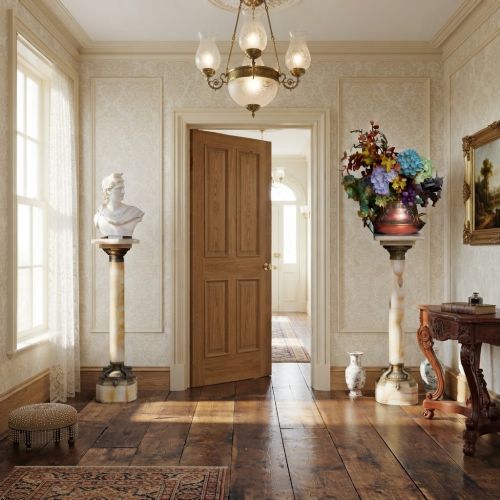
A scagliola display plinth brings the classical theatre of the nineteenth-century interior into a modern room to elevate sculpture and urns.
Scagliola Display Plinth
A scagliola display plinth serves as an architectural support for decorative objects, taking the form of a column, pedestal or plinth. These pieces emerge primarily from the nineteenth century, including Victorian examples and specific dates such as 1850, 1900, 1920 and 1930.
The most common forms on this page include pedestals, columns, and combined pedestals and plinths. Makers often drew upon neoclassical, Victorian, French Chateau, Grand Regency, and neoclassical revival styles to shape their silhouettes.
Buyers encounter versions that stand independently or arrive as pairs, utilising various heights and proportions. Their primary role remains the physical elevation of art objects within domestic and grand settings.
How they were made
Makers constructed these supports using scagliola, a composite material of plaster, glue and pigments designed to imitate natural stone. Artisans also employed marble, onyx, painted wood, and plaster to achieve the desired structural heft.
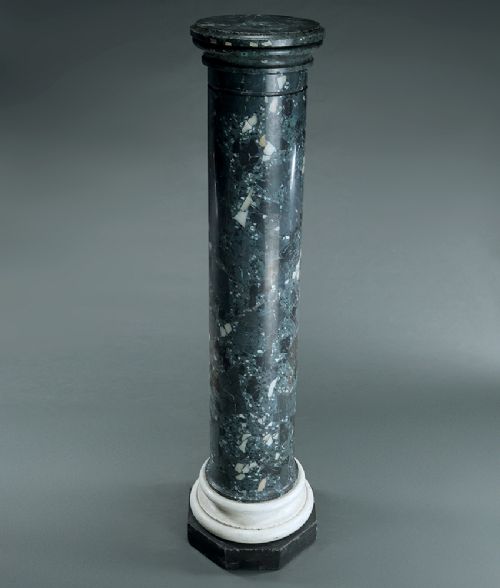
Surfaces frequently feature painted simulations of stones such as verde antico, paired occasionally with ormolu collars or white socle bases and black marble plinths. This combination of cast plaster, applied paint and carved wood produced the illusion of solid monolithic stone.
Styles recorded across these pedestals and columns include neoclassical, Victorian, French Chateau, and Grand Regency.
What varies in quality
Structural harmony also separates examples, particularly where ormolu collars, white socle bases, and black marble plinths meet the main column. Balance in proportion and the crispness of neoclassical styling determine the visual success of the piece.
The Scagliola Display Plinth Glossary
- Verde Antico
- A dark green serpentine breccia marble imitated frequently in nineteenth-century decorative work. Painters utilised this green palette to give wooden and plaster columns an ancient appearance.
- Ormolu
- Gilt bronze mounts applied as decorative collars or accents on nineteenth-century furniture and pedestals. This gilded detail adds a sharp metallic contrast to stone and faux-stone surfaces.
- Socle
- A short plain plinth or pedestal supporting a column or bust. It provides a stable transition between the floor and the main shaft.
- Plinth
- The lowest square member of the base of a column or pedestal. It elevates the entire structure cleanly from the ground.
Scagliola Display Plinth: Frequently Asked Questions
What is a scagliola display plinth?
It is an architectural column or pedestal made from pigmented plaster to imitate luxury stone.
Craftsmen used these supports to elevate sculptures, urns, and decorative arts in nineteenth-century interiors.
How were faux marble columns made?
Artisans combined plaster, glue, and colours to create scagliola or painted wood to simulate real marble.
These techniques allowed makers to produce convincing stone-like columns without the extreme weight and cost of solid marble.
Where should I place a pedestal?
These supports suit corners, hallways, or focal points in a room where an art piece requires height.
Their neoclassical and Victorian forms help anchor larger decorative items within an interior space.
How do I identify a nineteenth-century piece?
Look for period materials like plaster, painted wood, onyx, and ormolu combined with neoclassical or Victorian styling.
Makers working around this era frequently employed faux verde antico finishes and distinct socle bases.