





Grand Tour Column
When you search for a grand tour column, you are looking at miniature architectural souvenirs and specimen pieces that brought classical antiquity home from Italy.
Grand Tour Column
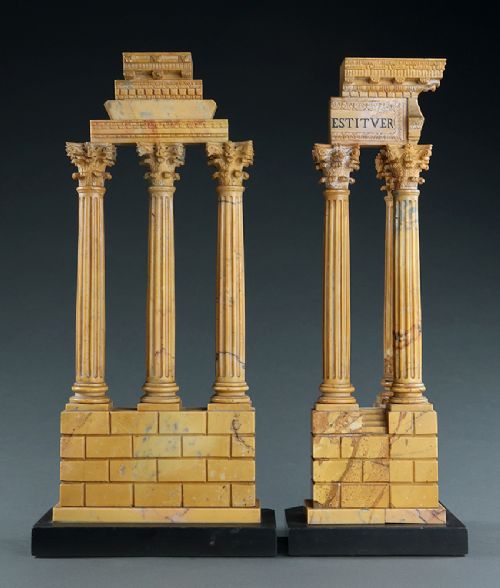
A grand tour column represents the architectural monuments and classical ruins encountered by travellers during eighteenth and nineteenth-century journeys through Rome and other Italian cities. These pieces take the form of tabletop bronze models of famous columns, such as those of Marcus Aurelius or Trajan, alongside solid marble shafts and scagliola pedestals.
The objects serve as tangible mementos of classical education and European travel, translating large-scale public architecture into domestic display pieces. Their forms draw directly from Neoclassical and Italian Renaissance Revival tastes popular among collectors of the period.
Materials and construction
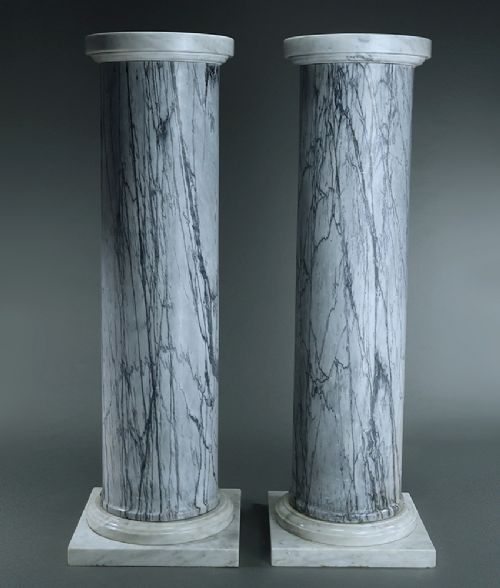
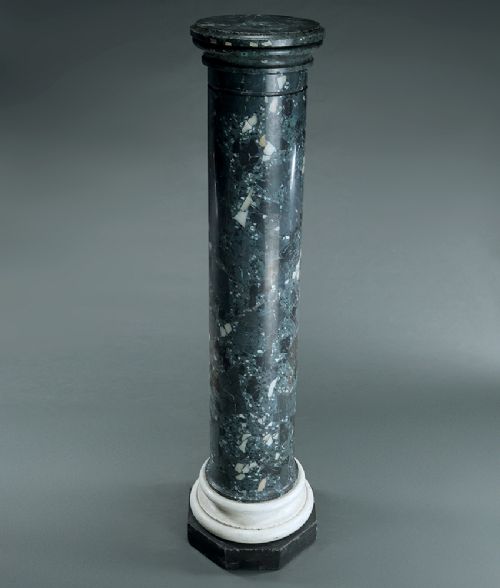
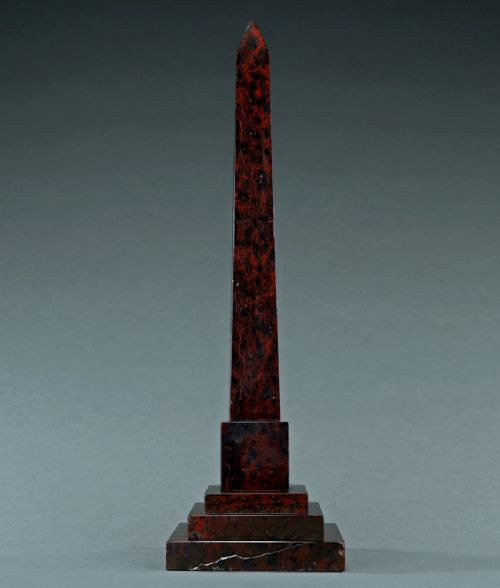
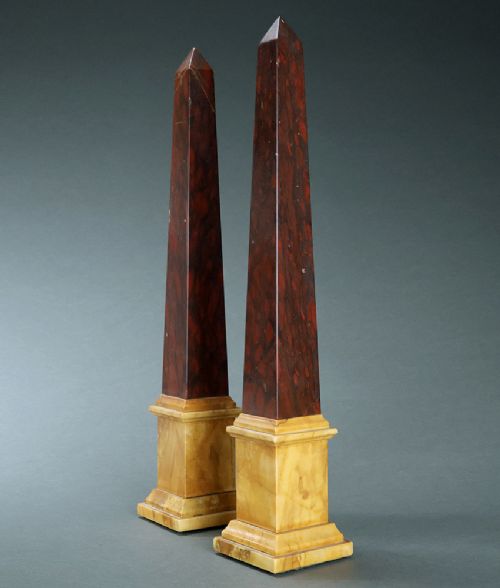
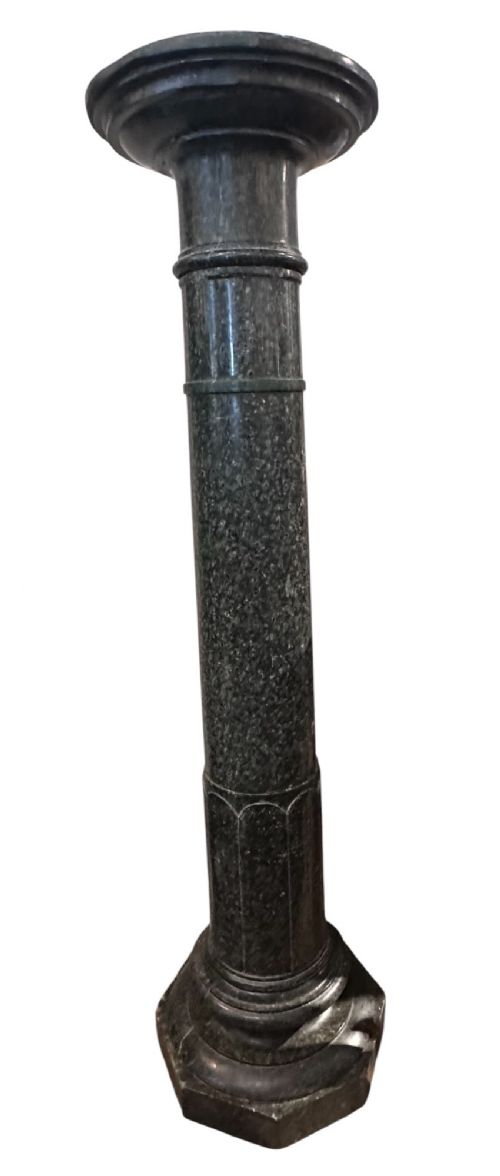
The construction of these pieces relies heavily on marbles such as Verde Antico, Siena, Bardiglio, and Rosso Antico, chosen for their rich natural veining and historical association with Roman buildings. Stonemasons turned and polished these mineral specimens on lathes to achieve smooth, cylindrical shafts.
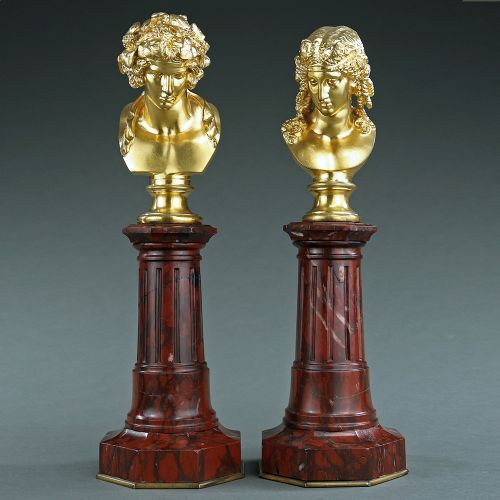
Bronze casting forms another primary method of production, particularly for metallic models of triumphal columns wrapped in helical friezes. Artisans finished these metals with patination or applied gold leaf and ormolu to highlight the minute sculptural reliefs.
Listings feature pieces from the 18th century, 19th century, and early 20th century, executed in Neoclassical, French Empire, and Italian Renaissance Revival styles.
Markers of quality
Quality in these pieces depends on the precision of the carving and the fidelity of the architectural details relative to the original ancient monuments. Finer metal castings retain crisp definitions in the narrative reliefs winding up the column shaft, whereas lesser examples show softened edges and blurred figural work.
The selection of materials dictates a significant portion of the piece's refinement, with superior items utilising genuine specimen marbles displaying complex, unblemished natural patterns. Simpler productions rely on uniform stones or substitute plaster and painted finishes for natural mineral depth.
The integration of mounts and bases also distinguishes different tiers of execution, where tightly fitted brass or ormolu collars demonstrate superior craftsmanship. Alignment between the column drum, base, and plinth reveals the care taken by the workshop during final assembly.
The Grand Tour Column Glossary
- Scagliola
- A composite material made from pigmented selenite plaster, glue, and natural colours, manipulated to imitate marbles and hardstones. Artisans polished the cured surface to achieve a high gloss resembling genuine stone.
- Ormolu
- Finely ground high-carat gold mercury-gilded onto a bronze base, creating a rich metallic finish. This technique was widely utilised in French workshops for decorative mounts.
- Pietra Dura
- An inlay technique using cut and fitted polished coloured stones to create pictorial designs on tabletops or panels. It frequently accompanies architectural stone specimens.
- Socle
- A short plain plinth or pedestal supporting a column, bust, or vase. It provides a stable flat base for display.
Grand Tour Column: Frequently Asked Questions
What is a grand tour column?
A grand tour column is a small-scale decorative model or specimen stone column collected by travellers during educational tours of Europe, particularly Italy, during the eighteenth and nineteenth centuries.
These pieces served as tangible reminders of classical antiquity, replicating famous architectural landmarks like the column of Marcus Aurelius for domestic display.
How were bronze column models made?
Makers cast bronze columns using traditional lost-wax or sand-casting methods, capturing the intricate helical friezes and sculptural details of original Roman monuments.
After casting, artisans applied patination or gilt bronze and ormolu finishes to highlight the relief work and simulate aged metal surfaces.
How do I care for a marble column?
Marble and stone surfaces require gentle dusting with a soft, dry cloth to prevent the accumulation of grit and debris.
Avoid using water, chemical cleaners, or acidic solutions, as these can damage the polished finish or react with the minerals within the stone.