





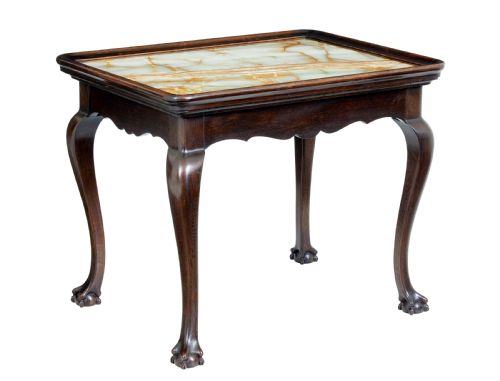
Green Marble Plant Stand
A green marble plant stand lifts a pot or sculpture into the light, bringing rich mineral colour and classical presence to a room.
Green Marble Plant Stand
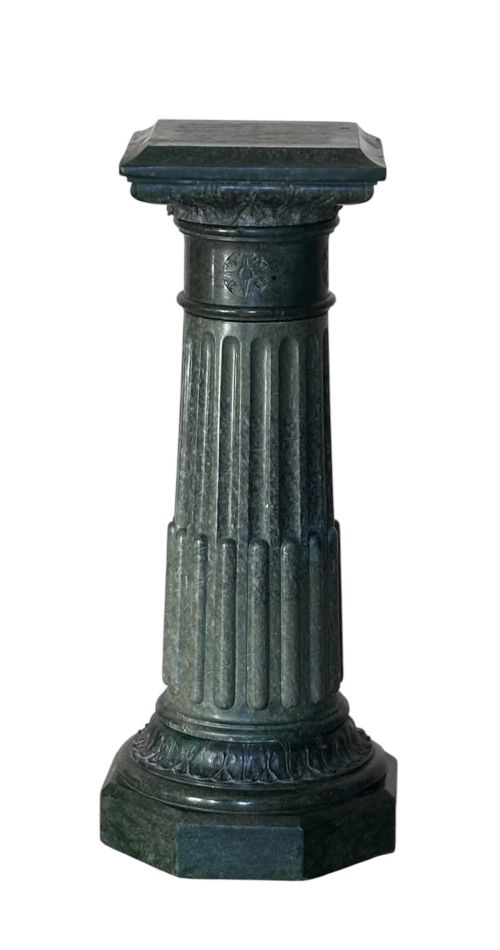
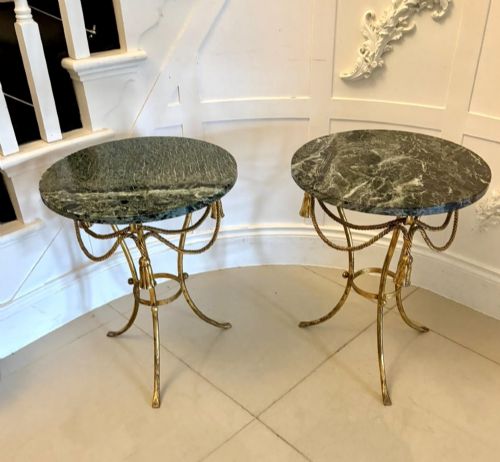
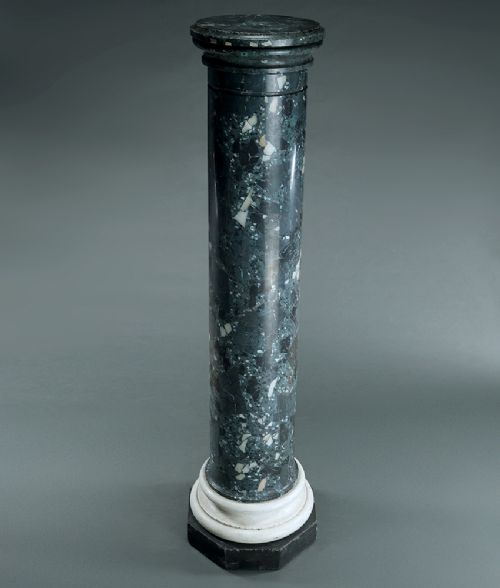
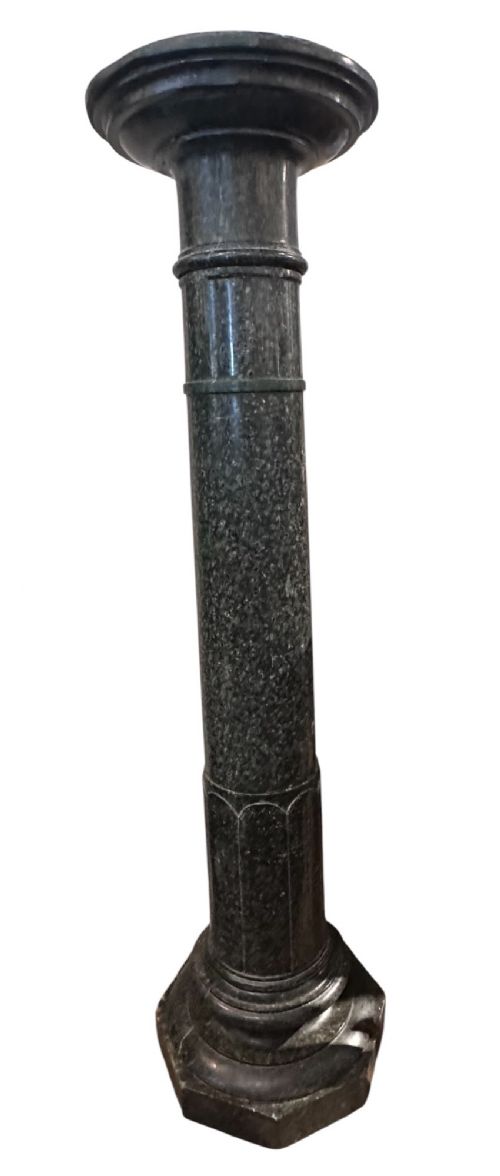
When you search for a green marble plant stand, you are looking at sturdy columns, pedestals, and torchere tables designed to elevate decorative objects. The examples available range from nineteenth-century Victorian columns to Italian Neoclassical pieces and early twentieth-century French designs. Most pieces on this page take the form of tall pedestals and columns, though side tables and bedside cabinets also appear.
Makers and workshops from Victorian Britain and continental Europe shaped these stands to support heavy jardinieres and bronze figures. You will encounter materials spanning Verde Antico, serpentine, and scagliola, often paired with gilt metal or brass mounts. These furnishings served nineteenth-century drawing rooms and grand halls before finding a place in modern interiors.
How they were made
Masons shaped solid blocks and turned sections of marble, serpentine, and onyx on lathes to create smooth cylindrical shafts. Verde Antico and scagliola were selected for their deep green variegation, mimicking ancient stone through specialist plaster and pigment techniques.
Metalworkers added cast brass and gilt metal collars, capitals, and tassel mounts to secure the stone and frame the columns. Cabinetmakers also combined these stone tops with timber structures like oak, mahogany, and giltwood.
Green Marble Plant Stand Retail Price Guide 2026
Typical asking prices for green marble plant stand among the pieces listed under this phrase on Sellingantiques today, from the lower quarter to the upper quarter. They describe what is for sale here now, not the wider market.
What varies in quality
The distinction between ordinary and exceptional stands lies in the depth of the stone's natural patterning and the precision of the turning. Richly figured Verde Antico and serpentine exhibit complex mineral veining that sets them apart from plain stone.
The integration of cast metal mounts and the crispness of classical capitals reveal the hand of a skilled workshop. Pieces that combine solid marble shafts with robust brass detailing demonstrate superior construction.
The Green Marble Plant Stand Glossary
- Torchere
- A tall stand or pedestal originally built to hold a candle or torch. Today these slender columns support plants, urns, and lamps.
- Serpentine
- A group of green silicate minerals often polished for decorative architectural elements and columns. It provides a dense, mottled surface texture.
- Neoclassical
- A style drawing inspiration from the classical art and architecture of ancient Greece and Rome. This aesthetic governed the proportions of nineteenth-century pedestals and columns.
Green Marble Plant Stand: Frequently Asked Questions
How do I style a marble plant stand?
Place a heavy ceramic pot, bronze bust, or trailing plant on top to let the stone column anchor the corner of a room. The height draws the eye upward and breaks up flat horizontal lines in the interior.
Keep surrounding furniture simple so the rich green mineral tones and classical proportions remain the focal point of the space.
Are these stands sturdy enough for heavy pots?
These columns and pedestals were originally engineered to support heavy marble urns, bronze sculptures, and large indoor plants. The dense stone shafts and weighted bases provide inherent stability.
Ensure the stand rests on an even floor surface so the weight distributes evenly down the central shaft.
How do I identify Victorian green marble?
Victorian pieces often display deep green serpentine or variegated marble paired with brass mounts or turned wooden elements. Examine the surface for natural mineral fissures and hand-polished finishes typical of nineteenth-century masonry.
Comparing the form to documented neoclassical designs helps confirm the manufacturing period.
Can I use these stands outdoors?
These antique furnishings are designed for interior use in drawing rooms, hallways, and studies. Exposure to frost, rain, and extreme temperature fluctuations can damage the stone and corrode internal iron rods or brass mounts.
Keep them inside where stable humidity preserves the polish of the marble and scagliola.