
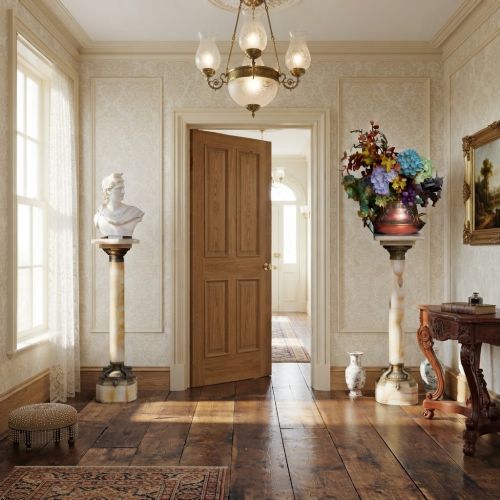
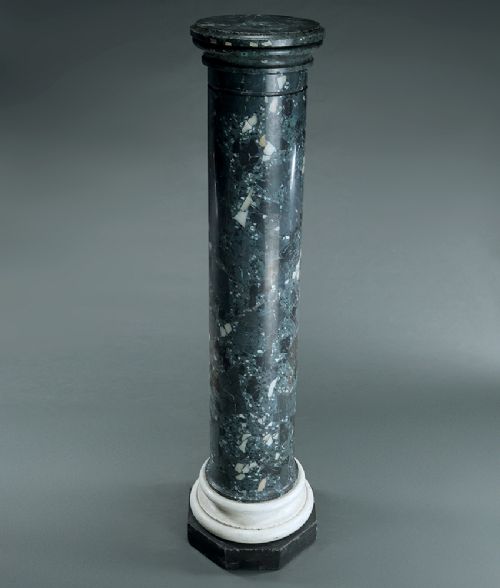


Scagliola Display Column
A scagliola display column offers a classical method for elevating art and sculpture, bringing architectural presence into an interior space.
Scagliola Display Column
When you search for scagliola display column, you are looking at architectural supports designed to showcase sculpture, urns or decorative objects in a room. These pieces function as pedestals and plinths, lifting focal points to eye level.
The versions most likely to meet you on this page date from the nineteenth century, including Victorian examples and the year 1900. They appear in forms such as large square pedestals and columns with socle bases and plinths.
Origins and styles span neoclassical, French chateau, Grand Regency and Victorian neo-classical designs. Alongside genuine scagliola, the selection includes related faux marble wooden display columns and painted plaster pedestals.
How they were made
Maker construction relies on a combination of scagliola, marble, plaster, painted wood and onyx to achieve the weight and appearance of solid stone. Scagliola itself involves pigmented selenite, glue and plaster, trowelled and polished to mimic marbles like verde antico.
Metal mounts such as ormolu collars appear on select pieces to accent the columns. Painted wood and plaster alternatives utilise surface decoration to simulate the grain and depth of natural stone.
Materials recorded across the inventory include scagliola, marble, onyx, ormolu, painted plaster, paint and wood.
What varies in quality
The fidelity of the simulated stone surface dictates the visual success of the piece, where skilled application of colour and veining creates a convincing depth. Simpler painted treatments on wood or plaster sit apart from the intricate polish of true scagliola.
Structural integrity and the harmonious balance between the column shaft, the socle base and the marble plinth determine the overall proportion and visual weight of the pedestal.
The Scagliola Display Column Glossary
- Scagliola
- A composite material made from pigmented gypsum, selenite and glue, applied and polished to imitate natural marble and other hard stones. This technique allows artisans to create complex columnar forms without carving solid blocks.
- Verde Antico
- A dark green serpentine breccia marble prized in classical design for its rich, mottled appearance. Makers of scagliola columns frequently simulated this specific stone finish.
- Socle
- A short plain plinth or pedestal supporting a column or bust. It provides a stable foundation where the shaft meets the base.
- Ormolu
- Gilt bronze mounted onto furniture or decorative objects as an accent. These metal collars add a bright metallic contrast to the stone or scagliola surface.
- Neoclassical
- A style reviving classical architectural motifs from ancient Greece and Rome. Columns and pedestals from this tradition feature clean lines and classical proportions.
Scagliola Display Column: Frequently Asked Questions
What is a scagliola display column?
A scagliola display column is a decorative pedestal made from a composite plaster material designed to imitate solid marble.
Craftsmen use these columns to support sculptures, vases and decorative objects within a grand interior.
How were these columns used historically?
Historically, homeowners used these pedestals to elevate works of art, Grand Tour souvenirs and classical busts to prominent heights.
Placing them in hallways, drawing rooms or libraries allowed collectors to display prized objects effectively.
How do I live with a scagliola column?
You can position a display column in a corner or alcove to support a heavy vase or sculpture.
Keep the piece away from excessive moisture and handle the surface gently during cleaning to preserve the polished finish.
How can I tell periods apart?
Nineteenth century and Victorian examples often feature classical neoclassical motifs like ormolu collars and stepped plinths.
Later nineteenth and early twentieth century pieces incorporate simpler geometric forms or alternative painted finishes.