





Green Marble Pedestal
A green marble pedestal brings geological weight and classical symmetry into a room, elevating sculpture or light.
Green Marble Pedestal
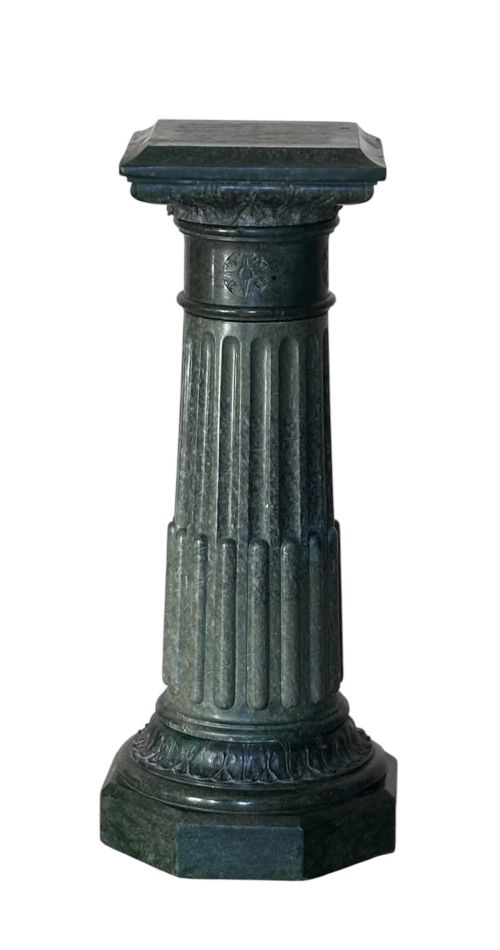
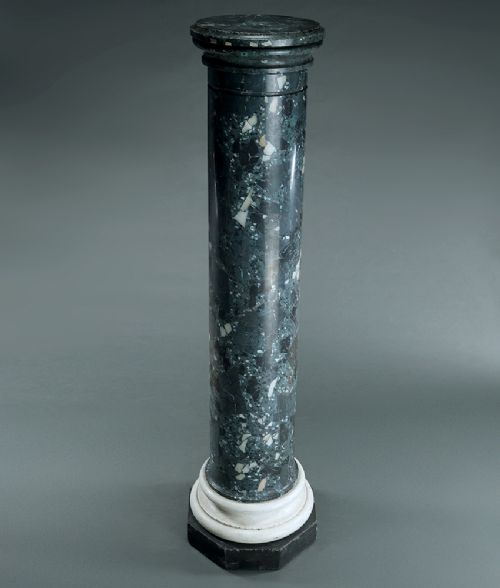
When you search for a green marble pedestal, you encounter architectural columns, plinths, and torchères designed to elevate busts, urns, and lamps. These sturdy supports draw heavily on Neoclassical, French Empire, and Victorian design vocabularies.
The selection ranges from tall, slender Italian and French columns in Verde Antico and serpentine marble to low decorative plinths. Many pieces date from the nineteenth century, reflecting periods when classical antiquity inspired domestic interiors.
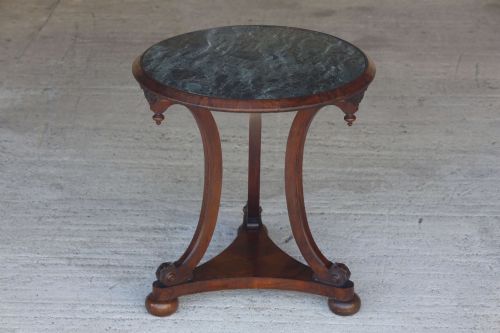
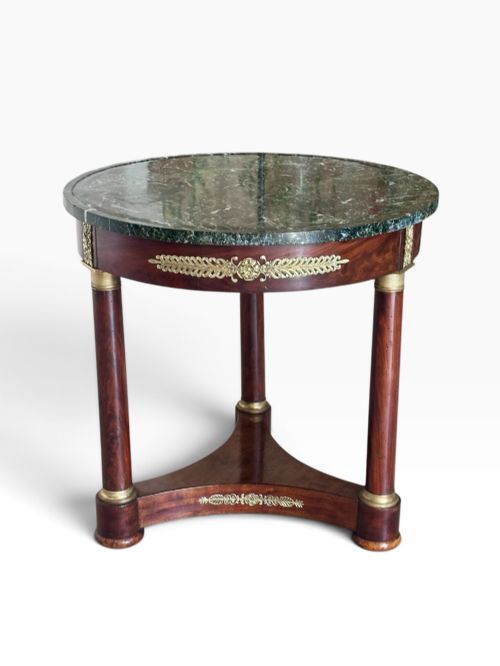
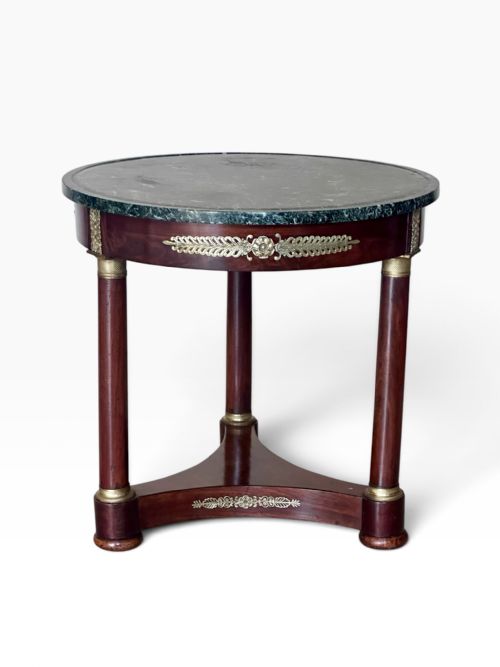
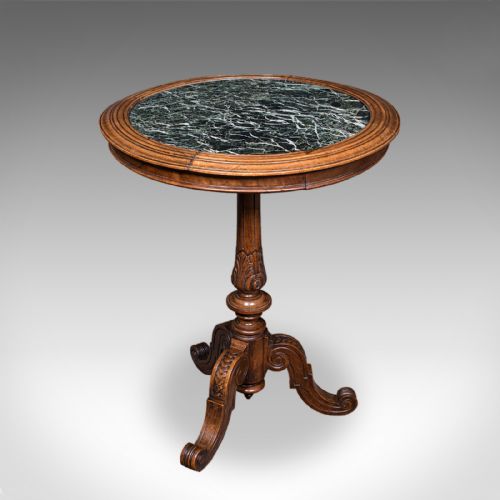
Alongside dedicated pedestals and columns, related forms such as centre tables, gueridons, and display columns occasionally appear. These share the characteristic use of green stone tops or simulated marble surfaces.
What varies in quality
Quality rests in the depth and geological complexity of the marble figure, alongside the precision of the stone turning and polish. Superior columns display seamless joints and rich, uninterrupted veining across the shaft.
The refinement of the associated bronze or giltwood mounts dictates the grade of the piece. Crisp, finely chased ormolu or cast bronze detailing separates standard production from exceptional examples.
Green Marble Pedestal Retail Price Guide 2026
Typical asking prices for green marble pedestal among the pieces listed under this phrase on Sellingantiques today, from the lower quarter to the upper quarter. They describe what is for sale here now, not the wider market.
Listings feature 19th-century French and Italian pieces utilising Verde Antico and serpentine marble alongside bronze and mahogany.
F. De Luca·Willems·Ferdinand Preiss
The Green Marble Pedestal Glossary
- Verde Antico
- A dark green serpentine marble heavily utilised in classical and neoclassical architecture. It shows distinctive white calcite veining throughout the polished stone.
- Torchere
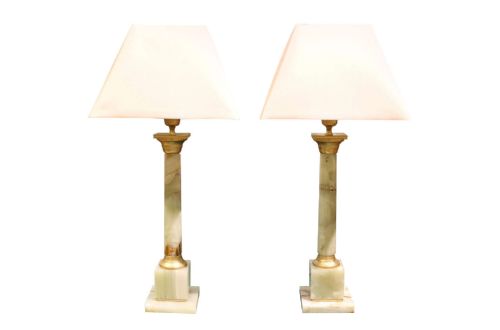
- A tall stand or ornamental candlestick originally designed to hold a torch or lamp. In nineteenth-century interiors, these functioned as elevated supports for lighting.
- Scagliola
- A composite material made from selenite, glue, and pigments, mimicking natural marble. Artisans apply and polish this mixture to create convincing faux stone columns and panels.
- Gueridon
- A small French table supported by one or more columns or figures. These pieces frequently feature marble tops and date from the nineteenth century.
- Plinth
- The heavy base supporting a statue, column, or pedestal. It provides structural stability and grounds the vertical shaft visually.
Green Marble Pedestal: Frequently Asked Questions
What were green marble pedestals used for?
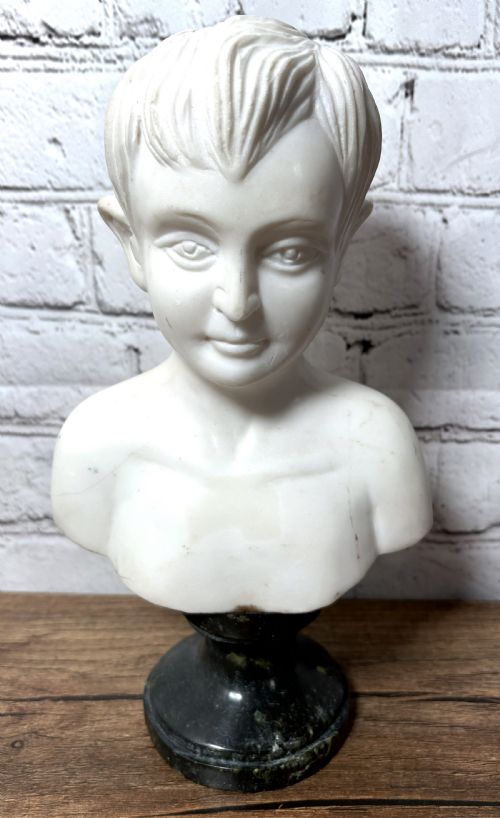
These pieces served primarily to display sculpture, bronze busts, clocks, and decorative urns at eye level in grand nineteenth-century rooms.
They also functioned as standalone architectural elements that brought classical proportions and rich materials into domestic halls and libraries.
How do I date a marble column?
Dating relies on observing the stylistic vocabulary of the base and capital, such as Neoclassical or High Victorian motifs, combined with the manufacturing traits of the stone and metal mounts.
Nineteenth-century pieces often display hand-turned shafts and specific patination on the bronze or brass components that mark their period of origin.
Are these pedestals solid stone?
Construction varies between solid quarried stone and composite alternatives like scagliola or simulated marble over timber framing.
Many columns utilise heavy natural marble for the main shaft while incorporating internal iron or wooden rods for structural stability.
How do I style a pedestal at home?
A tall column suits an empty corner or flanking a doorway, carrying a bronze sculpture, a lamp, or a trailing plant.
Ensure the weight capacity of the top matches the object you place upon it to maintain stability.