

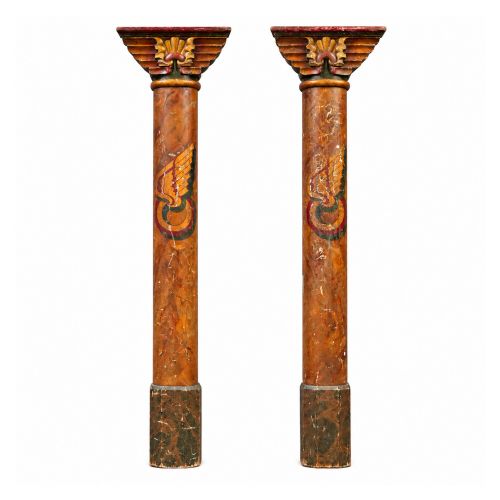
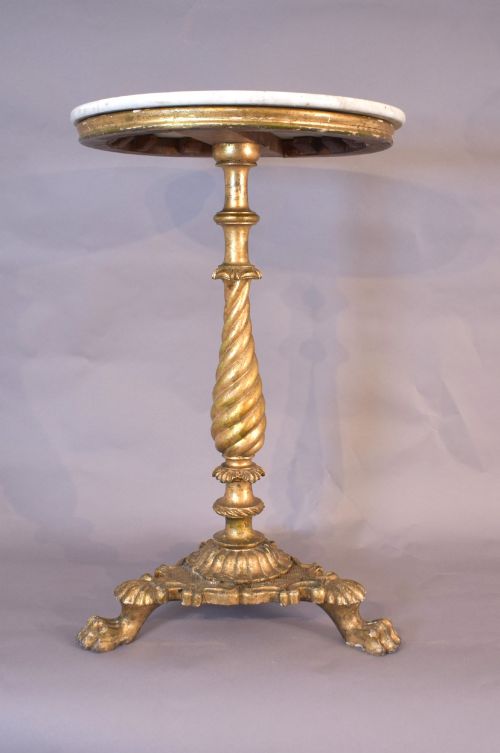
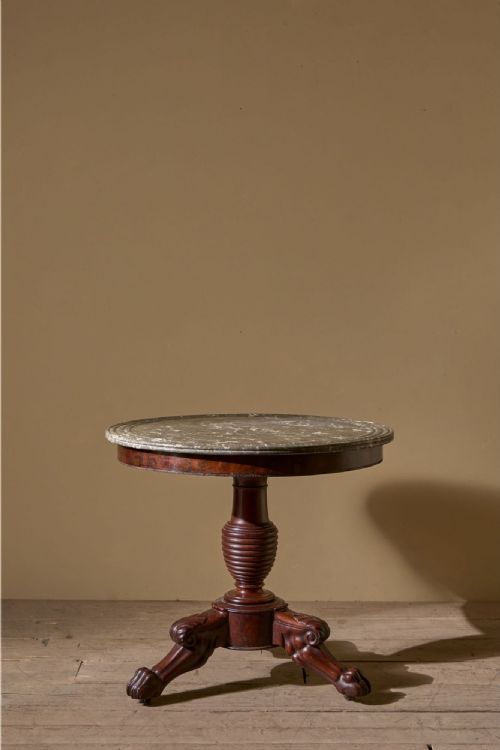
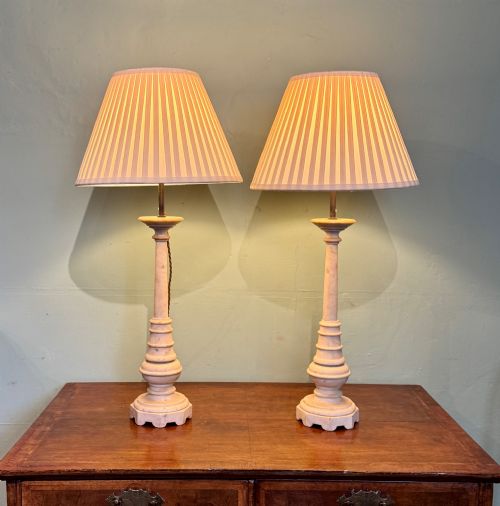


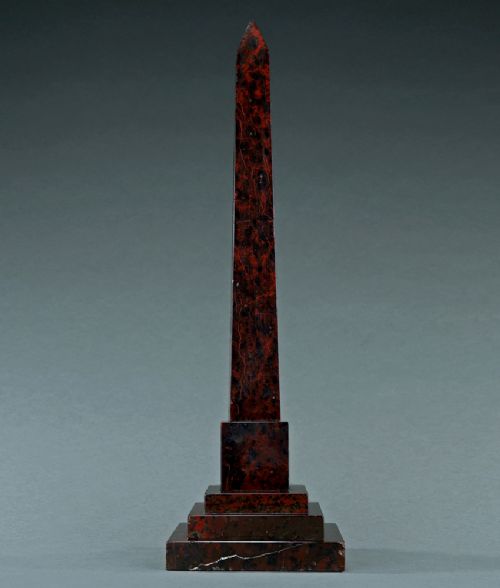

Carved Marble Column
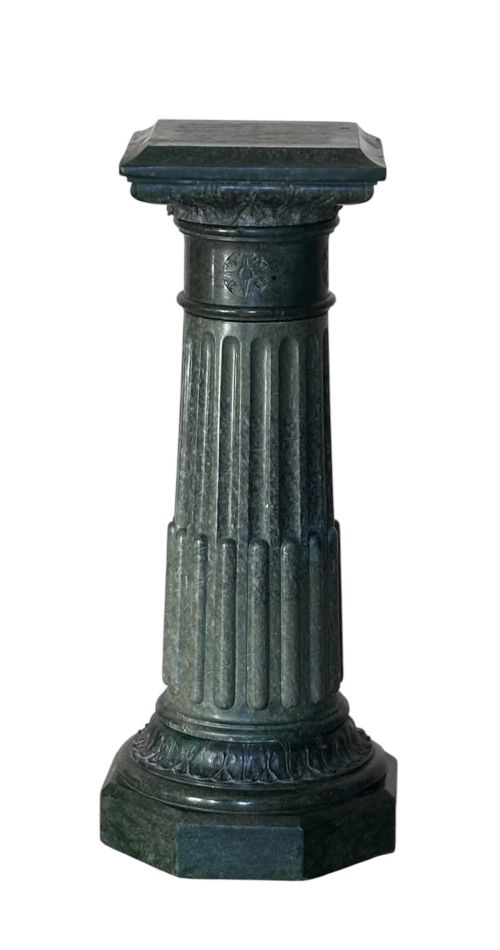
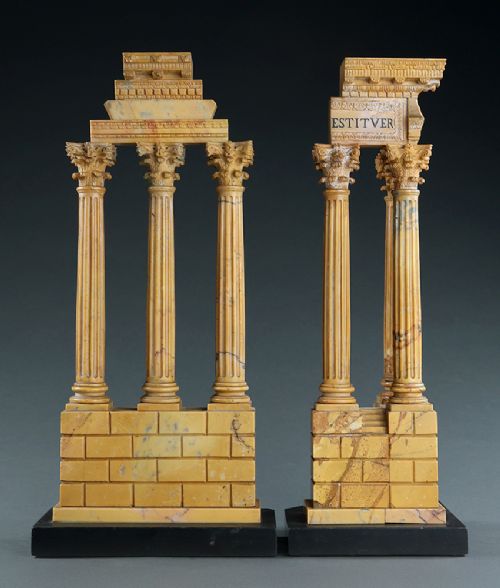
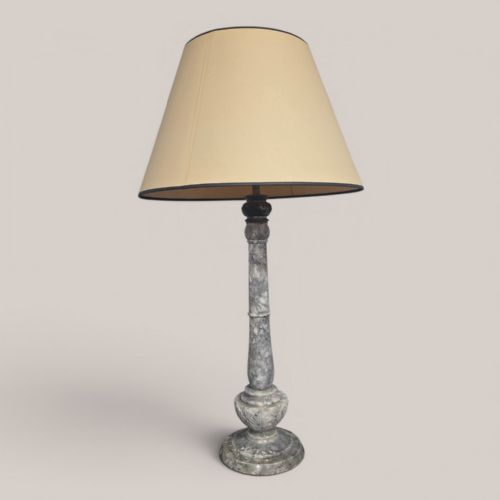
A carved marble column brings stone weight and classical line into a room, serving as a solid stage for a bust, lamp or plant.
Carved Marble Column
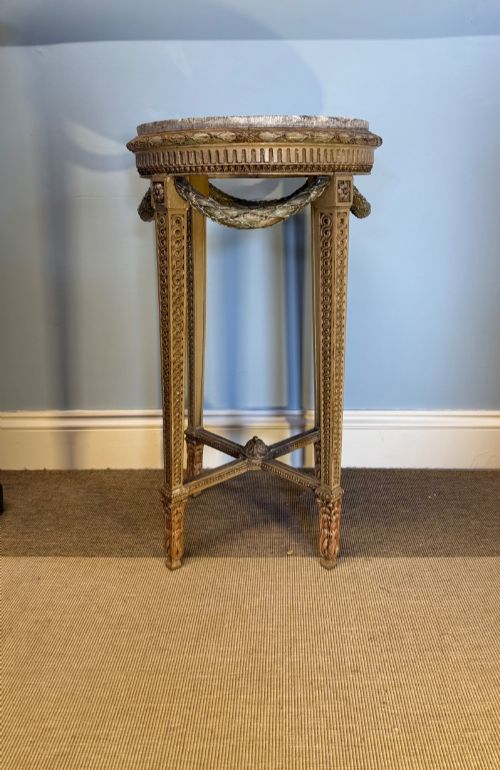
A carved marble column functions primarily as a display pedestal, torchere or plant stand, lifting decorative objects into the line of sight. The selection ranges from slender architectural shafts to substantial sculptural supports originating across the nineteenth and early twentieth centuries.
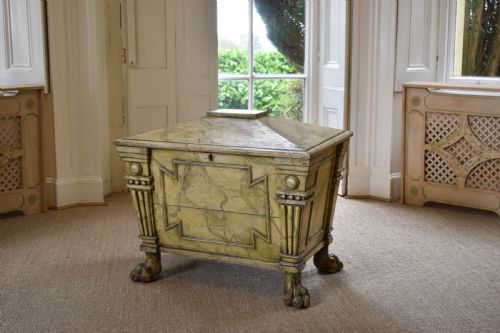
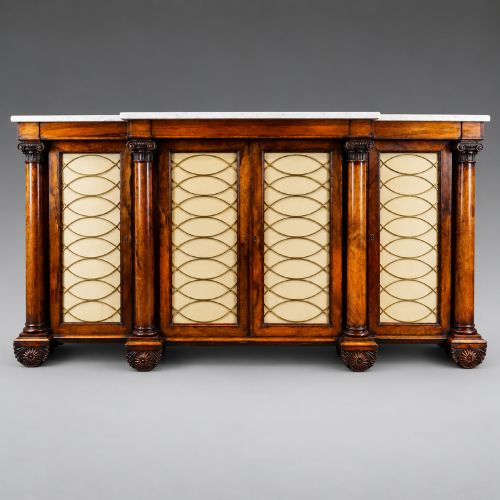
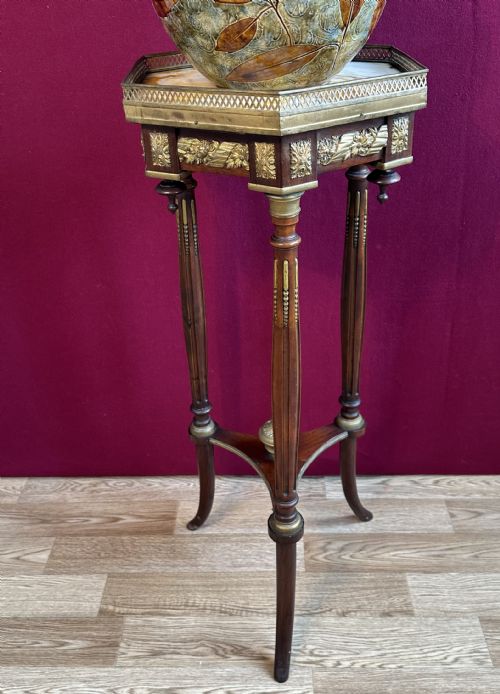
The Neoclassical and Louis XVI styles dominate the forms, frequently drawing on French and Italian design traditions. Alongside pure stone shafts, the inventory includes hybrid pieces combining marble tops with mahogany, walnut, pine, brass and ormolu mounts.
How they were made
Masons shaped these columns from various stones including Carrara, Siena, Verde Antico, grey, red serpentine and variegated marbles, alongside softer alabaster and scagliola. Turning hard stone on a lathe required patient abrasion and water cooling to achieve smooth cylindrical profiles and fluted shafts.
Many examples incorporate cast or chased brass and ormolu collars, capitals and bases to accent the natural stone. Wooden components rely on traditional joinery in mahogany, walnut, satinwood and giltwood to support inset stone tops and plinths.
Carved Marble Column Retail Price Guide 2026
Typical asking prices for carved marble column among the pieces listed under this phrase on Sellingantiques today, from the lower quarter to the upper quarter. They describe what is for sale here now, not the wider market.
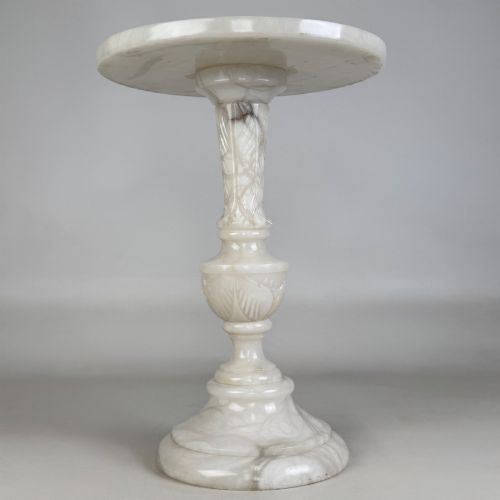
The inventory records diverse functional forms including torcheres, plant stands, gueridon tables, bedside cabinets, and grand architectural pedestals.
What varies in quality
The integrity of the stone carving dictates the upper tier of quality, distinguishing crisp, deep acanthus capitals and sharp fluting from soft or mechanical machine work. Natural veining and harmonious colour matching across a pair also separate exceptional examples from standard production.
Mounting hardware and secondary materials reveal the maker's hand, where heavy fire-gilt ormolu and fine secondary timbers like mahogany or walnut indicate a workshop of higher ambition. Structural stability in tall, heavy stone shafts depends entirely on the precision of the internal pinning and the flat truing of base joints.
Eduardo Giolli·S. Kitson
The Carved Marble Column Glossary
- Scagliola
- A composite material made from selenite, glue and pigments, plastered onto a core to imitate genuine marble. Craftsmen polish the surface to a high gloss that closely resembles natural stone.
- Verde Antico
- A dark green serpentine marble flecked with white calcite veins, heavily favoured in classical revival architecture and decorative columns. Italian quarries supplied much of this dense stone.
- Torchere
- A tall, slender stand designed to hold a lamp, candle or small sculpture. These supports elevate light sources or ornaments above eye level in a room.
- Ormolu
- Gilded bronze mounted onto furniture, pedestals and clocks to provide decorative metallic contrast. The technique involves applying a mercury and gold amalgam to cast bronze before firing.
- Gueridon
- A small circular table on a central pillar or tripod base, frequently topped with marble. Originating in seventeenth-century France, these tables often served as candle stands or small display surfaces.
Carved Marble Column: Frequently Asked Questions
How do I style a marble column at home?
Place a single column in an empty corner or hallway to anchor the space with vertical lines. Top the piece with a bronze bust, a heavy ceramic bowl or a trailing plant to soften the hard stone edges.
Ensure the floor is level and solid before positioning heavy stone shafts. Heavier columns require stable placement away from high-traffic zones where accidental impacts could topple them.
What is the difference between a column and a pedestal?
A column strictly follows classical architectural orders with a base, shaft and capital, often featuring fluting or spiral carving. A pedestal or plinth can be square, rectangular or panelled, functioning primarily as a flat-topped display box.
Both forms served identical decorative purposes in nineteenth-century interiors. The choice depends entirely on whether you prefer classical cylindrical geometry or straight-sided architectural blocks.
How can I tell the age of a stone column?
Examine the underside and internal fixings for hand-cut screws, peg joins and the natural weathering of the stone. Nineteenth-century examples often display subtle tool marks and heavier patination on the base and capital.
Compare the decorative style, such as Neoclassical revival or Louis XVI mounts, against known period manufacturing techniques. The presence of secondary timbers like old mahogany or pine often points towards nineteenth-century workshop origins.