


Grey Marble Column
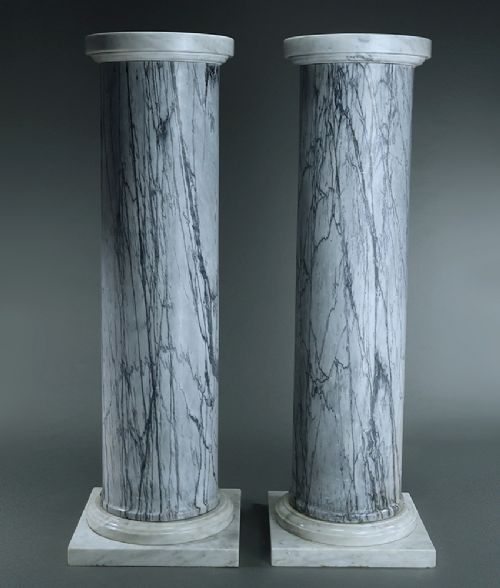
A grey marble column brings architectural weight and classical proportion into a room.
Grey Marble Column
When you search for a grey marble column, you are looking at substantial architectural supports and display stands that draw on neoclassical design. These pieces function primarily as pedestals for sculpture or as standalone decorative elements within formal interiors.
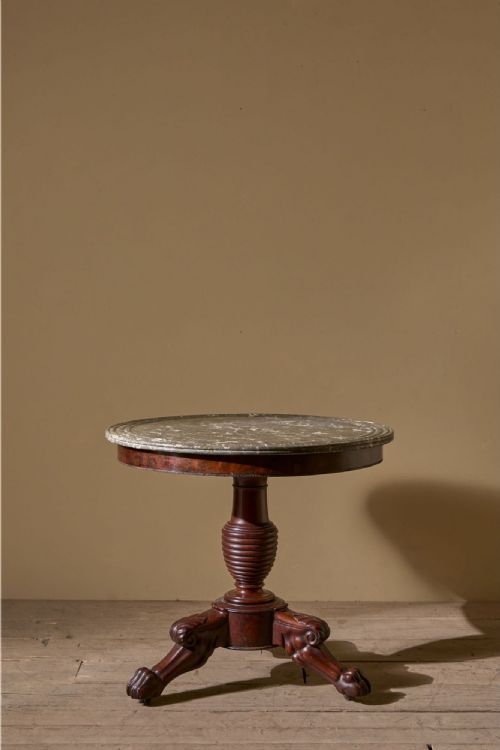
The versions most likely to be met on this page span the nineteenth century and the early twentieth century. They appear alongside related forms such as gueridon tables, console tables, and commodes featuring marble components.
Origins trace principally to French classical and neoclassical traditions, encompassing both solid stone shafts and composite forms. Makers utilised materials like bardiglio and scagliola to achieve the characteristic grey tone.
How they were made
Craftsmen shaped natural stone such as bardiglio and various marbles into smooth, classical shafts, often pairing the grey stone with contrasting white socle bases or black marble plinths. Scagliola offered an alternative method, using pigmented plaster to imitate the rich grain and colour of genuine marble.
Structural framing frequently incorporated timber elements like mahogany and walnut, particularly in table and commode variants where marble tops rest on wooden bases. Brass fittings and painted plaster also appear in the construction of related pedestals and decorative supports.
Listings feature nineteen-century and early twentieth-century pieces, incorporating materials such as scagliola, mahogany, brass, and painted plaster alongside various marbles.
What varies in quality
The distinction between ordinary and exceptional examples lies in the depth of the material and the ambition of the neoclassical detailing. Solid bardiglio and finely executed scagliola display a naturalistic grain that lesser painted surfaces simply imitate.
Proportion and stability dictate the standing of a column, with well-balanced plinths and socle bases providing the necessary architectural presence. The integration of stone with secondary materials like brass or mahogany reveals the maker's hand and commitment to period style.
The Grey Marble Column Glossary
- Bardiglio
- A grey Italian marble characterised by darker veins and cloudy markings. It provides the cool, sober palette favoured in neoclassical architecture.
- Scagliola
- A composite material made from pigmented selenite, glue, and plaster, applied to resemble marble. Skilled artisans polished this mixture to achieve a convincing stone finish.
- Socle
- A short plinth or footing supporting a column, bust, or pedestal. It elevates the main shaft and grounds the piece visually.
- Gueridon
- A small round table supported by a central pillar or figures. Nineteenth-century examples frequently incorporate marble tops.
- Neoclassical
- A style reviving the forms and proportions of ancient Greece and Rome. It dominates the design vocabulary of nineteenth-century French columns and furniture.
Grey Marble Column: Frequently Asked Questions
What holds up a heavy marble column?
These columns rely on their own substantial weight, often anchored by a solid marble plinth or a stepped wooden base. The centre of gravity is carefully managed through dense stone or weighted internal structures.
Larger floor-standing pedestals distribute their load evenly across the floor, making them stable platforms for heavy bronze busts or large sculptures without requiring wall attachment.
How do I style a column in a modern room?
Position a grey marble column in an empty corner or flanking a doorway to introduce vertical lines and classical proportion. The neutral grey tones integrate easily with contemporary minimalist furnishings.
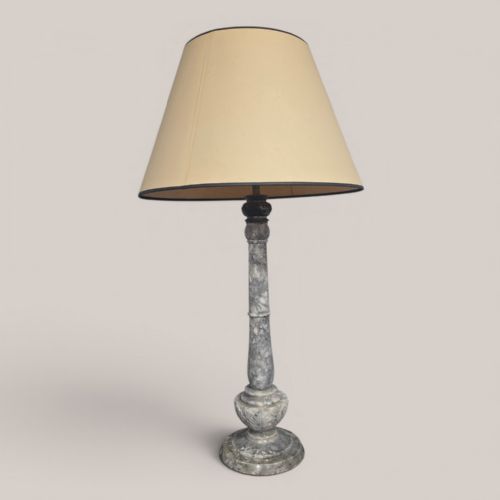
Top the column with a single sculptural object, a lamp, or leave it bare to appreciate the architectural form and the natural grain of the stone.
How do I clean grey marble?
Dust the stone regularly with a soft, dry cloth to prevent grit from settling into the porous surface. Avoid acidic cleaners, vinegar, or harsh detergents which will etch the marble.
Use only warm water and a neutral soap if washing is necessary, drying the surface thoroughly afterwards to maintain the polished finish.
How can I tell scagliola from real marble?
Examine the surface closely under a strong light and touch the material to check its temperature. Real marble feels cold to the touch and shows natural mineral inclusions that run deep into the stone.
Scagliola often feels slightly warmer and may reveal tiny air bubbles or hand-applied pigment patterns upon close inspection, reflecting its plaster-based composition.