


Famille Rose Plate
These famille rose plate pieces bring hand-painted enamels and export history to a room, offering collectors a tangible piece of Qing porcelain trade.
Famille Rose Plate
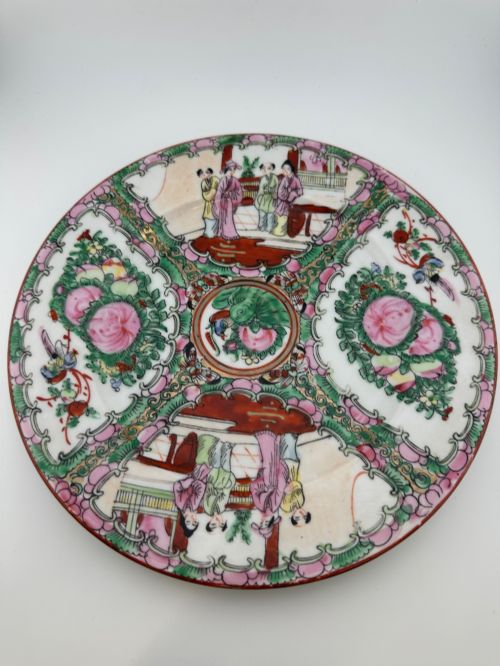
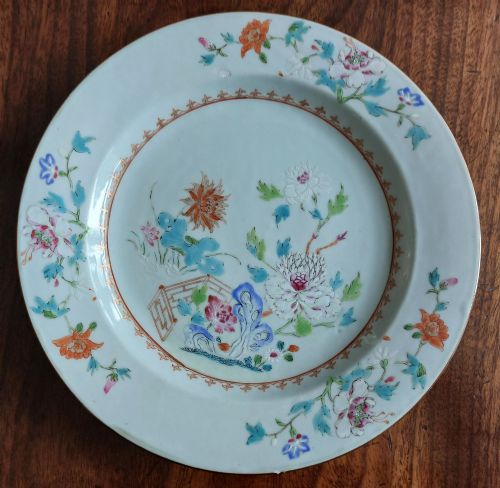
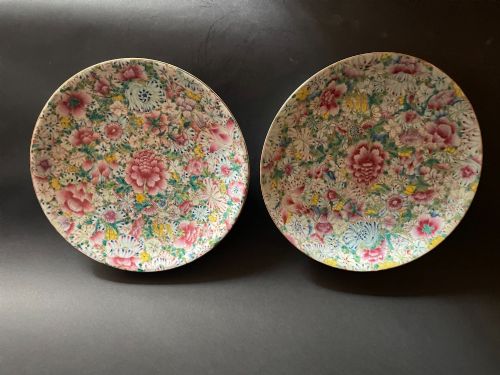
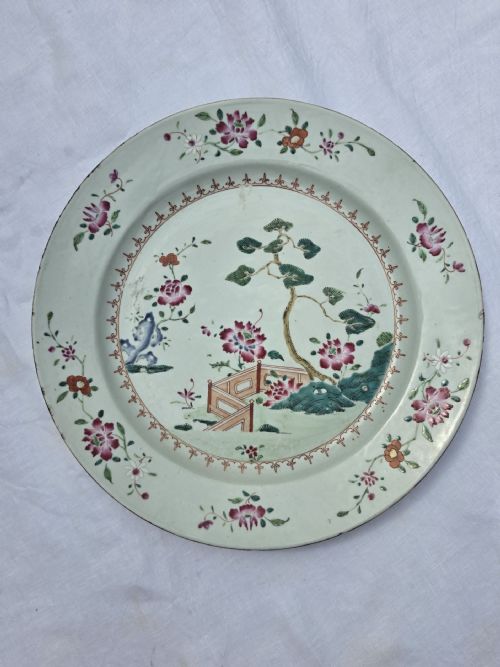
A famille rose plate is a ceramic vessel decorated with opaque pink or rose enamels, originating primarily from Chinese export kilns during the Qing Dynasty. The pieces found on this page span the eighteenth and nineteenth centuries, including items from the Qianlong period and later Canton productions.
Forms range from standard circular dinner plates and soup plates to octagonal armorial chargers, rectangular dishes, and trefoil trays. While many items are plates, the selection also includes bowls, saucers, and platters created for both domestic court use and the Western export market.
How they were made
Makers utilised hard-paste porcelain as the primary body, fired at high temperatures to create a durable, white ceramic foundation. Artisans then applied designs using overglaze enamel and enamel glaze, introducing the signature pink palette alongside green, blue, yellow, and iron red pigments.
Selected details received gold leaf, gilding, or touches of coral-orange ground to highlight specific motifs such as birds, flowers, heraldic coats of arms, and figures. The painting was executed entirely by hand before a secondary, lower-temperature kiln firing fixed the vitreous colours to the glaze.
The listings here include items featuring hard-paste porcelain, overglaze enamel, and gold leaf across the Georgian, Qing Dynasty, and Meiji periods.
What varies in quality
The distinction between tiers of work rests on the precision of the hand-painted brushwork and the complexity of the composition. Early eighteenth-century examples often display meticulous detail in facial expressions, plumage, and botanical elements, while later nineteenth-century Canton pieces can show broader, more repetitive patterns.
The inclusion of specific heraldry, such as armorial crests for European families, or unusual narrative scenes like Jesuit designs and animal subjects, elevates the historical interest of a piece. The crispness of the porcelain body and the preservation of the delicate gilding and rose enamel further separate standard utilitarian wares from fine collector examples.
Samson of Paris
The Famille Rose Plate Glossary
- Famille Rose
- A palette of opaque enamels introduced in Chinese porcelain during the Qing Dynasty, distinguished by its dominant pink or rose colour derived from colloidal gold. This palette allowed painters to achieve tonal gradations that earlier green-dominant families could not.
- Qianlong Period
- The era of the Qianlong Emperor lasting from 1736 to 1795, representing a peak in technical proficiency and artistic output for Chinese export porcelain. Pieces from this time often exhibit fine potting and intricate enamel work.
- Armorial Plate
- A ceramic dish painted with a specific European family coat of arms, commissioned through the Chinese export trade. These plates were ordered by wealthy merchants and nobility, often matching larger dinner services.
- Canton
- A style of Chinese export porcelain decorated in the southern port city during the nineteenth century, typically featuring panels filled with birds, butterflies, and figures against a dense ground of green foliage and gilt flowers.
- Hard-paste Porcelain
- A dense, vitrified ceramic compound made from petuntse and kaolin, fired at high temperatures. It forms the durable, translucent body characteristic of traditional Chinese imperial and export wares.
Famille Rose Plate: Frequently Asked Questions
How do I date an 18th-century plate?
Dating relies on stylistic clues, paste characteristics, and historical context rather than a simple stamp. Eighteenth-century pieces, particularly from the Qianlong period, often feature thinner porcelain bodies, refined painting styles, and specific floral or armorial borders.
Later nineteenth-century productions tend to use heavier porcelain and denser, more repetitive enamel patterns, such as the rose medallion designs associated with Canton. Comparing the vibrancy and wear of the overglaze enamels helps confirm the age.
Were these plates used for dining?
Many items were indeed made as functional tableware for wealthy European and domestic households, forming part of large dinner and service sets. Armorial plates, for instance, sat at elite tables to display family prestige during formal meals.
Over time, surviving examples transitioned into decorative objects due to their delicate enamel surfaces and age. Today, they are more commonly displayed on walls or in cabinets rather than utilised for food.
What is the difference between Canton and Qianlong pieces?
Qianlong period pieces, produced during the eighteenth century, generally exhibit restrained compositions with meticulous attention to detail, fine floral borders, and heraldic or pictorial subjects. The painting is precise and the porcelain is typically crisp.
Canton pieces date primarily from the nineteenth century and are recognised by busier, compartmentalised layouts filled with figures, birds, and botanical motifs. They often incorporate heavy gilt and vibrant green accents across the surface.
How should I display my porcelain safely?
Displaying these items requires stable, secure mountings that do not pressure the edges or the delicate overglaze enamels. Wall-mounted plate hangers should feature protective rubber sleeves to prevent chipping the rim.
Keep pieces away from direct, strong sunlight to protect the stability of the antique enamels and gold leaf. Position them in low-traffic areas where accidental bumps from passing guests are unlikely.