





Canton Rose Medallion
Canton rose medallion ceramics are vibrant Chinese export porcelains defined by segmented enamel panels, bringing rich nineteenth-century colour and narrative detail to interiors.
Canton Rose Medallion
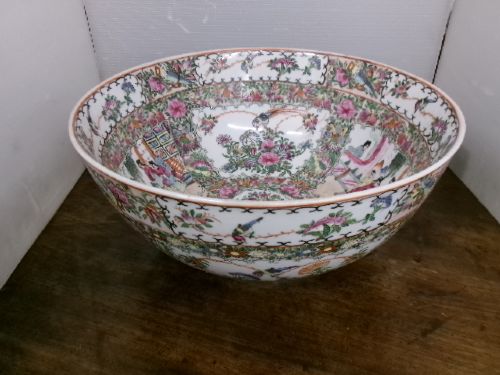
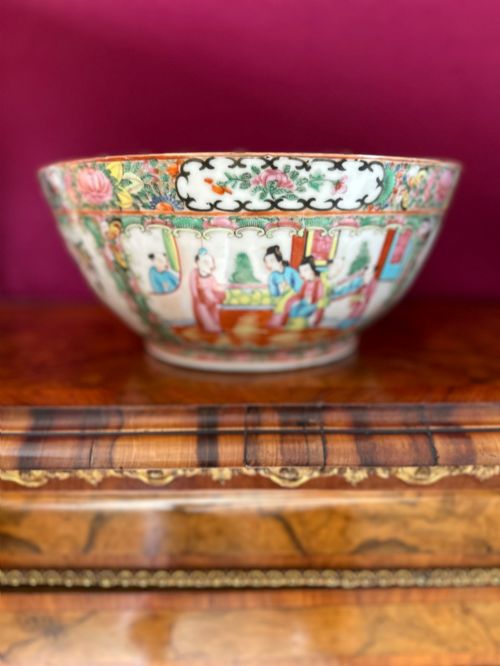
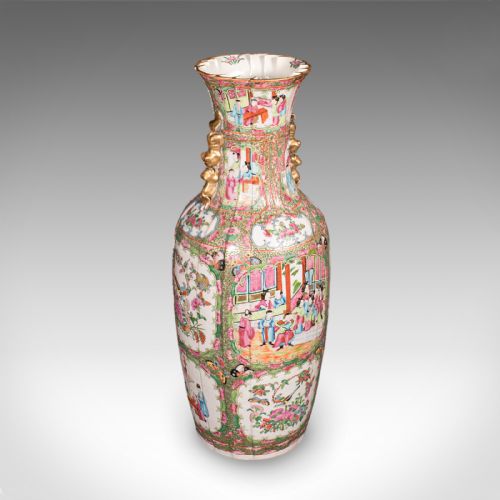
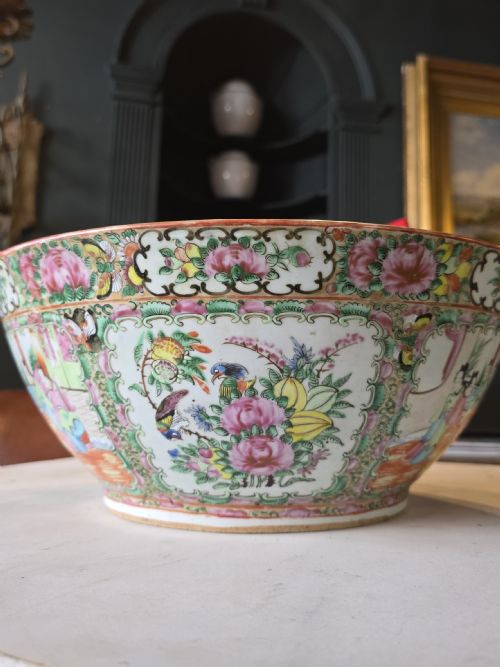
When you search for canton rose medallion, you encounter heavily decorated porcelain vessels designed for export from China to Western markets. The most common forms on this page are large punch bowls, decorative plates, and monumental baluster vases, many originating from the nineteenth century during the Qing Dynasty.
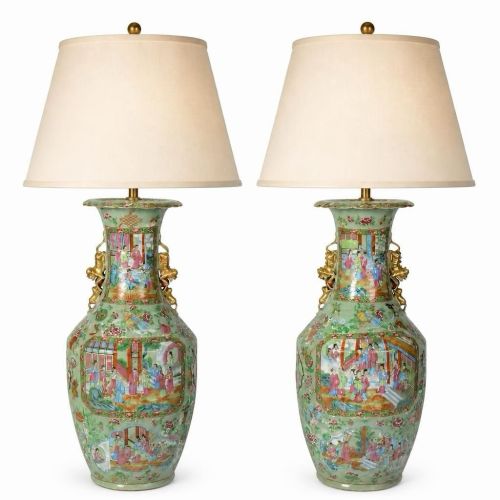
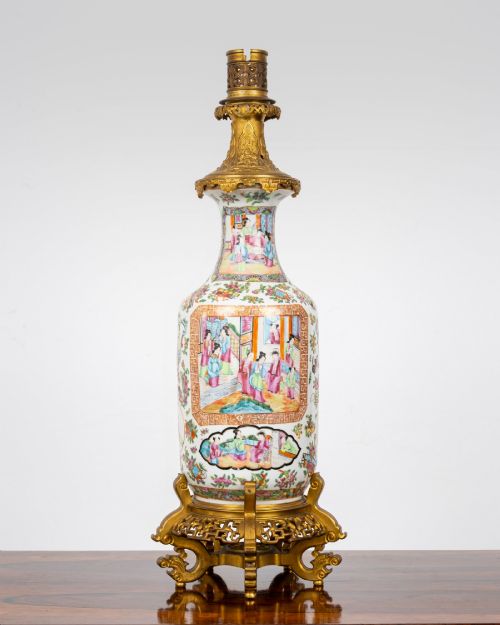
These items range from everyday vessels to grand centrepiece bowls and umbrella stands. Several examples survive as paired vases or have been converted into table lamps using gilt bronze mounts or brass fittings.
The style merges traditional Cantonese painting with motifs intended for Western drawing rooms. You will find pieces shaped as trefoils or shamrocks alongside standard round dishes and large garden seats.
Materials and technique
The foundation of every piece is white Chinese porcelain, shaped into bowls, vases, and trays before being hand-painted. Artisans utilised colourful overglaze enamels, predominantly pinks and greens, supplemented by gold leaf and gilding to highlight the intricate borders and panels.
Mounts and stands introduce supplementary materials such as gilt bronze, brass, and padouk wood. Many of the nineteenth-century lamp conversions incorporate these metal elements to secure electrical fittings while maintaining the visual weight of the ceramic.
One nineteenth-century dish arrives in the unusual shape of a shamrock, proving that Cantonese artisans readily catered to specific Western botanical whims.
Factors of quality
Quality rests in the precision of the hand-painted panels and the density of the gilding. Superior examples display finely rendered figures and birds within the medallions, set against complex backgrounds filled with butterflies and foliage.
The scale of the object also dictates its standing, with monumental baluster vases and expansive punch bowls representing the more ambitious outputs of Cantonese workshops. Condition and the integrity of the original enamel colours further separate standard production from exceptional survivals.
The Canton Rose Medallion Glossary
- Famille Rose
- A palette of opaque overglaze enamels introduced in China during the Qing Dynasty, distinguished by its characteristic pink colour derived from colloidal gold.
- Canton
- A major Chinese port city where porcelain was decorated for the export market during the eighteenth and nineteenth centuries.
- Baluster
- A vase shape with a rounded body that tapers toward the base and swells near the middle, often fitted with a cover.
- Ormolu
- Gilt bronze mounts applied to furniture and ceramics, frequently seen on nineteenth-century European adaptations of Chinese vases.
- Trefoil
- A three-lobed decorative shape derived from clover leaves, occasionally utilised for porcelain trays and dishes.
Canton Rose Medallion: Frequently Asked Questions
What is canton rose medallion?
It is a specific style of Chinese export porcelain decorated with alternating panels of figures, birds, and flowers painted in bright enamels.
The design is centred around a medallion, typically containing a bird or flower, surrounded by geometric and botanical borders enhanced with gold gilding.
How were these porcelain pieces used?
Historically, large bowls functioned as punch bowls or centrepieces for dining tables, while massive vases and umbrella stands decorated grand halls.
Today, many of the lidded vases and punch bowls are displayed as focal points, and several have been adapted into table lamps for modern lighting.
How do I date a piece?
Most items bearing this decoration date from the nineteenth century during the Qing Dynasty, marked by specific hand-painted techniques and heavy enamelling.
Examining the base, the weight of the porcelain, and the style of the gilding helps distinguish earlier export pieces from twentieth-century reproductions.
Are these items waterproof?
While the porcelain itself is vitrified and holds water, antique garden seats and decorative vessels are primarily intended for display rather than utility.
Using them as planters requires caution to protect the historic overglaze enamels and original gilding from moisture damage.