



Antique Chinese Display Plate
These antique chinese display plate pieces bring hand-painted porcelain and bronze into the room, offering centuries of ceramic tradition for modern walls and cabinets.
Antique Chinese Display Plate
An antique chinese display plate serves primarily as a decorative focal point rather than tableware, spanning periods from the Yuan dynasty through the Qing dynasty and into the Victorian era. The selection includes chargers, platters, and dishes created for export and domestic use.
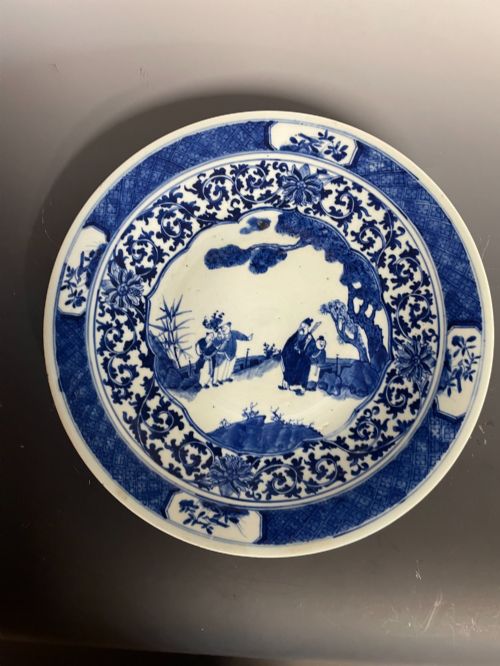
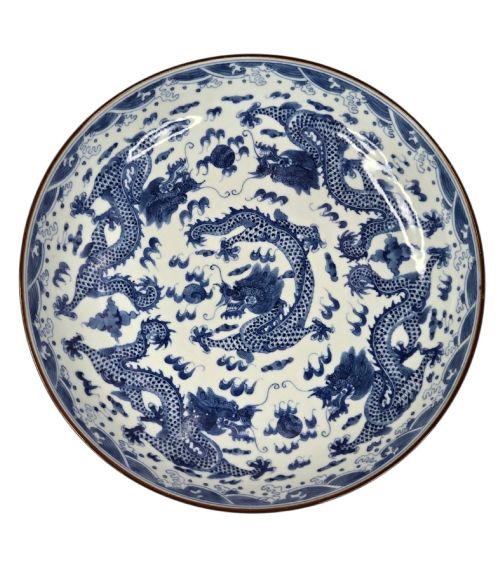
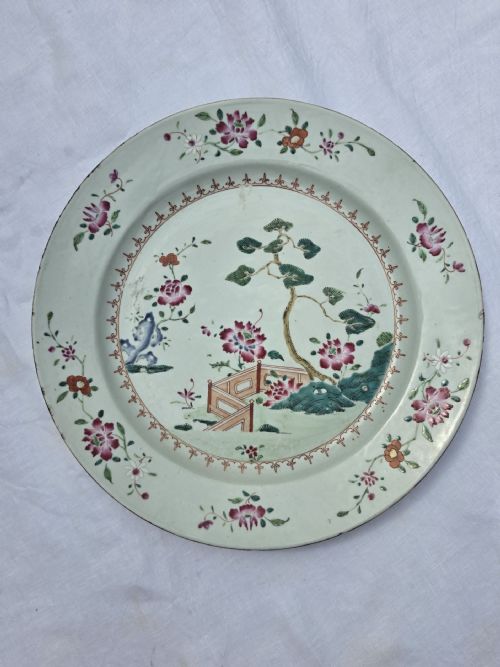
Buyers encounter blue and white porcelain alongside famille rose, famille verte, and Canton rose medallion enamels. Forms range from large circular chargers with barbed rims to smaller hand-painted dishes.
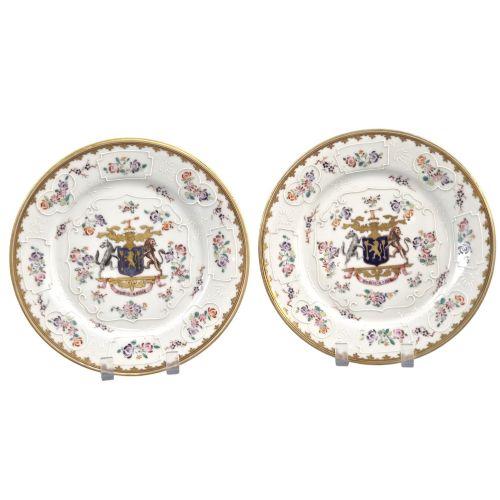
Origins vary from direct Chinese export wares to European interpretations, including pieces by Edmé Samson and Minton alongside Japanese Arita Imari wares.
Materials and technique
Hard-paste porcelain and ceramic form the structural foundation of these objects, shaped often with moulded floral scrolls or barbed rims. Cobalt glaze provides the deep blue pigments underglaze, while enamels add polychrome detail.
Gold leaf and brass or bronze elements occasionally supplement the ceramic bodies, particularly in mounted pieces or cloisonné plaques. Hand-painted brushwork defines the surface imagery across both export and domestic production.
Listings feature hard-paste porcelain, brass, and bronze across the 18th and 19th centuries.
Variations in quality
The refinement of the hand-painted brushwork distinguishes standard production from exceptional examples, visible in the precision of dragon motifs, court life scenes, and floral scrolls. Control over the cobalt glaze and polychrome enamels determines visual depth.
Age and period authenticity drive interest, with Kangxi and Qianlong period pieces showing distinct potting characteristics compared to later 19th-century or 20th-century items. The crispness of moulded details and the preservation of enamel surfaces complete the distinction.
Minton·Bluett And Sons
The Antique Chinese Display Plate Glossary
- Charger
- A large decorative plate or platter, traditionally used for presentation rather than dining. These pieces measure larger than standard dining plates.
- Famille Rose
- A major palette of Chinese ceramic glazes introduced in the Qing dynasty, characterised by opaque pink enamel. It allowed for delicate shading and pictorial rendering.
- Famille Verte
- A ceramic palette dominated by green enamel, developed during the Qing dynasty and prominent on 19th-century dishes. It often combines with iron red and blue.
- Canton
- A style of Chinese export porcelain decorated in vibrant polychrome enamels, frequently featuring panels of figures and birds surrounded by floral borders. Production centered in Guangdong province.
- Imari
- A style of Japanese porcelain imported to Europe, featuring underglaze blue and red, highlighted with gold. The aesthetic influenced various export wares.
Antique Chinese Display Plate: Frequently Asked Questions
How were antique Chinese chargers displayed?
These large plates were traditionally shown on sideboards or hung on walls using specialised wiring or plate hangers. Their generous diameters made them ideal for architectural display in dining rooms and halls.
Today, collectors use similar mounting methods or dedicated stands to exhibit them securely on surfaces while protecting the glazed edges.
What is the difference between a plate and a charger?
A charger is significantly larger than a standard plate, typically exceeding twelve inches in diameter. They served as centrepieces or serving platters rather than individual tableware.
In historical interiors, chargers occupied prominent positions on display furniture due to their commanding visual presence.
How do I identify a Qing dynasty piece?
Identification relies on examining the potting characteristics, the composition of the body, and the style of the hand-painted decoration. Cobalt blue tones and enamel vibrancy offer key diagnostic clues for specific reigns.
Marks on the reverse, such as six-character Kangxi periods, provide additional context when combined with material analysis.
Can these display plates be hung safely?
Most antique display plates and chargers tolerate wall hanging provided appropriate, non-abrasive brass or coated spring hangers are utilised. The weight of larger chargers requires secure wall anchors.
Checking the rim depth and body thickness ensures the chosen hardware matches the specific physical dimensions of the ceramic.