


Antique Heraldic China
Antique heraldic china pieces bear painted family crests and coats of arms, offering a tangible link to landed lineage and historical households.
Antique Heraldic China
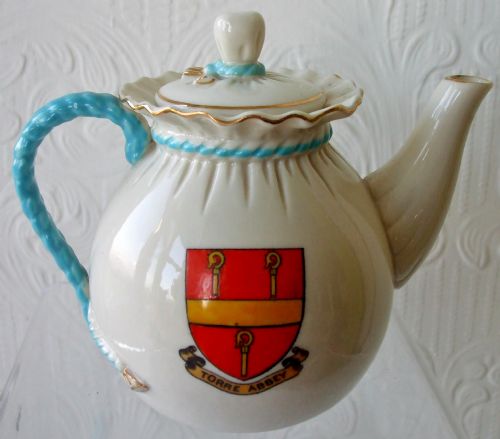
When you search for antique heraldic china, you encounter ceramic tableware and decorative items painted with specific family crests, coats of arms, and mottoes. These pieces were commissioned by noble families, landed gentry, and institutions to display their lineage and status during formal dining.
The selections you meet on this page span the eighteenth and nineteenth centuries, featuring domestic porcelain from English factories alongside Chinese export porcelain made to European order. Plates, soup plates, teacups, saucers, teapots, and serving dishes dominate the forms available.
Chinese export examples from the eighteenth century sit alongside later Victorian and Georgian pieces produced by prominent English potteries. Each item carries heraldic iconography that identifies the original commissioning family or institution.
How they were made
Potters shaped these objects using hard-paste porcelain, soft-paste porcelain, bone china, and glazed pottery, depending on the manufacturing origin and period. Chinese export works utilised durable hard-paste porcelain bodies, while English counterparts often employed refined bone china or soft-paste porcelain.
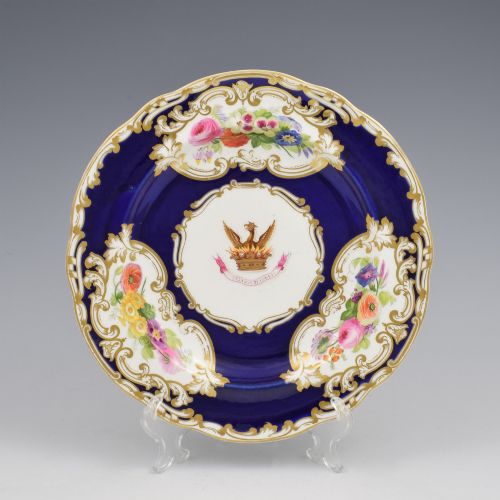
Decorators applied intricate heraldic designs using hand-painted enamel colours and gold leaf or gilt highlights, which were then fired in kiln environments to fix the pigments. Artisans rendered complex armorial bearings, mantling, and crests with minute brushwork, frequently matching the exact heraldic tinctures specified by the client.
Available forms range from simple decorative plates and teacups to soup plates, sauce boats, and large serving dishes.
What varies in quality
The refinement of the painted armorial details separates standard production from superior examples, with master painters achieving crisp lines and accurate heraldic blazoning. Commissioned services destined for high-ranking nobility display finer enamel work and heavier gilding than commercial stock produced for the broader market.
The prestige of the original commissioning family and the documented provenance elevate the standing of individual items within this category. Furthermore, the complexity of the ceramic form, such as octagonal soup plates or moulded tureens, influences the overall accomplishment of the piece.
Copeland·Derby·Coalport·Chamberlain Worcester·Barr Flight And Barr·Minton·Samson Of Paris·W H Goss
The Antique Heraldic China Glossary
- Armorial
- Bearing a coat of arms or heraldic device. This term describes ceramics painted with specific familial heraldry.
- Crest
- The component of a coat of arms situated upon the helm or coronet. It often appears alone on tableware without the full shield.
- Famille Rose
- A palette of Chinese porcelain decoration characterised by opaque pink enamel introduced during the Qing dynasty. Pieces from the Qianlong period frequently utilise this colour scheme for armorial services.
- Gilt
- Covered thinly with gold leaf or gold paint. This technique highlights rims, handles, and heraldic details on porcelain wares.
- Soft-Paste Porcelain
- An artificial porcelain body composed of white clay and glass frit, fired at lower temperatures than hard-paste. English factories produced this material extensively during the eighteenth century.
Antique Heraldic China: Frequently Asked Questions
What is antique heraldic china?
Antique heraldic china comprises ceramic tableware and decorative pieces painted with specific family coats of arms, crests, and mottoes. These items were commissioned by aristocratic households and landed families for daily dining and formal entertaining.
The category encompasses eighteenth-century Chinese export porcelain ordered through the East India companies alongside nineteenth-century English porcelain produced by domestic potteries. Each piece serves as a record of historical lineage and ownership.
How was armorial porcelain ordered?
European families sent drawings of their coats of arms and specific instructions regarding borders and colours to trade agents. These designs travelled to overseas workshops where painters copied the armorial bearings onto porcelain blanks.
Once painted and glazed, the finished services made the long sea voyage back to Europe for delivery to the commissioning client. This process resulted in bespoke tablewares tailored to individual lineages.
How do I identify the family on a piece?
Identification relies on matching the painted coat of arms, crest, or motto to records in heraldic armorials and genealogical reference books. The specific combination of charges on the shield and the surrounding mantling points to the original owner.
Specialist heraldic dictionaries catalogue these historical bearings, enabling researchers to link specific ceramic pieces to particular landed families and historical figures.
Can I use antique armorial plates for dining?
Using these antique plates for dining requires caution due to the age of the porcelain and the fragility of the hand-painted enamels and gold leaf. Historic glazes can be sensitive to modern detergents and abrasive cleaning methods.
Most collectors choose to display cabinet plates on stands or hang them securely rather than risking damage during meals. Gentle hand washing is essential if occasional use is preferred.