



Hand Painted Armorial Plates
Hand painted armorial plates bring centuries of heraldry and fine ceramics to your table, carrying family crests and coats of arms painted by hand.
Hand Painted Armorial Plates
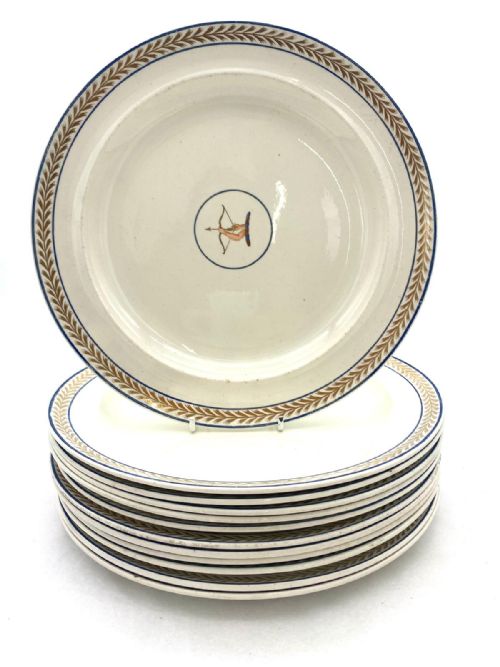
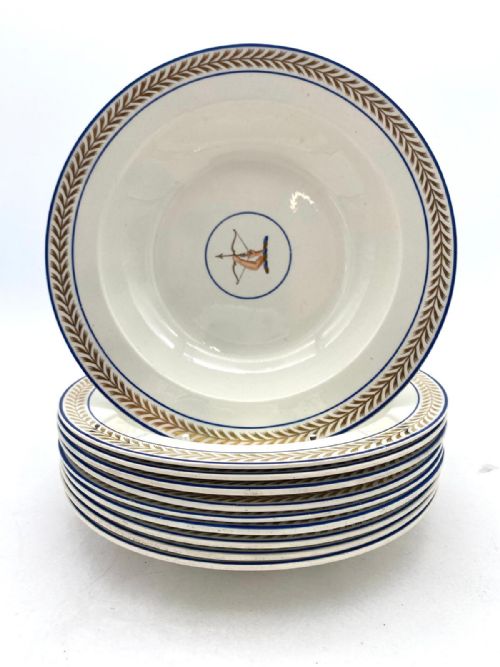
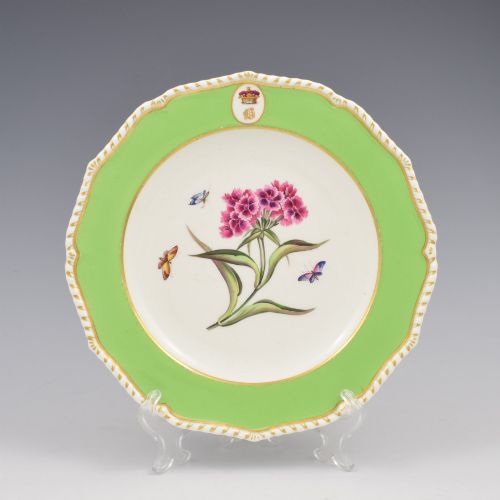
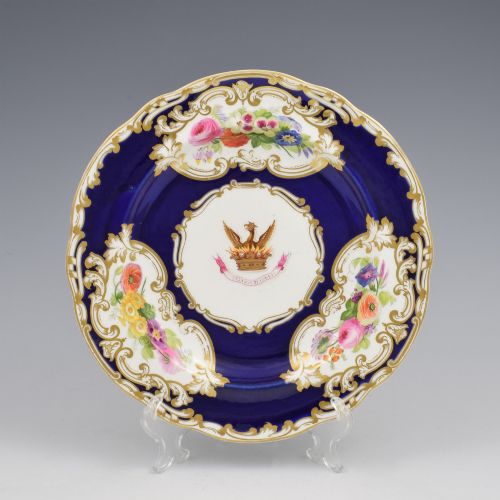
Hand painted armorial plates are display plates, dinner plates, dessert plates, pudding bowls, and soup plates bearing personal crests, coats of arms, and family mottos. When you search for hand painted armorial plates, you encounter ceramics created for aristocratic households and notable families, decorated with precise heraldic charges and lineage symbols.
The pieces appearing on this page span the eighteenth century, the regency era, the georian period, and the nineteenth century, extending into eighteen ninety. You meet wares shaped as heavy glazed pottery, creamware, earthenware, bone china, and porcelain, alongside faience and Chinese export porcelain.
Makers and factories represented include Wedgwood, Bloor Derby, Copeland, Chamberlain Worcester, Veuve Perrin, Barr, Flight and Barr Worcester, and Minton. These wares range from botanical dessert plates to cabinet pieces and soup plates, each featuring painted armorials often enhanced with gilding, gold leaf, and enamel.
Materials and construction
Potters formed these pieces using creamware, earthenware, bone china, porcelain, faience, and heavy glazed pottery, shaping them into plates, pudding bowls, and dishes. Skilled hands applied enamel colours to render heraldic shields, crests, and mantling accurately.
Gilding and gold leaf accent borders, edges, and crest details, adding richness to porcelain and creamware surfaces. Kiln firing fixed the painted enamels and gilt layers onto the ceramic body, ensuring durability for formal dining and display.
Materials span creamware, enamel, gold leaf, gilding, and heavy glazed pottery across multiple decades.
Assessing quality and execution
Quality rests upon the crispness of the hand painting and the precision of the heraldic detail within the arms and crests. Superior examples display refined brushwork in the enamel colours and meticulous rendering of motto scrolls and supporters.
The choice of ceramic body and the application of gold leaf or gilding distinguish finer cabinet pieces from utilitarian wares. Well-preserved glaze surfaces and intact enamel without rubbing elevate the desirability of a plate.
Wedgwood·Bloor Derby·Copeland·Chamberlain Worcester·Veuve Perrin·Barr, Flight and Barr·Minton
The Hand Painted Armorial Plates Glossary
- Armorial
- Bearing a coat of arms or heraldic device. These designs identify specific families, lineages, and noble houses.
- Creamware
- A refined earthenware of a pale cream colour developed in the eighteenth century. It served as a smooth canvas for painted decoration and armorials.
- Enamel
- Opaque coloured glass fused to pottery or porcelain by firing. It provides vibrant hues for heraldic shields and botanical motifs.
- Gilding
- The application of gold leaf or gold dust to ceramic surfaces. It highlights rims, borders, and significant elements of a crest.
- Faience
- Tin-glazed earthenware produced in continental Europe. It offers an opaque white background suited for hand-painted scenes and coats of arms.
Hand Painted Armorial Plates: Frequently Asked Questions
How were armorial plates used?
Armorial plates served elite dining tables for formal courses, displaying the host family's lineage and social standing to guests.
They also functioned as cabinet pieces and display plates in grand dining rooms, showcasing wealth and connections through painted heraldry.
How do I identify the family crest?
The painted arms, crests, and mottos correspond to specific historical families and peerages registered with heraldic authorities.
Matching the charges, tinctures, and supporters to armorial records reveals the original owner or commissioning household.
Can I use these plates for dining?
Many antique armorial plates, particularly nineteenth-century porcelain and creamware examples, remain robust enough for careful handling.
Delicate faience, fragile enamels, and extensive gilding benefit from gentle hand washing rather than daily dining use.
How do I date an armorial plate?
Ceramic bodies, glaze characteristics, and factory backstamps provide primary clues to the period of manufacture.
Stylistic shifts between eighteenth-century Chinese export wares, Georgian creamware, and Victorian porcelain further narrow the date of creation.