




Victorian Glazed Ceramic Plates
Victorian glazed ceramic plates bring heavy colour and transfer-printed scenes to the table, and collectors prize them for their rich nineteenth-century character.
Victorian Glazed Ceramic Plates
Victorian glazed ceramic plates encompass an array of nineteenth-century tableware, ranging from everyday transfer-printed blue and white wares to elaborate majolica serving pieces and commemorative plaques. Buyers exploring this category encounter earthenware, stoneware, and porcelain objects produced across the decades from eighteen hundred to nineteen hundred.
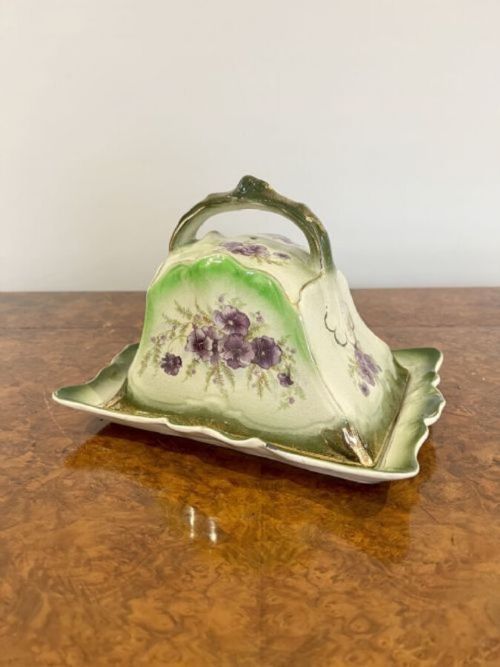
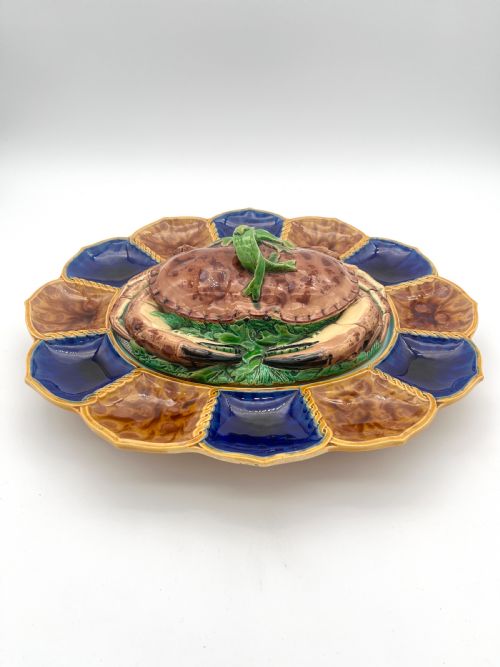
The selection on this page leans heavily toward decorative dessert services, cheese dishes, and patterned plates reflecting Victorian taste. Pieces span styles from traditional Chinoiserie and Willow patterns to bold Victorian majolica featuring naturalistic motifs like birds and sunflowers.
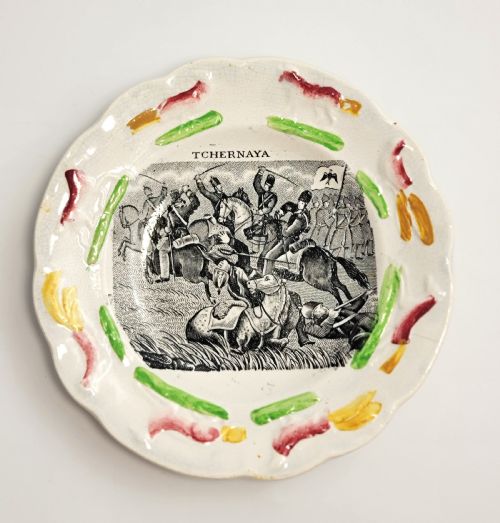
Makers and regional potteries from England, Scotland, and Austria shaped these forms, incorporating armorial designs, historic events such as the Crimean War, and rustic folk art themes. Each surviving plate or platter carries the distinct manufacturing marks and glazing techniques of its period.
How they were made
Potters shaped these objects using earthenware, stoneware, and porcelain bodies, applying lead glazes and vibrant enamels to achieve durable, glossy surfaces. Techniques included transfer printing for intricate blue and white patterns as well as hand-painted or moulded relief work for majolica and earthenware pieces.
Kiln firing set the ceramic bodies before glazes and coloured enamels were fused to the surface, creating the characteristic sheen seen on nineteenth-century tableware. Heavier lead glazes provided a protective coating that preserved the bright pigments on serving dishes and decorative plates over generations.
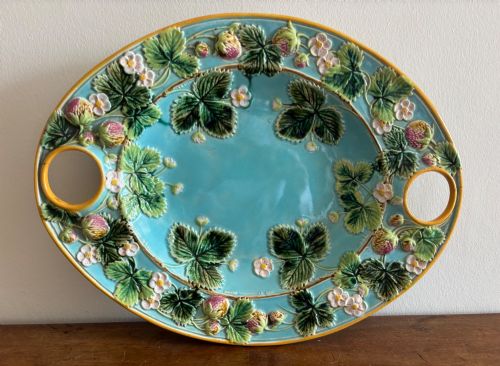
Nineteenth-century diners loved novelty, evidenced by crab-shaped tureens and cheese dishes designed to look like giant strawberries.
What varies in quality
Quality in these ceramics depends on the crispness of the moulded relief and the depth and stability of the coloured glazes or transfer prints. Finer examples display precise detailing in subjects such as birds, armorial crests, or botanical motifs without blurring or running in the glaze.
The sophistication of the form and the reputation of the pottery or decorator elevate individual pieces above standard utilitarian wares. Elaborate multi-piece dessert services or large cheese dishes with fitted covers reflect higher standards of nineteenth-century ceramic design and execution.
Wedgwood·George Jones·Pratt Ware·Minton·John Ridgway
The Victorian Glazed Ceramic Plates Glossary
- Majolica
- A type of earthenware covered with an opaque tin-lead glaze and painted with bright metal oxide colours. It gained immense popularity during the Victorian era for its vibrant, naturalistic modelling.
- Earthenware
- A porous ceramic body fired at lower temperatures, requiring a glaze to render it waterproof. Most nineteenth-century table plates and platters utilise this versatile material.
- Transfer printing
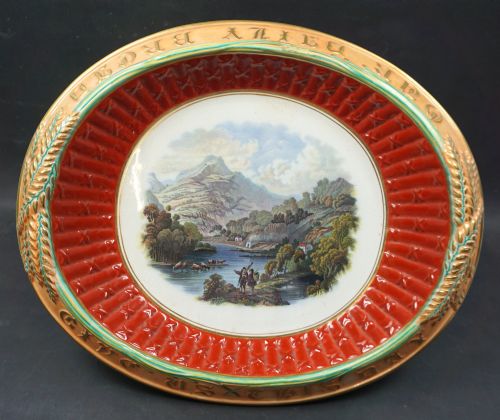
- A method of applying detailed designs to pottery by engraving a copper plate, pulling the image on tissue paper, and pressing it onto the ceramic surface before glazing. This technique enabled mass production of complex blue and white patterns like the Willow pattern.
- Stoneware
- A dense, hard ceramic fired at high temperatures until vitrified, making it naturally non-porous and durable. John Ridgway and other nineteenth-century makers utilised this body for robust tableware.
- Lead glaze
- A glossy coating containing lead oxide applied to ceramics before a final kiln firing to seal the porous clay body. It provides the smooth, reflective finish characteristic of antique glazed pottery.
Victorian Glazed Ceramic Plates: Frequently Asked Questions
How do I care for Victorian plates?
Wash antique glazed ceramics gently by hand in warm water using mild soap rather than placing them in a dishwasher. Avoid harsh scrubbing brushes that might scratch the nineteenth-century lead glaze or enamel decorations.
Store plates securely in plate racks or with protective felt dividers between stacked pieces to prevent chipping the earthenware edges. Keep them away from direct sunlight to preserve the vibrant colours of majolica and transfer-printed surfaces.
What is Victorian majolica?
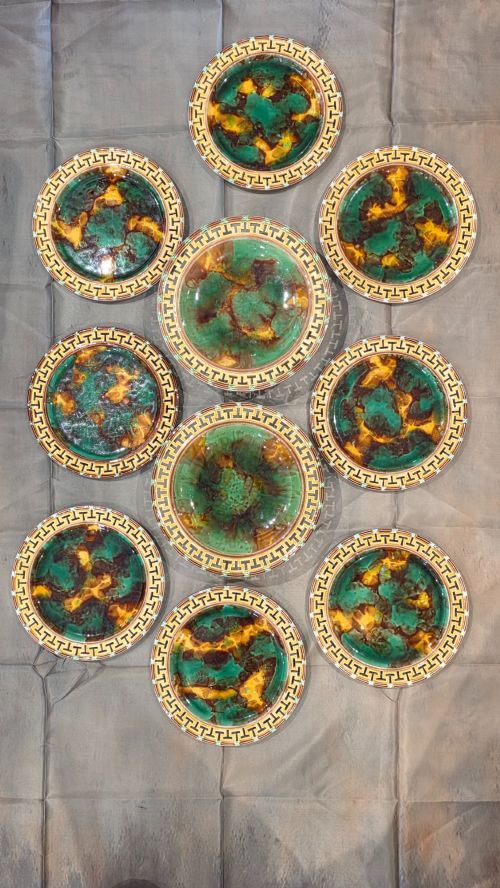
Victorian majolica is a colourful, lead-glazed earthenware characterised by moulded naturalistic designs such as plants, animals, and rustic scenes. Introduced mid-century, it became a staple of nineteenth-century households for both utility and display.
Potteries like Minton and Wedgwood produced elaborate cheese dishes, plates, and servers using this vibrant glazing technique. The pieces are easily recognised by their glossy, high-relief surfaces and rich green, brown, and yellow tones.
How can I date a ceramic plate?
Dating relies on identifying maker marks, backstamps, stylistic cues, and the specific composition of the ceramic body or glaze. Nineteenth-century pieces frequently display impressed factory ciphers or registration marks that narrow down the year of production.
Comparing the decorative style, such as Victorian Chinoiserie or transfer-printed historical scenes, provides further chronological context. Archival records for firms like Minton or John Ridgway help pinpoint exact decades of manufacture.