


Antique Armorial Earthenware
Antique armorial earthenware carries the painted crests of notable houses across creamware, delft and tin-glazed bodies.
Antique Armorial Earthenware
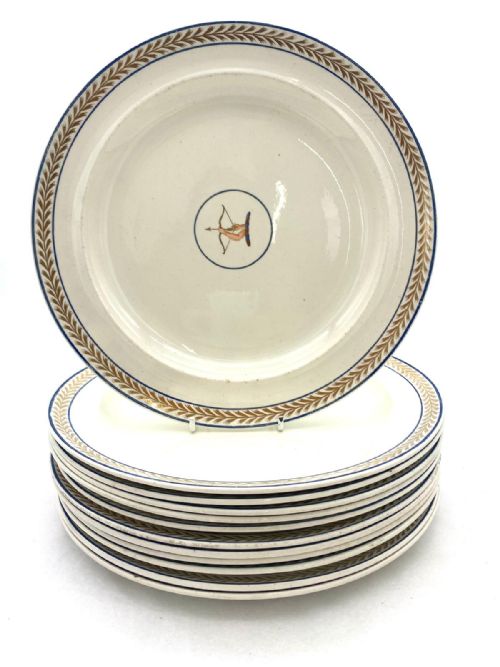
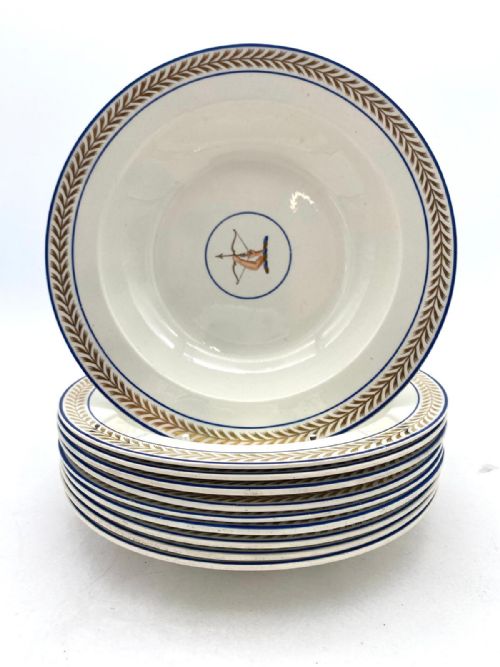
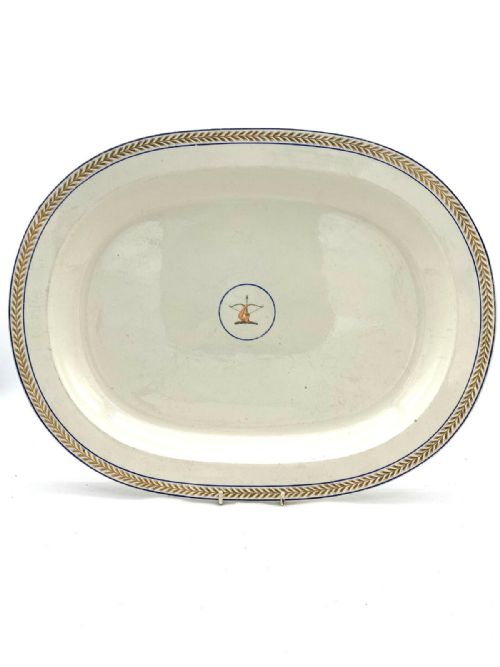
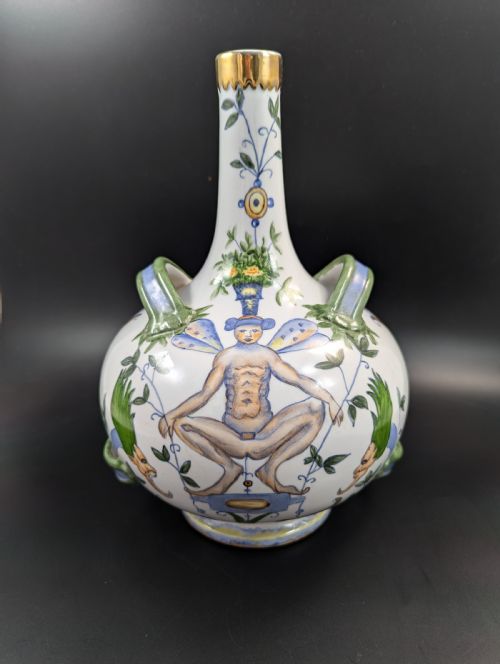
When you search for antique armorial earthenware, you are looking at ceramic vessels and plates painted with family crests, coats of arms or institutional insignia. These pieces span the seventeenth, eighteenth and nineteenth centuries, taking the form of dinner plates, serving platters, pudding bowls, drug jars, snuff boxes and tankards. The selection includes English creamware services, Dutch delft boxes, German faience steins, French flasks and Italian pharmacy jugs.
You are most likely to meet eighteenth-century creamware services from makers such as Wedgwood, alongside tin-glazed faience from continental European factories. Forms range from large meat platters and compotes to small patch boxes and wet drug jars. The decoration combines heraldic painting with period styles that include Georgian, Dutch Baroque and French Rococo.
Materials and manufacture
Potters formed these items from earthenware clay, finishing them with tin glazes or cream-coloured lead glazes to create smooth surfaces for painting. Tin-glazed earthenware provided an opaque white ground suited to polychrome pigments, while creamware offered a refined, pale yellow body that took crisp heraldic enamel transfers and hand-painted details.
Painters applied mineral pigments and enamels by hand, rendering coats of arms, crests and mottoes before a final kiln firing fixed the colours into the glaze. Metal mounts appear on items like snuff boxes, while larger vessels such as tankards and drug jars rely entirely on heavy glazed pottery bodies.
An eighteenth-century Italian pharmacy jar labeled for syrup of marshmallow sits ready to cure historical coughs.
Factors of quality
Quality rests upon the crispness of the heraldic painting and the precision with which the coat of arms is rendered. Finer pieces display detailed brushwork in the crests and proper heraldic tinctures, whereas simpler items show hurried or formulaic execution.
The potting standard and the preservation of the glaze separate examples. Heavy, well-poured creamware bodies and smooth tin glazes without excessive crazing or chipping hold greater merit than warped or heavily repaired earthenware.
Wedgwood·Veuve Perrin Marseille·Minton
The Antique Armorial Earthenware Glossary
- Armorial
- Bearing a coat of arms or heraldic crest. These designs identify the family, city or institution that commissioned the ceramic service.
- Creamware
- A refined earthenware with a pale yellowish-white lead glaze, developed in England during the eighteenth century. It became the standard body for armorial dinner services.
- Tin-Glaze
- An earthenware glaze rendered opaque by the addition of tin oxide. This finish provides a smooth white background for hand-painted decoration.
- Compote
- A raised vessel on a foot, used for serving fruit or sweet dishes at table. In armorial ceramics, these often feature institutional or family coats of arms in the centre.
Antique Armorial Earthenware: Frequently Asked Questions
How do I identify an armorial crest?
Armorial crests display heraldic elements such as shields, helmets, mantling and mottoes belonging to specific families or guilds. You can research these symbols against historical armorial records to find the original owner.
Many pieces on this page carry British or European coats of arms, sometimes tied to specific trade guilds like the London Goldsmiths.
Were these pieces used daily?
Dinner plates, platters and pudding bowls were made for dining tables and serving food during formal meals. Armorial services marked the status of the host during grand dinners.
Other forms, such as apothecary jars and drug jugs, served practical functions in pharmacies, while snuff boxes were carried daily.
How do I care for antique earthenware?
Wash these pieces by hand in warm water using mild soap, avoiding dishwashers and harsh scrubbers. Earthenware and creamware bodies can absorb moisture through crazed glaze if left standing in water.
Display them away from direct sunlight and sudden temperature shifts to protect the historic tin glazes and enamels.
How do I tell creamware from tin-glazed earthenware?
Creamware has a translucent or pale yellow-toned lead glaze over a thin cream-coloured earthenware body. It was perfected in England during the late eighteenth century for functional tableware.
Tin-glazed earthenware, or faience, uses an opaque white tin oxide glaze that covers the darker clay body entirely, acting as a canvas for painted pigments.