21,781  PAGES BROWSED TODAY PAGES TODAY 36  ANTIQUES UPLOADED TODAY NEW ARRIVALS
ID #SA1126556
FOR SALE
£1,500
Email
Save
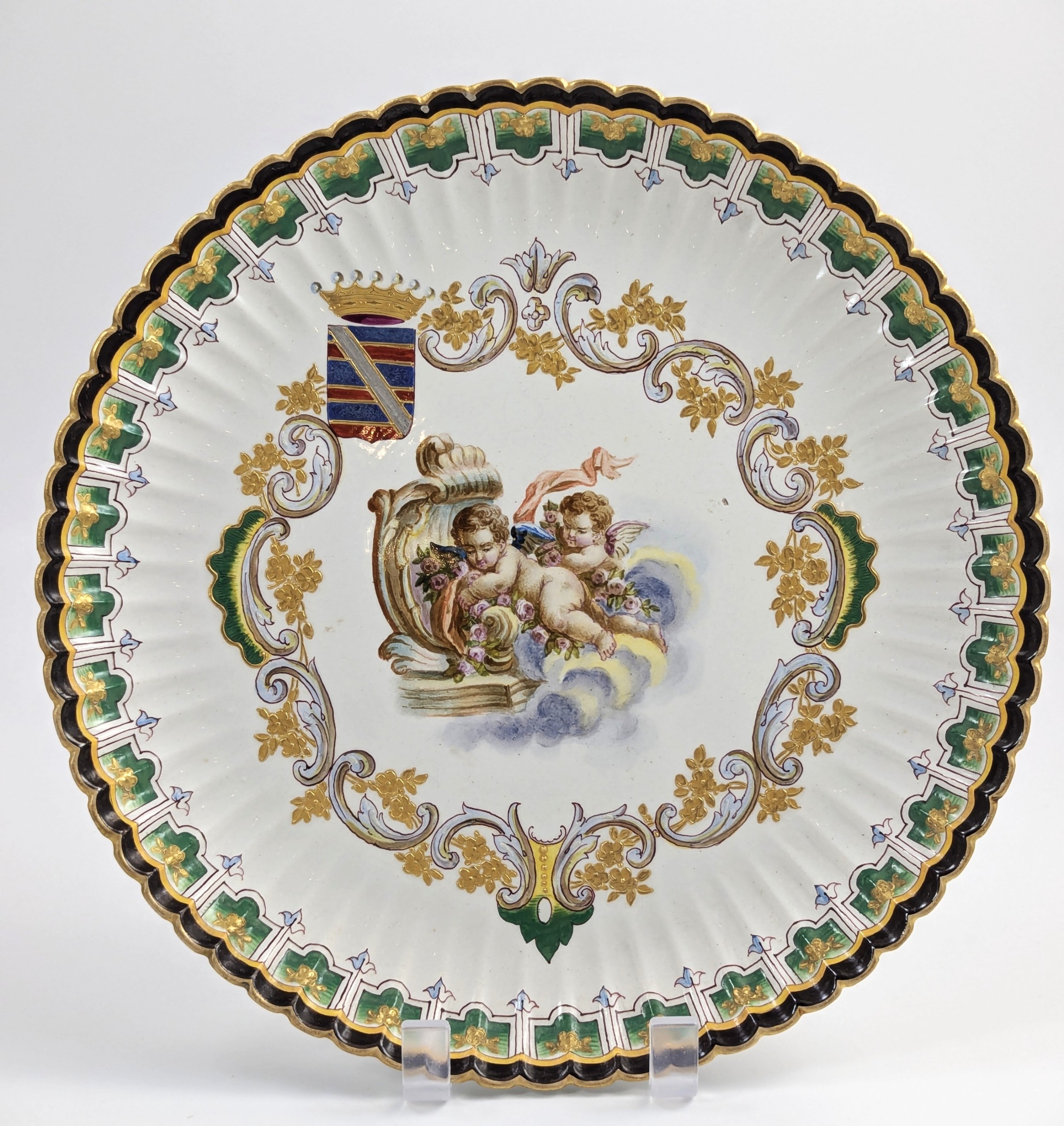
Two Very Rare Veuve Perrin, Marseille, Faience Hand-painted Plates, C. 1770
Gillers Antiques Ltd
for sale €1,755     $1,905
£1,500
Gillers Antiques Ltd

Gillers Antiques Ltd

Sellingantiques Verified Since Mar 2023
View Dealers Stock Page
Id #SA1126556
PDF SHARE
SAVE

Two Very Rare Veuve Perrin, Marseille, Faience Hand-painted Plates, C. 1770

18th century
Description

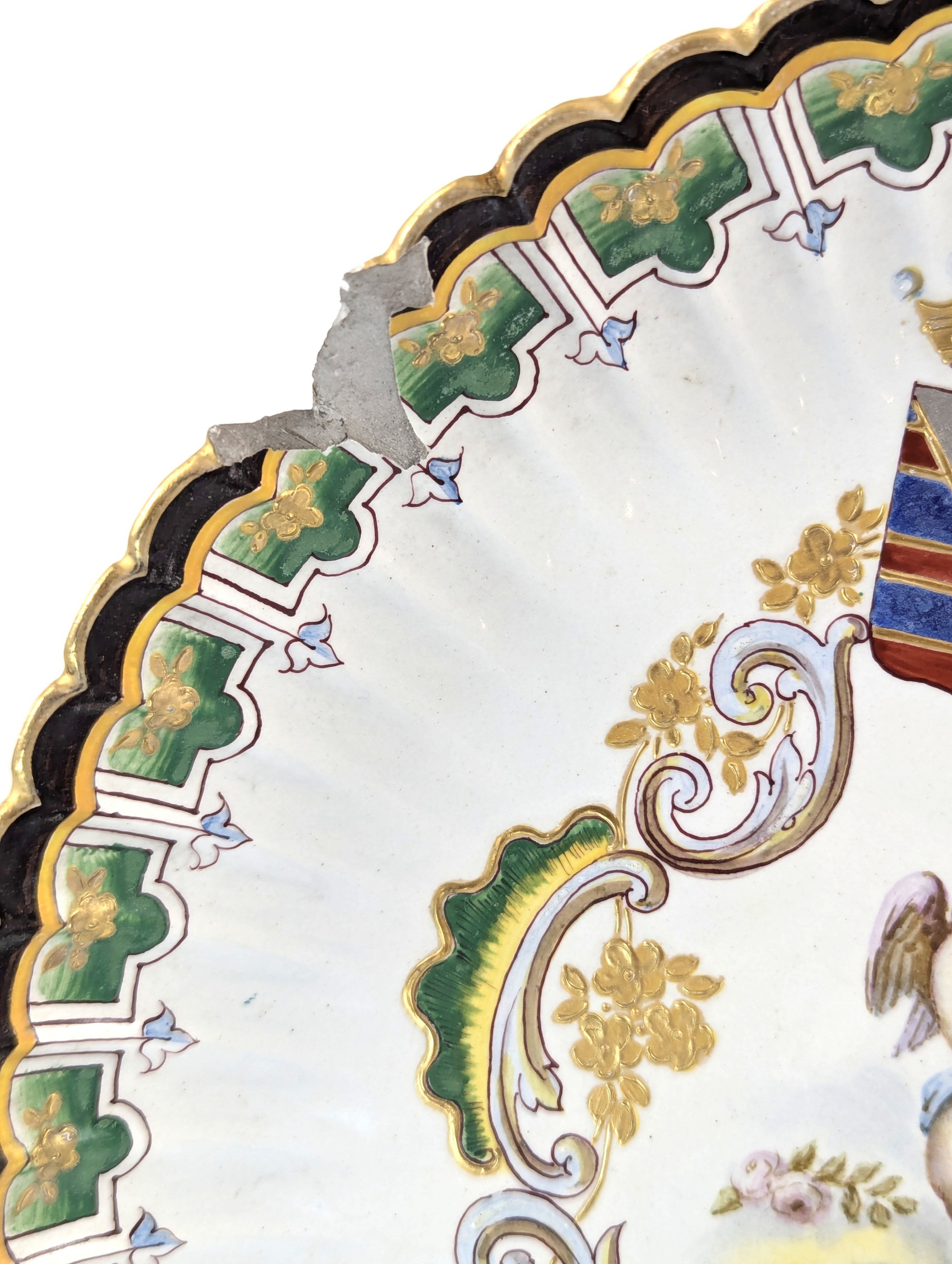
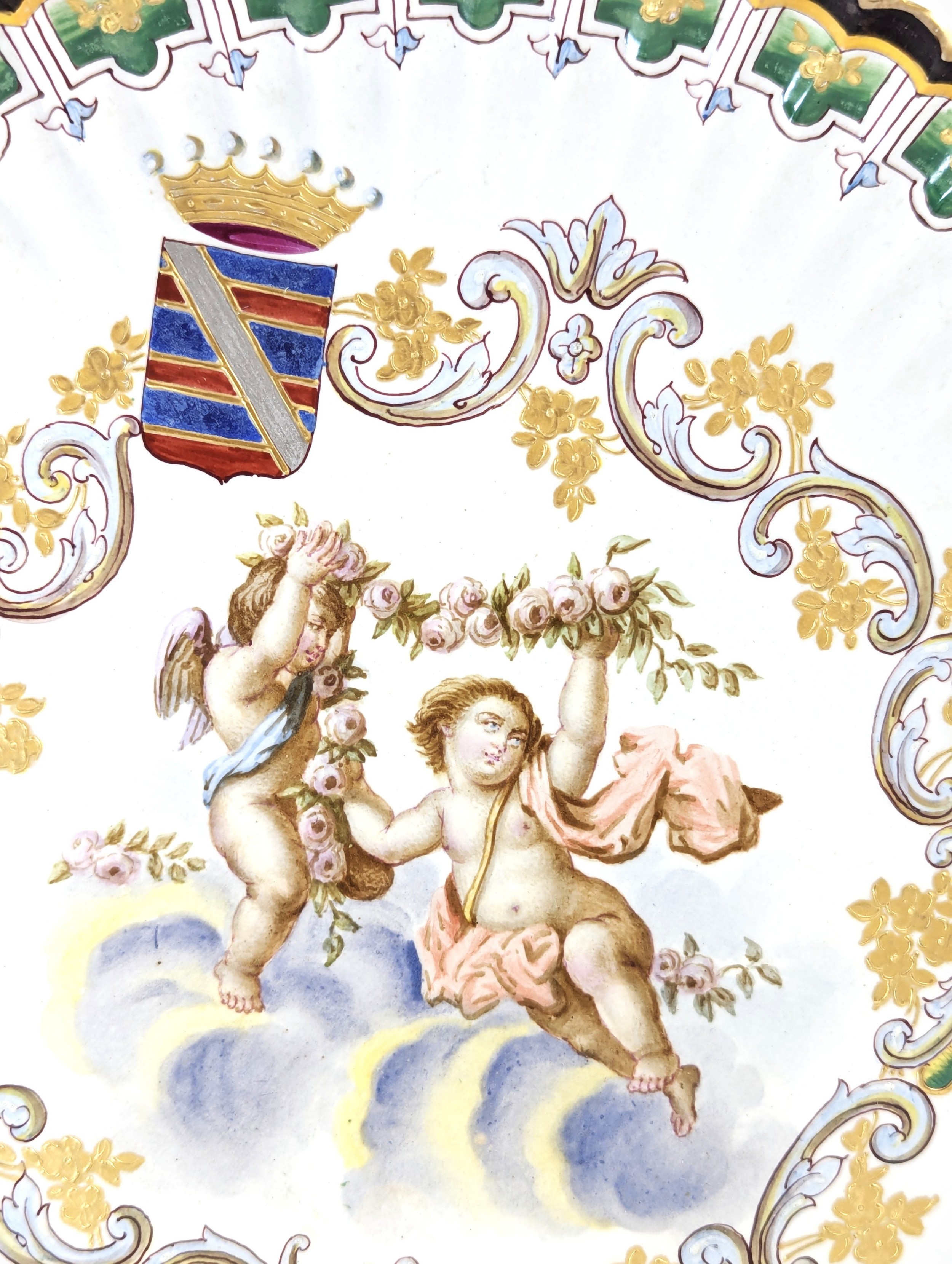
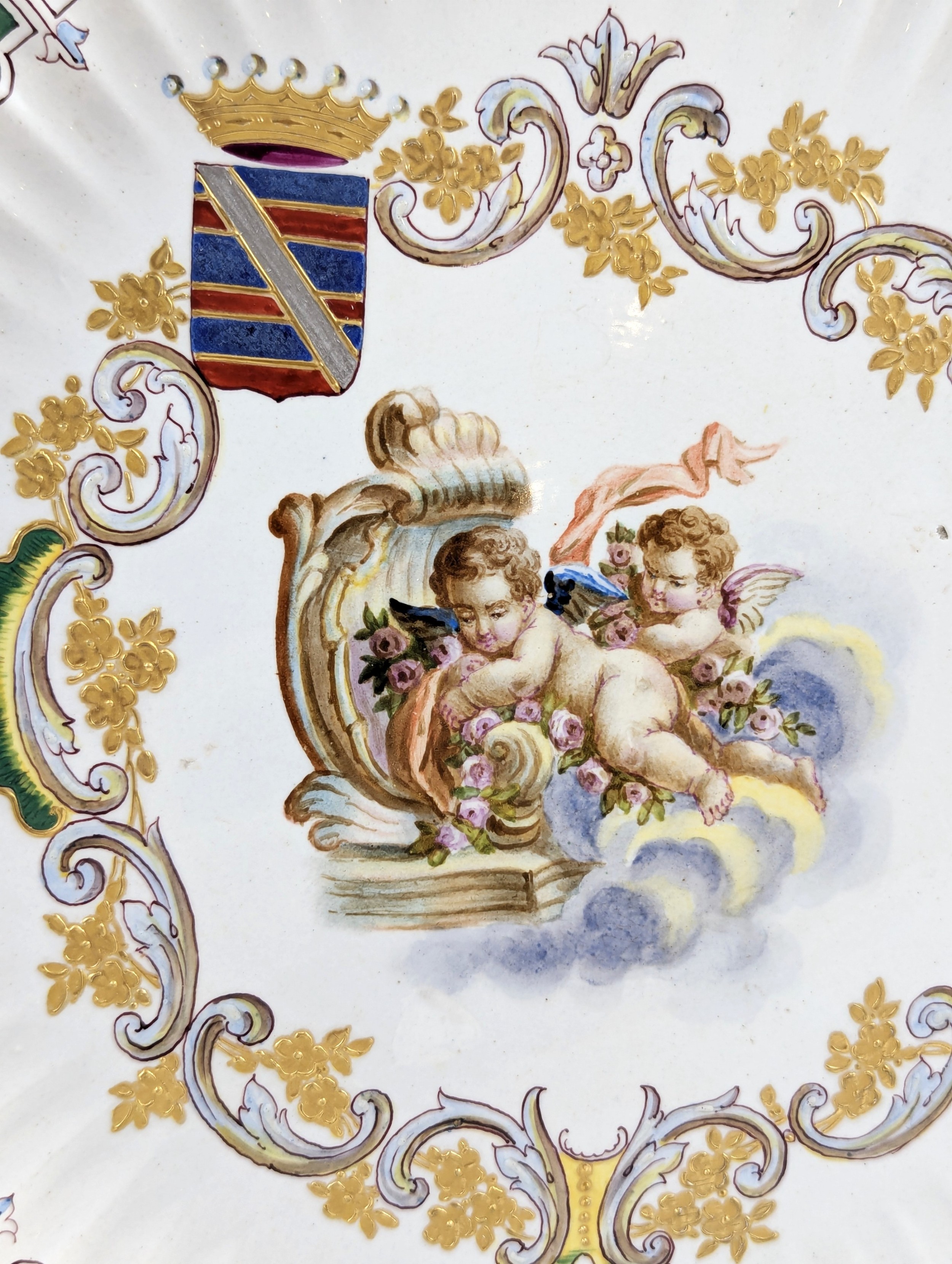
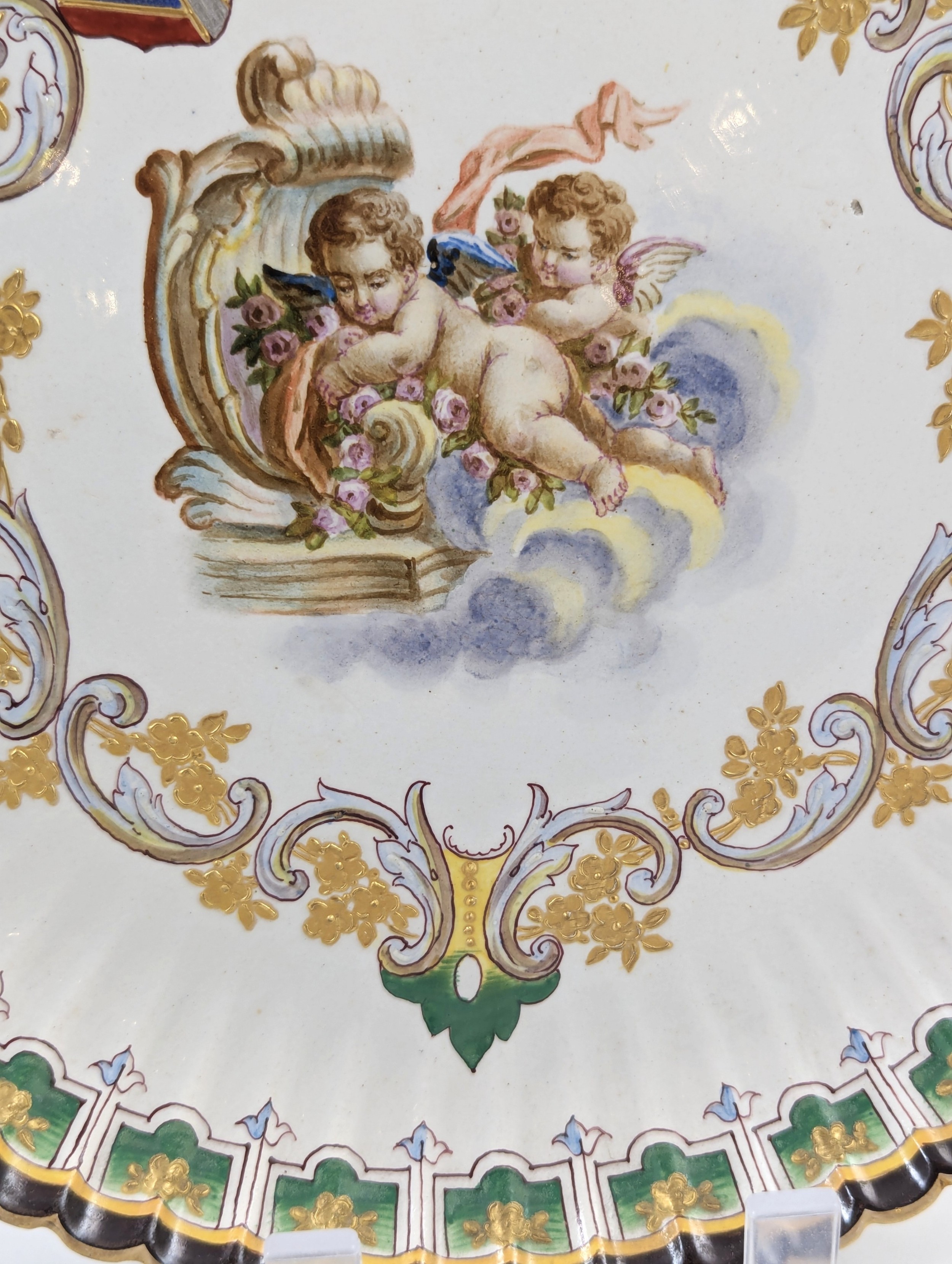
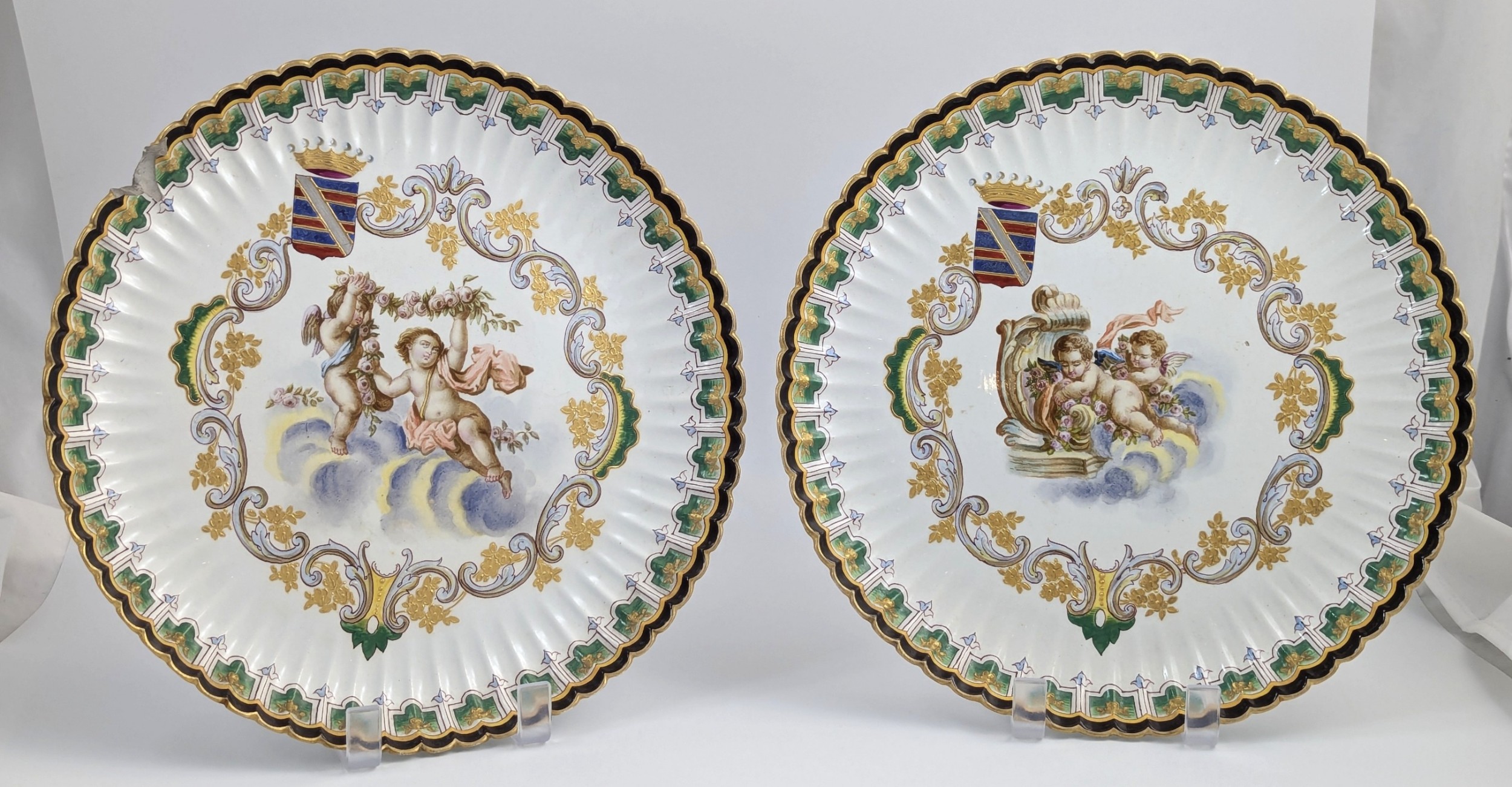
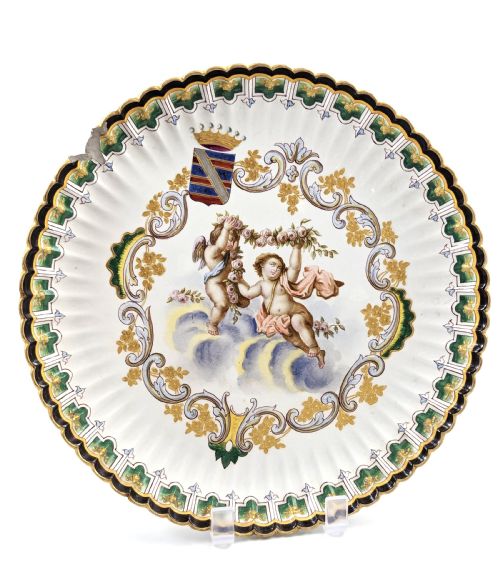
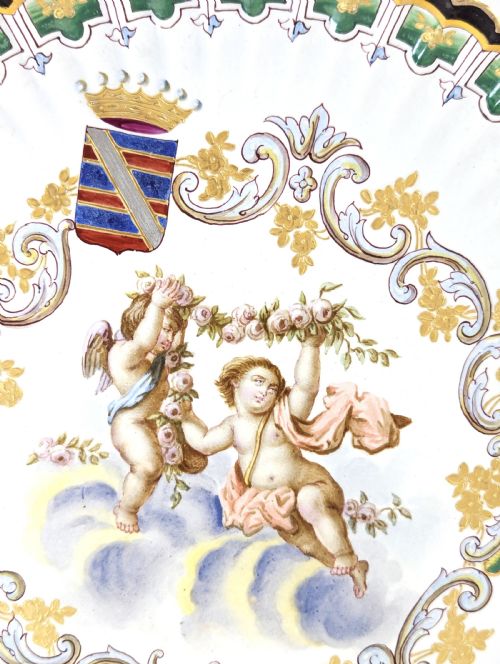
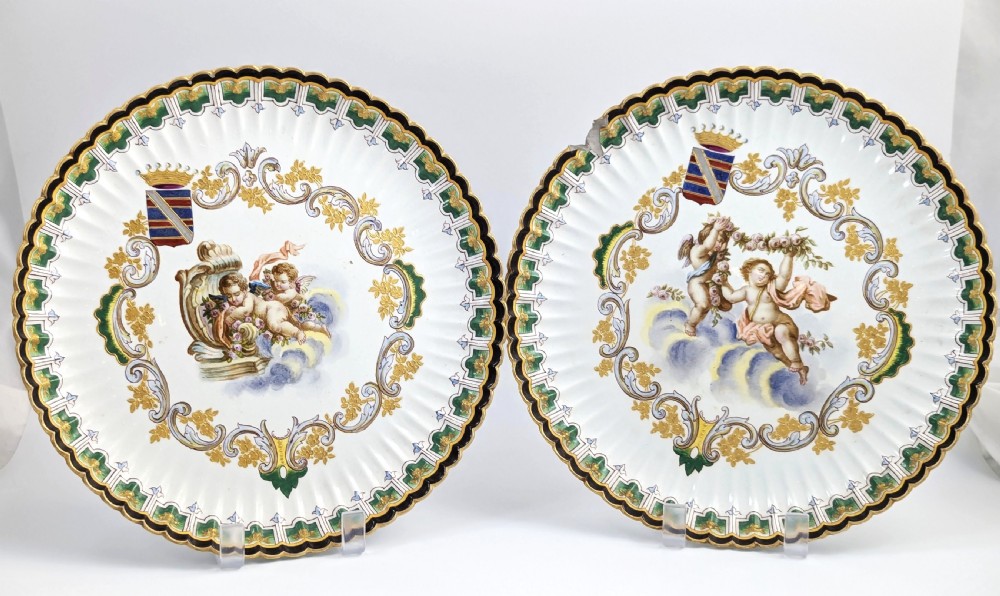
Antique and rare pair of faience hand-painted cabinet plates, created by the renowned Veuve Perrin company from Marseille, France, in the 18th century. These fluted plates, featuring Baroque-style cherubs, gilded Rococo ornamentation, and a heraldic crest, are not only a testament to exquisite craftsmanship but are also highly valuable due to their rarity and excellent condition. They are distinguished by intricate hand-painted motifs and polychrome glazes. The gilded scrollwork, border details with green and gold accents, and the heraldic crest suggest that these pieces were likely custom-made for a noble family, enhancing their historical and artistic significance.

The factory was established in Marseille in 1748 by Joseph Perrin. After his death, management passed to his widow, Marie Perrin, from whom the company derived its name, Veuve Perrin (Widow Perrin).
Veuve Perrin became one of the most prestigious ceramic manufacturers in Marseille, competing with other renowned producers such as La Veuve Blanc and La Faïencerie de Clérissy. The company specialized in faience production, characterized by vibrant colors, gilding, and intricate patterns, often inspired by the Rococo style. Their products were renowned for their high quality and exquisite design. The range included plates, vases, tableware sets, decorative panels, and other luxury interior items, primarily catering to aristocratic and noble clientele.
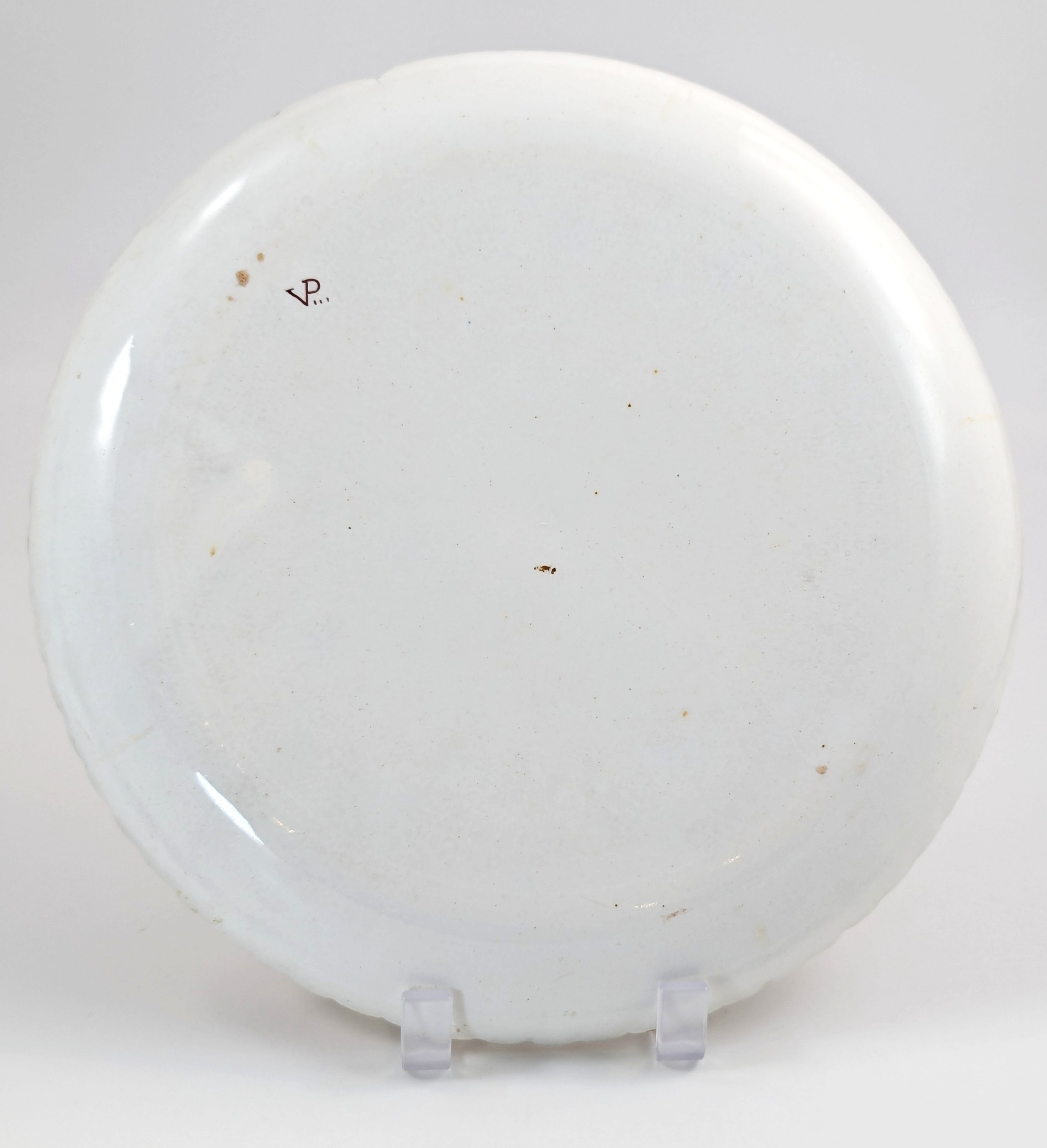
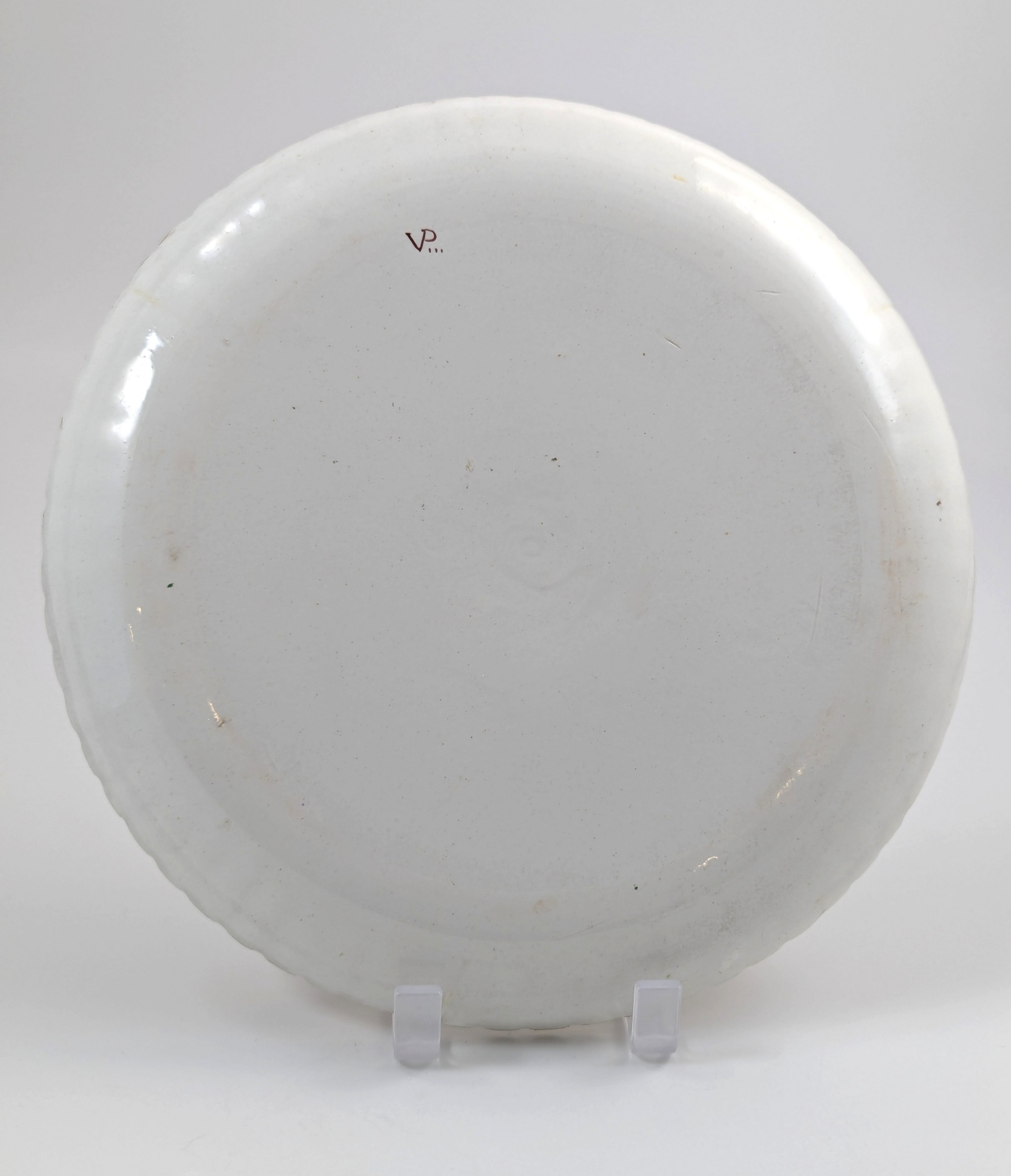
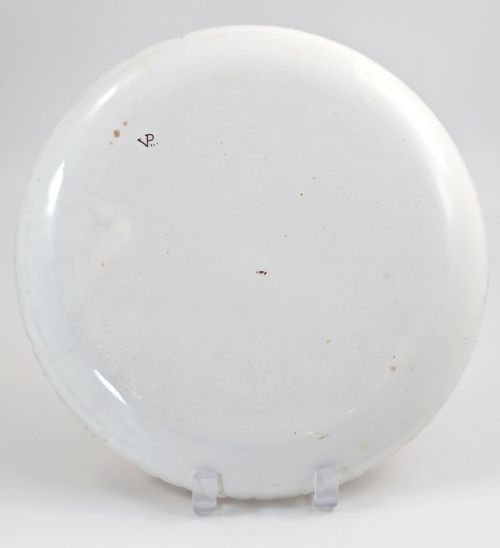
Veuve Perrin's items were often marked with the initials VP or the full name Veuve Perrin, sometimes accompanied by decorative elements such as flowers or scrolls.

The company remained active until the end of the 18th century, after which production gradually declined. However, its creations remain highly sought after by collectors due to their historical and artistic significance. Many examples of their work are displayed in renowned museums.
Today, Veuve Perrin ceramics are highly prized at major auctions and in antique shops for their beauty and their important connection to the history of French decorative arts.

One plate - with a chip, weight: 648 grams
Second plate: 617 grams

Diameter: 25.8 cm

Height: 2 cm

Condition:

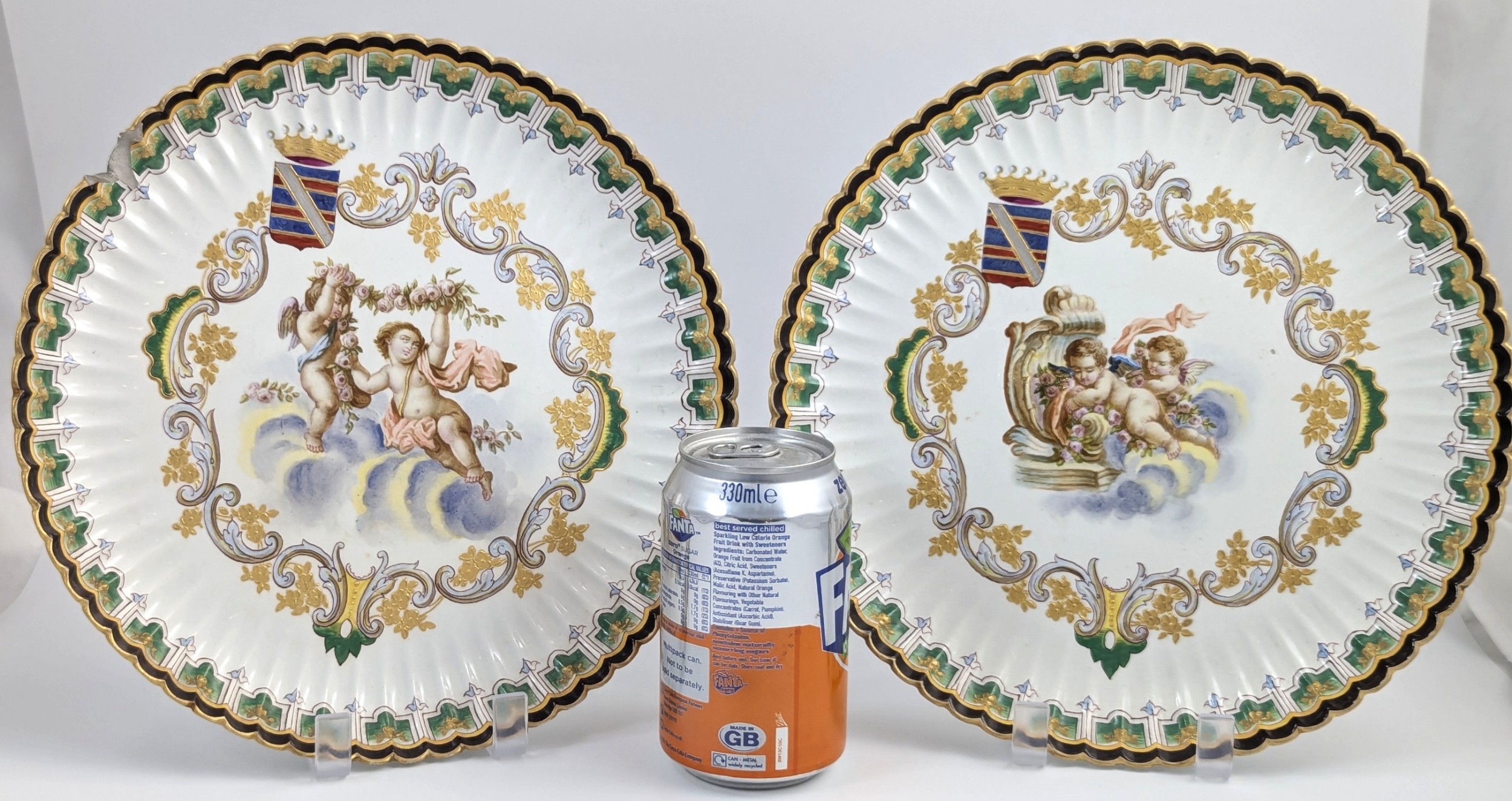
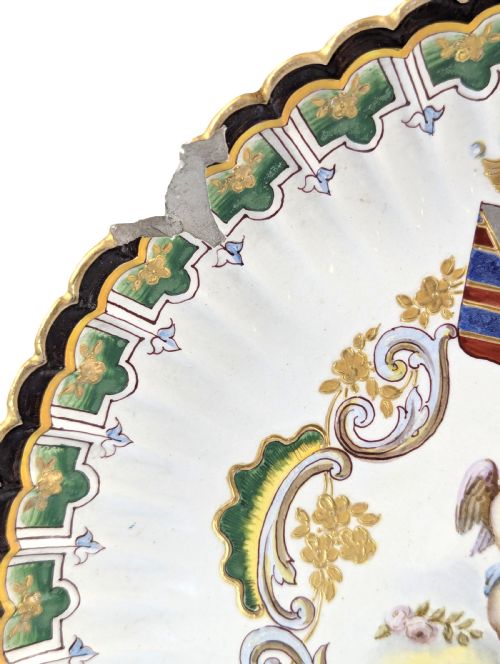
There is some enamel loss in certain areas, and one of the plates has a visible chip (see photo).

Please examine the accompanying photographs carefully, as they form an integral part of this description. If you have any questions, we will be happy to answer them.

The item will be shipped with full tracking and insurance. Please note that shipping costs include labor, packaging, and postage.

Declaration

Gillers Antiques Ltd has dated these French Faience Ceramic Plates to the 18th Century.

Reference Numbers
Sellingantiques Reference
SA1126556
Description
Antique and rare pair of faience hand-painted cabinet plates, created by the renowned Veuve Perrin company from Marseille, France, in the 18th century. These fluted plates, featuring Baroque-style cherubs, gilded Rococo ornamentation, and a heraldic crest, are not only a testament to exquisite craftsmanship but are also highly valuable due to their rarity and excellent condition. They are distinguished by intricate hand-painted motifs and polychrome glazes. The gilded scrollwork, border details with green and gold accents, and the heraldic crest suggest that these pieces were likely custom-made for a noble family, enhancing their historical and artistic significance.

The factory was established in Marseille in 1748 by Joseph Perrin.

After his death, management passed to his widow, Marie Perrin, from whom the company derived its name, Veuve Perrin (Widow Perrin).
Gillers Antiques Ltd
fig 1. A pair of 18th-century French tin-glazed earthenware display plates with hand-painted putti motifs, armorial shields, and green scalloped borders.
fig 1. Two Very Rare Veuve Perrin, Marseille, Faience Hand-painted Plates, C. 1770

Veuve Perrin became one of the most prestigious ceramic manufacturers in Marseille, competing with other renowned producers such as La Veuve Blanc and La Faïencerie de Clérissy. The company specialized in faience production, characterized by vibrant colors, gilding, and intricate patterns, often inspired by the Rococo style. Their products were renowned for their high quality and exquisite design. The range included plates, vases, tableware sets, decorative panels, and other luxury interior items, primarily catering to aristocratic and noble clientele.

fig 2. A pair of 18th-century French tin-glazed earthenware display plates with hand-painted putti motifs, armorial shields, and green scalloped borders.
fig 2. Two Very Rare Veuve Perrin, Marseille, Faience Hand-painted Plates, C. 1770

Veuve Perrin's items were often marked with the initials VP or the full name Veuve Perrin, sometimes accompanied by decorative elements such as flowers or scrolls.

The company remained active until the end of the 18th century, after which production gradually declined. However, its creations remain highly sought after by collectors due to their historical and artistic significance. Many examples of their work are displayed in renowned museums.

fig 3. A pair of 18th-century French tin-glazed earthenware display plates with hand-painted putti motifs, armorial shields, and green scalloped borders.
fig 3. Two Very Rare Veuve Perrin, Marseille, Faience Hand-painted Plates, C. 1770

Today, Veuve Perrin ceramics are highly prized at major auctions and in antique shops for their beauty and their important connection to the history of French decorative arts.

One plate - with a chip, weight: 648 grams

fig 4. A pair of 18th-century French tin-glazed earthenware display plates with hand-painted putti motifs, armorial shields, and green scalloped borders.
fig 4. Two Very Rare Veuve Perrin, Marseille, Faience Hand-painted Plates, C. 1770

Second plate: 617 grams

Diameter: 25.8 cm

Height: 2 cm

Condition:

There is some enamel loss in certain areas, and one of the plates has a visible chip (see photo).

Please examine the accompanying photographs carefully, as they form an integral part of this description. If you have any questions, we will be happy to answer them.

The item will be shipped with full tracking and insurance. Please note that shipping costs include labor, packaging, and postage.

Date of Manufacture

Gillers Antiques Ltd has dated these French Faience Ceramic Plates to the 18th Century.

Reference Numbers
Sellingantiques Ref
SA1126556
Gillers Antiques Ltd
Sellingantiques verified Since Mar 2023
Dealer Profile

You can view the stock and full dealer information on the Gillers Antiques Ltd Profile Page
PDF SHARE
SAVE
A pair of 18th-century French tin-glazed earthenware display plates with hand-painted putti motifs, armorial shields, and green scalloped borders.
1 / 11
Archive I A pair of 18th-century French tin-glazed earthenware display plates with hand-painted putti motifs, armorial shields, and green scalloped borders.

Two Very Rare Veuve Perrin, Marseille, Faience Hand-painted Plates, C. 1770
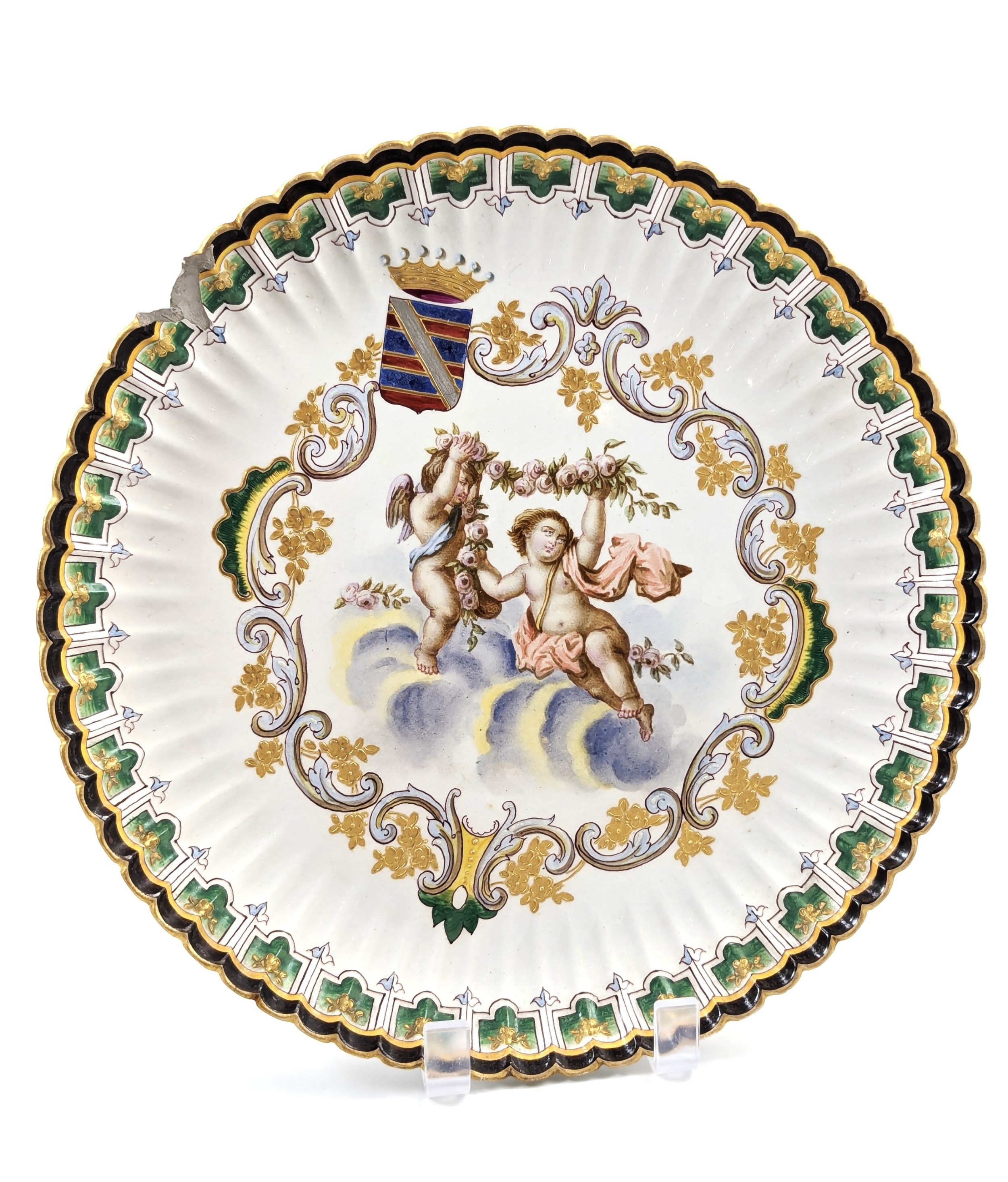
Archive II A pair of 18th-century French tin-glazed earthenware display plates with hand-painted putti motifs, armorial shields, and green scalloped borders. View II
Archive III A pair of 18th-century French tin-glazed earthenware display plates with hand-painted putti motifs, armorial shields, and green scalloped borders. View III
Archive IV A pair of 18th-century French tin-glazed earthenware display plates with hand-painted putti motifs, armorial shields, and green scalloped borders. View IV
Archive V A pair of 18th-century French tin-glazed earthenware display plates with hand-painted putti motifs, armorial shields, and green scalloped borders. View V
Archive VI A pair of 18th-century French tin-glazed earthenware display plates with hand-painted putti motifs, armorial shields, and green scalloped borders. View VI
Archive VII A pair of 18th-century French tin-glazed earthenware display plates with hand-painted putti motifs, armorial shields, and green scalloped borders. View VII
Archive VIII A pair of 18th-century French tin-glazed earthenware display plates with hand-painted putti motifs, armorial shields, and green scalloped borders. View VIII
Archive IX A pair of 18th-century French tin-glazed earthenware display plates with hand-painted putti motifs, armorial shields, and green scalloped borders. View IX
Archive X A pair of 18th-century French tin-glazed earthenware display plates with hand-painted putti motifs, armorial shields, and green scalloped borders. View X
Archive XI A pair of 18th-century French tin-glazed earthenware display plates with hand-painted putti motifs, armorial shields, and green scalloped borders. View XI
Enlarged Archival View
Telephone 07738 009924
Location
Buckland House
Buntingford
Hertfordshire
SG9 0PY
United Kingdom
Verified Since Mar 2023
Items For Sale 401
Items Sold 564
Gillers Antiques Ltd
Verified Since Mar 2023
View Dealer Info
Location: Buckland House, Buntingford, Hertfordshire, SG9 0PY, United Kingdom
Verified
Mar 2023
For Sale
401
Sold
564
A pair of 18th-century French tin-glazed earthenware display plates with hand-painted putti motifs, armorial shields, and green scalloped borders.
Two Very Rare Veuve Perrin, Marseille, Faience Hand-Painted Plates, c. 1770
Ref: SA1126556
A pair of 18th-century French tin-glazed earthenware display plates with hand-painted putti motifs, armorial shields, and green scalloped borders.
Detail View 1
Detail View 2
Detail View 3
Detail View 4
Detail View 5
Detail View 6
Detail View 7
Detail View 8
Detail View 9
Detail View 10
Archival Detail
Every single antique dealer on our platform is individually approved by our internal team. We verify their professional trade history, ethical standards, and photographic quality to ensure a secure, high-standard buying environment. Upon joining, every dealer agrees to a strict 9-point code of conduct. While issues can occasionally arise, our dealers typically resolve them swiftly and directly with the buyer. In fact, since our founding in 2002, Sellingantiques has only had to step in to help resolve an issue on roughly five occasions—a true testament to the quality of our dealers and their dedication to your happiness.
Our dealers are highly experienced in packing and shipping fragile, high-value antiques. Because you are in direct contact with the dealer, you will be able to easily go through all available shipping and insurance options together to ensure your item arrives safely.
Antiques are the ultimate green purchase. By choosing historical pieces over newly manufactured goods, you completely eliminate the carbon footprint of modern mass production while preserving exceptional, timeless craftsmanship.

French faience is a form of tin-glazed earthenware produced in centres such as Marseille, Rouen, and Nevers during the 17th and 18th centuries. The technique involves coating clay with an opaque white lead-tin glaze, providing a smooth surface for detailed enamel painting prior to firing.

Marseille faience was crafted using earthenware clay coated with a stanniferous glaze containing tin oxide. Decorators applied metallic oxide enamel colours using either low-temperature (petit feu) or high-temperature (grand feu) kilns to achieve detailed imagery and gilding.

Authentic pieces frequently feature the VP initials painted on the undersides in enamel. Identification relies on examining the characteristic softness of the tin-glaze, period-appropriate glaze craze patterns, hand-painted Rococo motifs, and evidence of historic kiln support marks.

Decorative ceramics can be mounted on a neutral wall using plate hangers, displayed on acrylic stands inside a glass cabinet, or placed on a mantelpiece alongside clean-lined contemporary art to create visual contrast.

Clean tin-glazed earthenware gently using a soft cloth dampened with lukewarm water and mild soap, avoiding prolonged immersion. Abrasive cloths and chemical cleaners must be avoided, as moisture can enter fine glaze cracks and cause deterioration.
items
Add keywords to the filter
Price
£100
£250000
Era
Movements
Material
Origin
Stock Location
Freshness
Online Payments
Categories