


French Faience Plate
A french faience plate brings tin-glazed earthenware into an interior with hand-painted character, offering colourful scenes and traditional forms that collectors prize.
French Faience Plate
When you search for a french faience plate, you encounter decorative dishes, chargers, and serving pieces shaped from earthenware and coated in a distinctive tin glaze. These items span periods from the mid-eighteenth century through the nineteenth century, reflecting regional pottery traditions across France.
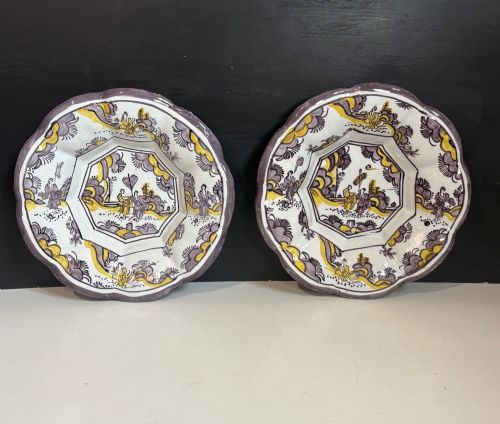
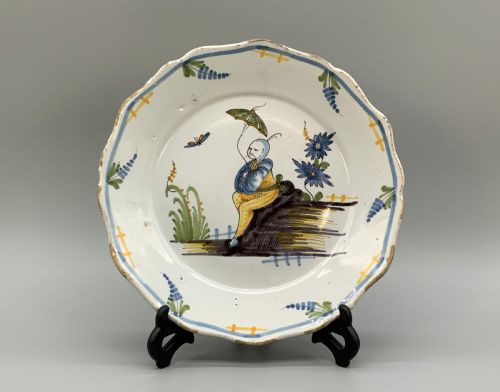
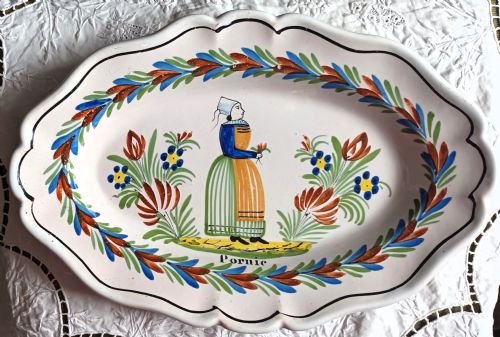
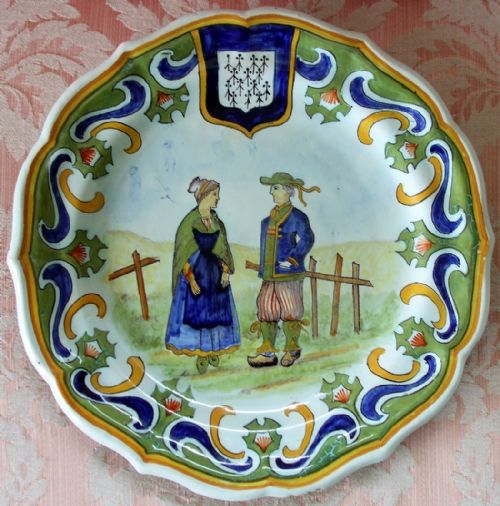
The most common examples you meet on this page include eighteenth-century chargers and nineteenth-century regional dishes from centres such as Quimper and Desvres. Makers decorated these surfaces with chinoiserie motifs, puce camaieu scenes, and hand-painted figures like fishermen or regional characters.
Beyond standard dining forms, the category encompasses wall plaques, serving dishes, and decorative bowls. Each piece demonstrates the enduring appeal of tin-glazed earthenware, whether executed in a refined French Rococo manner or a simpler provincial style.
How They Were Made
Potters formed these pieces using earthenware clay, which was then coated in a white tin glaze to create an opaque ground for painting. Artisans applied mineral pigments directly onto the absorbent unfired glaze, allowing colours like manganese, yellow, and blue to fuse permanently during the kiln firing.
Hand-painting defined the surface decoration, ranging from delicate puce camaieu monochrome scenes to polychrome bird and figural compositions. Gilding and enamel accents occasionally enriched the tin-glazed body on select eighteenth-century chargers and plates.
Listings feature earthenware and tin glaze materials across eighteenth and nineteenth-century periods, spanning styles from French Rococo to French Country.
What Varies in Quality
The sophistication of the hand-painted brushwork distinguishes standard provincial production from finer workshop output. Early eighteenth-century pieces with detailed polychrome chinoiserie or specific painterly scenes display a higher degree of artistic control than later, mass-produced regional wares.
The purity and consistency of the tin glaze also indicate quality, as does the crispness of the moulded earthenware form. Well-preserved glaze surfaces with minimal chipping and vibrant, stable enamel colours reflect superior initial manufacture and careful handling over the centuries.
Veuve Perrin·Quimper·Desvres·Lille
The French Faience Plate Glossary
- Faience
- Tin-glazed earthenware produced in France, featuring a white opaque glaze painted with metallic oxides. This technique provided a smooth surface for elaborate decoration before the widespread adoption of hard-paste porcelain.
- Tin Glaze
- A lead glaze made opaque by the addition of tin oxide, creating a milky white background for painted designs. It formed the essential base for traditional European earthenware decoration.
- Chinoiserie
- European artistic interpretations of Chinese and East Asian artistic traditions, popular in eighteenth-century pottery decoration. Painters utilised these fantastical motifs to add exotic narrative elements to chargers and dishes.
- Puce Camaieu
- A monochrome painting style executed entirely in shades of purple or pinkish-brown. Artisans utilised this technique to create subtle tonal depth in figurative and landscape scenes.
- Charger
- A large decorative plate or dish, often intended for display on a wall or dresser rather than table service. These substantial vessels frequently showcase the most ambitious painting of a pottery workshop.
French Faience Plate: Frequently Asked Questions
How old is my french faience plate?
Dating relies upon stylistic markers, glaze characteristics, and regional pottery attributions found across eighteenth and nineteenth-century examples. Earlier pieces often display softer earthenware bodies and specific manganese or yellow palettes.
Archival evidence and marked factory styles further help narrow the period of manufacture. Examining the brushwork technique provides additional clues regarding whether a piece originates from the eighteenth century or later nineteenth-century revivals.
What is tin-glazed earthenware?
Tin-glazed earthenware consists of a clay body covered in a glaze rendered white and opaque with tin oxide. This coating provides a receptive surface for artists to apply hand-painted mineral pigments.
The process requires skilled firing to bond the enamel colours with the opaque white ground. This technique unites durability with a distinctive canvas for colourful regional designs.
Can I use these plates for dining?
Most antique pieces function primarily as decorative items, wall plaques, or display plates due to their age and delicate tin glaze. Historic earthenware can be sensitive to modern detergents and cutlery wear.
Displaying them on walls or in cabinets preserves the hand-painted surfaces. Careful handling ensures the longevity of these fragile ceramic objects.
What are Quimper and Desvres wares?
Quimper and Desvres represent notable French pottery traditions producing distinctive regional faience during the nineteenth and twentieth centuries. Quimper designs often feature traditional local figures and floral borders.
Desvres workshops frequently reproduced earlier historic styles, including eighteenth-century motifs. Both centres contributed significantly to the continuity of French decorative ceramics.