
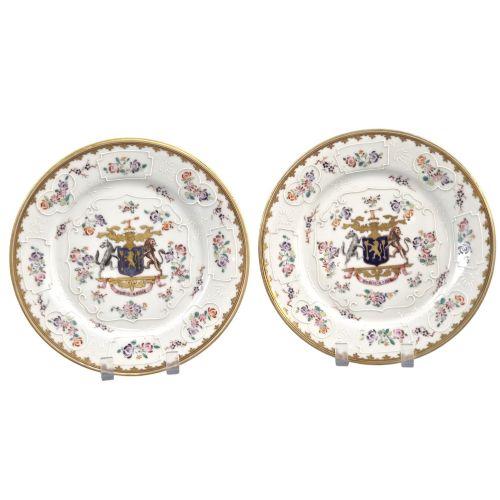


Coat of Arms Porcelain
Coat of arms porcelain combines heraldic precision with ceramic artistry, offering collectors historic plates, bowls, and vases painted with specific family crests.
Coat of Arms Porcelain
When searching for coat of arms porcelain, buyers encounter plates, soup plates, bowls, and vases painted with distinct armorial bearings. These pieces span the eighteenth and nineteenth centuries, originating from English factories, French workshops, and Chinese export kilns.
The Chinese export pieces from the eighteenth century, including Qianlong period dishes and soup plates with famille rose enamels, represent a significant portion of what turns up. English factories such as Worcester, Coalport, and Minton also produced armorial table services for specific noble families.
French makers like Edmé Samson in Paris created both direct reproductions and armorial style pieces during the nineteenth century. Buyers will also find Victorian heavy glazed pottery plates alongside earlier hard-paste porcelain service pieces.
How they were made
Makers utilised hard-paste porcelain and glazed pottery as the primary body materials for these armorial items. Artisans applied polychrome enamels and overglaze painting techniques to render intricate heraldic shields, crests, and mottoes accurately.
Gold leaf and gilt embellishments frequently highlight the borders, rims, and details surrounding the central coat of arms. Firing techniques varied between European factory kilns and the specialised export workshops of China.
Listings feature hard-paste porcelain, glazed pottery, and ceramic bodies decorated with gold leaf, gilt, and overglaze enamel.
What varies in quality
The precision and detail of the hand-painted heraldic device separate the finest examples from standard production. Heraldry requires exact tinctures, charges, and supporters, so superior pieces display crisp brushwork and accurate colour application.
The quality of the porcelain body and the preservation of the overglaze enamels and gold leaf gilding define the grade of the piece. Well-preserved surfaces with minimal rubbing to the gilt borders indicate better preservation and superior original manufacture.
Edmé Samson & Cie·Coalport Porcelain·Chamberlain Worcester·Barr Flight And Barr·Minton
The Coat of Arms Porcelain Glossary
- Armorial
- Bearing a coat of arms or heraldic device. This term describes ceramics specifically commissioned or decorated with a family crest.
- Famille Rose
- A palette of Chinese porcelain enamels dominated by opaque pink or rose colours, introduced in the eighteenth century. It frequently appears on export armorial plates and dishes.
- Hard-Paste Porcelain
- A dense, durable ceramic material fired at high temperatures, composed of kaolin and petuntse. It forms the body of many eighteenth-century and nineteenth-century European and Chinese pieces.
- Overglaze Enamel
- Colour pigments applied on top of the fired glaze and fixed with a lower temperature second firing. This technique allowed for the intricate multi-coloured depiction of detailed coats of arms.
- Qianlong Period
- The era of the Qing dynasty from seventeen thirty-five to seventeen ninety-six, noted for prolific Chinese export porcelain production. Many armorial plates and dishes date from this specific timeframe.
Coat of Arms Porcelain: Frequently Asked Questions
What is armorial porcelain?
Armorial porcelain refers to ceramic tableware, vases, and decorative pieces painted with a specific family coat of arms or crest. These items were typically commissioned by noble families or wealthy merchants to display lineage and status on the dining table.
Most surviving examples date from the eighteenth and nineteenth centuries, originating from major European factories or Chinese export kilns. Each piece serves as both functional tableware and a specific historical record of a family or title.
How can I identify the family crest?
Identifying the coat of arms involves examining the heraldic elements, including the shield, helm, crest, and sometimes a motto or supporters. Reference books on British and European heraldry help match these visual components to the original families who commissioned the services.
Many listings note the specific historical figure or family associated with the arms, such as Baron Carbery or the Earl of Northington. Researching the recorded name provides direct context about the original owner and the date of commission.
Were these pieces made in China?
A substantial portion of eighteenth-century armorial porcelain was manufactured in China for the European export market. European trading companies sent drawings of family coats of arms to Chinese kilns, where painters copied the heraldry onto porcelain blanks.
These Chinese export pieces, often featuring famille rose enamels, arrived alongside items produced domestically in English and French factories. Both origins utilised similar heraldic source material translated through different regional ceramic traditions.
How should I display these pieces?
Armorial plates and dishes adapt well to wall mounting using proper plate hangers or display within enclosed cabinets to protect the painted surfaces. Because many items include delicate overglaze enamels and gilt highlights, placement away from direct sunlight preserves the colours.
Vases and serving vessels function effectively as standalone decorative objects on stable surfaces where the painted coats of arms remain visible. Gentle dusting with a soft, dry cloth maintains the glaze without risking the historic pigments.