



Armorial China Plates
Armorial china plates carry family coats of arms and crests, offering a tangible link to heritage that draws serious collectors to the table.
Armorial China Plates
When you search for armorial china plates, you enter a specialised field of antique ceramic collecting spanning the eighteenth and nineteenth centuries. These pieces display specific family crests, coats of arms, or mottoes hand-painted or transferred onto porcelain, bone china, and glazed pottery. You will encounter various forms on this page, ranging from standard dessert plates and cabinet plates to deep soup plates and serving dishes.
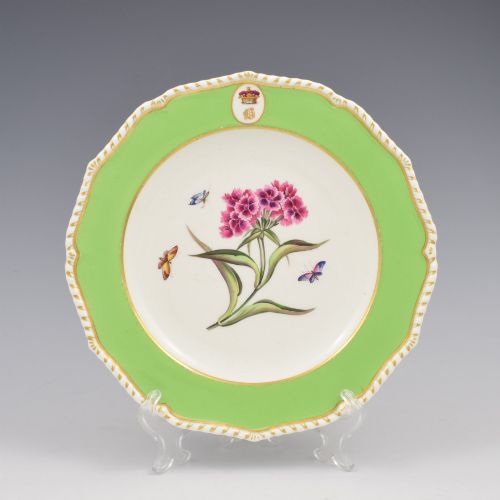
The English examples on this page date from the Georgian, Regency, and Victorian eras, originating from renowned factories such as Bloor Derby, Chamberlain Worcester, Coalport, Copeland, Minton, and Barr, Flight & Barr. Alongside these domestic productions, you will find Chinese export porcelain made for Western families during the eighteenth century, particularly from the Qianlong period. These wares served elite households for dining and display, marking familial alliances and status.
Dessert plates and soup plates form the majority of the current selection, often surviving from larger dinner or dessert services commissioned by nobility and gentry. The armorial bearings allow researchers to identify the original owners, connecting surviving ceramics to specific historical lineages. Whether European porcelain or Chinese export ware, each plate preserves a distinct heraldic design executed with considerable technical skill.
Quality and Execution
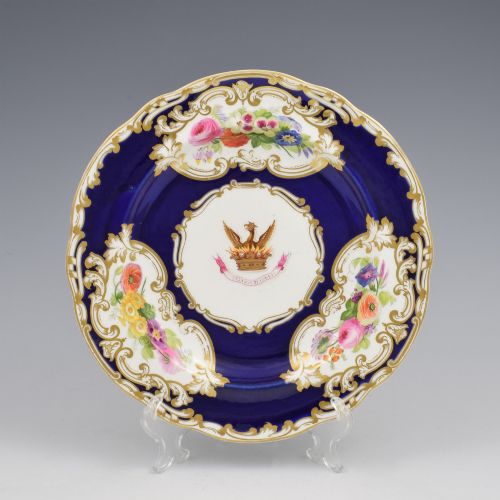
The precision and detail of the hand-painted heraldry separate standard factory output from exceptional commission pieces. Master painters rendered mantling, supporters, and mottos with fine brushwork, ensuring the tinctures of the coat of arms adhered strictly to heraldic rules. Simpler pieces might feature transfer-printed outlines filled in with basic washes of colour.
The quality of the ceramic body and the richness of the gilding also distinguish the range. High-tier cabinet and dessert plates display heavy, burnished gold leaf and flawless white porcelain grounds free from kiln distortion. Earlier Chinese export pieces and nineteenth-century English manufactories maintain high standards in throwing and glazing, though wear on surface enamel naturally accumulates over centuries of handling.
A phoenix in flames guards the family crest on one nineteenth-century plate, adding mythological fire to dinner.
Bloor Derby·Chamberlain Worcester·Coalport·Copeland·Minton·Barr Flight and Barr
The Armorial China Plates Glossary
- Armorial
- Bearing a coat of arms or heraldic device. These designs identify the specific family or institution that commissioned the ceramic service.
- Crest
- The specific component of a coat of arms that sits atop the helm or coronet. Many plates feature only this element rather than the full armorial achievement.
- Famille Rose
- A palette of Chinese porcelain enamels dominated by opaque pink or rose colours. This style gained popularity during the eighteenth century for export wares.
- Gilding
- The application of gold leaf or gold powder to ceramic surfaces. Artisans burnished this metal to create a reflective, decorative border or highlight.
- Hard-paste porcelain
- A dense, vitrified ceramic material composed of china clay and china stone. It was fired at high temperatures and resists scratching.
Armorial China Plates: Frequently Asked Questions
What is armorial china?
Armorial china consists of ceramic plates and dishes painted with specific family coats of arms, crests, or monograms. Wealthy patrons commissioned these services from Chinese export kilns and domestic European factories to display their lineage.
These pieces formed part of large dining or dessert services used during formal meals. Today, they interest collectors and historians due to their direct connection to specific historical families.
How do you date armorial plates?
Dating relies on the style of the ceramic body, the shape of the plate, and the characteristics of the enamel painting. Factory marks on the reverse, where present, help narrow the period of manufacture.
Heraldic records also assist by identifying the specific historical figure who held the coat of arms at a known time. Comparing the border decoration to documented pottery styles provides further chronological clues.
Were these plates used for daily dining?
Most armorial services were reserved for important guests and formal dining occasions to display the host's social standing and wealth. Soup plates, dessert plates, and large platters served specific courses during elaborate meals.
Over time, many services were dispersed among descendants or broken, leaving individual plates to survive as cabinet pieces. Their survival depends on how carefully past owners stored and handled them.
How do Chinese export armorial plates differ from English ones?
Chinese export plates were manufactured in Jingdezhen during the eighteenth century using hard-paste porcelain and shipped to Europe for decoration or painted directly in Chinese workshops from European drawings. They often feature distinct border motifs typical of the Qianlong period.
English armorial plates, produced later by factories like Derby, Worcester, and Coalport, use bone china or soft-paste porcelain with Regency or Victorian decorative styles. The painting techniques and paste compositions reflect European manufacturing methods of the nineteenth century.