



Turquoise Porcelain Plate
A turquoise porcelain plate brings rich colour and refined ceramic artistry to a table, spanning nineteenth-century English and French workshops.
Turquoise Porcelain Plate
A turquoise porcelain plate is a decorative or service piece finished with a distinctive bright blue glaze or ground, appearing across Georgian, Victorian, and nineteenth-century periods. These objects take the form of cabinet plates, dessert plates, chargers, and serving dishes created by prominent English and French potteries.
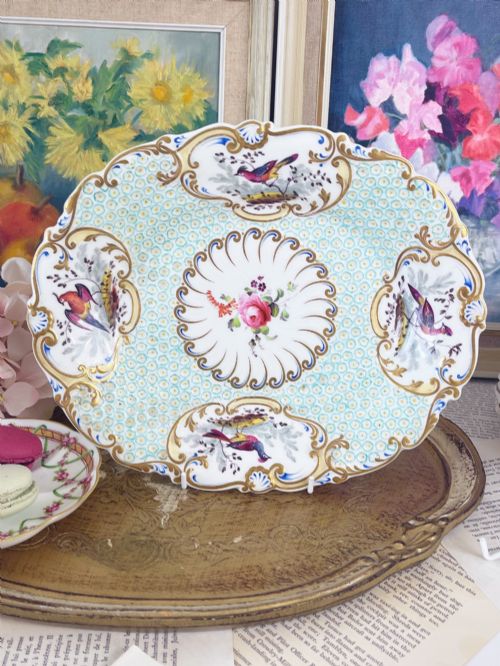
The versions most commonly met on this page include nineteenth-century English factory pieces alongside French examples styled after Sevres. Makers such as Minton, Worcester, and H & R Daniel dominate the selection, often pairing the vivid turquoise ground with handpainted birds, botanical studies, armorial bearings, or gilded highlights.
How they were made
These pieces rely on high-fired ceramic and porcelain bodies coated with coloured enamel or specialised ground colours such as bleu celeste and turquoise. Artisans applied rich gilding and gold leaf by hand to accent borders, rims, and central motifs.
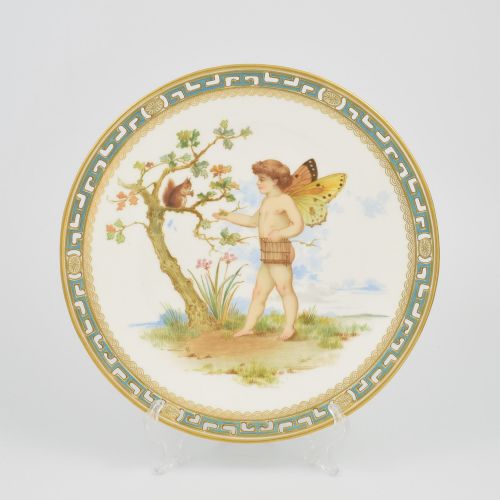
Decoration frequently involved meticulous handpainting, utilising fine brushwork for naturalistic subjects like fairies, squirrels, and fancy birds. Pierced work and jewelled enamel additions appear on select Victorian examples to create texture and visual depth.
Materials recorded across the selection include porcelain, enamel, gold leaf, and silver plate.
What varies in quality
Quality in a turquoise porcelain plate rests primarily on the ambition of the handpainting and the crispness of the porcelain body. Pieces featuring detailed botanical studies, armorial crests, or named decorative scenes by skilled hands stand apart from simpler glazed wares.
The application of gold leaf and the precision of the turquoise ground also define the upper tier of production. Rich, uniform colour saturation combined with expert gilding marks the output of esteemed factories like Minton and Worcester.
H & R Daniel·Minton·Barr Flight and Barr·Kerr and Binns
The Turquoise Porcelain Plate Glossary
- Cabinet plate
- A ceramic plate intended primarily for display in a cabinet or on a wall rather than for daily dining use. These items usually feature high-finish handpainted decoration or elaborate gilding.
- Charger plate
- A large decorative plate used as a base or under-plate for other courses during formal service. They often measure significantly wider than standard dining plates.
- Armorial
- Decoration featuring a coat of arms or family crest handpainted onto the ceramic surface. Such pieces were frequently commissioned by prominent households.
- Gilding
- The application of gold leaf or powdered gold to the ceramic surface to accent rims, handles, or borders. This technique enhances the decorative richness of nineteenth-century porcelain.
Turquoise Porcelain Plate: Frequently Asked Questions
What is a turquoise porcelain plate used for?
These pieces function primarily as decorative cabinet plates, dessert plates, or serving dishes for formal settings. Their vivid colour and detailed painting make them natural focal points for display.
Historically, finer examples served specialised roles in dessert courses or remained exhibited in glazed cabinets to showcase a household's taste and wealth.
How do I care for antique porcelain?
Antique porcelain requires gentle hand washing in warm water with mild soap, avoiding abrasive sponges or modern dishwashers. The delicate enamels and gold leaf can wear away over time if subjected to harsh cleaning.
When displaying pieces on plate stands, ensure the support is stable and padded to protect the fragile ceramic edges and historical glazes.
How do I identify a Sevres style plate?
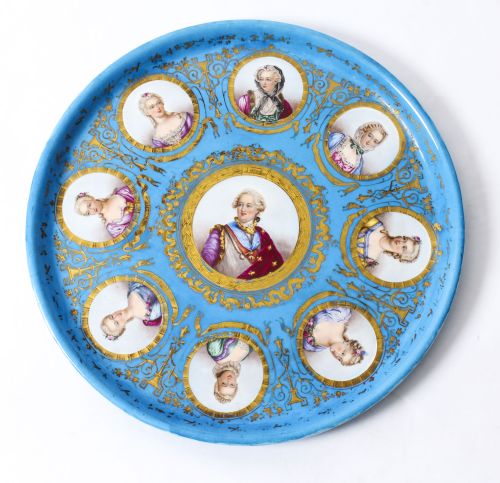
Sevres style plates emulate the distinctive soft-paste porcelain aesthetics, rich turquoise grounds, and ornate gilding associated with the famous French royal factory. They often feature handpainted panels of birds or figures framed within elaborate gilt borders.
Many nineteenth-century English and French factories produced wares in this manner to satisfy collectors who admired the elegance of eighteenth-century French design.
What period do most of these plates come from?
The majority of pieces date from the nineteenth century, encompassing both Georgian and Victorian eras. This period saw a revival of rococo and classical styles across European ceramic manufacturing.
Factory production during the 1850s to 1880s particularly favoured vibrant ground colours like turquoise paired with botanical or avian painting.