


Antique Heraldic Crest Plates
These antique heraldic crest plates carry centuries of family lineage and civic pride, painted or engraved with coats of arms for formal dining and display.
Antique Heraldic Crest Plates
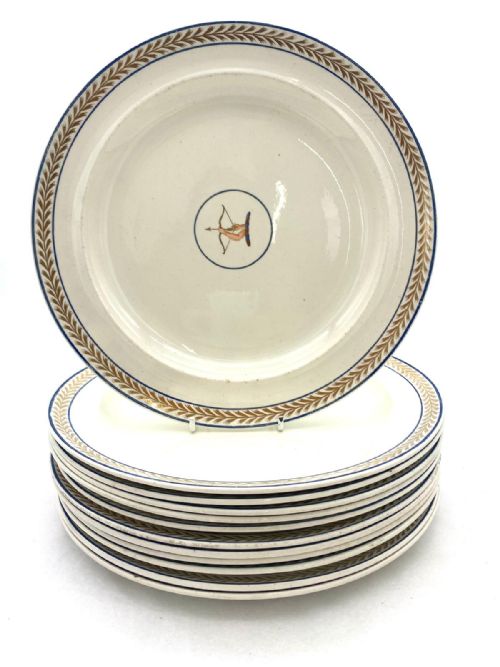
When you search for antique heraldic crest plates, you find armorial porcelain, creamware, earthenware, and metal chargers bearing specific family bearings or civic coats of arms. These pieces range from eighteenth-century Chinese export porcelain made for European markets to nineteenth-century bone china service plates produced by major English potteries.
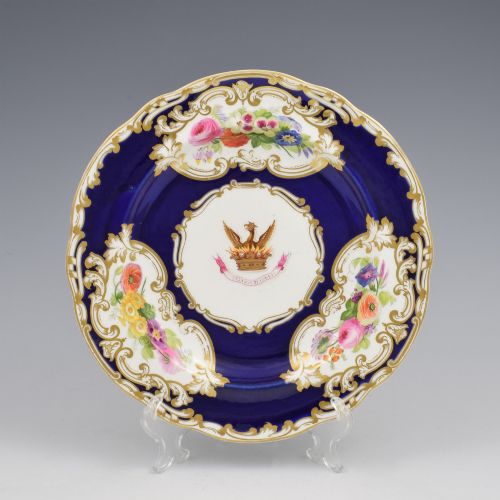
The version you are most likely to meet on this page is the nineteenth-century porcelain or pottery dinner plate featuring a hand-painted family crest and motto. Such pieces often come from larger armorial services commissioned by landed families, carrying the heraldry of specific British or continental dynasties.
Materials and production
Ceramic plates employ creamware, bone china, and porcelain bodies painted with enamel colours and occasionally highlighted with gold leaf. Potters shaped these on wheels or pressed them in moulds before applying intricate hand-painted heraldic motifs that required careful kiln firing to fix the pigments.
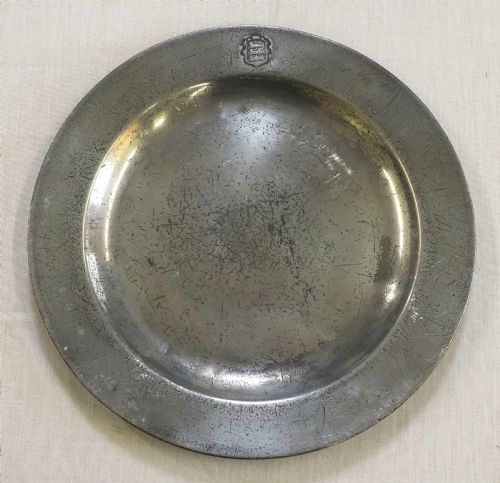
Metal pieces utilise pewter, brass, and silver plate, shaped into broad rim chargers or heavy trays. Pewter and brass versions typically feature engraved coats of arms, while silver-plated items often display crests applied via soldered medallions or crisp surface chasing.
Some plates feature fierce phoenixes rising from flames, proving that eighteenth-century aristocrats loved a dramatic family mascot just as much as modern film studios.
Distinctions in quality
The distinction between ordinary and superior pieces rests upon the precision of the heraldic painting and the prestige of the maker. Master ceramicists and specialised heraldic painters rendered mantling, crests, and mottos with remarkable crispness and correct heraldic tincture, whereas simpler items show hurried brushwork or generic decoration.
The weight of the metal body and the clarity of the engraving dictate the standing of pewter and silver-plated chargers. Heavy gauge pewter with deeply struck maker marks and sharply incised armorials represents the upper tier of metalwork.
Wedgwood·Copeland·Wood & Michell·Lawrence Dyer·Coalport
The Antique Heraldic Crest Plates Glossary
- Armorial
- Bearing a coat of arms or heraldic insignia. This term describes ceramics and metalware specifically decorated with a family crest.
- Creamware
- A refined earthenware developed in eighteenth-century England featuring a pale yellowish-buff glaze. It provided a smooth surface for armorial enamel painting.
- Charger
- A large decorative or serving plate, often measuring over twenty inches across. These heavy vessels frequently display prominent engraved coats of arms on wide rims.
- Crest
- The specific component of a coat of arms placed above the shield on a helmet or coronet. Many single plates display only this element rather than the full achievement.
- Motto
- A short sentence or phrase inscribed on a scroll below the shield or crest. It expresses the sentiment or history of the family bearing the arms.
Antique Heraldic Crest Plates: Frequently Asked Questions
How do I identify the family on an armorial plate?
Identify the family by researching the specific coat of arms, crest, and motto painted or engraved on the surface. Heraldic dictionaries match these graphical elements to the registered lineages of British and European gentry.
Many plates also include family names or specific mottoes within the design, which simplify genealogical research when cross-referenced against historical armorial records.
Were these plates used for daily dining?
Armorial services served elite dining tables during formal banquets, displaying the host's wealth and lineage to guests. Wealthy families commissioned entire services featuring their heraldry for significant social occasions.
Over time, many surviving pieces transitioned from active dining service to cabinet display or wall mounting, protected for their artistic and historical significance.
How do I date an antique ceramic armorial plate?
Dating relies upon the ceramic body type, glaze characteristics, and the style of the painted heraldry. Creamware and early porcelain exhibit distinct paste weights and foot ring formations typical of the eighteenth century.
Maker marks stamped or painted on the reverse provide a reliable timeframe, matching factory operating periods and specific nineteenth-century registry codes.
Can I hang antique metal chargers on the wall?
Metal chargers possess sturdy pewter, brass, or silver-plated bodies suitable for wall display when supported by proper professional hangers. These heavy pieces require fixtures that distribute the weight evenly across the rim.
Ensure that any hanging mechanism exerts no damaging pressure on the engraved armorial centre or the raised edge of the charger.