
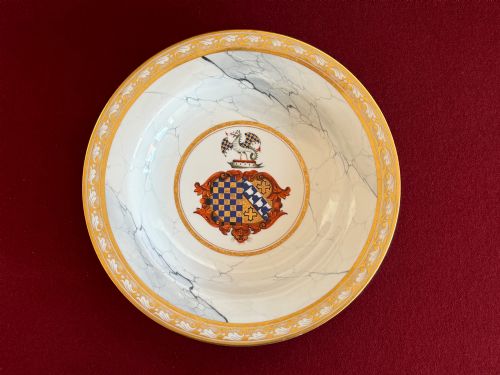
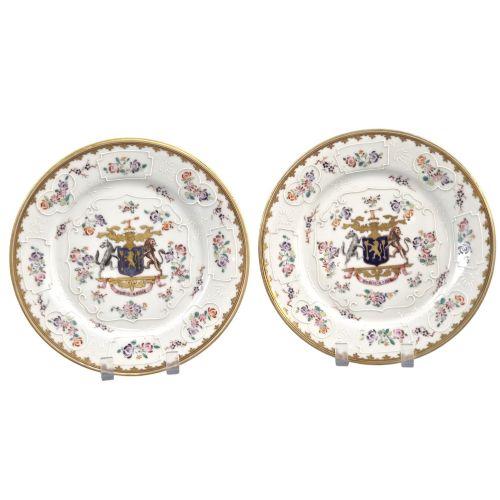


Heraldic Porcelain Dish
A heraldic porcelain dish carries centuries of family pride, painted with coats of arms and crests for the dining table.
Heraldic Porcelain Dish
A heraldic porcelain dish brings together fine ceramic manufacture and family lineage, typically taking the form of plates, soup plates, dessert plates, or tureens. When you search for a heraldic porcelain dish, you are looking at tableware commissioned by noble families, landed gentry, and institutions to display their coat of arms or crest.
The pieces on this page span the eighteenth and nineteenth centuries, running from Georgian and Regency eras through to Victorian productions. You will encounter both British factory wares from makers such as Coalport and Worcester alongside Chinese Export pieces made for the European market.
Forms range from simple cabinet plates and dinner plates to specialised rectangular dishes and soup plates. Each object bears hand-painted armorial bearings that reveal the identity of the original owner through heraldic symbolism.
Materials and techniques
Makers utilised hard-paste porcelain, bone china, and soft-paste bodies depending on the origin and period of production. Chinese Export pieces rely on durable hard-paste porcelain, whereas nineteenth-century British works from factories like Chamberlain Worcester employ refined bone china or porcelain bodies.
Decoration is applied using overglaze enamels combined with intricate gilding and gold leaf. Painters rendered complex armorial bearings by hand, utilising a palette of rich enamel colours before firing the pieces to fix the pigments.
Listings feature hard-paste porcelain, bone china, and enamel across Georgian, Regency, and Victorian periods.
Assessing quality and execution
The precision and detail of the painted armorial bearings dictate the standing of the piece. Finer examples display meticulous brushwork in the crests and mantling, while lesser pieces show simpler, more hurried application.
The quality of the porcelain body and the richness of the gilding further distinguish the range. Pieces with thick, polished gold leaf and unblemished glaze surfaces sit firmly at the top of the tier.
Edmé Samson & Cie·Coalport Porcelain·Chamberlain Worcester·Copeland Porcelain·Barr, Flight & Barr Worcester
The Heraldic Porcelain Dish Glossary
- Armorial
- Bearing a coat of arms or heraldic device. These designs were painstakingly researched and painted to order for prominent families.
- Crest
- The component of a coat of arms that sits above the shield and helm. On these dishes, the crest often appears alone in the centre or on the rim.
- Hard-Paste Porcelain
- A dense, vitrified ceramic material fired at high temperatures. It originated in China and was later replicated in European factories.
- Overglaze Enamel
- Coloured glass pigments applied over a fired glaze and refired at a lower temperature. This technique allows for bright, varied hues on the finished surface.
Heraldic Porcelain Dish: Frequently Asked Questions
How do I identify a heraldic porcelain dish?
Look for a hand-painted coat of arms, crest, or motto integrated into the design of the plate or dish. These heraldic symbols usually sit in the centre of the well or upon the rim.
Matching the armorial bearings to historical records often reveals the specific family or noble house that commissioned the service.
Were these dishes made for everyday dining?
Most armorial services were created for important banquets and formal dining rather than daily family meals. Wealthy patrons ordered full services to reinforce their social standing before guests.
Surviving pieces often functioned as cabinet plates or were kept within important dining rooms to display lineage.
How do Chinese Export armorial pieces differ from British ones?
Chinese Export pieces were manufactured in China during the eighteenth century using local hard-paste porcelain and then shipped to Europe. They often feature distinct iron-red or famille rose borders surrounding the requested coats of arms.
British pieces from factories like Worcester and Coalport date predominantly to the nineteenth century and utilise domestic bone china bodies.
Can I use a antique heraldic dish for serving food?
While these pieces were originally functional tableware, age, delicate overglaze enamels, and fragile gold leaf make modern usage risky. Hand-washing is essential if handling, though most collectors choose to display them on stands or walls.
Thermal shock and acidic foods can damage the historic glaze and pigments over time.