
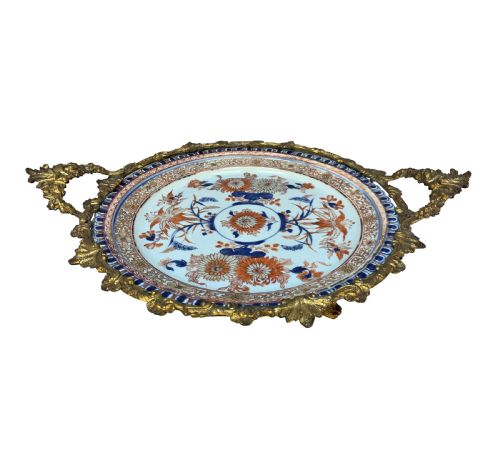


Gilt Export Porcelain Plate
A gilt export porcelain plate brings together Eastern craftsmanship and Western decorative taste across centuries of global trade.
Gilt Export Porcelain Plate
When you search for a gilt export porcelain plate, you enter a diverse field of decorative tableware and display chargers made in Asia for Western markets. These objects span periods from the eighteenth century through the early twentieth century, reflecting shifting international trade routes and aesthetic preferences.
You are most likely to meet Chinese export wares, including Canton dishes, Imari patterns, and armorial designs, alongside Japanese Imari and Kutani pieces. Forms vary from traditional round plates to fan shapes and shamrock dishes, often featuring hand-painted details enhanced with gold leaf.
Some examples combine Asian ceramics with European mounts in ormolu or gilt bronze, bridging distinct decorative traditions. The materials recorded across these listings include porcelain, earthenware, ironstone, enamel, and gold leaf.
How they were made
The foundation of every piece is hard-paste or soft-paste ceramic, shaped by hand or moulded before initial firing. Artisans then applied underglaze pigments or enamel colours to create intricate pictorial and geometric motifs.
Gilding was applied as gold leaf or liquid gold, frequently fixed during a secondary low-temperature kiln firing to bond the metal to the glazed surface. Certain items received metal mounts in ormolu or gilt bronze, securing the ceramic body within a decorative European framework.
Listings feature porcelain, earthenware, and ironstone decorated with enamel and gold leaf across the eighteenth, nineteenth, and early twentieth centuries.
What varies in quality
Quality in a gilt export porcelain plate rests upon the precision of the brushwork and the complexity of the composition. Pieces featuring detailed hand-painted scenes, iron-red pigments, and rich gilding represent superior artistic effort compared to simpler production.
The integrity of the surface decoration and the preservation of the gold leaf dictate the visual success of the object. Weight, potting fineness, and the harmony between ceramic body and any metal mounts further distinguish standard trade wares from exceptional commissions.
C.J. Mason
The Gilt Export Porcelain Plate Glossary
- Export porcelain
- Ceramics manufactured in Asia specifically for export to European and American markets. These wares combined traditional local potting techniques with shapes and motifs designed to appeal to Western buyers.
- Imari
- A style of Japanese porcelain featuring a distinct palette of underglaze blue, iron red, and abundant gilt highlights. The style proved immensely popular and was subsequently imitated by Chinese and European kilns.
- Canton dish
- Porcelain manufactured in the Canton region of China, typically characterised by vibrant enamel palettes and panelled scenes depicting figures, birds, and flowers. They often incorporate gilt detailing around the borders.
- Armorial plate
- Custom-ordered export porcelain painted with the specific coat of arms or crest of a European family. These commissioned pieces represent high-status international trade during the Georgian era.
- Ormolu
- Finely ground high-carat gold mercury-gilded onto a bronze object, frequently utilised to mount and display decorative porcelain plates in European interiors. It adds structural framing and a rich metallic sheen.
- Ironstone
- A type of durable earthenware patented in the nineteenth century as a robust alternative to porcelain. It accepted enamels and gilding readily while offering greater resistance to daily wear.
Gilt Export Porcelain Plate: Frequently Asked Questions
Where were these plates made?
These decorative plates and dishes originated primarily in Chinese and Japanese kilns, production centres geared towards international trade. Artisans produced them to satisfy the strong demand for Asian ceramics in Western domestic interiors.
Specific regions such as Canton and export hubs generated distinct stylistic traditions. European factories later drew inspiration from these imports, creating their own interpretations of the aesthetic.
How were gilt export plates used?
Historically, many of these plates served as display pieces in formal dining rooms and drawing rooms rather than everyday tableware. Their delicate enamels and gold leaf made them status symbols reflecting the owner's wealth and cosmopolitan tastes.
Some examples with metal mounts functioned as decorative mounted dishes or centrepieces. Today, collectors continue to display them on walls, plate racks, or specialised stands.
How do I identify the period?
Dating relies on stylistic clues, potting characteristics, and specific decorative palettes associated with reigns such as the Qing Dynasty or the Meiji period. Georgian and nineteenth-century examples often display particular border patterns and enamel formulations unique to their era of production.
Marks on the base, where present, can offer precise chronological indicators. Comparing the weight, glaze texture, and gilding technique against documented examples helps confirm the age.