


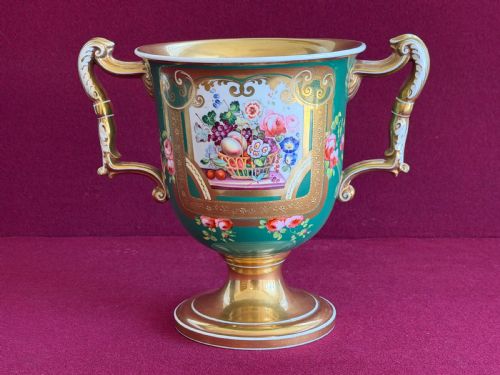

English Hand Painted Urn
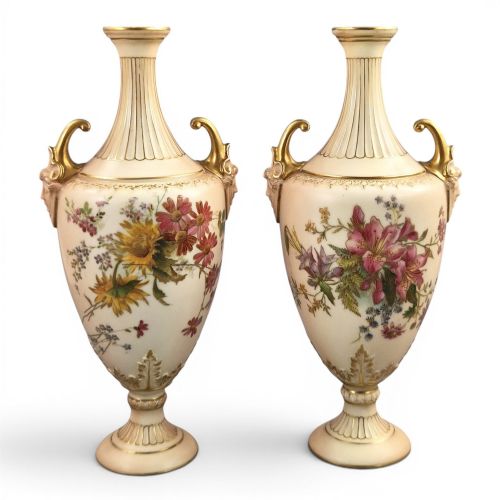
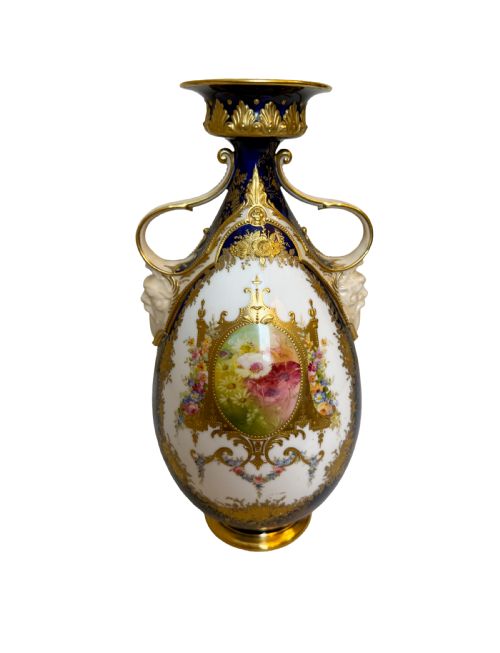
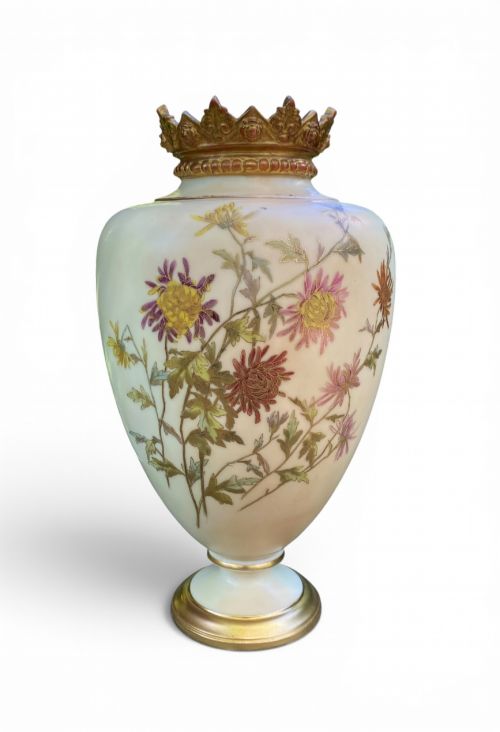
An English hand painted urn brings together ceramic form and fine brushwork, offering a glimpse into centuries of domestic display and botanical illustration.
English Hand Painted Urn
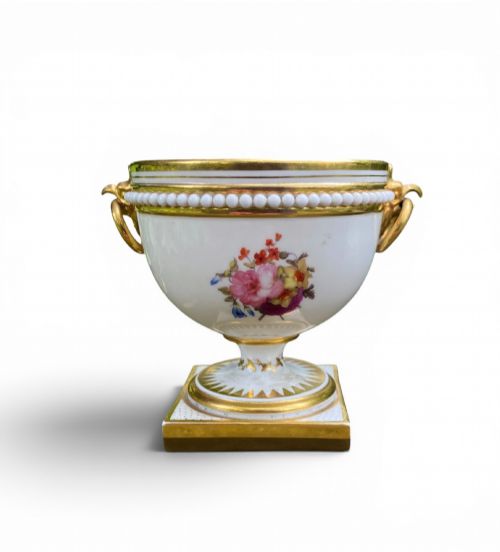
An english hand painted urn takes many shapes across the Georgian, Regency and Victorian periods, including campagna vessels, lidded potpourri pots, ice pails, and jardinieres. These decorative ceramics serve primarily as ornamental centrepieces rather than utilitarian vessels.
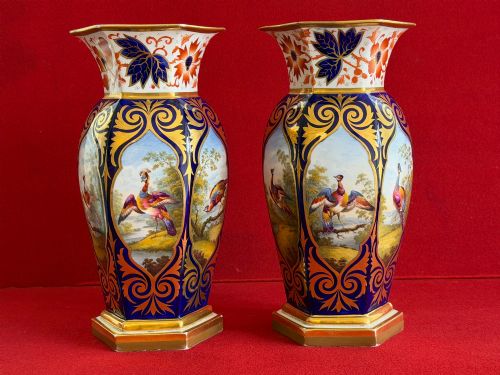
The majority of pieces encountered here date from the nineteenth and early twentieth centuries, featuring works from factories such as Worcester, Coalport, and Royal Doulton. Forms range from miniature porcelain vases to large ovoid jars adorned with landscapes, birds, fruit, and floral subjects.
Buyers select these objects for their marriage of sculptural ceramic forms and detailed miniature painting executed by named artists. Each piece reflects the aesthetic priorities of its decade, shifting from neoclassical restraint through Victorian exuberance to early twentieth-century lustre and earthenware.
How they were made
Potters shaped these vessels using porcelain, bone china, creamware, earthenware, and faience, often throwing them on a wheel or casting them in moulds before firing. Artisans then applied glazes, enamels, and mineral colours by hand, frequently incorporating gold leaf, gilding, and gilt accents to highlight handles, rims, and moulded details.
The decorative surfaces required multiple firings in kilns to fix the ground colours and delicate overglaze enamel paintings. Painters worked with fine-tipped brushes to render botanical studies, ornithological scenes, and classical landscapes directly onto the ceramic body.
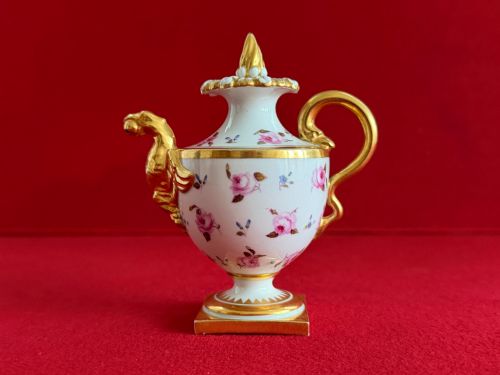
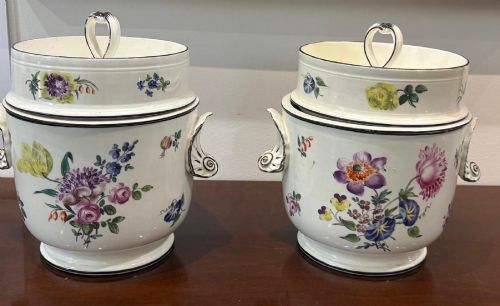
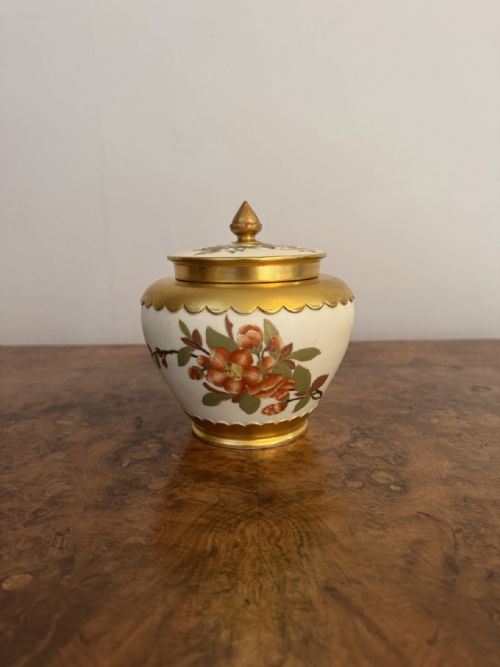
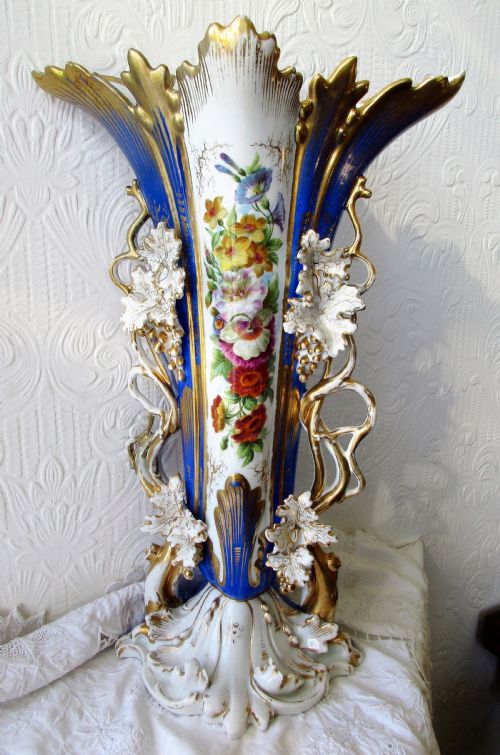
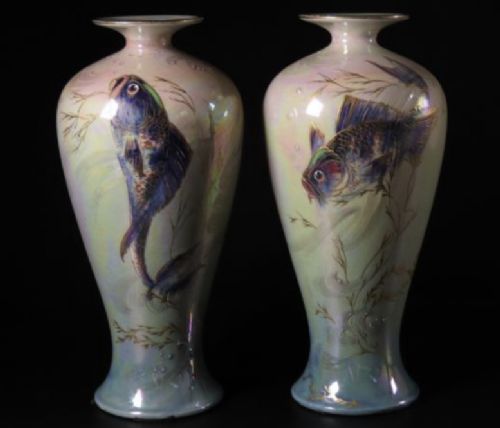
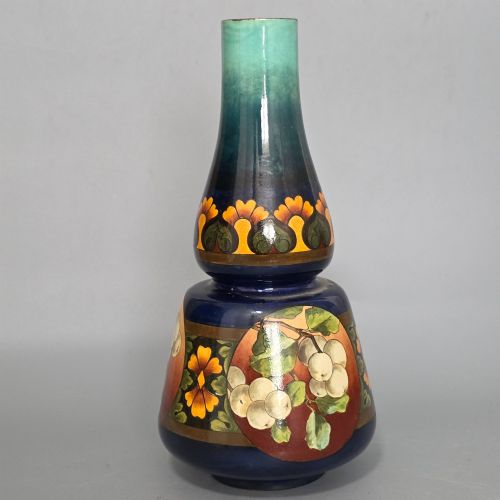
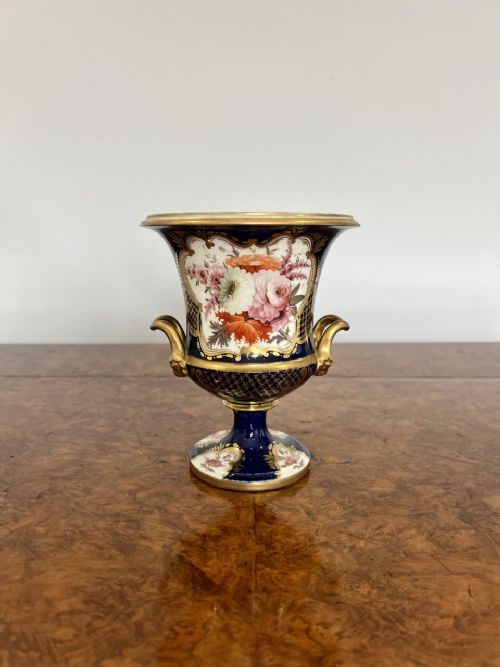
Forms include campagna urns, lidded potpourri pots, miniature vases, and ice pails decorated with hand-painted fruit and birds.
What varies in quality
Quality rests heavily on the precision and artistry of the hand painting, distinguishing standard factory output from pieces executed by named and recorded artists. Skill in brushwork, depth of palette, and the naturalism of subjects such as fruit, birds, or figures separate the finer examples.
The crispness of the ceramic moulding and the preservation of the gilding and enamel colours dictate the overall standing of an object. Earlier Regency and Georgian pieces often display sharper relief work and hand-mixed pigments, while later works depend on the mastery of the decorator.
Flight Barr and Barr·Royal Worcester·Coalport·Doulton Lambeth·Spode·H and R Daniel·Royal Crown Derby·Miles Mason
The English Hand Painted Urn Glossary
- Campagna urn
- A bell-shaped vessel with a flared rim and footed base, modelled after classical garden urns. This form was popular during the Regency period for both porcelain display pieces and stone garden ornaments.
- Creamware
- A fine-bodied earthenware developed in Staffordshire with a pale yellow or cream-coloured lead glaze. It gained widespread favour in the late eighteenth and early nineteenth centuries for domestic table and decorative wares.
- Gilding
- The application of gold leaf or powdered gold suspended in a medium to ceramic surfaces. It is typically fired onto the glaze to provide metallic borders and highlights.
- Jardiniere
- An ornamental ceramic pot or stand designed to hold live plants or cut flowers. These vessels often feature substantial handles and decorated outer walls suited for interior display.
- Potpourri pot
- A lidded vessel pierced with small holes to allow dried scented plant materials to release fragrance into a room. They frequently feature hand-painted floral panels or bird motifs.
English Hand Painted Urn: Frequently Asked Questions
How were these urns used in period homes?
These vessels functioned primarily as decorative focal points on mantelpieces, sideboards, and pedestals rather than for holding water. Lidded versions held potpourri to fragrance formal rooms.
Larger forms such as ice pails and jardinieres served specific dining and horticultural purposes before transitioning to purely ornamental display.
How do I tell a Regency urn from a Victorian one?
Regency pieces often display neoclassical restraint, featuring classical shapes, crisp white porcelain, and restrained gilding inspired by antiquity. Motifs frequently include classical urn profiles and monochrome landscapes.
Victorian examples tend towards greater exuberance in colour and form, embracing rich cobalt grounds, heavy gilding, and densely painted botanical or avian subjects.
Are all the artists' names recorded on these pieces?
Many fine pieces bear the signatures or initials of notable ceramic artists who worked for factories like Royal Worcester or Coalport. Painters specialised in specific subjects such as fruit, birds, or landscapes.
Unsigned pieces remain common, often reflecting standard factory production where decorators worked collaboratively without signing individual items.
How should I clean and care for a hand painted ceramic?
Dust these surfaces gently with a soft, dry brush to prevent accumulation in moulded crevices. Avoid using water or chemical cleaners, as moisture can damage delicate overglaze enamels and antique gilding.
Keep pieces out of direct sunlight to preserve the fugitive pigments used in nineteenth-century enamel painting.