


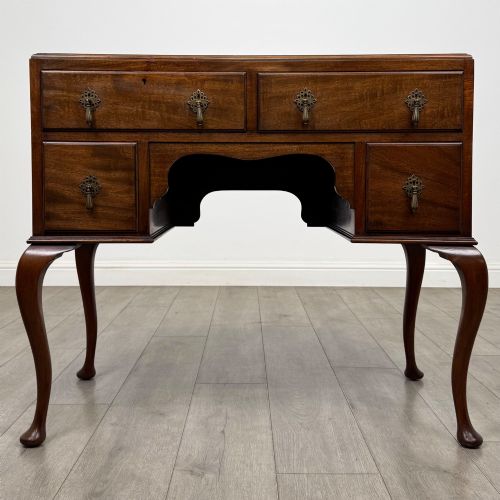
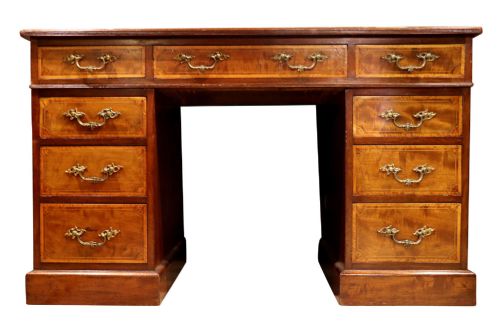
Edwardian Mahogany Writing Table
An edwardian mahogany writing table brings refined domestic utility into a room, offering a dedicated surface for correspondence built with polished timber.
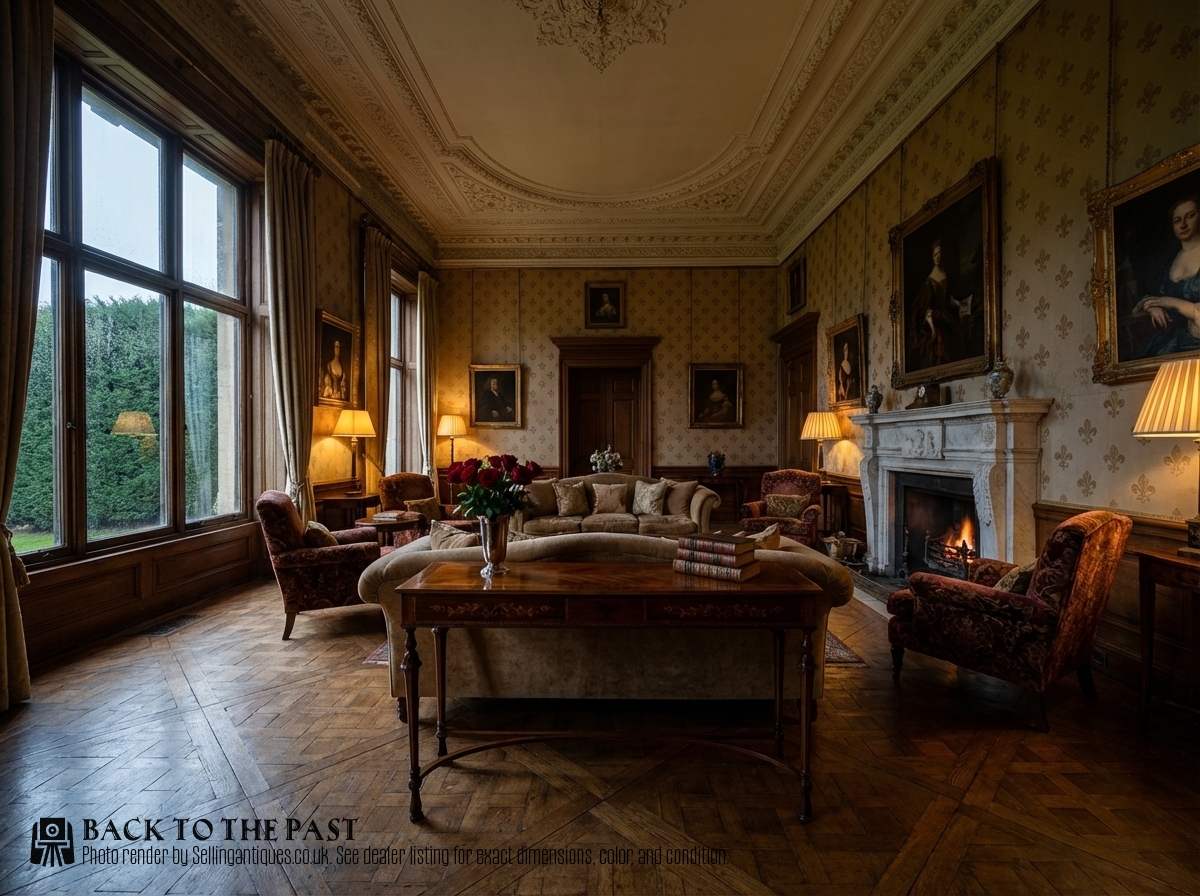
What these edwardian mahogany writing table pieces are
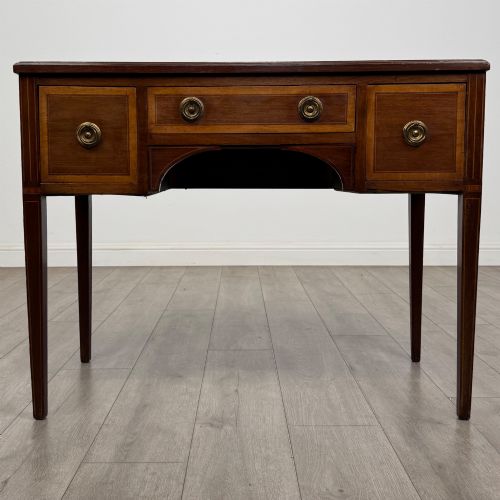
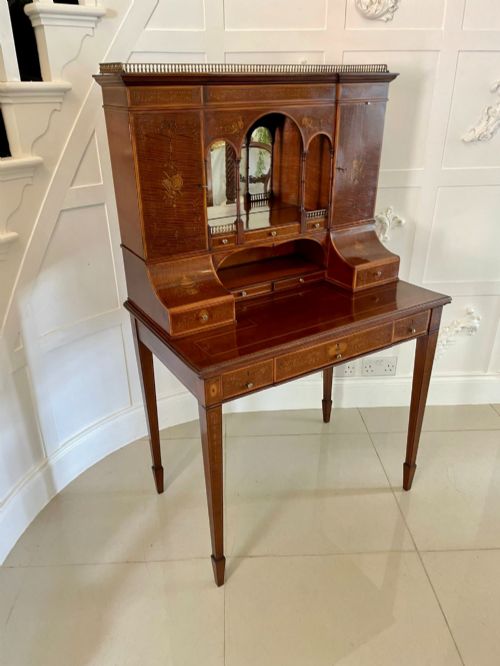
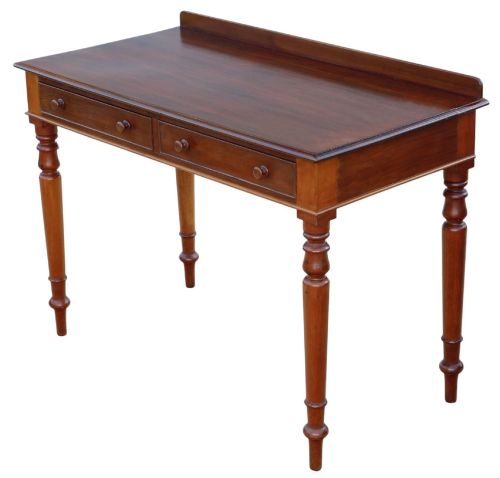
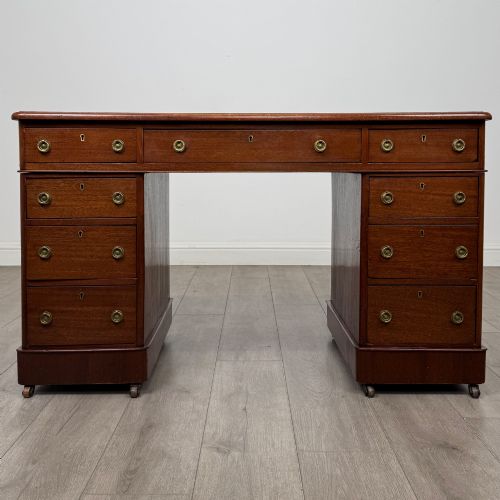
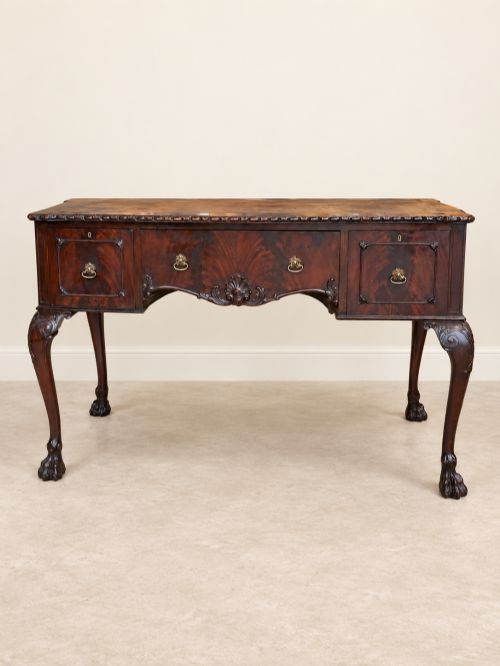
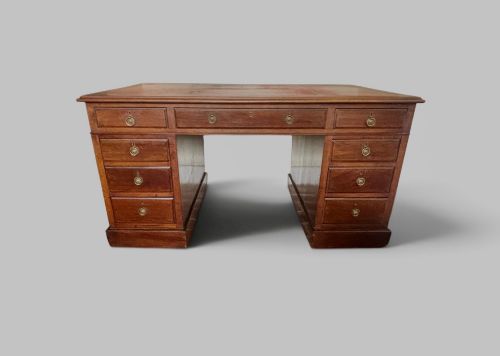
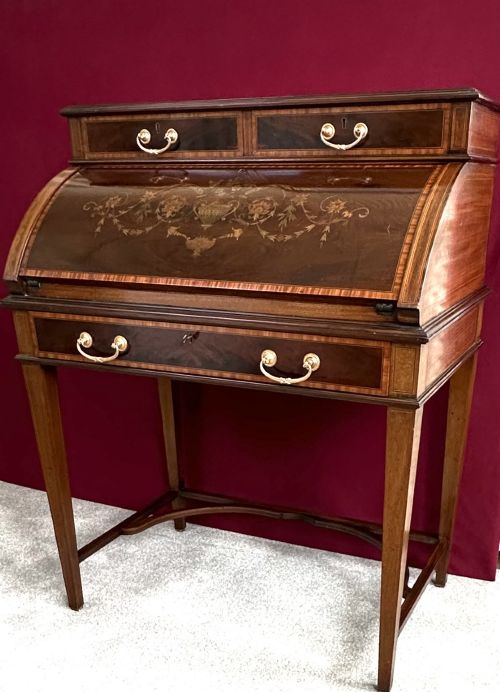
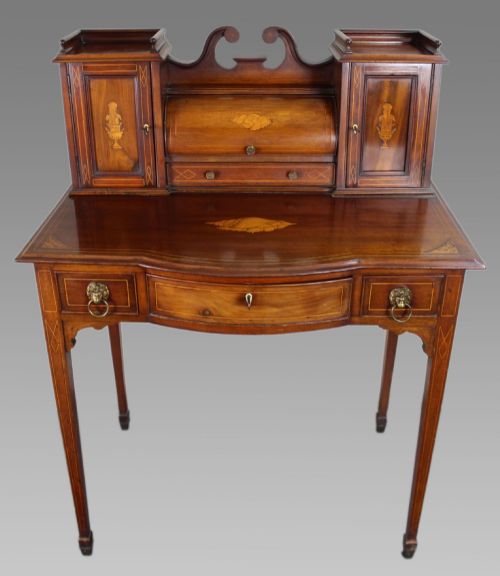
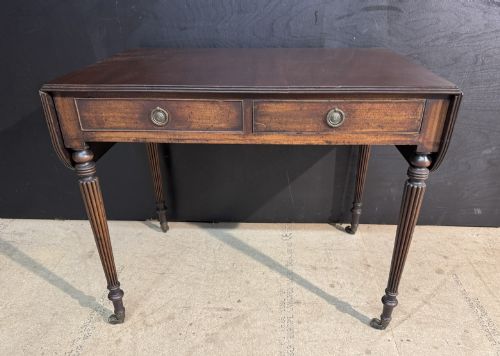
When you search for an edwardian mahogany writing table, you encounter compact desks designed for domestic correspondence and light study. These pieces mostly date from the Edwardian period and nineteen-hundred, alongside some nineteenth-century examples.
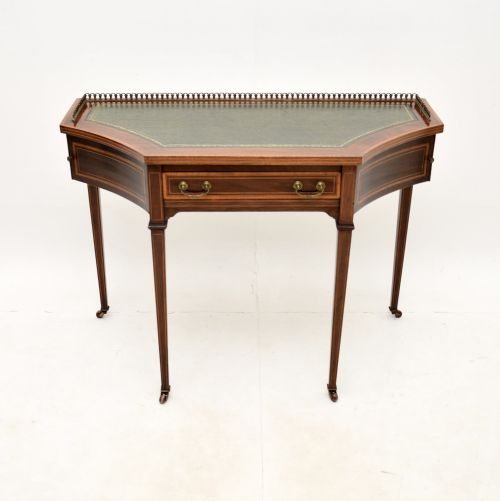
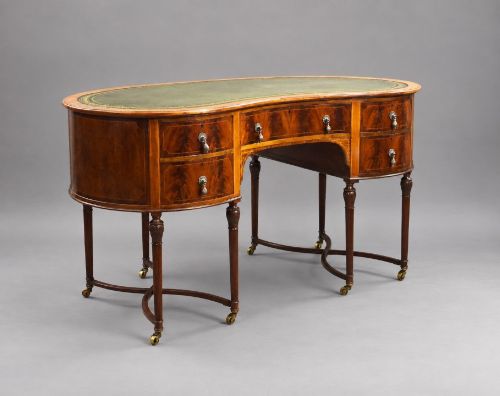
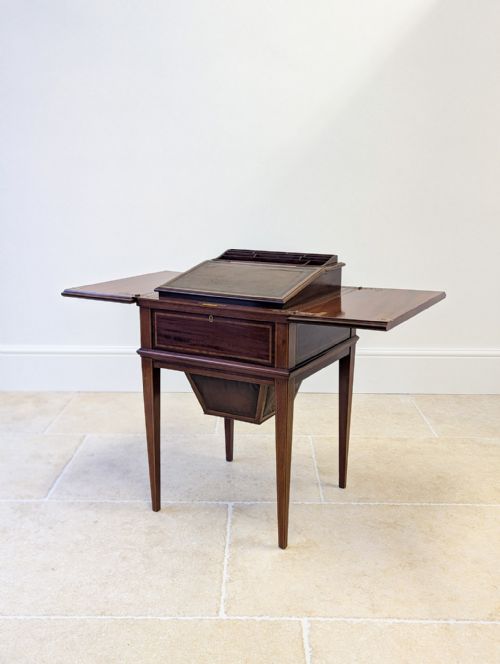
The primary forms on this page include writing desks, library tables, and side tables. Variants range from standard rectangular shapes to kidney-shaped surfaces and folding campaign designs.
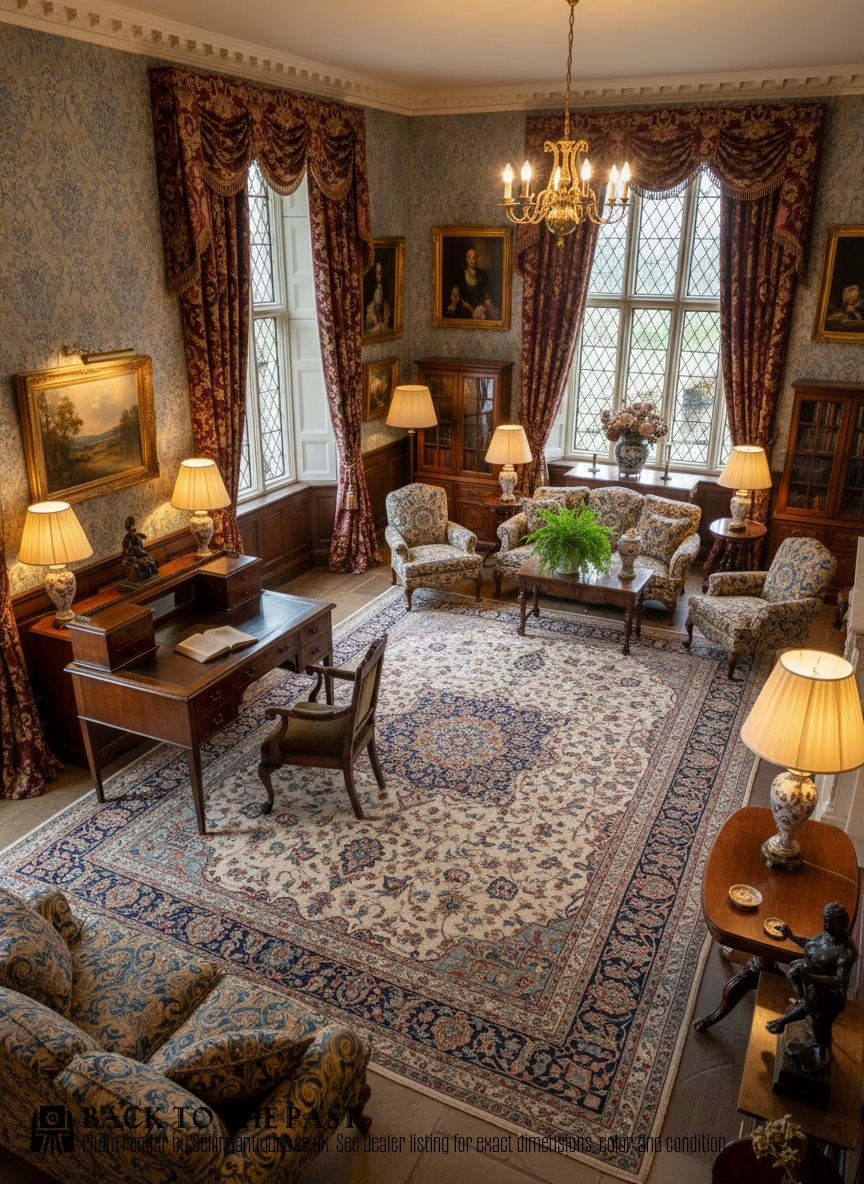
How they were made
Cabinet makers utilised solid mahogany and flame mahogany veneers for the main structure of these tables. Brass hardware often appears on drawer pulls and handles.
Satinwood inlay, boxwood inlay, and ebony inlay provide decorative contrast against the darker mahogany body. Inset writing surfaces utilise leather, frequently finished with tooled borders.
Construction techniques include multi-drawer configurations and specialised folding or extending mechanisms. These methods allowed workshops to produce both stationary library desks and adaptable portable writing furniture.
Retail Price Guide 2026
Typical UK retail prices for edwardian mahogany writing table, calculated from the Sellingantiques database of over a million retail prices indexed since 2003. This retail price guide relies exclusively on Sellingantiques data; no external sources or auction records are used, so the figures do not describe the wider market.
Some tables double as metamorphic writing desks, offering clever hidden compartments for clandestine love letters.
What varies in quality
The refinement of the timber selection creates a major distinction between pieces. Figured mahogany and carefully matched veneers signal a higher standard of manufacture.
The precision and complexity of the inlay work also separate tiers of production. Simple plain mahogany surfaces contrast with intricate satinwood, boxwood, and ebony decorative stringing.
Hardware execution and specialised mechanical components, such as adjustable frames or fitted drawers, influence the overall character of the piece.
The Edwardian Mahogany Writing Table Glossary
- Mahogany
- A durable reddish-brown tropical hardwood used extensively for furniture frames and veneers. Its stable nature allowed cabinet makers to achieve fine surface finishes.
- Satinwood
- A pale yellow exotic timber utilised for contrasting inlay and stringing on dark furniture. It provides bright linear decoration against mahogany bodies.
- Inlay
- A technique where contrasting woods are set into the surface of a primary timber to create decorative patterns. Boxwood and ebony frequently accompany satinwood in this process.
- Kidney shaped
- A curved furniture top resembling a kidney bean, often found on specialised ladies desks and writing tables. This shape allows the user to sit closer to the centre.
- Campaign
- Portable furniture designed for easy transport, featuring folding frames or collapsible components. These pieces were adapted for travel during the nineteenth and early twentieth centuries.
Frequently Asked Questions
What is an edwardian mahogany writing table?
An edwardian mahogany writing table is a compact desk produced during the early twentieth century for household correspondence and paperwork.
These pieces typically combine a mahogany frame with inset leather tops, drawers, and decorative inlay work.
Were these tables used in libraries?
Many larger examples served double duty as library tables or serving tables depending on the room layout.
Their finished backs and freestanding forms allowed placement away from walls within domestic spaces.
What woods are used besides mahogany?
Cabinet makers incorporated satinwood, boxwood, and ebony primarily as decorative inlay veneers.
These lighter contrasting timbers accent the rich red-brown tone of the primary mahogany structure.