

Brown Mahogany Serving Table
A brown mahogany serving table brings solid timber and proportion to a dining room, offering a surface for dishes that looks right in period and modern rooms alike.
Brown Mahogany Serving Table
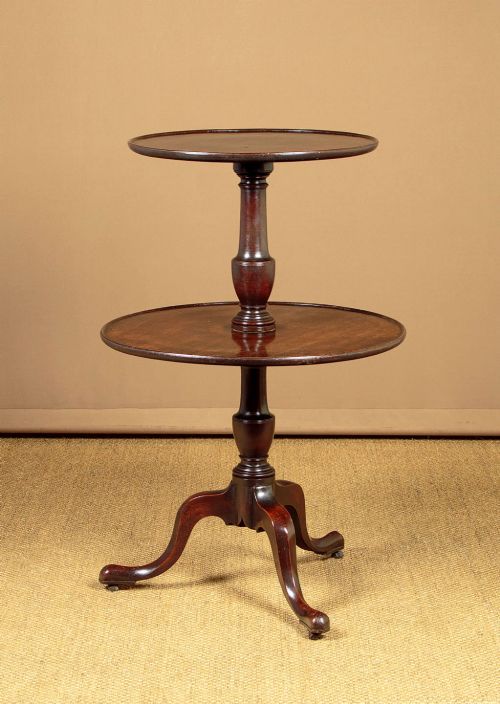
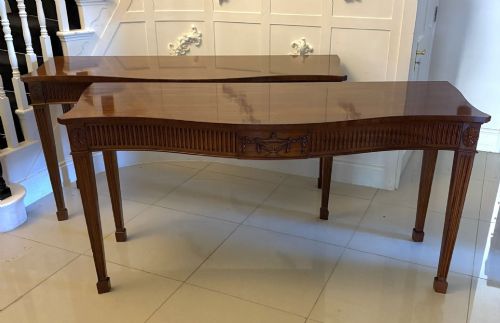
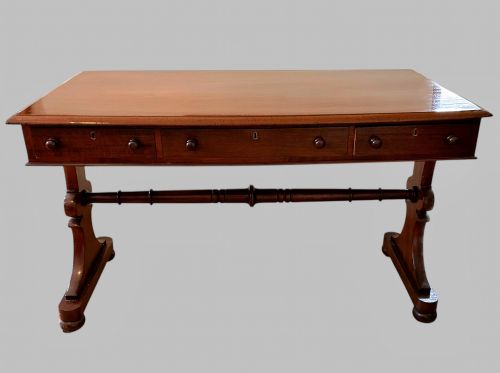
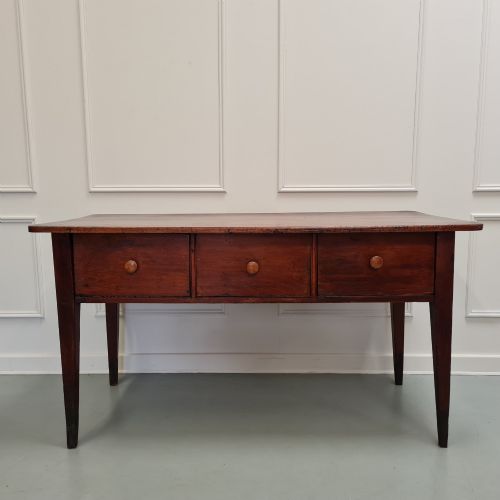
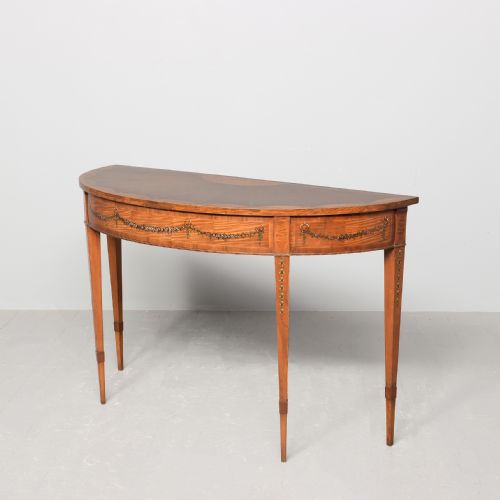
A brown mahogany serving table spans several forms in the evidence, appearing as sideboards, console tables, side tables, and dumb waiters from the Georgian, Regency, and Victorian eras.
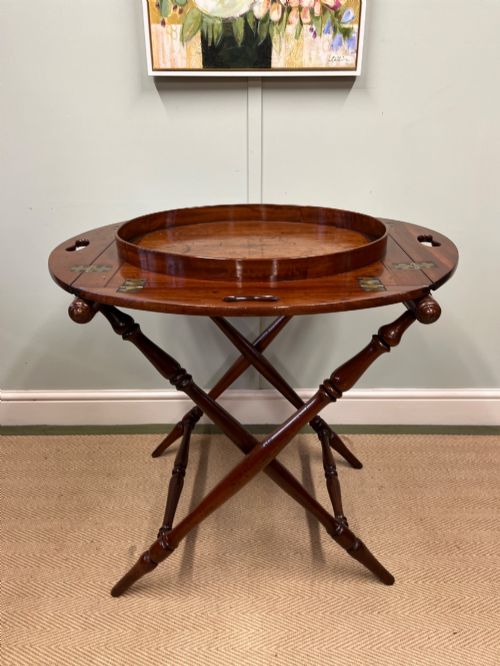
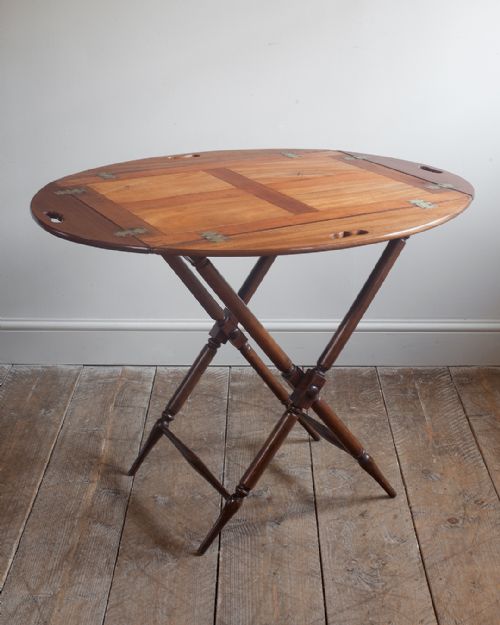
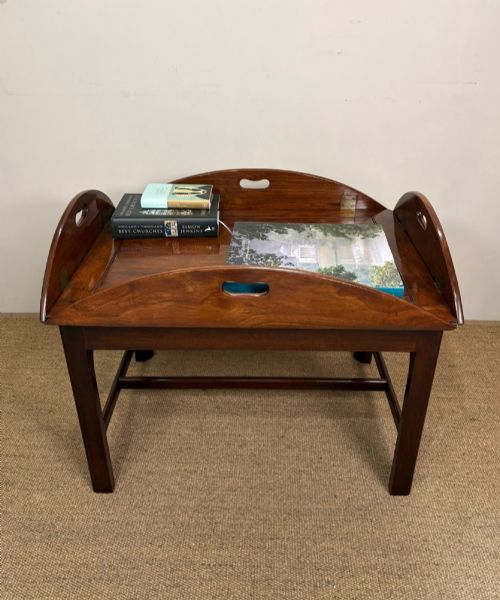
Buyers seeking a brown mahogany serving table most frequently encounter 18th-century, 19th-century, and Edwardian examples featuring sideboard formats, pedestals, or drop-flap tray stands.
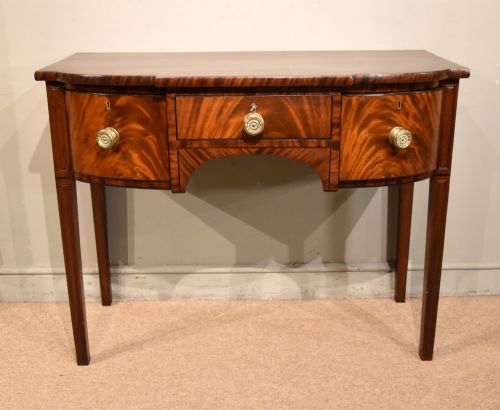
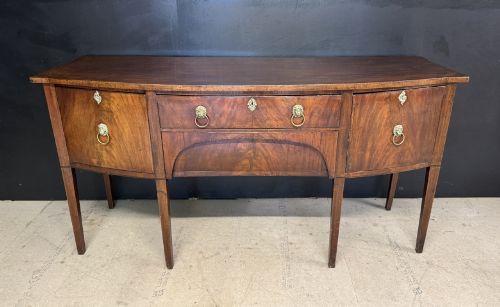
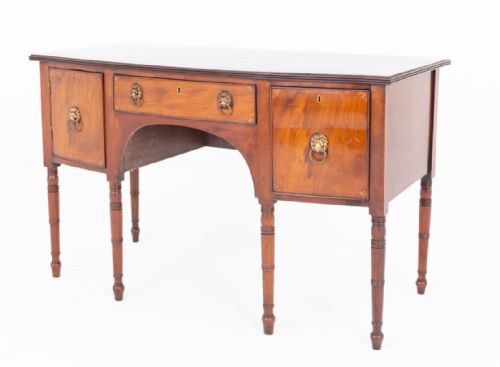
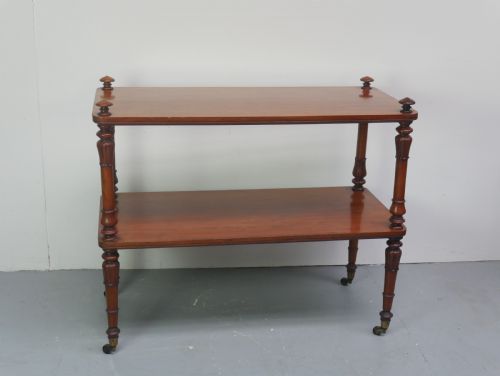
The selection includes specific variations such as bow front sideboards, breakfront sideboards, and multi-tiered buffets built to hold food and silver during meals.
Materials and construction
Cabinetmakers constructed these pieces primarily from mahogany, utilising pine as a secondary wood for internal framing and drawer linings.
Surface decoration frequently incorporates satinwood and boxwood inlay, alongside brass fittings and brass inlay to accent the dark timber.
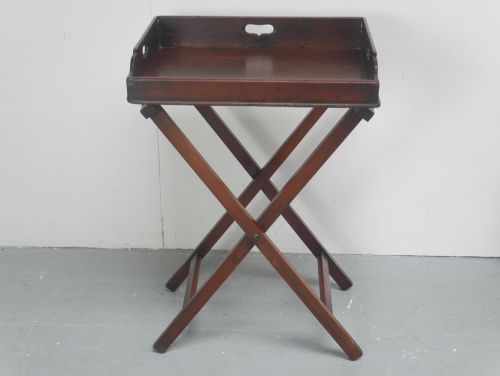
Joinery methods range from simple folding stands on butler's trays to heavy pedestals and multi-tiered framing on buffets and dumb waiters.
Garden party serving tables and tea trolleys prove that even Victorian hosts needed mobile refreshment close at hand.
Quality differences
The degree of refinement in the carved details, neoclassical motifs, and inlaid borders distinguishes standard utility pieces from finer cabinet work.
Timber selection dictates the visual depth of the surface, with well-figured mahogany grain and precise boxwood or satinwood stringing elevating a sideboard or server.
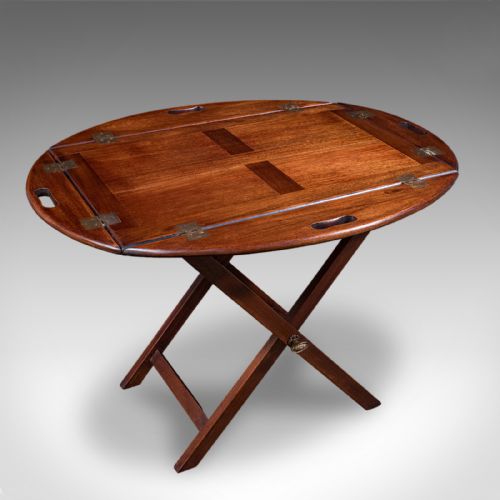
Structural integrity depends on the original soundness of the joinery, particularly on folding stands, drop-flap mechanisms, and multi-tier rotating dumb waiters.
The Brown Mahogany Serving Table Glossary
- Serving table
- A long table designed for holding food and drink prior to dining. It typically stands against a dining room wall.
- Sideboard
- A large dining room piece incorporating cupboards and drawers for cutlery and linen. It serves the same functional purpose as a serving table.
- Butler's tray
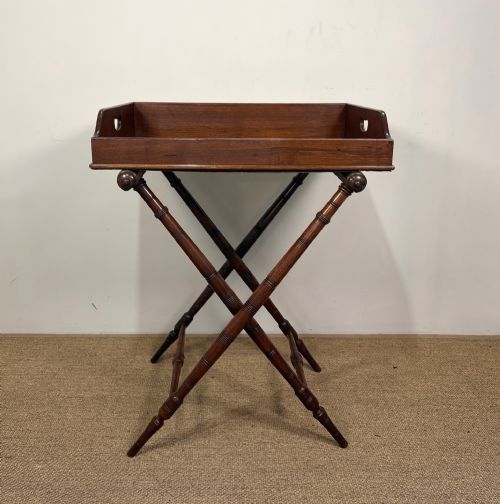
- A removable tray with hinged sides, designed to sit upon a folding wooden stand. It functions as a portable serving surface.
- Bow front
- A convex curved cabinet front that projects outward. This shape softens the corners of a serving table or sideboard.
Brown Mahogany Serving Table: Frequently Asked Questions
What is a brown mahogany serving table used for?
These tables provide a sturdy surface for placing dishes, serving food, and displaying silver during meals. In modern rooms, they function well as side consoles or hallway furniture.
Their elongated proportions allow them to sit flat against a dining room wall without blocking walkways.
How do I date a Georgian serving table?
Examination of the timber grain, secondary woods like pine, and the style of inlay helps establish the period. George III pieces often show restrained neoclassical carving and tight mahogany figure.
Hardware such as brass pulls and the construction of the drawer linings offer further clues to the exact decade of manufacture.
What is the difference between a sideboard and a serving table?
A serving table primarily offers an open top and sometimes a shallow drawer for service use. A sideboard incorporates deeper drawers and enclosed cupboards for storage.
Both forms appear across the Georgian, Regency, and Victorian periods in mahogany timber.
Are butler's trays considered serving tables?
Butler's trays and stands act as portable serving tables with drop-flaps that lift to contain items. They fold away easily when not in use.
English examples from the 19th century frequently pair a mahogany tray with a collapsible X-frame stand.