

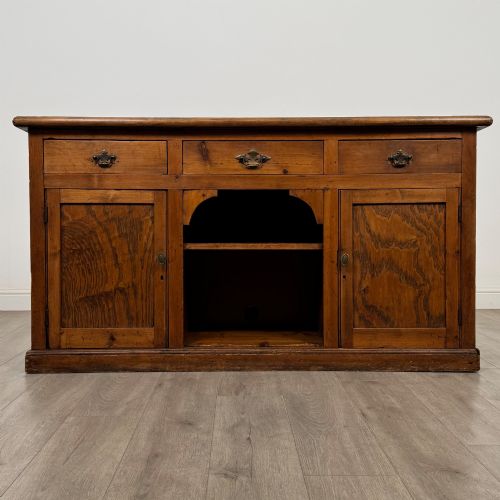
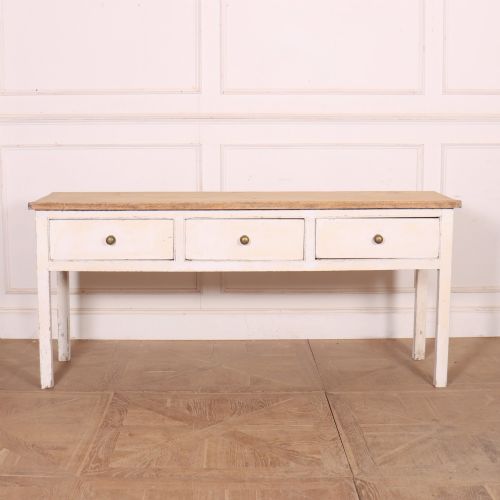
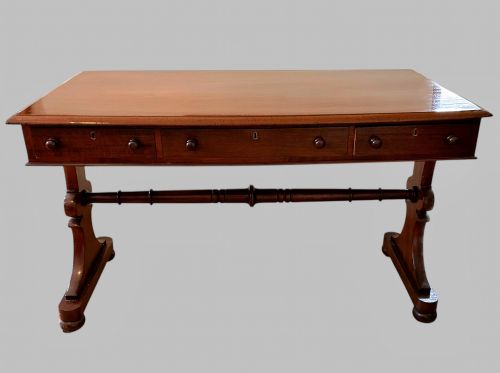


Victorian Three Drawer Server
These Victorian three drawer server options bring honest utility and character to a room, offering sturdy surfaces and generous storage for daily living.
Victorian Three Drawer Server
A Victorian three drawer server sits comfortably within the broader family of dresser bases, sideboards, and serving tables found in traditional interiors. These pieces frequently appear in robust timbers and practical formats designed for functional storage and display.
Most examples encountered on this page date from the nineteenth century, drawing on English country and rustic farmhouse traditions. They combine a low, accessible working surface with the immediate utility of three drawers set beneath.
The form bridges the gap between kitchen utility and dining room hospitality, serving equally well as a sideboard in a living space or a preparation table in a pantry. Buyers select them for their straightforward proportions and the grounded presence they bring to a home.
Materials and construction
Cabinet makers relied primarily on dependable timbers such as oak, mahogany, and pine to construct these robust bases. Oak and mahogany provided strength and deep grain texture for more formal rooms, while pine suited the humbler domestic workspaces of the period.
Hardware details typically included brass pulls and handles, paired occasionally with ceramic touches, fastened securely to drawer fronts built to withstand heavy daily use. Painted wood surfaces also appear, offering a softer aesthetic layered over the underlying timber.
Victorian Three Drawer Server Retail Price Guide 2026
Typical asking prices for victorian three drawer server among the pieces listed under this phrase on Sellingantiques today, from the lower quarter to the upper quarter. They describe what is for sale here now, not the wider market.
Several pieces come equipped with pot boards, historically designed to keep heavy iron cookware safely off damp flagstone floors.
Assessing quality and finish
Quality rests heavily on the integrity of the timber selection and the straightforward honesty of the joinery used throughout the carcass. Finer examples display tight, considered dovetailing in the drawers and timber chosen for stability and pleasing grain movement.
Surface patination plays a defining role, distinguishing pieces that have aged naturally through generations of use from those with overworked finishes. The best examples retain a tactile warmth in the wood and authentic wear that reflects their working origins.
The Victorian Three Drawer Server Glossary
- Dresser base
- A low wooden storage unit featuring drawers and sometimes a lower shelf, traditionally used in kitchens or dining rooms for food preparation and tableware storage.
- Pot board
- An open lower shelf fitted between the legs of a dresser base, historically designated for storing heavy pots and pans.
- Dovetail
- A traditional wood joint formed by interlocking wedge-shaped fingers, prized for its tensile strength and resistance to being pulled apart.
- Patina
- The surface sheen and softening of colour developed by wood, metal, and paint over decades of handling, cleaning, and exposure to light.
Victorian Three Drawer Server: Frequently Asked Questions
How were these servers originally used?
Historically, they functioned as working furniture for preparing food, organising tableware, and serving meals in domestic settings. The surface handled heavy service items while the drawers held linens, cutlery, and kitchen utensils.
Lower shelves often accommodated heavy cookware, keeping everyday necessities within arm's reach of the household staff or family.
How do I care for the wood?
Maintain the timber surfaces by dusting regularly with a dry cloth and avoiding excessive moisture or direct heat sources. Applying a traditional beeswax polish occasionally helps nourish older woods and preserves their natural finish.
Avoid synthetic sprays that can build up a film over the historic surface and dull the patination.
How can I tell the period?
Dating relies on observing construction methods, tool marks left on the timber, and the style of the hardware fitted to the drawers. Hand-cut joinery and native timbers like oak and pine point firmly toward nineteenth-century domestic production.
Comparing the proportions and overall form with documented regional styles helps confirm whether a piece belongs to the Victorian era or earlier traditions.