
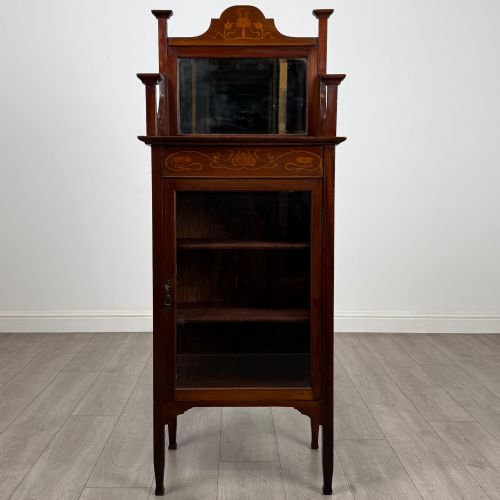


Edwardian Inlaid Music Cabinet
An edwardian inlaid music cabinet is a slender, purposeful furniture form designed to house sheet music, bringing refined marquetry into the domestic parlour.
Edwardian Inlaid Music Cabinet
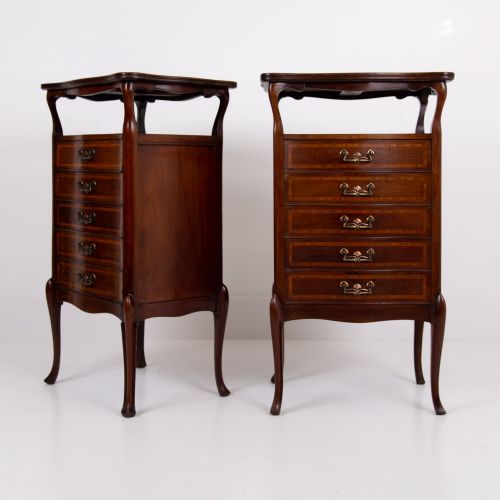
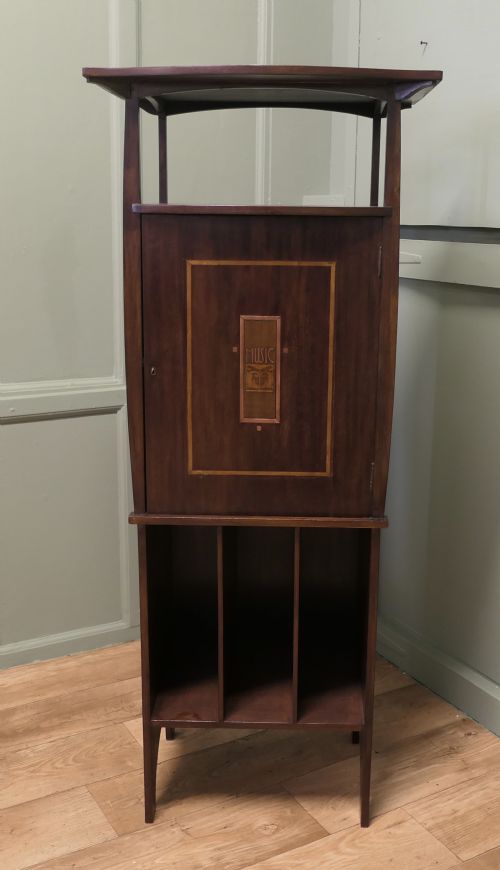
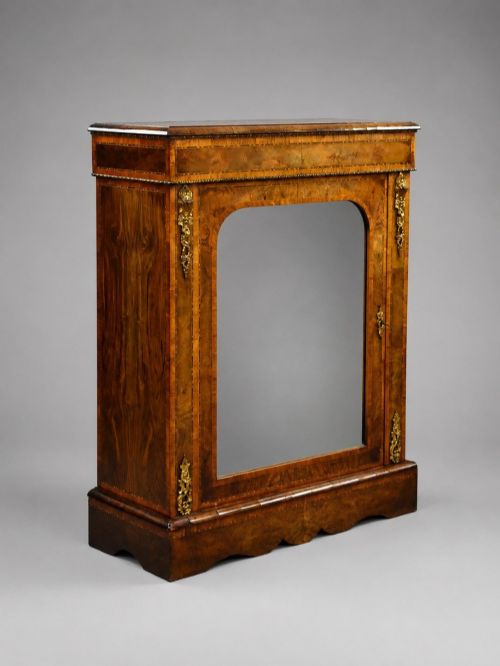
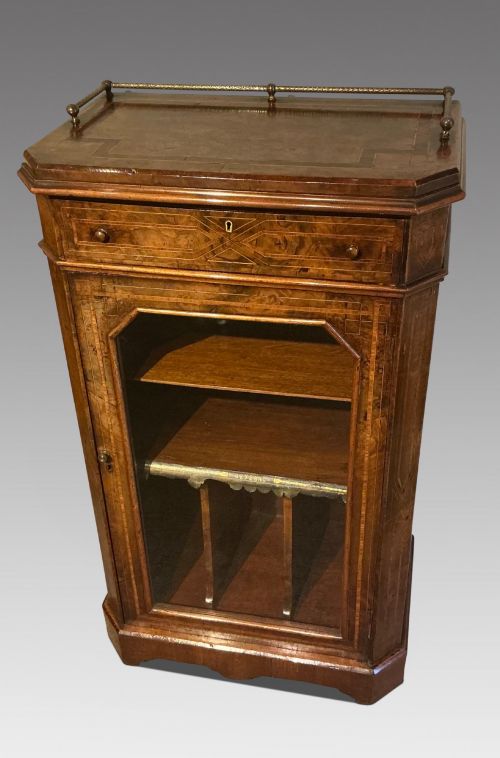
An edwardian inlaid music cabinet is typically a vertical, compartmented case built specifically to store sheet music and scores in the Edwardian home. The version most commonly met on this page is an upright mahogany piece featuring drop-front drawers or a glazed door, accented with delicate stringing and floral marquetry.
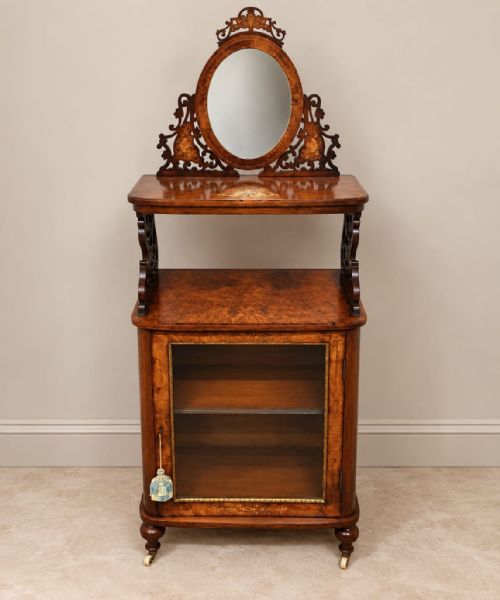
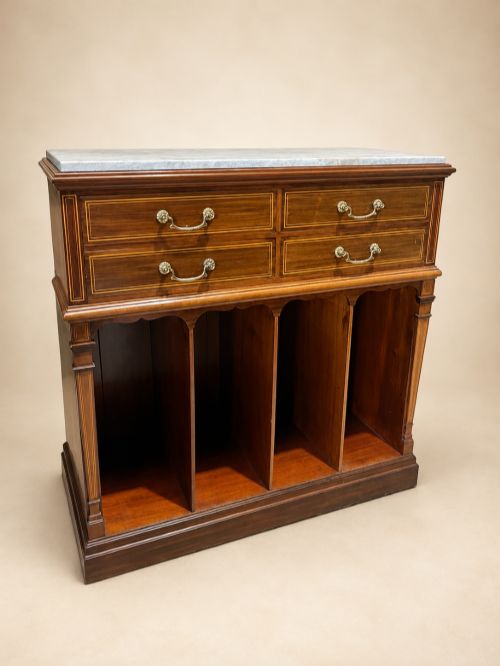
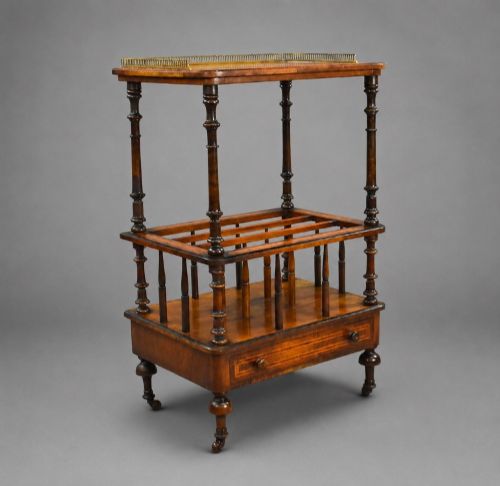
These pieces bridge the gap between utilitarian storage and formal drawing-room display. Alongside dedicated music cabinets, the selection encompasses related forms from the Victorian and Edwardian periods, including canterburys, whatnots, and narrow side cabinets sharing similar proportions and decorative inlays.
How They Were Made
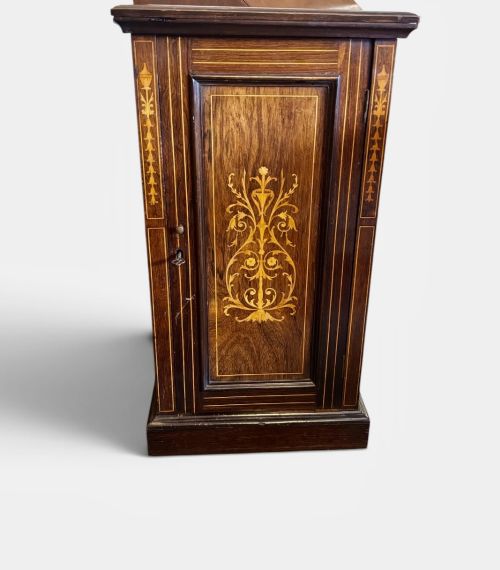
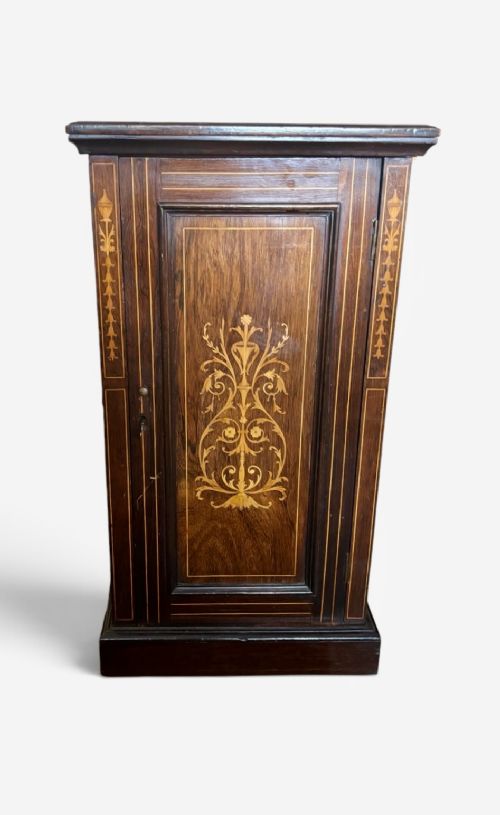
Cabinet makers constructed the primary carcase using timbers like mahogany, rosewood, and burr walnut, often pairing them with contrasting secondary woods for structural stability. Fine geometric stringing and floral motifs in satinwood, boxwood, and ebony were meticulously set into the primary surfaces.
Internal drawer banks were engineered with drop-front mechanisms or specialised vertical partitions to keep delicate paper scores organised and flat. Brass drop handles, escutcheons, and occasional glazed panels completed the construction.
Listings feature mahogany, rosewood, and burr walnut cabinets spanning from the Victorian era through the Edwardian period.
What Varies in Quality
Quality reveals itself in the depth of timber figure and the precision of the marquetry work. Finer examples display hand-cut, tightly fitted contrasting veneers rather than simple painted lines, alongside timber selection that shows rich natural grain.
Internal engineering marks the division between standard production and workshop craftsmanship. Superior pieces feature thoughtfully designed drop-front actions, solid brass hardware, and secondary framing timbers that remain stable across seasons.
GM Elwood for JS Henry·Collinson & Lock London·Keeble London·Shapland & Petter·Edwards & Roberts·George Laird & Son Glasgow
The Edwardian Inlaid Music Cabinet Glossary
- Marquetry
- Decorative veneer work forming pictorial or geometric patterns on furniture surfaces. It involves cutting thin pieces of wood and fitting them together like a puzzle before pressing onto the carcase.
- Stringing
- Fine, narrow strips of contrasting wood inlaid into channels cut into the furniture surface. This linear detail defines panels and borders on Edwardian cabinetry.
- Canterbury
- A low stand with vertical partitions designed for holding sheet music, magazines, or folios. Many feature an integrated drawer below the main compartment.
- Pier cabinet
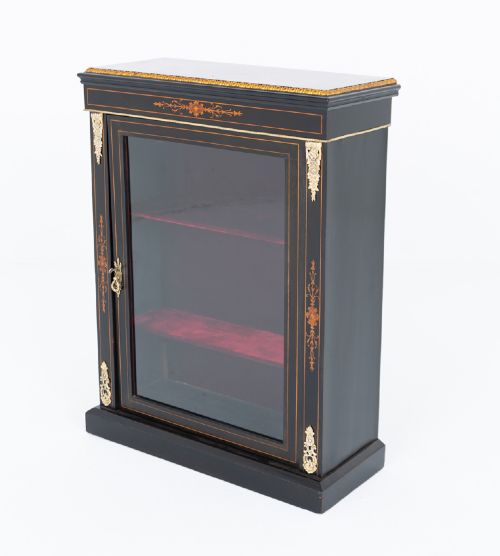
- An upright, narrow cabinet specifically proportioned to stand against the wall space between windows. These often feature glazed doors for displaying porcelain or books.
- Drop-front
- A hinged panel that opens downwards to provide access to interior compartments or desk surfaces. In music cabinets, this mechanism supports scores while browsing.
Edwardian Inlaid Music Cabinet: Frequently Asked Questions
What is an edwardian inlaid music cabinet?
An edwardian inlaid music cabinet is a tall, narrow storage piece built to hold sheet music in domestic parlours during the early twentieth century.
These cabinets typically feature a series of shallow drawers or a shelved interior enclosed by a single wooden or glazed door, decorated with contrasting wood inlays.
How were music cabinets used originally?
Music cabinets kept unbound sheet scores, songbooks, and piano rolls organised and protected from dust in drawing rooms where families gathered for evening entertainment.
Drop-front drawers allowed musicians to browse through individual pieces of sheet music without bending or folding the delicate paper sheets.
Where should I place a music cabinet today?
These slender cabinets suit narrow hallways, alcoves, or living rooms where floor space is limited yet vertical storage is needed.
Their decorative inlays and compact footprints allow them to function effectively as bedside tables, display stands, or general storage cupboards.
How do I tell an Edwardian cabinet from a Victorian one?
Edwardian pieces generally exhibit lighter timbers, more restrained satinwood stringing, and simpler geometric marquetry influenced by Sheraton Revival designs.
Victorian cabinets often employ darker rosewood or burr walnut with heavier proportions, denser carving, and more elaborate brass or gilt ornamentation.