

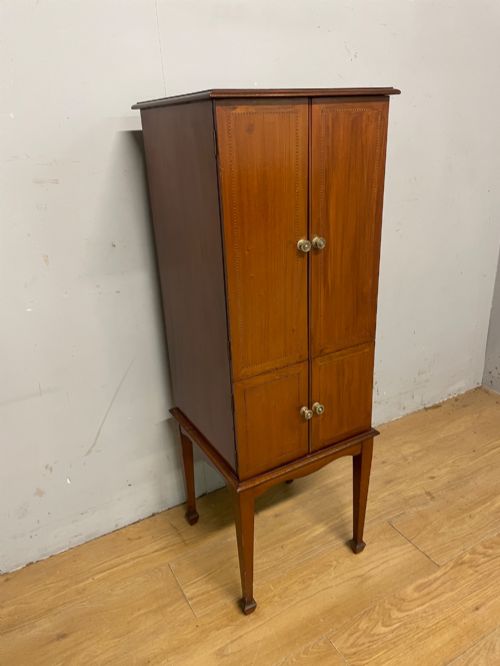
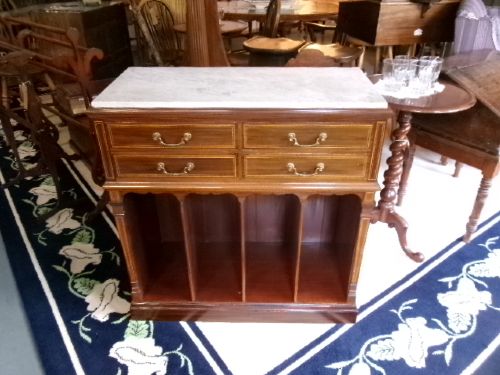
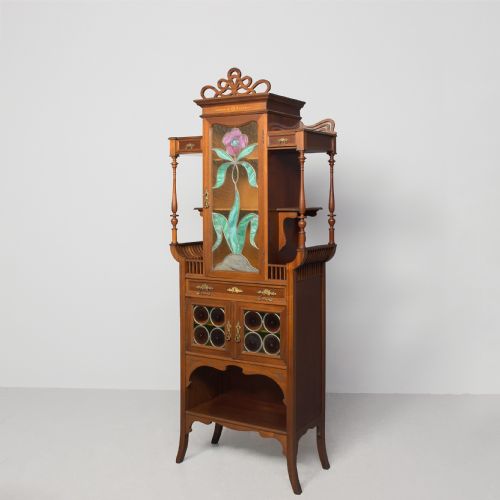
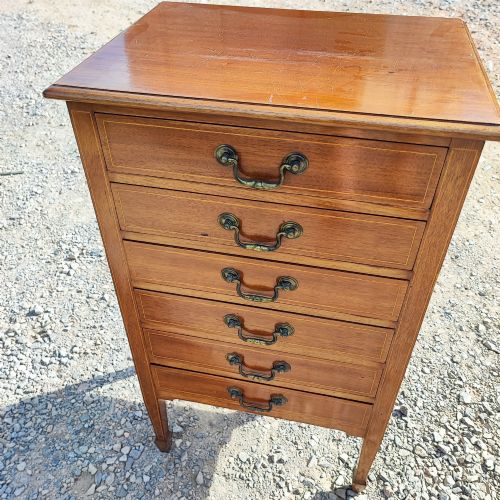


Inlaid Mahogany Music Cabinet
When you seek an inlaid mahogany music cabinet, you look for a specialised piece designed to store sheet music, typically originating from the Edwardian period.
Inlaid Mahogany Music Cabinet
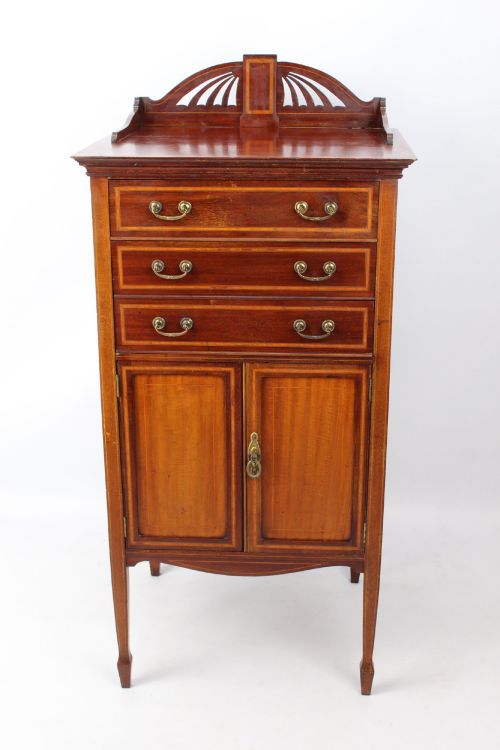
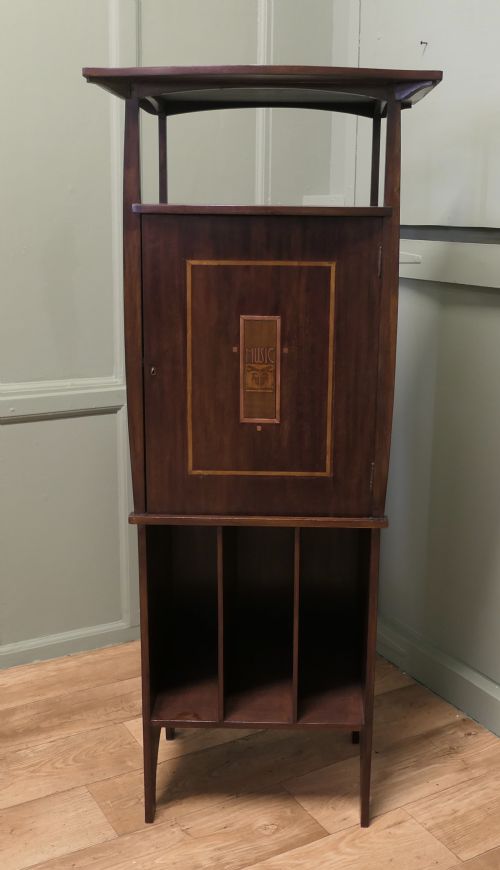
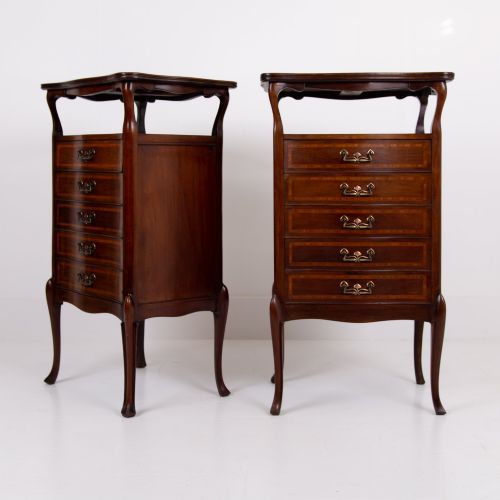
An inlaid mahogany music cabinet is a dedicated piece of furniture designed to organise and store sheet music, often featuring multiple shallow drawers, drop-front compartments, or interior shelves. The pieces you encounter most frequently date from the Edwardian era and the late nineteenth century, reflecting a time when domestic music-making was central to parlour life.
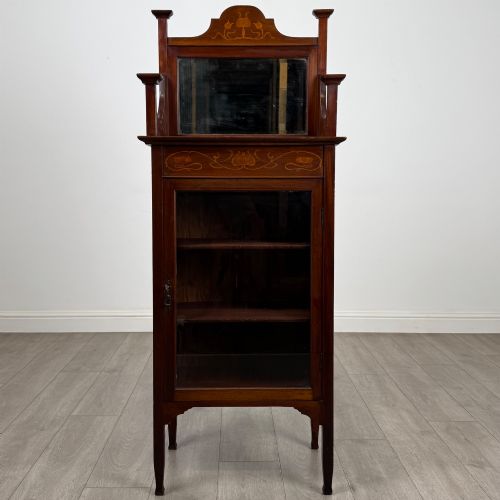
Beyond the standard vertical music chest, variants include narrow cupboards, combination cabinets with book storage, piano stools, and bow-fronted side cabinets. These items combine practical storage with decorative presence, frequently utilising compact proportions suited to smaller drawing rooms and parlours.
Origins span standard domestic production to pieces bearing retailer or maker labels from London and Scottish workshops. The typical survival is Edwardian, built with upright rectangular forms that accommodate drop-down fronts or stacks of drawers designed specifically for horizontal music sheets.
Materials and Construction
The primary structural timber is mahogany, often complemented by contrasting secondary woods such as satinwood, boxwood, and sometimes rosewood or walnut. Craftsmen applied delicate wood inlay and line marquetry, often incorporating satinwood details into the darker mahogany carcase to create decorative urns, swags, or geometric borders.
Hardware played both a functional and decorative role, with brass handles, hinges, and occasional glass-fronted doors appearing on display variants. Interiors were fitted with specialised shelving or document drawers, constructed to house fragile paper scores without bending or folding them.
Inlaid Mahogany Music Cabinet Retail Price Guide 2026
Typical asking prices for inlaid mahogany music cabinet among the pieces listed under this phrase on Sellingantiques today, from the lower quarter to the upper quarter. They describe what is for sale here now, not the wider market.
Assessing Quality
The standard of an inlaid mahogany music cabinet depends heavily on the crispness and complexity of the marquetry work. Finer examples display meticulously fitted contrasting veneers and precise boxwood stringing, whereas simpler versions rely on painted motifs or sparse line inlay.
Structural refinement marks the division between ordinary production and superior workshop output, visible in the choice of solid mahogany carcases versus lesser secondary timbers. Well-executed internal fittings, original brass hardware, and maker stamps or retailer labels further distinguish the higher tier of cabinetmaking.
GM Elwood for JS Henry·Collinson and Lock London·Keeble London·Shapland and Petter·Edwards and Roberts·George Laird and Son Glasgow·Jenners of Edinburgh
The Inlaid Mahogany Music Cabinet Glossary
- Marquetry
- Decorative veneer work arranged in intricate patterns or pictures using various coloured woods. On these cabinets, marquetry typically adorns the upper door panel or top surface.
- Satinwood
- A pale, hard wood originating from tropical regions, valued for its glossy sheen. It is frequently employed for contrasting inlays against darker mahogany bodies.
- Boxwood
- A dense, pale yellow wood utilised extensively for fine stringing and inlay lines. Craftsmen cut it into thin strips to frame drawer fronts and panels.
- Bow Front
- A convex, outwardly curved front profile seen on select cabinets. This curved shape adds visual depth and requires advanced woodworking skill to execute.
- Stringing
- Narrow inlay bands of contrasting timber set flush into the surface of the wood. It creates delicate geometric borders around panels and drawer fronts.
Inlaid Mahogany Music Cabinet: Frequently Asked Questions
What were music cabinets used for?
These cabinets served as specialised storage units for holding sheet music, scores, and folios in nineteenth and early twentieth-century drawing rooms. The shallow drawers and drop-front compartments kept paper items flat, organised, and protected from dust.
Beyond sheet music, many owners utilised the compartments for storing documents, letters, or specimen collections. Their compact size made them practical additions to parlours where home piano playing was a frequent pastime.
How do I date an Edwardian music cabinet?
Dating relies primarily on stylistic clues, construction methods, and occasionally paper labels pasted inside the drawers or backing boards. Edwardian pieces, built around 1900 to 1910, typically display lighter proportions and Sheraton Revival influences compared to heavier Victorian predecessors.
Examine the secondary timbers inside the drawers and the style of the brass hardware for period consistency. Pieces marked with specific retailer labels or maker stamps often provide a clearer timeline of origin.
How do I fit one into a modern room?
An inlaid mahogany music cabinet works well as a narrow bedside table, a hallway storage chest, or an end table in a living room. Their modest footprints allow them to occupy tight wall spaces while providing functional drawer storage.
The polished wood tones and delicate stringing pair effectively with both traditional and contemporary interiors. The top surface also offers a suitable platform for lamps, small sculptures, or framed photographs.
What is the difference between Edwardian and Victorian styles?
Victorian cabinets from the nineteenth century generally feature heavier proportions, darker finishes, and denser, more assertive carvings or marquetry. Mahogany was often stained deeper, and the overall aesthetic prioritised solid visual weight.
Edwardian interpretations, emerging around the turn of the century, favoured brighter satinwood inlays, lighter mahogany tones, and Sheraton Revival elegance. The forms became slender and more restrained, reflecting changing domestic tastes towards airier spaces.