


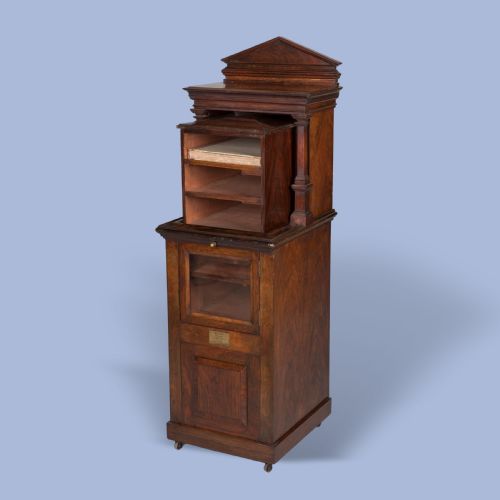


Rosewood Sheet Music Cabinet
These rosewood sheet music cabinet pieces are timber storage items designed for scores, and they bring rich grain and period function to a room.
Rosewood Sheet Music Cabinet
A rosewood sheet music cabinet provides dedicated storage for musical scores and sheet materials within a domestic interior. These items take several forms across the evidence, appearing as canuterburys, side cabinets, display units, and whatnots.
Materials and construction methods
Makers built these pieces primarily using rosewood, frequently incorporating mahogany, gonçalo alves, and brass details. Cabinets often display marquetry inlay work on their exterior surfaces, adding decorative patterns to the timber.
Structural elements include carved wooden supports and glass viewing panels in glazed doors. Drawers appear beneath main compartments, while open rack sections divide the lower portions of canterbury forms.
Rosewood Sheet Music Cabinet Retail Price Guide 2026
Typical asking prices for rosewood sheet music cabinet among the pieces listed under this phrase on Sellingantiques today, from the lower quarter to the upper quarter. They describe what is for sale here now, not the wider market.
Listings span the nineteenth century and the Edwardian era, incorporating Victorian, William IV, and Gothic Revival styles alongside French influences.
Distinctions in construction and finish
The standard of timber selection and inlay work defines the execution of each piece. Elaborate marquetry inlay and carved decorative motifs demonstrate a higher level of cabinetmaker effort than plain surfaces.
The Rosewood Sheet Music Cabinet Glossary
- Canterbury
- A low stand with partitions for holding sheet music or books. It typically includes a small drawer at the base.
- Marquetry Inlay
- Decorative patterns formed by fitting contrasting pieces of wood veneer into a primary timber surface. This technique creates pictorial or geometric designs on cabinet doors and tops.
- Gonçalo Alves
- A dense tropical timber with distinctive contrasting dark streaks, used occasionally in place of standard rosewood. It provides a striking figured grain.
- Gothic Revival
- A nineteenth century design style incorporating pointed arches and medieval architectural motifs. Furniture in this style reflects medieval ecclesiastical aesthetics.
- Whatnot
- An open shelving unit designed for displaying small objects and ornaments. It frequently sits atop a music cabinet or canterbury.
Rosewood Sheet Music Cabinet: Frequently Asked Questions
What is a rosewood sheet music cabinet?
A rosewood sheet music cabinet is a specialised timber furniture item built to store and organise musical scores in the home. They date primarily from the nineteenth and early twentieth centuries.
These pieces combine enclosed cupboard space or drawers with open vertical partitions. Their rosewood construction gives them a dark, figured appearance suited to period interiors.
Where were these cabinets placed?
These items stood in nineteenth and early twentieth century drawing rooms, music rooms, and parlours. They kept sheet scores close to pianos and other domestic instruments.
Their decorative wood grain and marquetry inlay allowed them to function as ornamental furniture while remaining practical. Many included flat top surfaces suitable for holding lamps or small decorative objects.
How do I care for rosewood furniture?
Rosewood surfaces require protection from direct sunlight and excessive heat fluctuations to prevent timber splitting or fading. Regular dusting with a soft, dry cloth preserves the polished finish.
Avoid using silicone-based polishes or harsh chemical cleaners on antique timber and inlay work. Conditioning the wood periodically helps maintain the natural oils in the rosewood.
What styles are common in these cabinets?
The listings show Victorian, Edwardian, William IV, and Gothic Revival design influences. French nineteenth century examples also appear among the records.
Earlier pieces often feature heavier carved rosewood details, whilst Edwardian items frequently incorporate delicate marquetry inlay and lighter framing. Regional variations include American Gothic Revival interpretations of the form.