


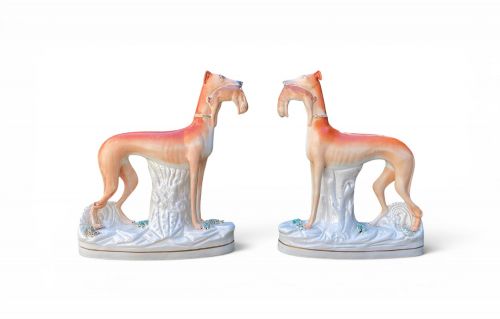
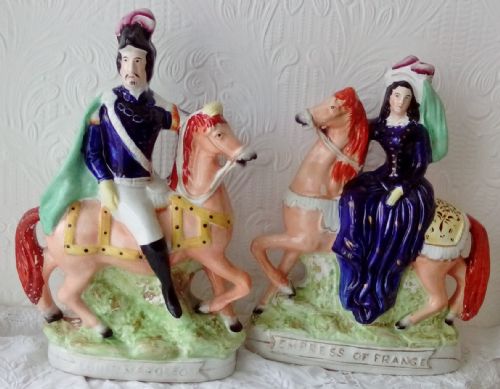
Earthenware Staffordshire Figurine
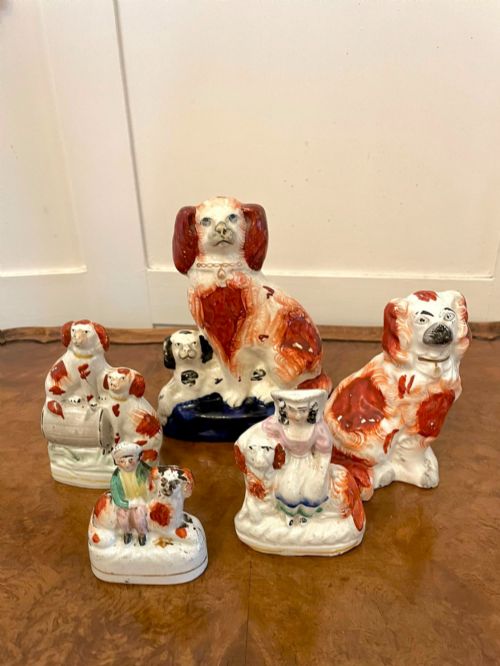
These earthenware staffordshire figurine examples capture domestic Victorian animal and portrait subjects designed for cottage mantelpieces.

Earthenware Staffordshire Figurine
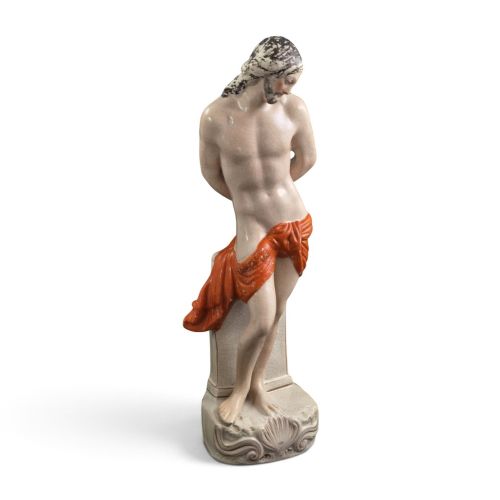
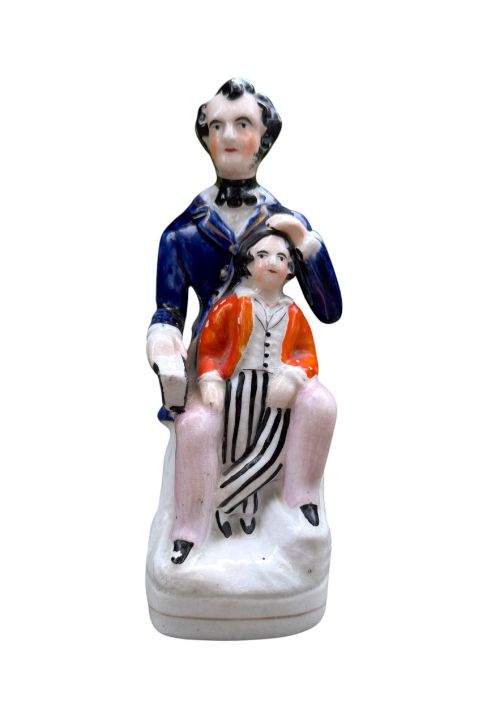
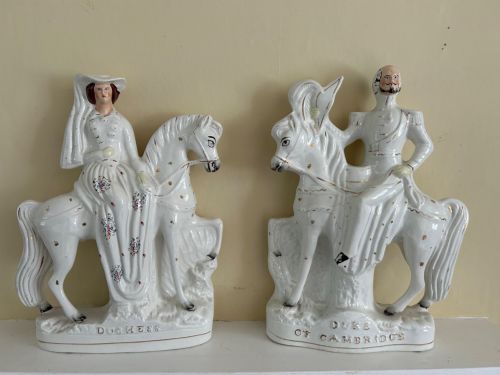
An earthenware staffordshire figurine selection typically takes the form of portrait figures, historical subjects, and animal pairs intended for display on nineteenth-century mantelpieces. The evidence shows these pieces span periods from the Georgian era through to 1900, with Victorian examples appearing most frequently.
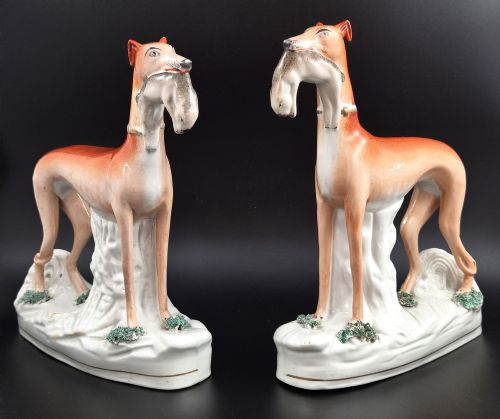
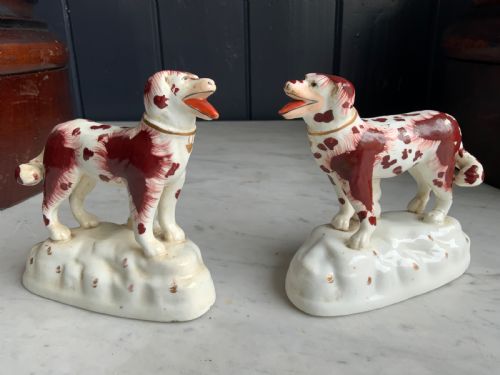
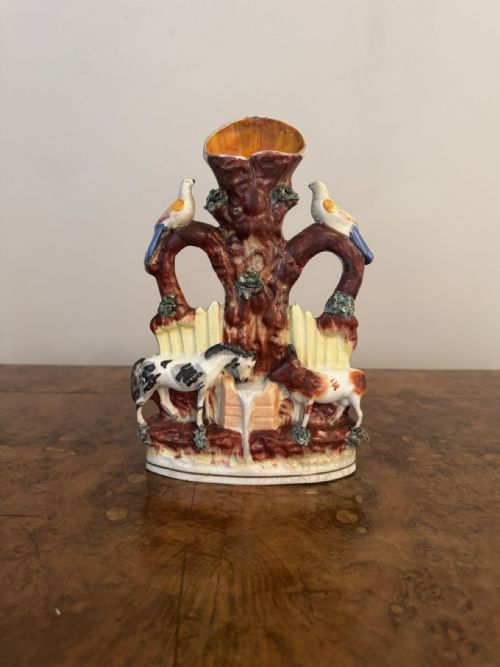
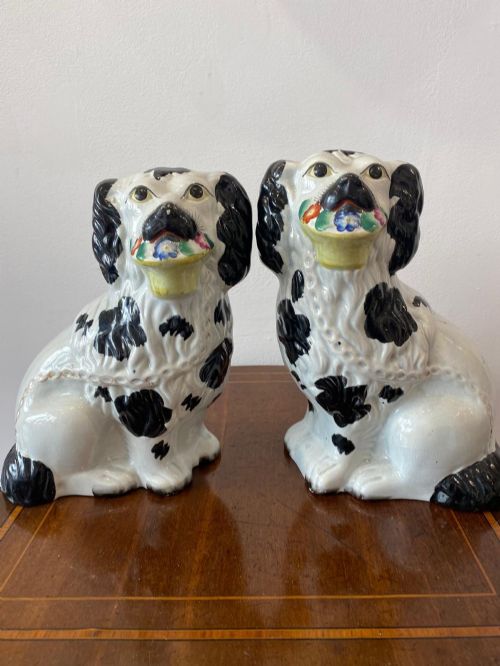
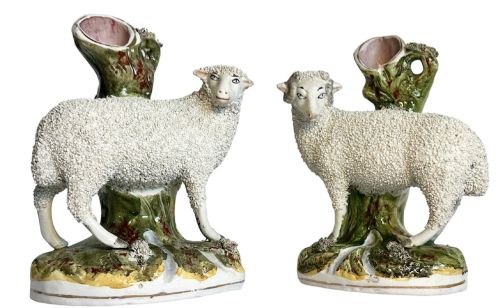
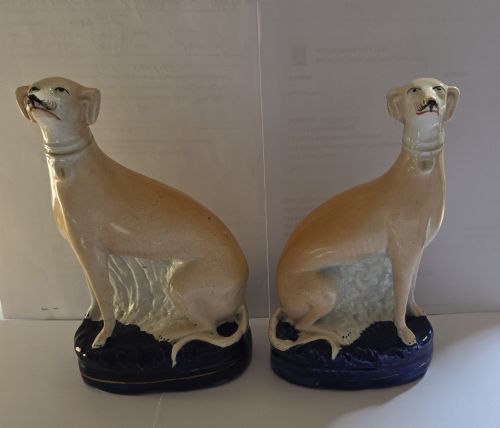
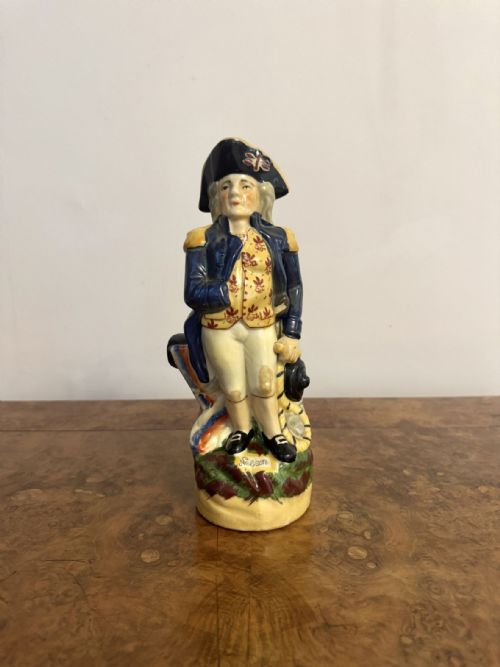
Forms range from flatback pottery figures of notable figures and theatrical characters to spill vases depicting deers, lions, and sheep. Pairs of dogs, including greyhounds, poodles, and spaniels, form a substantial portion of the objects encountered here.
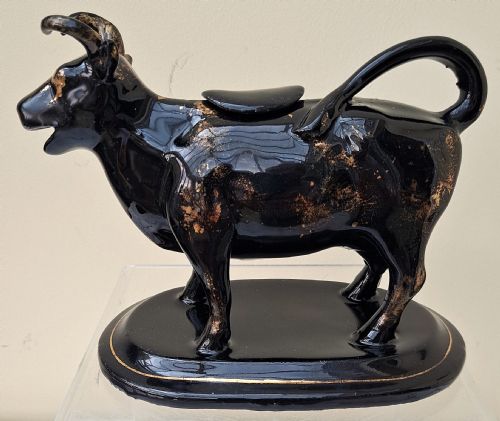
Originating primarily from English potteries, these glazed ceramic objects include both freestanding ornamental groups and functional pieces like tobacco jars and cow creamers.
Materials and construction
Makers shaped these earthenware bodies using press moulds, frequently creating hollow flatback figures designed to be viewed from the front on shallow shelves. The ceramics are finished with lead glazes or enamel paint, alongside occasional gilt accents.
Surface decoration relies on applied enamel colours and hand-painted details over a glazed ceramic base. Certain pieces utilise specific finishes like treacle glaze or incorporate specialised regional output such as Jackfield pottery.
The material record across these listings consists entirely of earthenware, glazed ceramic, and enamel, encompassing nineteenth-century Victorian and Regency periods.
Assessing quality
The preservation of the original glaze and the clarity of the underlying ceramic form dictate the visual impact of each figure. Pieces maintaining their intended pairs or companion groups demonstrate greater completeness.
The Earthenware Staffordshire Figurine Glossary
- Flatback
- A figure moulded with a finished front and a plain, unmodelled flat rear designed for standing against a wall. This construction saved material and prevented warping in the kiln.
- Spill vase
- A hollow pottery figure incorporating a small cylindrical holder meant for storing taper spills used to light pipes and candles. These vessels combine functional design with animal or figural modelling.
- Earthenware
- A porous pottery body fired at lower temperatures than stoneware or porcelain. It requires a glaze to become impermeable to liquids.
- Lead glaze
- A glossy coating containing lead oxide applied to pottery before a secondary firing. This finish creates a smooth, reflective surface over the ceramic body.
- Pearlware
- A refined earthenware developed with a small amount of cobalt in the glaze to produce a slightly bluish-white surface. It bridges the transition between creamware and later white earthenware.
Earthenware Staffordshire Figurine: Frequently Asked Questions
What subjects do these figures depict?
The listings comprise portraits of historical personages, literary characters, theatrical players, and numerous domestic animals. Dogs, lions, and sheep appear repeatedly alongside spill vases and figural groups.
Human subjects range from political figures and military commanders to theatrical pairs and rustic workers. Animal subjects frequently occur as matched pairs intended to sit at either end of a mantelpiece.
How do I date a Staffordshire figure?
Dating relies on costume details, moulding styles, and the specific type of glaze used across the nineteenth century. Victorian pieces often feature flat backs and distinct enamel colour palettes.
Earlier objects from the Regency or Georgian periods display different modelling characteristics compared to items produced toward 1900. Marked or titled bases occasionally provide direct historical context.
Are these pieces usually found in pairs?
Many animal and figural subjects were manufactured as matched pairs to decorate domestic interiors symmetrically. Greyhounds, spaniels, and poodles commonly survive in these paired configurations.
Single figures also occur widely, particularly among portrait subjects and specific theatrical or literary representations. Spill vases likewise appear both individually and in corresponding sets.
How were these ceramics used originally?
These earthenware objects served primarily as decorative ornaments placed upon mantelpieces in nineteenth-century homes. Certain forms fulfilled secondary practical functions, such as cow creamers and tobacco jars.
Spill vase variants held wooden tapers used for lighting fires and candles before the invention of safety matches. Their display reflected contemporary popular tastes and interests in public figures and animals.